The Sherman Homeowner's Ultimate Guide to Garage Door Repair & Safety
Published: Mar 10, 2026
That sudden, jarring sound from the garage. A loud bang, a grinding screech, or maybe just an unsettling silence when you expected the familiar hum of the door opening. If you’re a homeowner in Sherman, TX, this moment can trigger a wave of questions: What just broke? Is it dangerous? How much is this going to cost?
You're not alone. Most homeowners only think about their garage door when it stops working, and the sudden failure can feel overwhelming. But understanding what’s happening is the first step toward a smart, safe, and cost-effective solution.
This guide is designed to be your trusted first resource. We’ll help you decode those warning signs, understand the basic anatomy of your door, and know when to call a professional for a safe and reliable fix.
What's That Noise? Decoding Your Garage Door's Warning Signs
- A Loud BANG: This is the most alarming sound and almost always signals a broken torsion or extension spring. The springs are under immense tension to lift the door's weight, and when one snaps, it releases its energy with a gunshot-like noise.
- Grinding or Squealing: This often points to a problem with the opener's motor or chain/belt. It could also be rollers that are worn out and scraping against the metal track.
- Popping or Clicking: As your door moves, you might hear popping sounds. This can indicate that the rollers are worn and struggling to move smoothly in the track, or that the torsion system is under stress.
- Rattling: While some rattling is normal, excessive shaking can mean loose hardware, like nuts and bolts, that needs to be tightened.
Foundation: 'Anatomy of Your Garage Door'
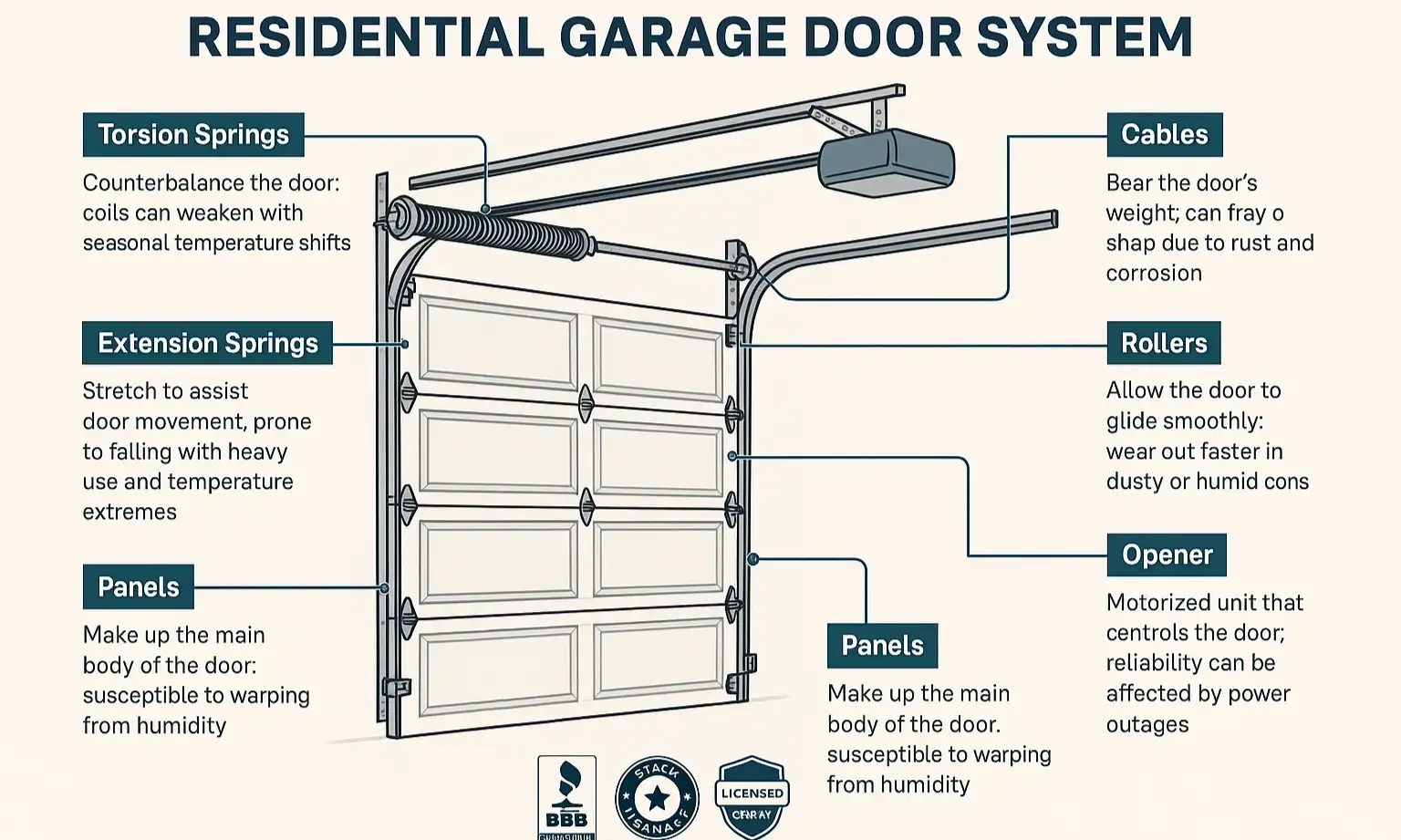
- Springs (Torsion or Extension): These are the muscles of the system. They do the heavy lifting so the opener doesn't have to. Torsion springs are mounted above the door, while extension springs run alongside the tracks. A broken garage spring repair is the most common major repair.
- Opener: The motorized device that directs the door to open and close. It includes the motor, a chain or belt, and the trolley that connects to the door.
- Cables: These high-tension steel cables are attached to the bottom of the door and work with the springs to lift it evenly. If one snaps, the door will become crooked and dangerous.
- Rollers & Tracks: The wheels (rollers) run within the metal tracks on either side of the door, guiding it up and down.
- Panels: These are the individual sections of your door. While durable, they can be damaged by impacts from a car or storm debris.
Building: The Common Culprits: A Visual Guide to Problems
1. Broken Springs
2. Faulty Opener
3. Snapped or Frayed Cables
4. Damaged Panels
Mastery: 'DIY vs. Call a Pro: A Sherman Safety Briefing'
Safe DIY Tasks (The "Green Zone"):
- Lubricating Moving Parts: Use a silicone-based garage door lubricant on rollers, hinges, and springs every 6-12 months.
- Cleaning Safety Sensors: Wipe the lenses of the two small sensors at the base of your door tracks. If they are misaligned or dirty, you may find your garage door won`t close.
- Checking and Tightening Hardware: Visually inspect nuts and bolts and tighten any that are loose.
- Clearing the Tracks: Ensure there is no debris or obstruction inside the metal tracks.
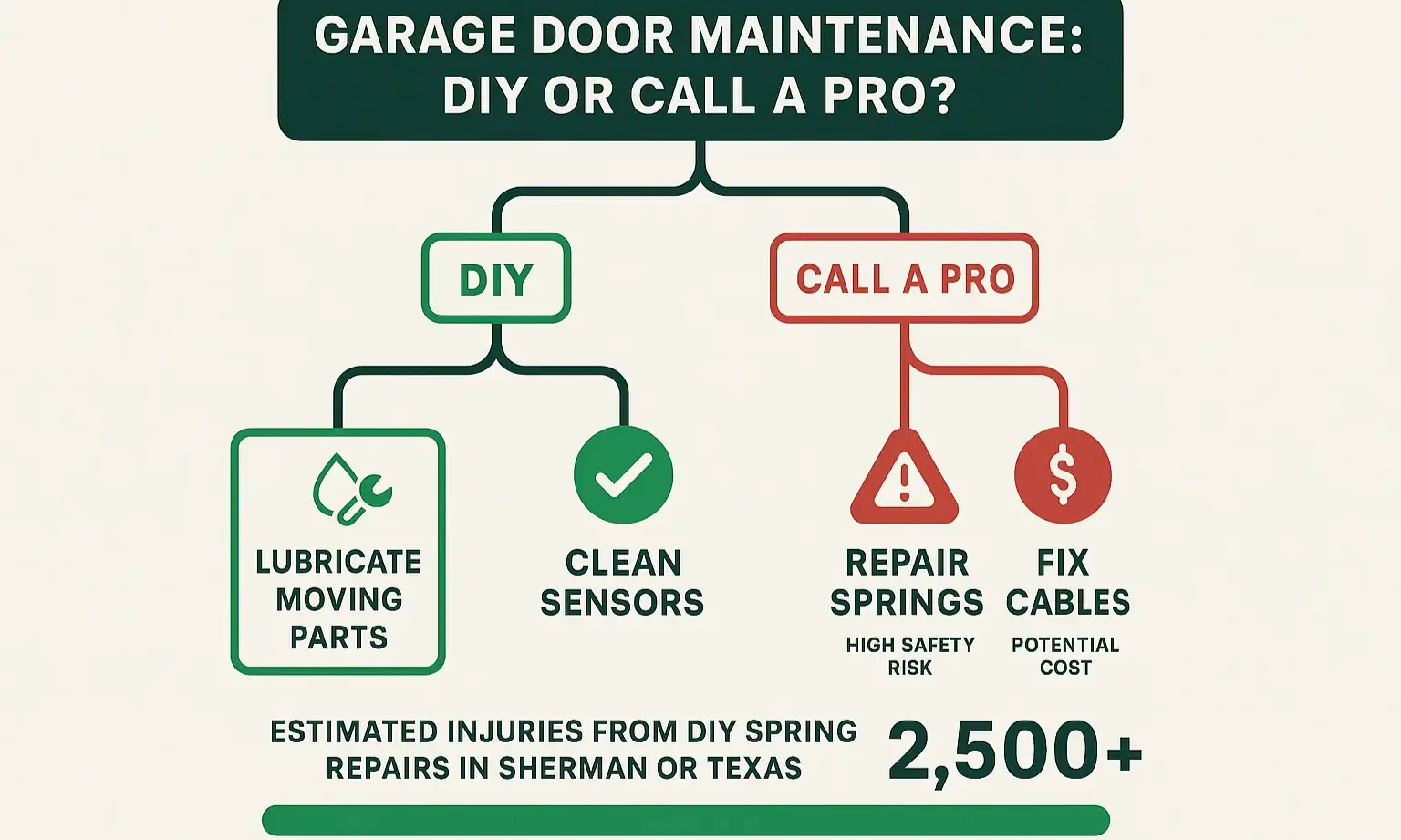
Call a Professional (The "Red Zone"):
- Anything Involving Springs or Cables: This cannot be overstated. Garage door springs are under extreme tension. A mistake during removal or installation can release that energy uncontrollably, causing severe injury or worse. This is a job exclusively for trained technicians.
- Replacing the Opener Motor: This involves electrical wiring and proper calibration to ensure the door's force settings are safe.
- Getting a Door Back on Track: If your door has come off its tracks, it is unstable. Trying to force it back can cause more damage or lead to the door falling.
Need more information?
Get a free quote
Action: 'Your 15-Minute Yearly Maintenance Checklist to Prevent 90% of Problems'
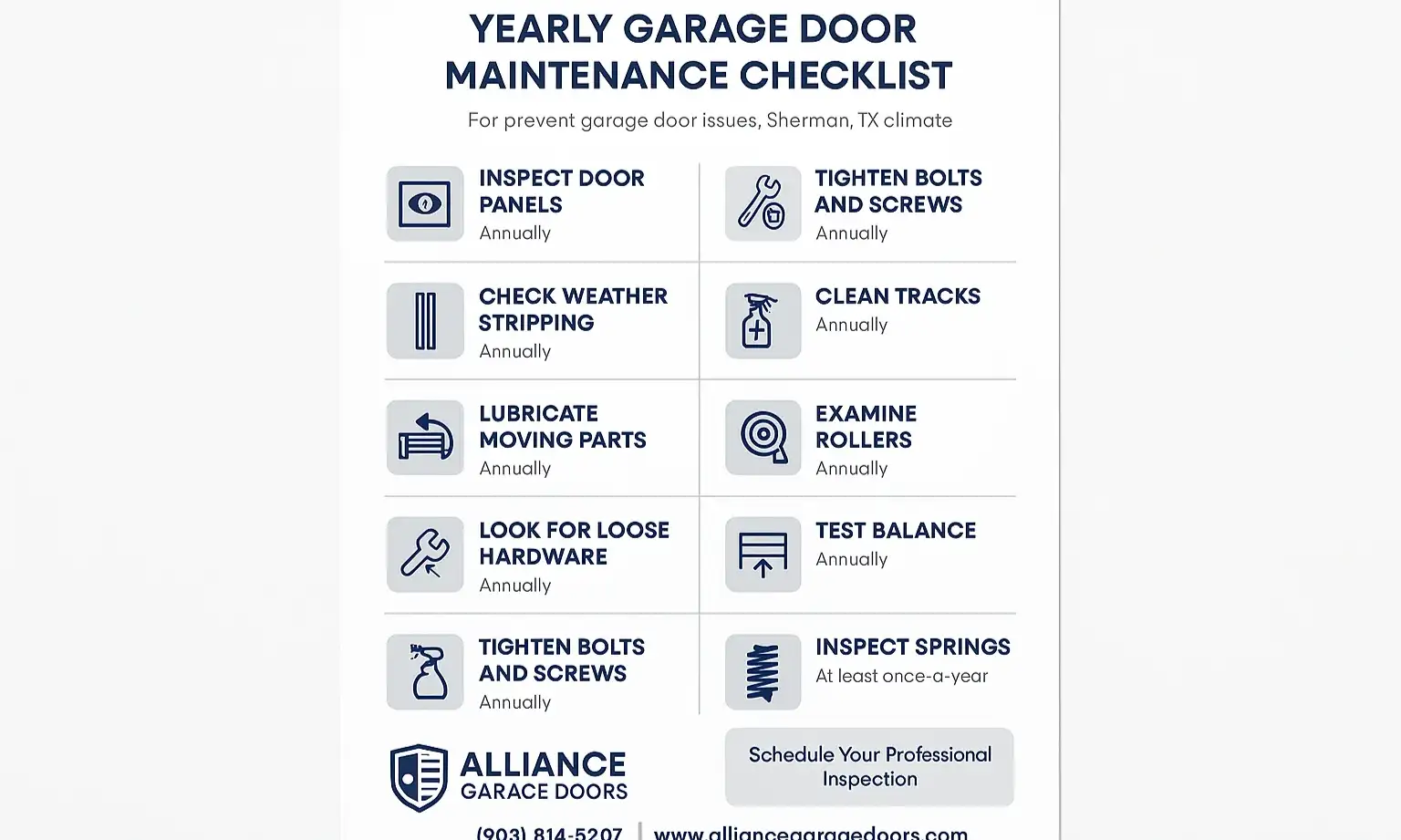
- Look and Listen: Operate the door and watch its movement. Does it move smoothly or is it jerky? Listen for any new or unusual noises.
- Check the Balance: With the door closed, pull the emergency release cord (the red handle). You should be able to lift the door manually with relative ease. If it feels very heavy or slams to the ground, the springs are unbalanced and need professional adjustment.
- Test the Reversal Feature: Place a 2x4 board flat on the ground in the door's path. When the door touches the board, it should immediately reverse. If it doesn't, the safety mechanism needs adjustment.
- Inspect the Rollers: Check for any that are cracked, worn, or chipped.
- Check Cables for Wear: Look for broken strands or fraying near the bottom roller brackets.
- Wipe and Lubricate: Clean the tracks and apply a high-quality lubricant to all moving parts.
Frequently Asked Questions for Sherman Homeowners
Should I repair or replace my garage door opener?
How do I choose a reputable garage door company in Sherman?
Can I replace just one broken spring?
Is garage door repair covered by my homeowner's insurance?
You may also like