The Stamford Homeowner's Ultimate Guide to Garage Door Repair
Published: Mar 12, 2026
Is that a new, unsettling sound your garage door is making? That sudden screech, groan, or shudder can be more than just an annoyance—it's your home’s largest moving object telling you something isn't right. Especially on a cold Connecticut morning when you’re already running late, a garage door that won’t open or close properly can ruin your day.
You're not alone. Most homeowners in Stamford face this at some point. The good news is that understanding what's happening is the first step toward a safe and effective solution. This guide is designed to be your trusted first resource, helping you diagnose the problem, decide what you can safely handle yourself, and know when to call a professional.
Foundation: Your Garage Door 101
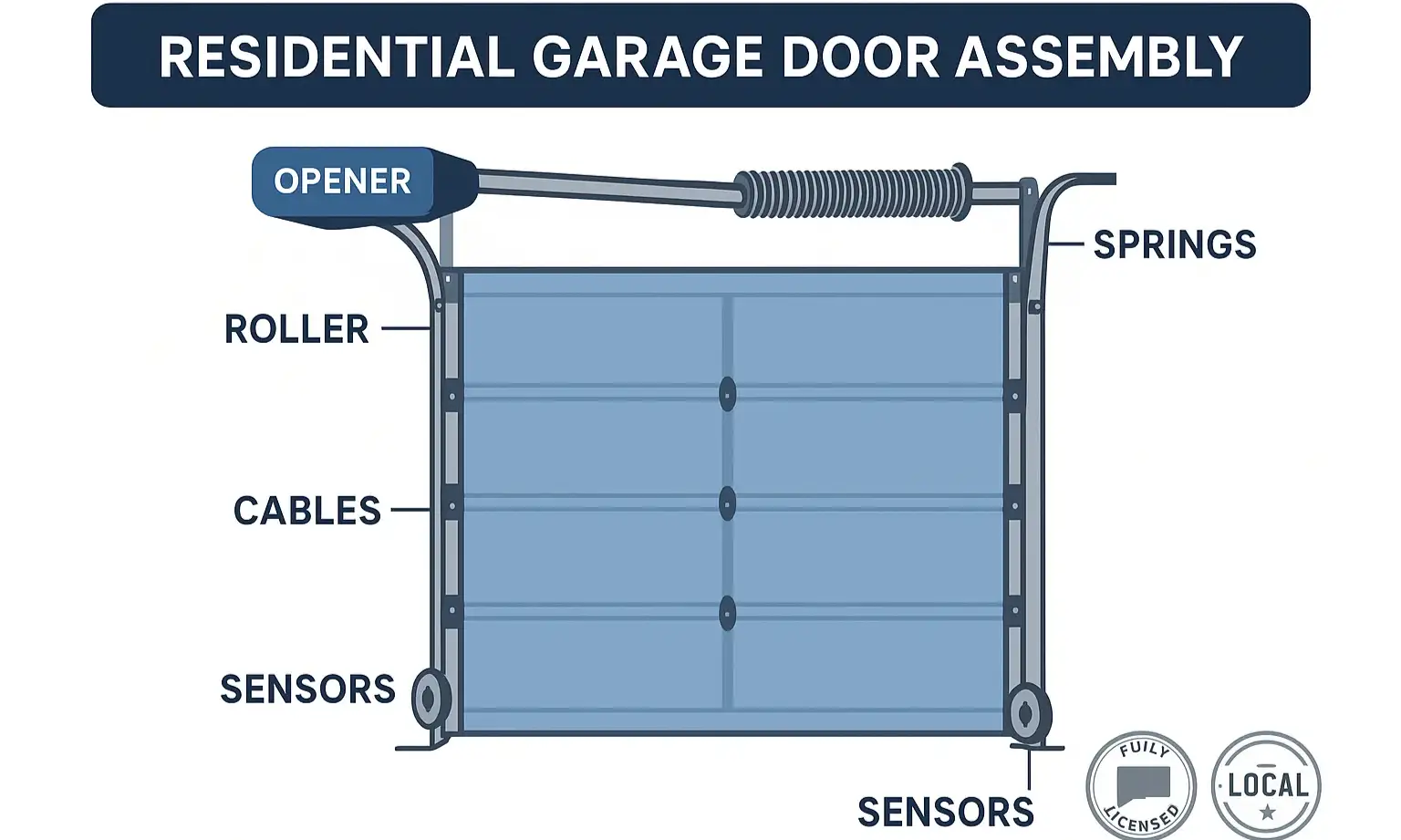
- Springs (Torsion or Extension): These are the muscles of the system. They do the heavy lifting so the opener doesn't have to. A broken garage door spring is one of the most common—and dangerous—repairs.
- Cables: These steel cables work with the springs to lift and lower the door evenly. If one snaps, the door will likely become crooked and stuck.
- Rollers & Tracks: The rollers run along the metal tracks on either side of the door, guiding it up and down. If they're worn or the tracks are bent, you'll hear it.
- Panels: These are the sections that make up the door itself. Damage to a panel can affect the door's alignment and insulation.
- Opener & Safety Sensors: The motor that automates the lifting. The safety sensors (the two small "eyes" near the floor) prevent the door from closing on an object, person, or pet.
Building: The Interactive Symptom Checker
Symptom: Loud Squeaking, Grinding, or Popping Noises
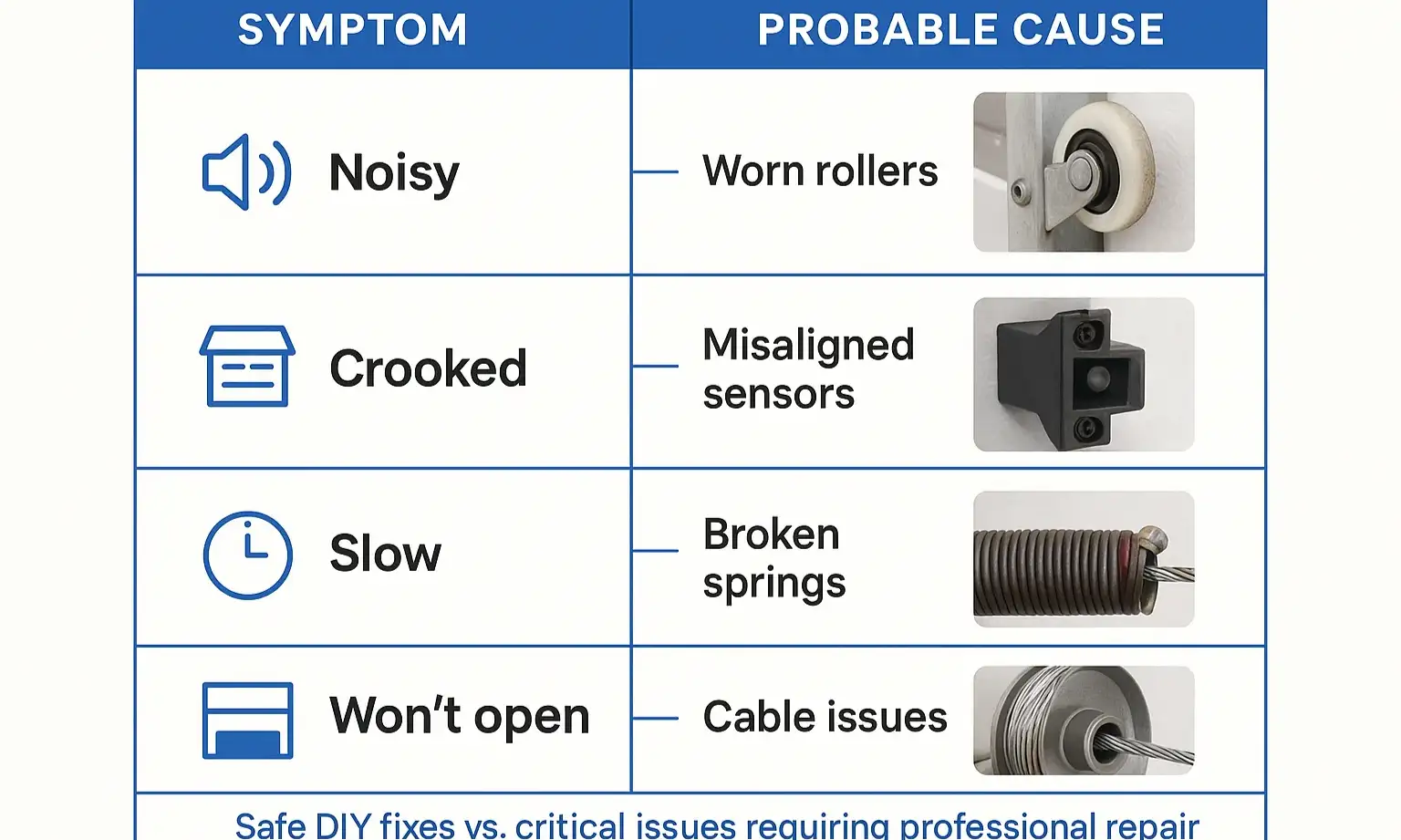
Symptom: The Door Won't Open or Close (or Only Moves a Few Inches)
Symptom: The Door Closes Too Fast or Slams Shut
Symptom: The Door Looks Crooked or Off-Track
Mastery: DIY Maintenance vs. DANGER - When to Call a Pro
Safe DIY Tasks for the Stamford Homeowner
- Lubrication: About twice a year, use a silicone-based or white lithium grease spray on all moving parts: rollers, hinges, and springs. Pro Tip: Don't use WD-40 on the tracks; it attracts dirt. Wipe tracks clean with a rag instead.
- Sensor Check: Clean the sensor "eyes" with a soft cloth. Test them by placing an object (like a paper towel roll) in the door's path as it closes. The door should immediately reverse.
- Weatherstripping: Check the rubber seal at the bottom of the door. If it's cracked or brittle, replacing it is a simple way to improve insulation and keep pests out.
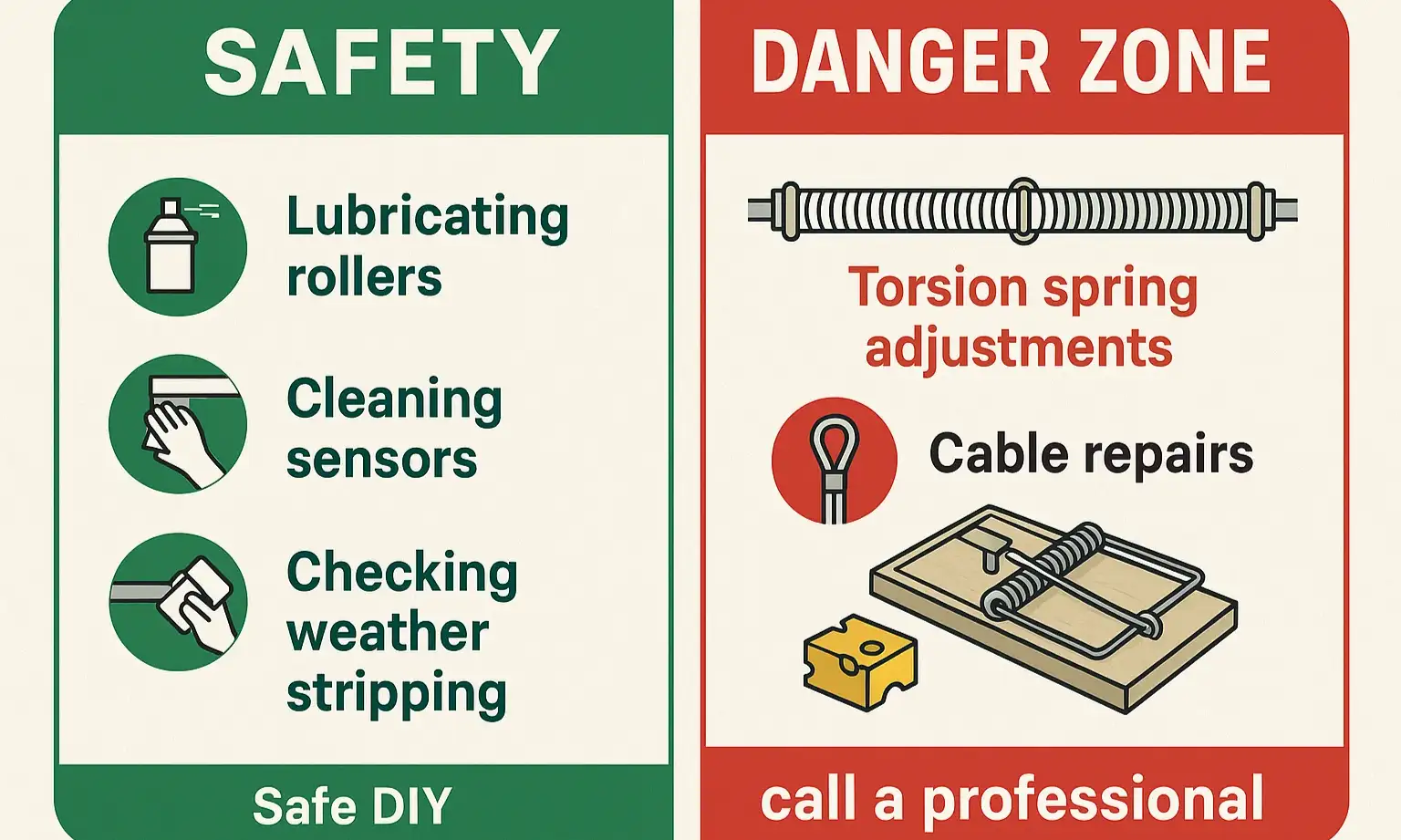
The DANGER ZONE: Repairs Best Left to a Professional
- Spring Replacement: This is not a DIY job. It requires specialized tools and a deep understanding of how to safely release and apply tension.
- Cable Replacement: Like springs, cables are under high tension and can snap with incredible force.
- Bent Track or Panel Repair: A professional is needed to safely get the door back on track or assess whether a full garage door panel repair is needed without causing further damage.
Action: Your Stamford-Specific Guide to Finding Help
How to Choose a Reputable Garage Door Technician in Stamford
- Look for Local Experience: A company familiar with garage door repair in Stamford, CT, knows the local housing styles and how our coastal weather affects doors.
- Check for Licensing & Insurance: This protects you and ensures they are accountable for their work.
- Read Recent Reviews: Look for feedback that mentions professionalism, timeliness, and fair pricing.
- Ask About 24/7 Availability: Garage doors don't break on a 9-to-5 schedule. An emergency service option is a must.
Need more information?
Get a free quote
Frequently Asked Questions
How often should I get my garage door serviced?
Will my homeowners insurance cover garage door repair?
Is it cheaper to repair my door or just replace it?
How do Connecticut winters affect my garage door?
Can I upgrade to a smart garage door opener?
Your Next Step to a Safe and Reliable Garage Door
You may also like