The Ultimate Homeowner's Guide to Garage Door Health in Worcester, MA
Published: Mar 16, 2026
Your garage door is likely the largest moving object in your home. You probably use it every single day without a second thought—until it makes a strange noise or refuses to open. That's when the questions start. Is it serious? Is it dangerous? Can I fix it myself?
Most homeowners in Worcester only think about their garage door when there's a problem. But what if a simple, 5-minute check-up could prevent 90% of those problems?
Before you do anything else, try this: disconnect the automatic opener and try to lift your garage door by hand. Does it feel incredibly heavy? Does it slam shut or refuse to stay open halfway? If so, your door's balance is off. This simple test reveals the health of your door's most critical components and is the first step to becoming an educated homeowner.
This guide is your trusted first touchpoint. We're not here to sell you anything; we're here to teach you how your garage door works, how to safely maintain it, and how to intelligently diagnose a problem. Let's transform you from a casual user into a confident, informed homeowner.
Foundation: Anatomy of a Garage Door (The Beginner's Visual Guide)
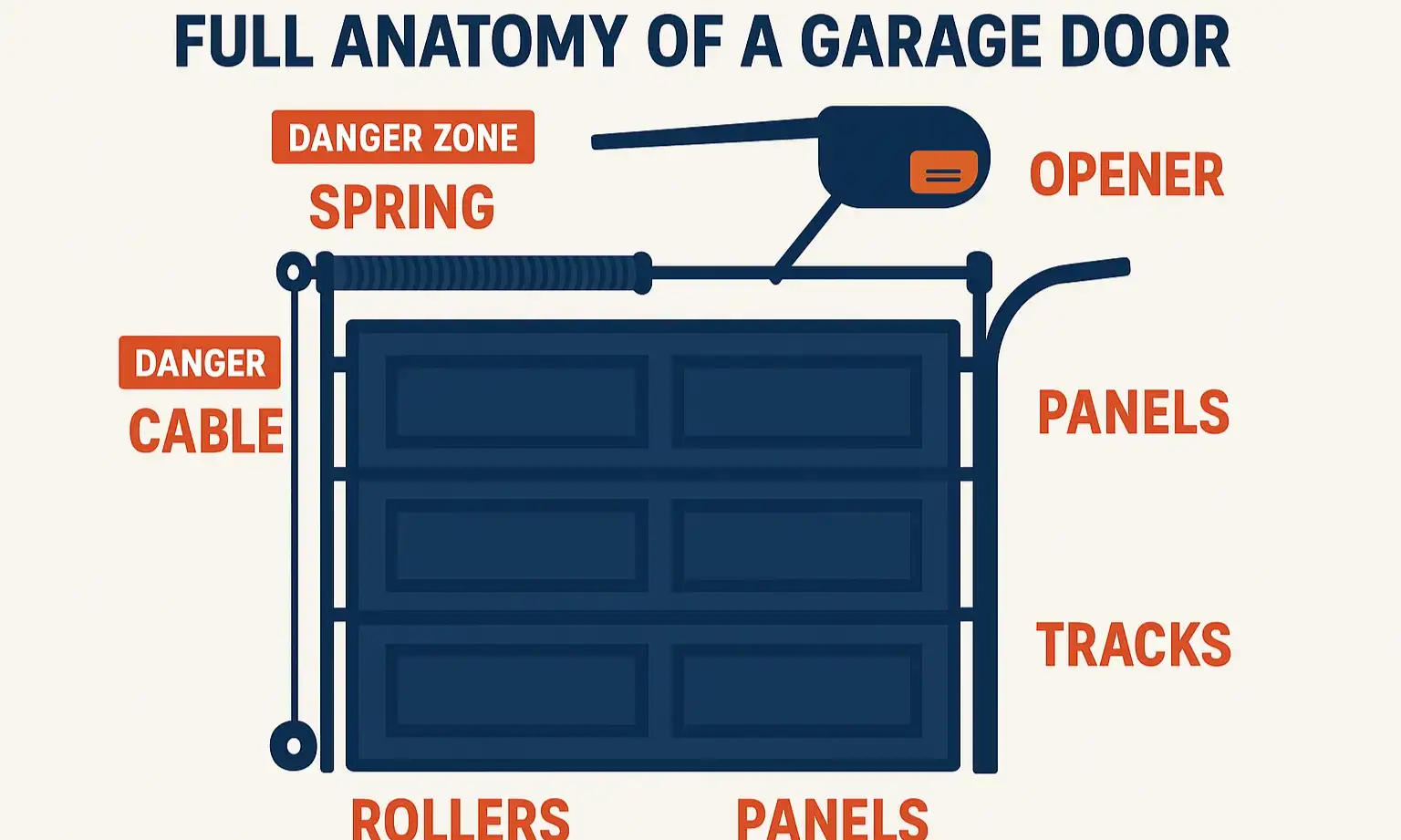
- Springs (Torsion or Extension): These are the muscles of the system. They are under extreme tension and do the actual lifting. Torsion springs are mounted on a bar above the door, while extension springs are located above the horizontal tracks on each side. This is the DANGER ZONE—never attempt to adjust or repair springs yourself.
- Cables: These are the steel wires that connect the springs to the bottom of the door, transferring the lifting force. If a cable looks frayed or rusty, it’s a sign of a potential failure.
- Rollers & Tracks: The rollers are the wheels that run inside the metal tracks on the sides of your door, guiding it up and down. Worn-out rollers are a primary source of grinding noises.
- Panels: These are the large, sectioned parts of the door itself. They can be insulated or non-insulated, and damage to a single panel can often be replaced without replacing the whole door.
- Opener: The motorized unit that automates the opening and closing. It includes the motor, a trolley, and a chain, belt, or screw drive.
- Safety Sensors: The two small "eyes" near the bottom of the door tracks. They project an invisible beam that, if broken, prevents the door from closing on an object.
Building: The Essential Homeowner's Maintenance Checklist
1. Look and Listen (The 1-Minute Diagnostic)
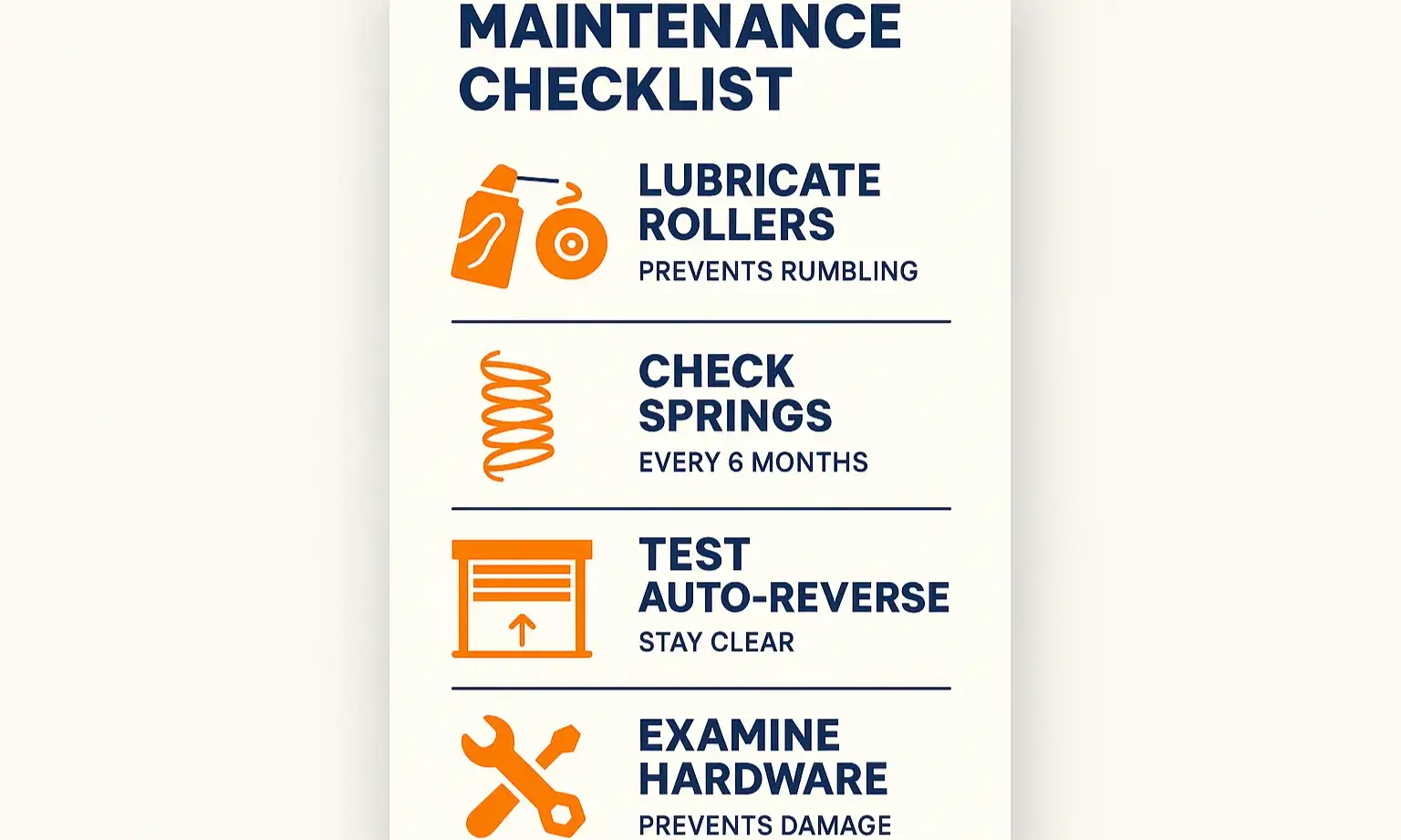
2. Check the Balance (The Most Important Test)
3. Tighten the Hardware
4. Lubricate Moving Parts (The Right Way)
- DO Lubricate: Rollers (stems and bearings), hinges, and springs (a light coat to prevent rust).
- DO NOT Lubricate: The tracks. Greasing the tracks doesn't help and only attracts grime that will hinder movement.
5. Inspect and Clean the Tracks
6. Test the Safety Features
- Reversal Test: Place a 2x4 board flat on the ground in the door's path. When the closing door hits the board, it should immediately reverse direction.
- Sensor Test: As the door is closing, wave an object (like a broom handle) in front of one of the sensors. The door should instantly stop and reverse.
Mastery: The Garage Door Detective - A Guide to Common Problems
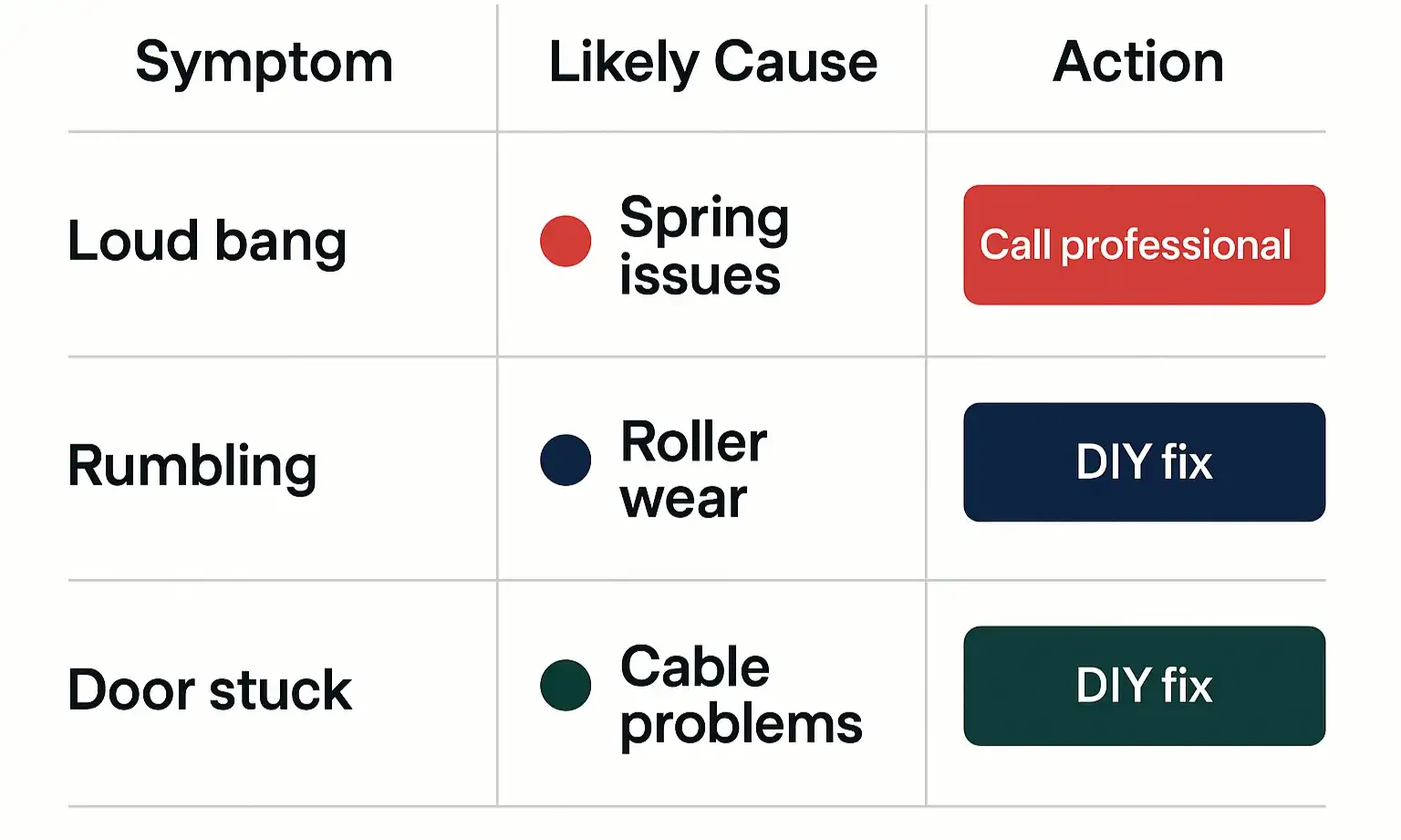
Symptom 1: Loud, Unusual Noises
- A Loud BANG: This is almost always a broken torsion spring. It’s the sound of immense tension being released at once. The door will now be extremely heavy. This requires immediate professional attention.
- Grinding or Squeaking: This points to worn-out rollers or poor lubrication. Check your rollers—if they look worn or are not spinning freely, they need replacement.
- Rattling: This is often caused by loose hardware. It’s a good reminder to perform Step 3 from our maintenance checklist.
Symptom 2: The Door Won't Open or Close
- Door Won't Close, Blinking Opener Light: This is a classic sign of misaligned or dirty safety sensors. Check to see if the small LED lights on both sensors are solid. If one is blinking, they are out of alignment.
- Door Opens a Few Inches, Then Stops: This can be a sign of a broken spring or an obstruction. The opener is sensing too much resistance and stopping as a safety precaution.
- Door Won't Open with Remote: First, try the wall switch. If that works, the issue is likely dead batteries in your remote or a problem with the remote's signal.
Symptom 3: Uneven or Jerky Movement
- Shaky or Jerky Motion: This often points to dirty tracks or worn-out rollers struggling to move smoothly.
- Door Looks Crooked or Slanted When Opening: This is a serious issue, often caused by a broken lift cable on one side. The door is being pulled up unevenly, which puts immense strain on the tracks and panels. Stop using the door immediately.
Action: The DIY/PRO Decision Guide
Safe DIY Tasks (Go for it!)
- Lubricating Moving Parts: As long as you use the right lubricant and stay away from the tracks, this is a safe and essential task.
- Cleaning and Aligning Safety Sensors: A simple and common fix that can save you a service call.
- Replacing Remote Control Batteries: The easiest fix of all!
- Tightening Loose Hardware: A few minutes with a wrench can solve rattling issues.
- Cleaning Tracks: Wiping down debris is perfectly safe.
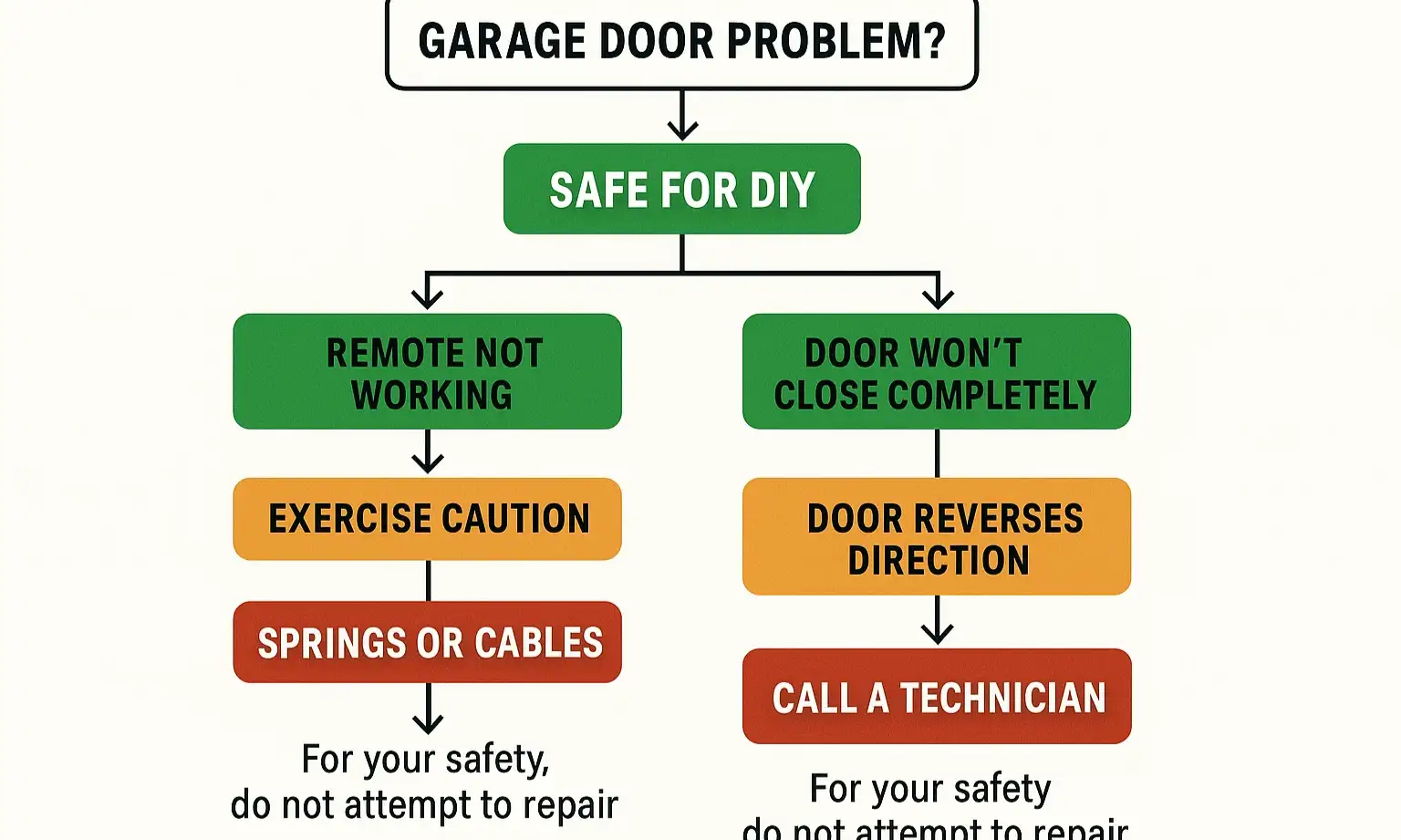
Professional-Only Repairs (Call for Help!)
- Anything Involving Springs: We can't say this enough. Garage door springs are under thousands of pounds of tension. A snapping spring or an uncontrolled release can cause severe injury or death.
- Replacing Lift Cables: Like springs, cables are also under high tension. A mistake during a garage door cable replacement can cause the door to fall.
- Replacing a Door Panel: This requires removing tension from the system and ensuring proper alignment, a job best left to a trained technician.
- Fixing a Door Off Its Tracks: Trying to force a door back into its tracks can damage the tracks, rollers, and panels, turning a simple repair into a full replacement.
Need more information?
Get a free quote
Frequently Asked Questions for Worcester Homeowners
How often should I have my garage door professionally serviced?
Is a noisy garage door a serious problem?
What is the best lubricant for a garage door?
Can I replace a single garage door panel, or do I need a whole new door?
My garage door feels heavy when I lift it manually. What does that mean?
Your Next Step to a Healthier Garage Door
You may also like