The Worcester Homeowner's Ultimate Guide to Garage Door Repair & Safety
Published: Mar 16, 2026
It often starts with a sound. A sudden, sharp BANG that echoes from the garage. Or maybe it’s a new, unsettling grinding noise that makes you cringe every time you leave for work. For many homeowners in Worcester, that moment is the beginning of a stressful journey, filled with questions like: "What's wrong? Is it dangerous? Can I fix it myself? Who can I trust to fix it?"
You’re not alone. Your garage door is the largest moving object in your home, a complex system of springs, cables, and rollers working in harmony. When that harmony is broken, it's natural to feel overwhelmed. But understanding what’s happening is the first step toward a safe and confident solution.
This guide was created specifically for Worcester homeowners like you. We’ll skip the dense technical jargon and explain what's really going on with your garage door, how our New England weather plays a role, and—most importantly—how to make the safest decision for you and your family.
Is Your Garage Door Speaking a Different Language?
- A Sudden Loud "Bang": This is almost always a broken torsion or extension spring. The sound is the release of immense tension.
- Grinding or Squeaking Noises: This often points to worn-out rollers, a lack of lubrication in the tracks, or parts rubbing together.
- Shaky or Uneven Movement: The door might look like it’s struggling to move up or down. This can be caused by a frayed cable, a misaligned track, or a problem with the springs.
- The Door Reverses Immediately After Closing: This is a classic sign of misaligned or obstructed safety sensors, which are the small "eyes" near the bottom of your door tracks.
- The Wall Button Works, But the Remote Doesn't: This usually indicates a simple fix, like dead batteries in the remote, but it could also signal an issue with the opener's receiver.
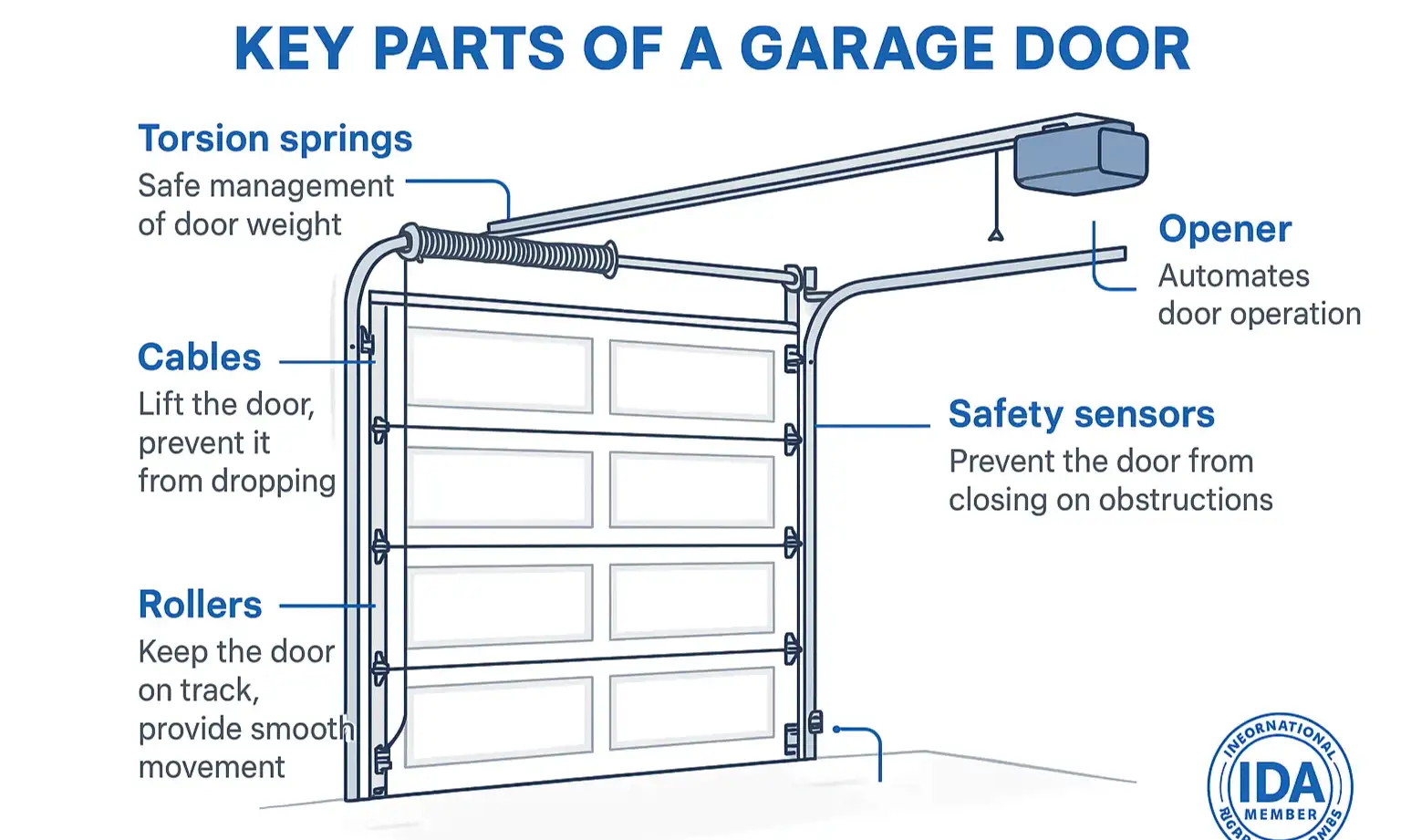
Anatomy of Your Worcester Garage Door
- Torsion Springs: A large spring mounted horizontally above the door. It winds and unwinds to lift and lower the door. It stores an incredible amount of energy.
- Extension Springs: Found on either side of the door, running parallel to the tracks. They stretch and contract to provide lifting power.
Decoding the Signs: Common Garage Door Problems in Massachusetts
The Loud Bang: A Broken Spring
- What it is: The "bang" you heard was the sound of a torsion or extension spring snapping under tension. Your door is now dead weight and will be incredibly heavy, if not impossible, to lift manually.
- Why it happens: Springs are rated for a certain number of cycles (one open/close is one cycle). After 10,000-15,000 cycles, they simply wear out and break. Rust, often accelerated by our humid summers and salty winters in Worcester, can speed up this process.
- Danger Meter: SEVERE. A broken spring means the door's weight is no longer counterbalanced. Attempting to lift it can cause serious injury. Replacing springs involves working with components under extreme tension and is one of the most dangerous home repairs a person can attempt.
The Door That Reverses: Safety Sensor Issues
- What it is: The door starts to close, then suddenly shoots back up. This is your safety system working, but it means something is wrong.
- Why it happens: The sensors are likely misaligned, or the lens is dirty or obstructed. In Worcester, it’s common for blowing leaves, snow buildup, or even direct, low-angle sunlight to interfere with the sensor beam.
- Danger Meter: LOW. This is often a DIY-friendly fix. You can start by wiping the sensor lenses with a soft cloth and ensuring there are no obstructions. If that doesn’t work, check to see if the small LED lights on both sensors are lit and steady. If one is blinking, it needs to be gently repositioned until the light becomes solid.
The Shaky, Crooked Door: A Cable Problem
- What it is: The door lifts unevenly or hangs crooked in the opening. You may see a loose or frayed cable hanging on one side.
- Why it happens: Cables can fray and snap over time due to moisture and wear. A broken spring can also cause a cable to lose tension and come loose.
- Danger Meter: HIGH. Like springs, cables are under immense tension. A snapped cable can whip around with incredible force. A door with a broken cable is unstable and can fall unexpectedly. Never attempt a garage door cable replacement yourself; it requires specialized tools and knowledge to do safely.
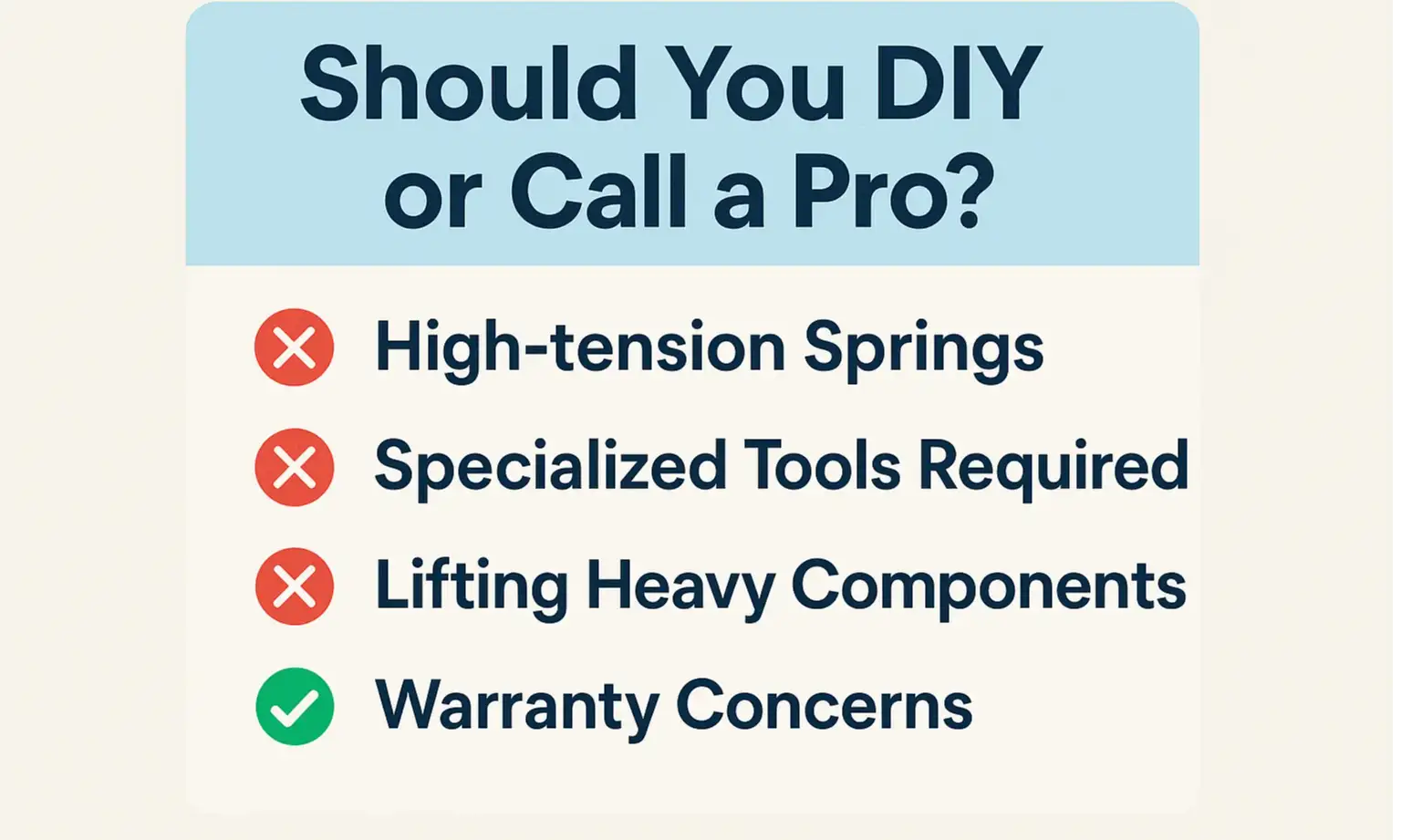
The Big Question: DIY Repair vs. Calling a Professional
Your DIY Safety Checklist (Green Light Repairs)
When to Call a Worcester Pro (Red Light Repairs)
Need more information?
Get a free quote
FAQ: Your Worcester Garage Door Questions Answered
How often should I have my garage door serviced in New England?
What's the real difference between torsion and extension springs?
Is it worth repairing an old garage door opener?
Your Next Step to a Safe and Silent Garage Door
You may also like