Understanding Garage Door Warning Signs in New Haven Homes
Published: Mar 3, 2026
It’s a sound every homeowner dreads. That sudden, jarring BANG from the garage. Or maybe it’s a more subtle grinding, a shuddering refusal to open, or a new, unsettling squeal. Your garage door, a machine you rely on every day, is suddenly sending a clear message: something is wrong.
For many in New Haven, the first instinct is to search online, where you're met with a confusing mix of hyper-technical DIY videos and urgent calls to action. But what you really need is a clear, calm guide to help you understand what's happening, what's safe to handle yourself, and when it’s absolutely time to call in a professional.
This is that guide. We'll help you translate your garage door's strange new language, empowering you to make the safest, smartest decision for your home.
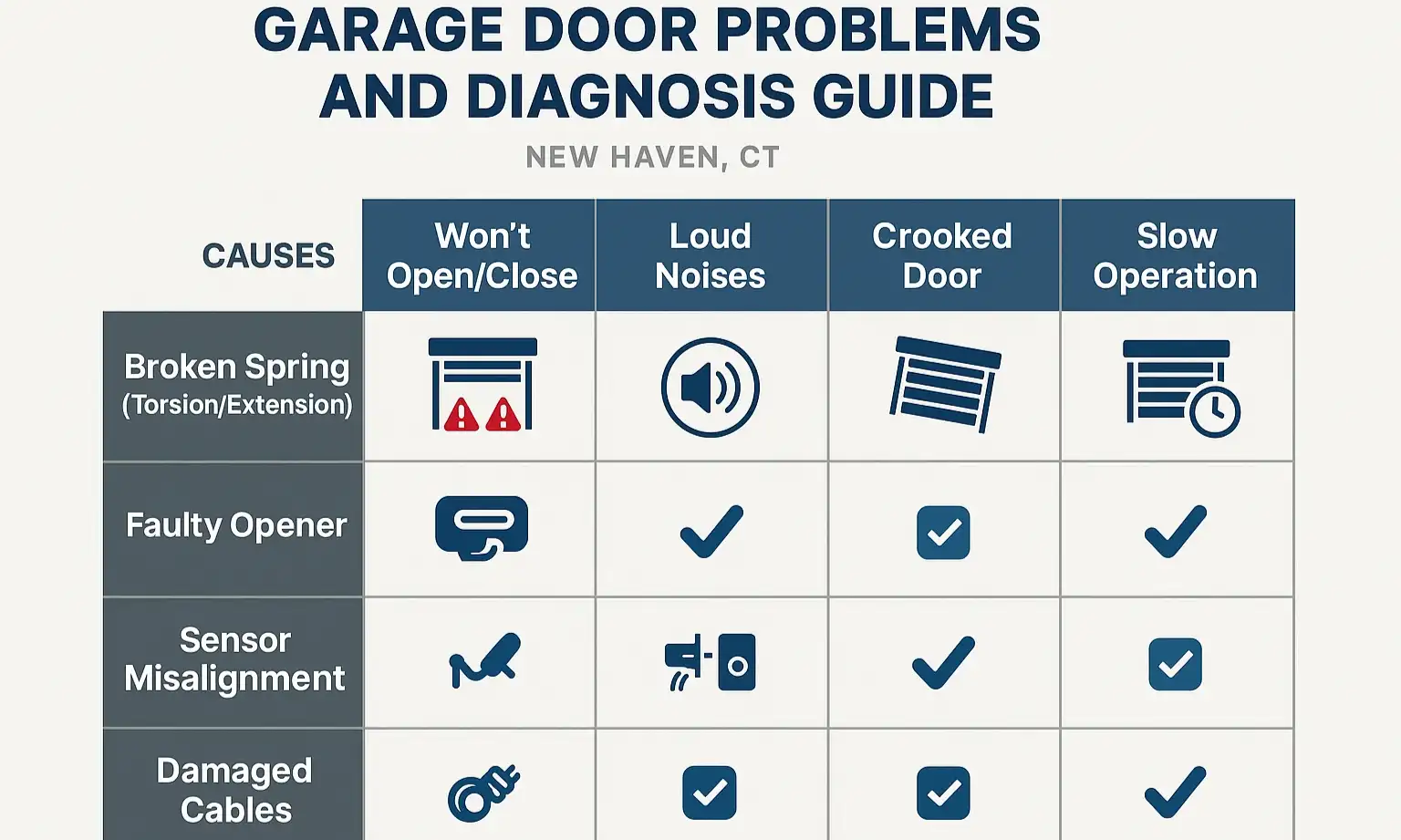
What's Your Garage Door Trying to Tell You? A Symptom Checker
Safety First: Understanding Your Garage Door's Anatomy
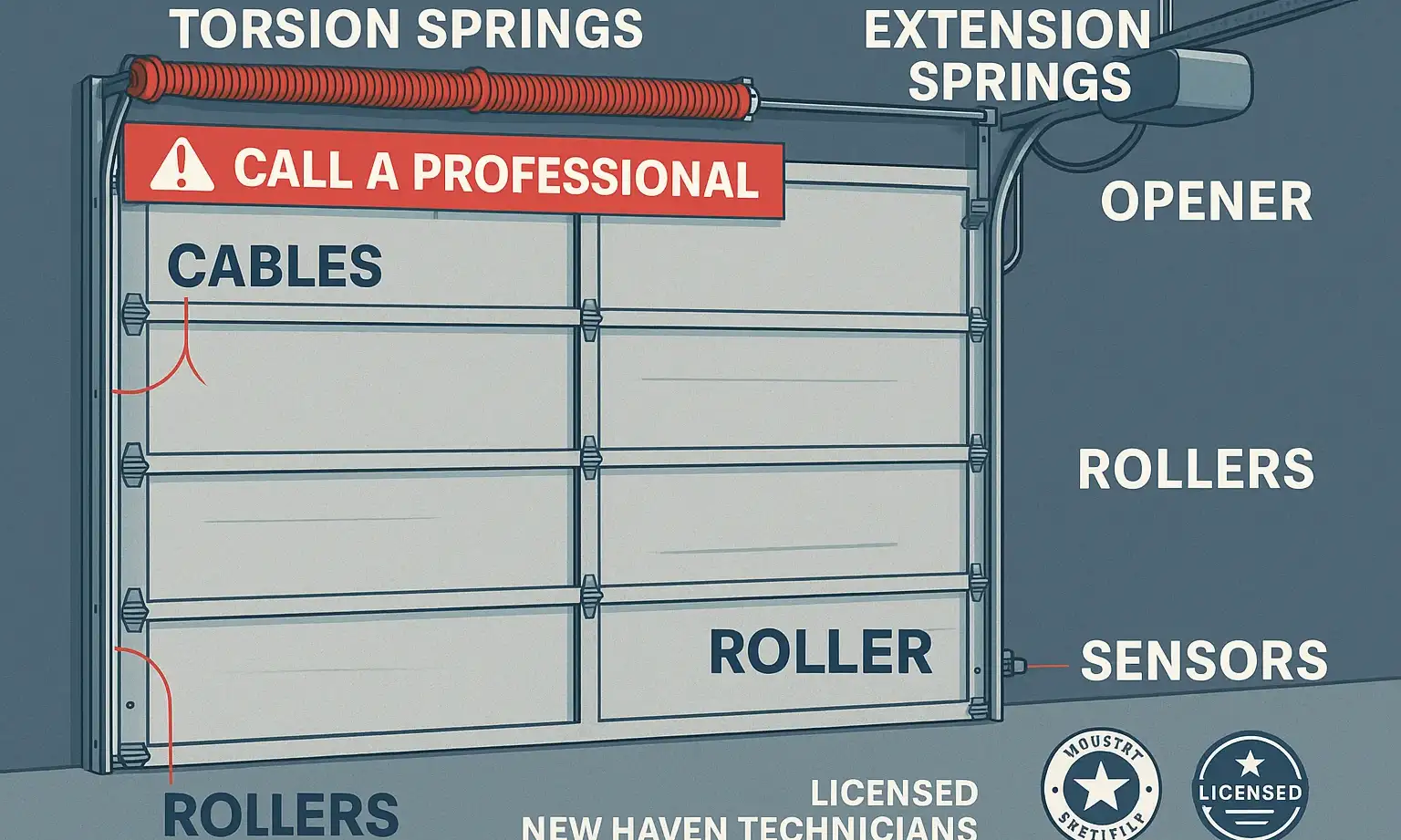
The Danger Zone: Springs and Cables
- Torsion Springs: These are mounted on a metal bar above the garage door opening. They are wound incredibly tight and are the most common type on modern doors. Never attempt to adjust or remove these yourself. A sudden release of energy can be destructive and even fatal.
- Extension Springs: These are found on either side of the door, running parallel to the horizontal tracks. While slightly less dangerous than torsion springs, they still carry enough tension to cause serious injury if they snap.
Simple & Safe DIY Fixes (The 10-Minute Triage)
1. The Safety Sensor Check
- Clear away any cobwebs, dust, or obstructions.
- Gently wipe the lenses with a soft cloth.
- Check if the sensors have been bumped out of alignment. Loosen the wingnut, adjust until the lights are solid, and retighten.
2. The Lubrication Lifesaver
- What to do: Use a silicone or lithium-based garage door lubricant (avoid WD-40, which can attract dust).
- The Fix: With the door closed, spray all the moving parts: the rollers, hinges, and springs. Then, open and close the door a few times to distribute the lubricant.
- Tool-O-Meter: Easy | Tools: Garage door lubricant, rag | Time: 10 minutes
3. The Remote Control Reset
- What to do: If your remote isn't working, the first step is to replace the battery.
- The Fix: If a new battery doesn't work, try reprogramming the remote. Check your opener's manual for instructions—it usually involves pressing a "Learn" button on the motor unit. If it still doesn't work, you may need a garage door opener repair specialist to diagnose an issue with the logic board.
- Tool-O-Meter: Easy | Tools: New battery, step ladder | Time: 5 minutes
Red Flags: When to Immediately Call a Professional
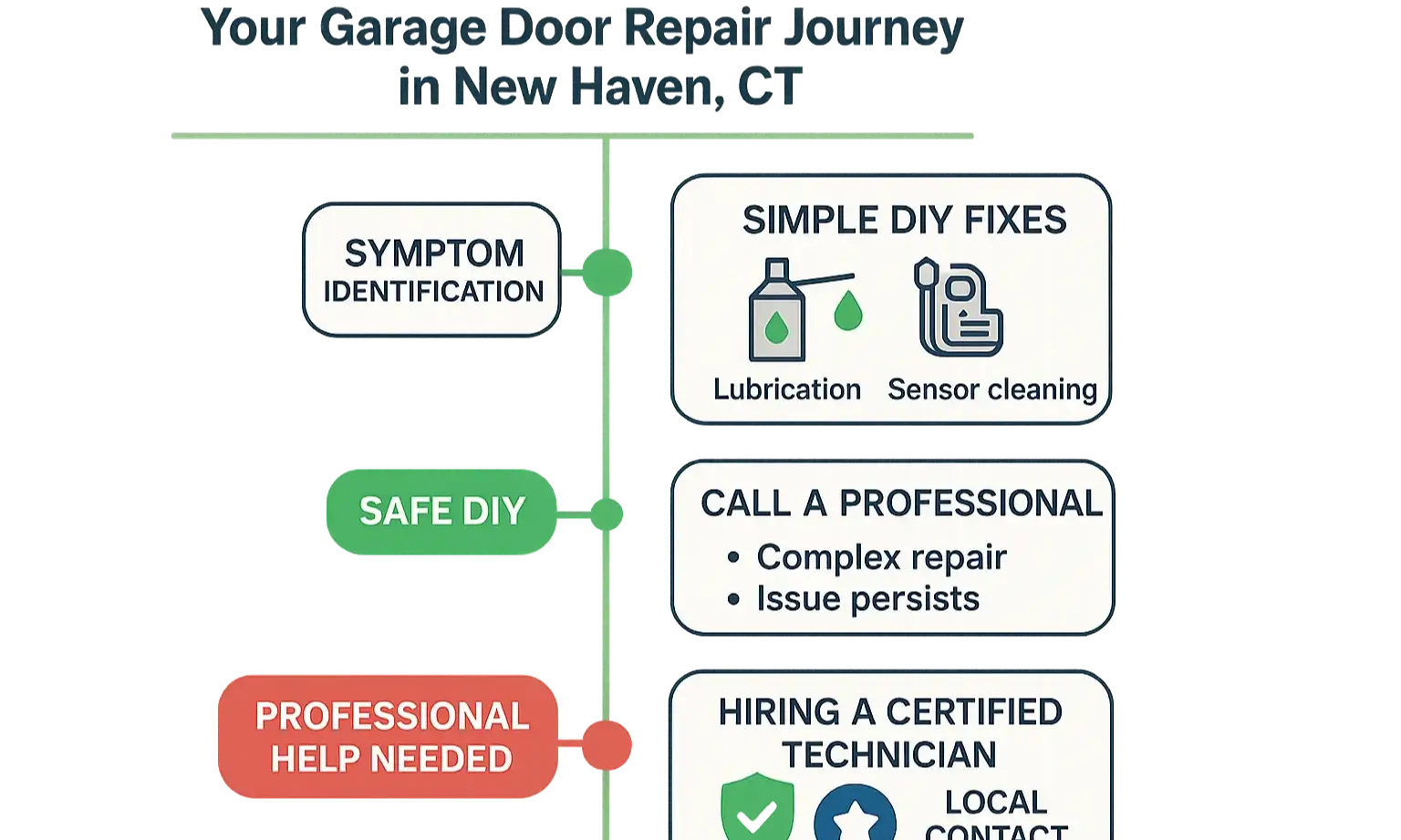
- Broken Springs: As mentioned, this is the #1 non-negotiable. The stored energy in a spring is immense.
- Snapped or Frayed Cables: Cables are under the same tension as the springs. A snap can cause the door to crash down.
- Door is Off-Track: A door that has come out of its tracks is dangerously unstable. Trying to force it back can cause multiple panels to collapse.
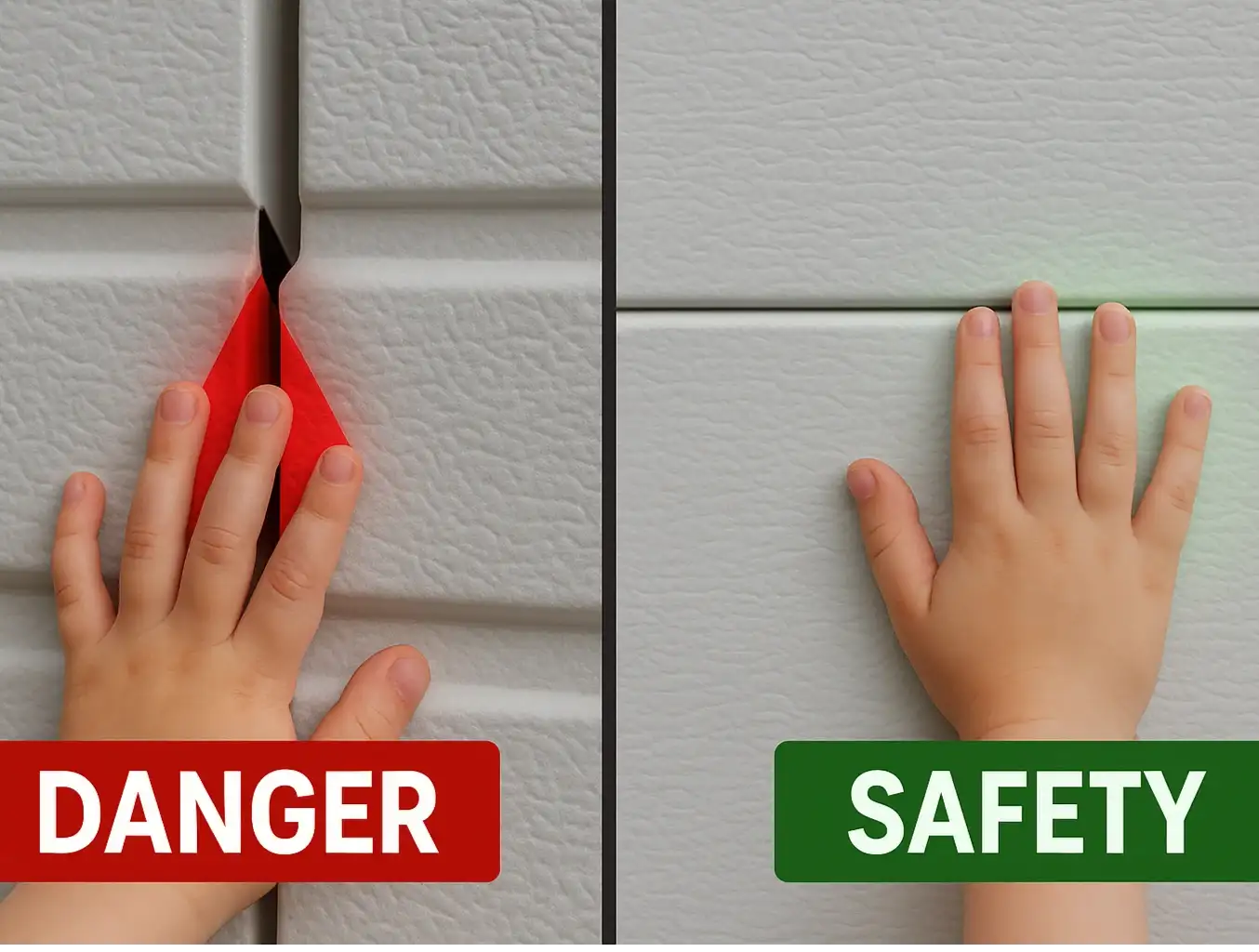
- Damaged or Bent Panels: A bent panel compromises the structural integrity of the entire door, putting strain on all other components.
- The Door is Crooked or Sagging When Moving: This indicates a serious imbalance, likely due to a failing spring or cable on one side.
Need more information?
Get a free quote
Frequently Asked Questions
Is it safe to repair my own garage door?
How often should my garage door be serviced?
My garage door is old. Should I repair or replace it?
- The repair cost is more than 50% of the cost of a new door.
- You have multiple damaged panels.
- The door lacks modern safety features like auto-reverse sensors.
- You're looking to improve your home's curb appeal and energy efficiency.
What's the difference between a chain drive and a belt drive opener?
What is a smart garage door opener?
Your Next Step to a Safe and Secure Garage
You may also like