Garage Door Lock Frozen: A 5-Minute Guide to Safely Getting In
Published: Apr 2, 2026
That sinking feeling is unmistakable. It’s freezing outside, you’re in a hurry, and your garage door is completely, stubbornly stuck. You turn the key, and it won’t budge. You press the remote, and nothing happens. The first instinct is to force it—to jam the key harder or hit the opener button again and again.
Please don’t.
Forcing a frozen garage door is one of the fastest ways to cause expensive damage, from a broken lock to a stripped opener gear. The good news is that what seems like a major problem is often one of three common cold-weather issues, each with a safe, simple solution. This guide will help you figure out exactly what’s wrong and how to fix it without damaging your door.
The 2-Minute Triage: What's Really Wrong with Your Frozen Garage Door?
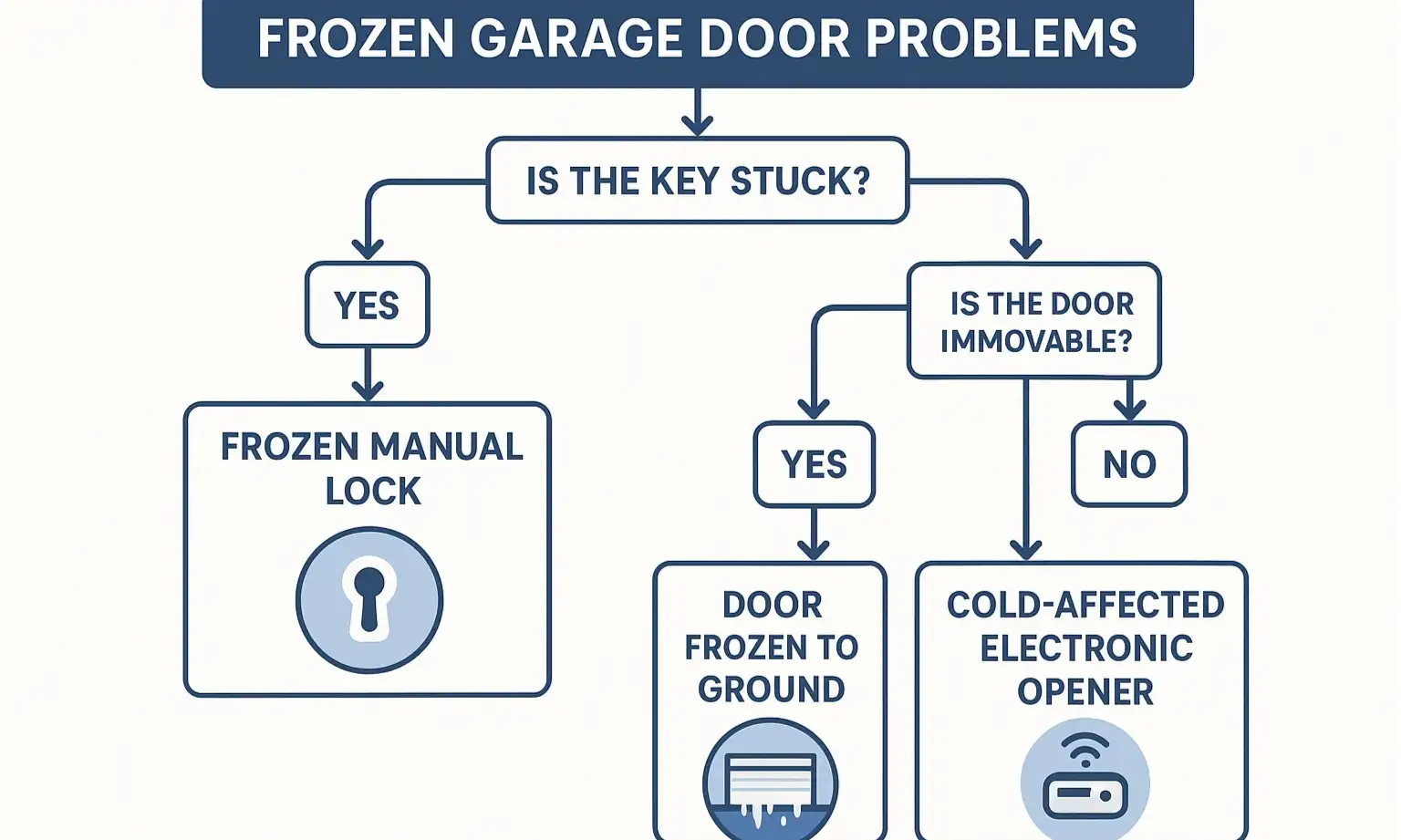
Path A: How to Safely Unfreeze a Manual Garage Door Lock
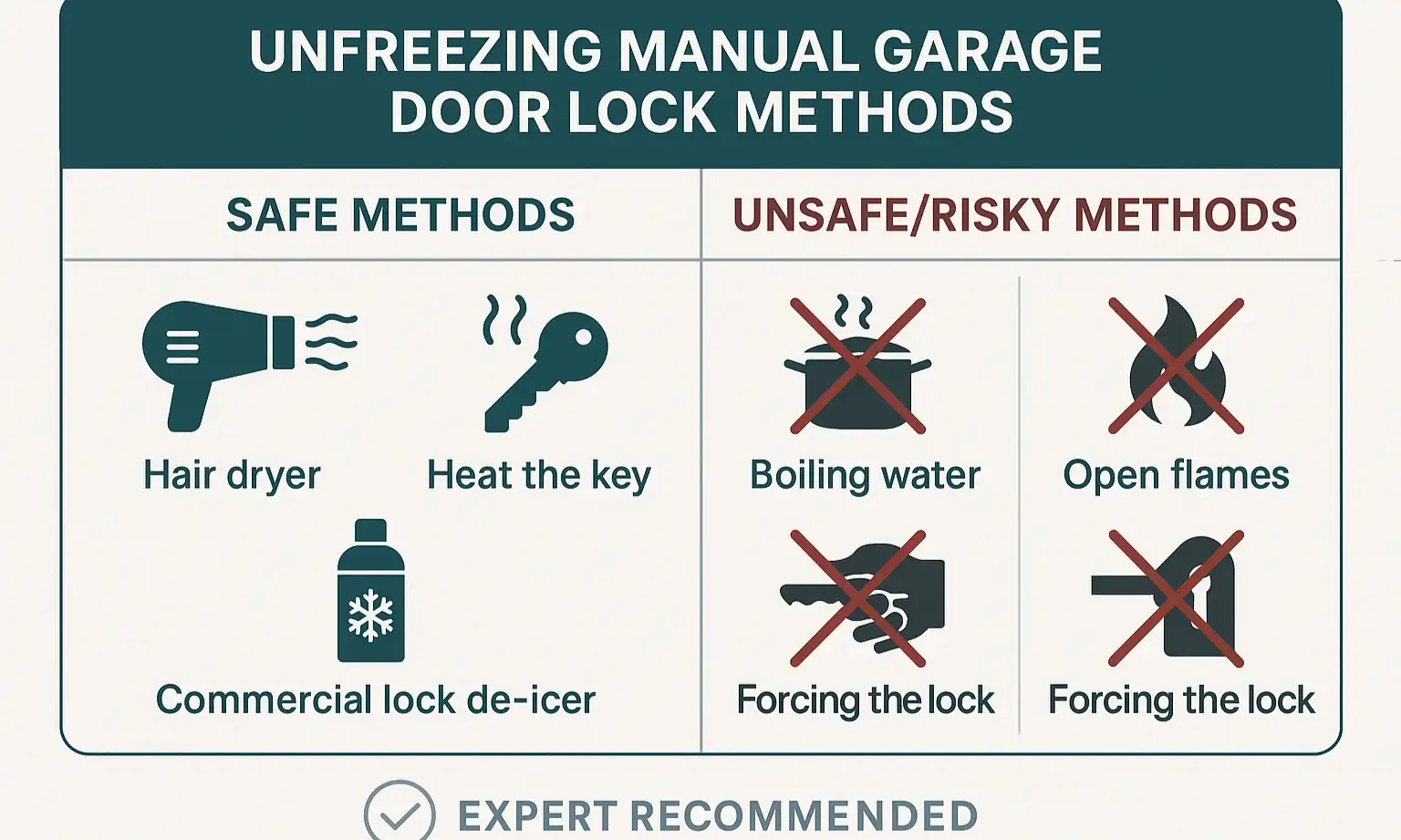
Safe Thawing Methods for a Manual Lock
- Use a Commercial Lock De-Icer: This is the safest and most effective method. These products contain alcohol-based solutions that melt ice quickly without harming the lock’s internal mechanisms. Keep a can in your car or just inside your home for easy access.
- Heat Your Key (Carefully): Hold the metal part of your key with a pair of pliers or thick gloves and warm it with a lighter or match for 5-10 seconds. The key should be warm, not red-hot. Gently insert the warm key into the lock and hold it there. You may need to repeat this a few times as the key transfers its heat to the frozen tumblers.
- Use a Hairdryer or Heat Gun: Aim a hairdryer at the lock on a low-to-medium setting. Keep it moving to distribute the heat evenly and prevent overheating any single spot. This method takes a few minutes but is very effective.
Path B: Your Garage Door Is Frozen Shut to the Ground
How to Safely Break the Ice Seal
- Pour Lukewarm Water: Boiling water is a bad idea—it can damage the seal and will quickly refreeze, potentially making the problem worse. Instead, pour a line of lukewarm or cool tap water along the exterior base of the door. This will gently melt the ice bond.
- Gentle Chipping: If the ice is thick, use a flat shovel or ice scraper to gently chip away at the ice buildup on the outside. Be careful not to strike the door or the weather stripping itself.
- Melt It from Inside: If you have access to the garage from another entrance, you can place a space heater or a heat lamp inside, pointed towards the bottom of the door. This will slowly and safely thaw the area.
Path C: Troubleshooting a Cold-Affected Electronic Opener
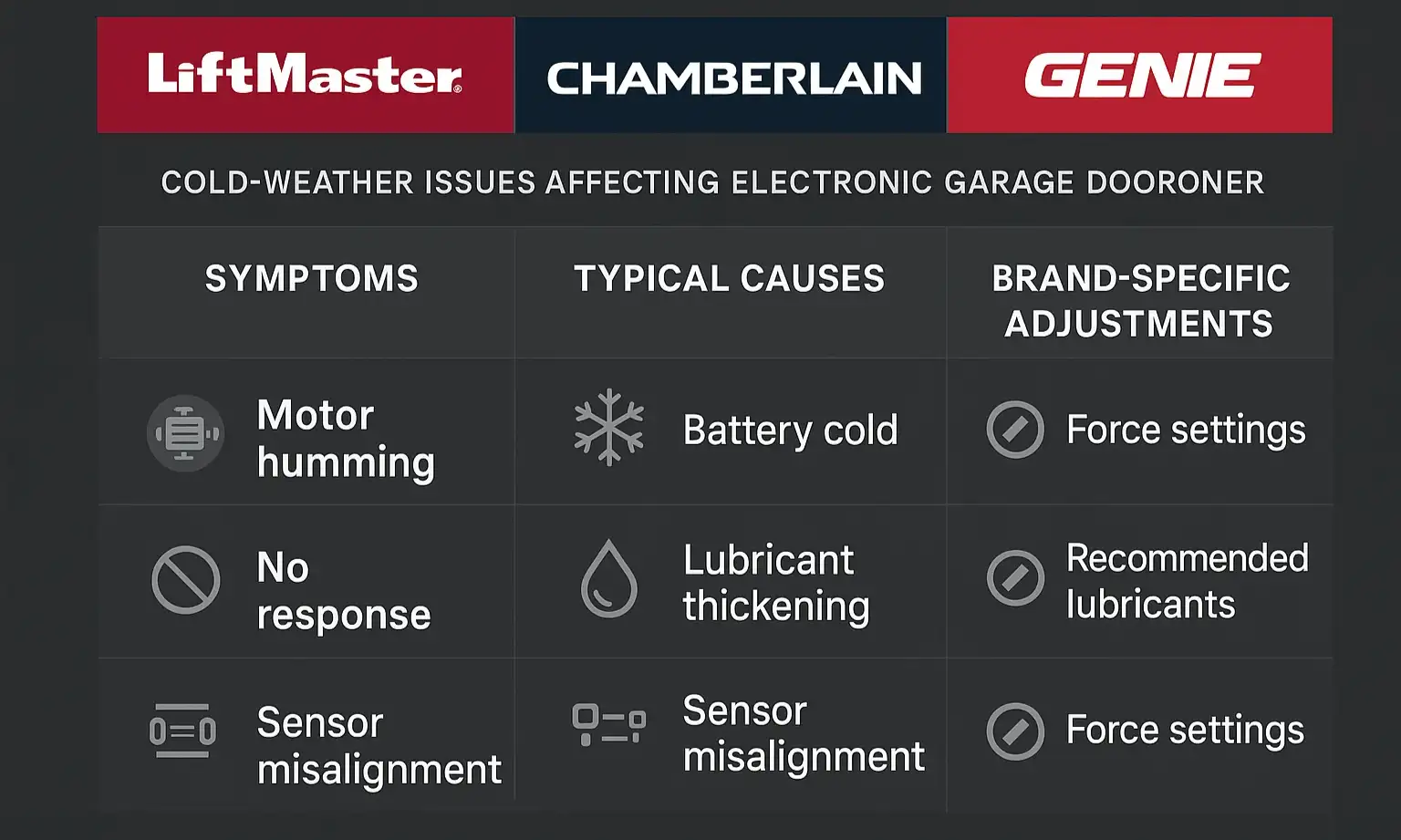
Cold Weather Opener Checklist
- Check the Remote and Keypad Batteries: Cold weather drains battery life. This is often the simplest fix. Try opening the door from the wired wall button inside the garage. If that works, you just need new batteries for your remotes.
- Wipe Your Safety Sensors: The small sensor "eyes" at the base of your door tracks can get frosted over or blocked by snow and ice, preventing the door from operating. Wipe them clean with a soft cloth.
- Listen to the Motor: If the motor hums but doesn't move the door, the lubricant on the drive screw or chain may have thickened. Disengage the opener using the emergency release cord and try lifting the door manually. If it moves smoothly, the problem is likely thickened grease in the opener unit itself.
- For Brand-Specific Issues: Different brands have unique quirks in the cold. If you need more detailed guidance, a dedicated LiftMaster garage door opener troubleshooting guide can provide model-specific advice.
The Ultimate Winter-Proofing Checklist: From Quick Fix to Full Prevention
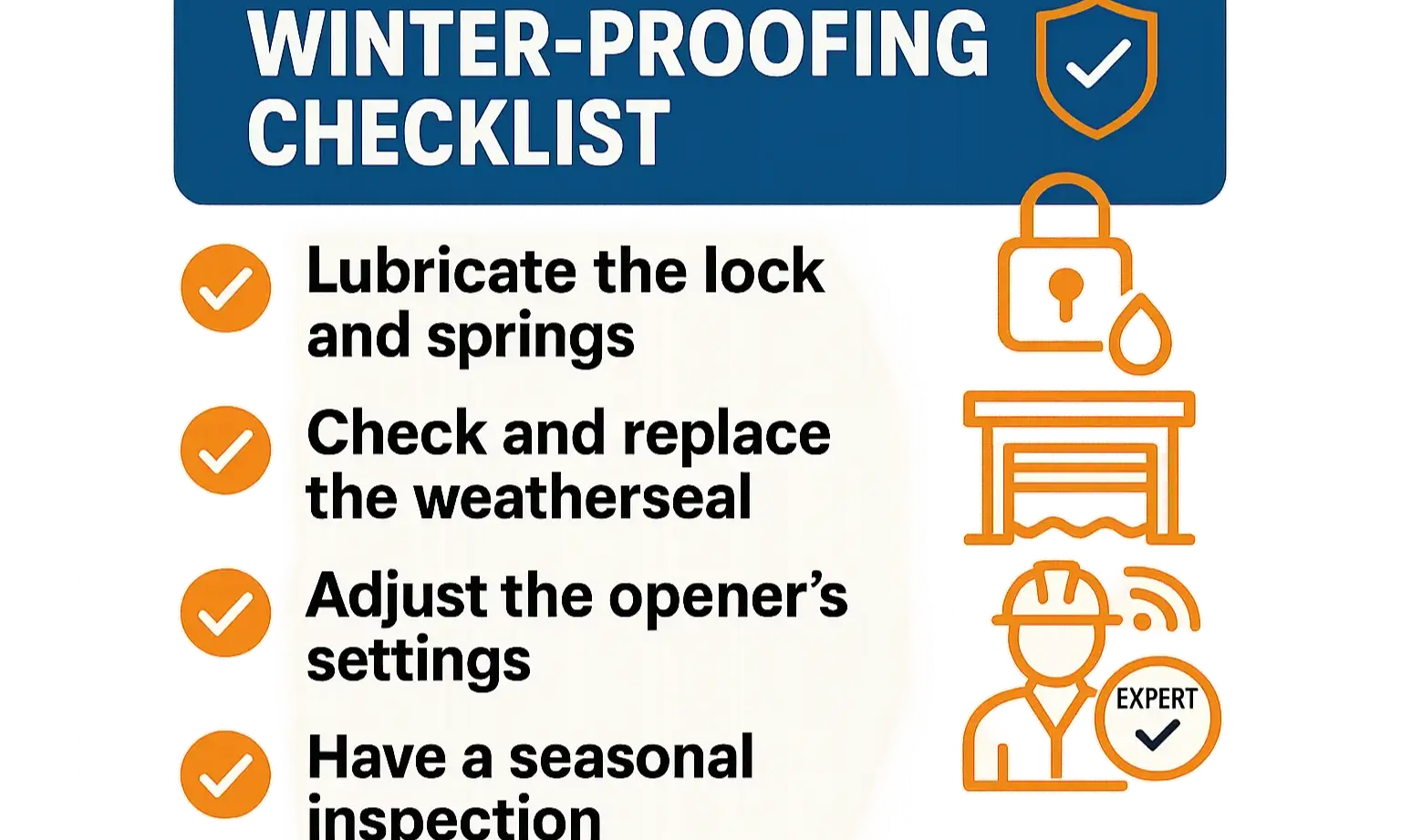
- Lubricate All Moving Parts: The number one rule of winter prep is proper lubrication. Use a high-quality, silicone- or lithium-based garage door lubricant on all hinges, rollers, and springs. Do not use WD-40, as it can attract dust and gum up in cold temperatures.
- Clean and Check the Weather Seal: Wipe down the rubber weather seal at the bottom of the door. Check for any cracks or tears that could let water seep in and freeze. A healthy seal is your best defense against the door freezing to the ground.
- Ensure Proper Drainage: Make sure the ground just outside your garage door slopes slightly away from the door. This prevents water from rain and melting snow from pooling at the threshold where it can freeze.
- Test Your Opener Settings: Before the first deep freeze, run your opener and make sure it's operating smoothly. Some models have force adjustment settings that may need a slight tweak for cold weather operation, but consult your owner's manual before making changes.
Need more information?
Get a free quote
FAQ: Your Cold Weather Garage Door Questions Answered
Can I pour boiling water on a frozen lock?
Why does my garage keypad stop working when it gets cold?
Is it really that bad to keep trying the opener if the door is frozen shut?
When to Call in the Experts
You may also like