Maximizing Overhead Space: A Guide to Vertical Lift Garage Doors
Published: Jan 13, 2026
It’s a familiar dream for any homeowner with a passion project. You picture it perfectly: your classic car raised on a two-post lift, giving you ample room to work underneath. Or maybe it’s a workshop with ceiling-high shelves for lumber and tools, finally organized and accessible. You look at the empty space in your garage, see the potential, and then your eyes drift upward… right to the horizontal tracks of your garage door, hanging precisely where your dream is supposed to be.
That low-hanging garage door is the unsung villain of workshop aspirations. It’s the single biggest obstacle between you and a truly functional, high-clearance space.
But what if you could reclaim that space? What if your garage door could open by moving straight up the wall, disappearing near the ceiling and leaving the entire overhead area free and clear? This isn't a futuristic concept; it's a practical and increasingly popular solution for hobbyists and professionals alike. This guide is your first step—transforming that frustrating limitation into a world of new possibilities.
The Foundation: The 3 Garage Door Track Systems Explained
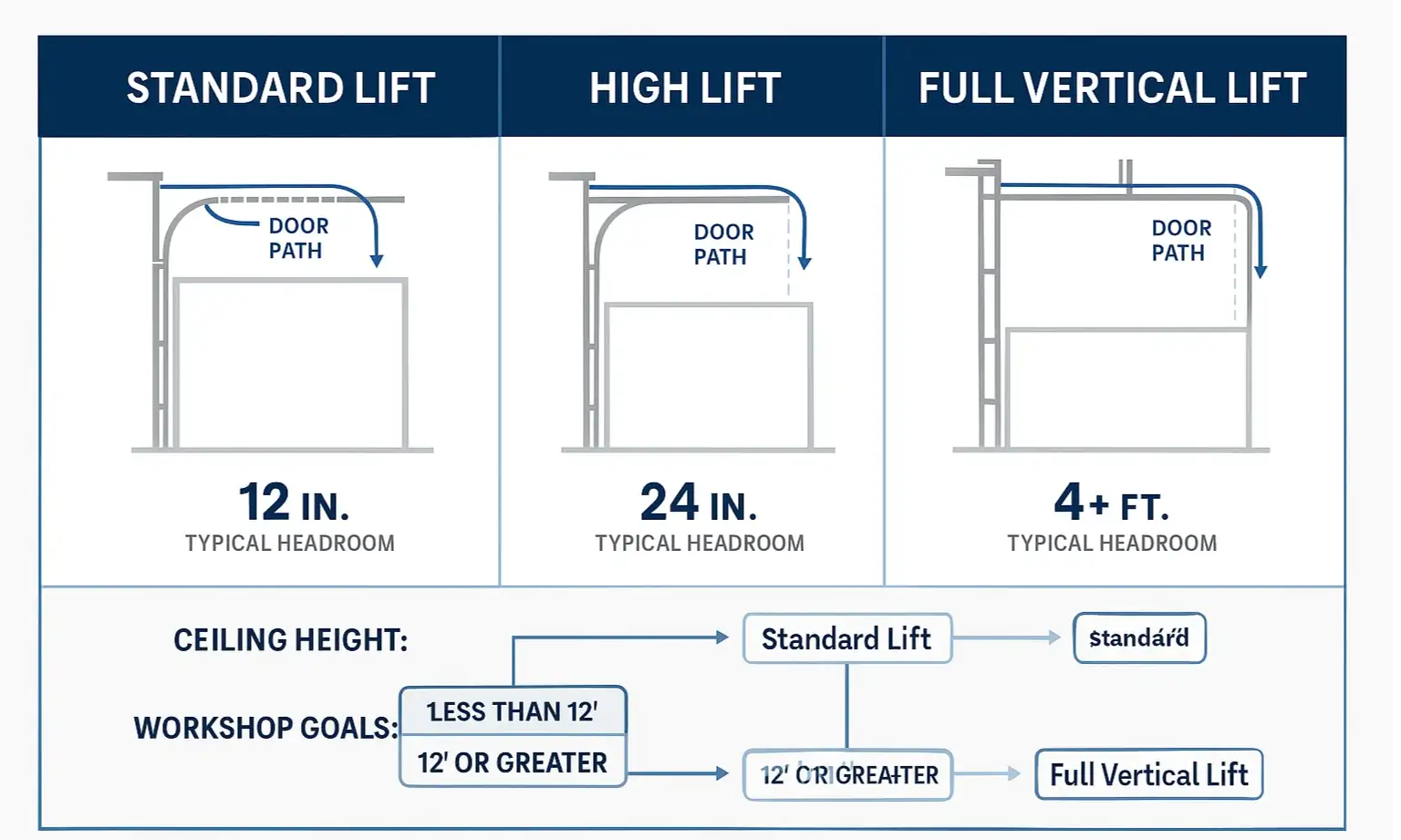
- Standard Lift: This is what 90% of homes have. The door rises a few inches vertically before the tracks immediately curve, sending the door to rest horizontally just below the ceiling. It’s efficient for daily use but terrible for overhead clearance.
- High Lift: This is a hybrid solution. The door travels vertically up the wall for a specific distance—past the normal curve point—before it turns back horizontally. A high lift garage door is a fantastic upgrade that can reclaim several feet of overhead space, often enough to clear the roof of a car on a lift.
- Full Vertical Lift: This system eliminates the horizontal tracks entirely. The garage door opens by moving straight up the wall, parking parallel to it near the ceiling. A vertical lift garage door offers the absolute maximum clearance possible, making it the gold standard for workshops with car lifts or tall storage.
- For a high-lift conversion, you need enough headroom to accommodate the height of the door plus the track radius (usually 12-15 inches) and opener.
- For a full vertical lift, you need a ceiling height that is at least twice the height of your garage door, plus a little extra for the components.
The Blueprint: Your First Step is a Tape Measure, Not a Wrench
- Headroom (or Lintel): This is the most important measurement. It's the distance from the top of your garage door opening to the ceiling (or the lowest obstruction, like a beam or pipe). This number will largely dictate whether you can do a high-lift or full vertical-lift conversion.
- Sideroom: The space on either side of the garage door opening. You'll need about 3.75 inches for a standard system, but 5-6 inches is safer for vertical lift systems that use different cable drums.
- Backroom: The depth of your garage, measured from the door opening to the back wall. For a high-lift system, you still need enough space for the horizontal tracks to run.
The Toolkit: Essential Components for a Safe Conversion
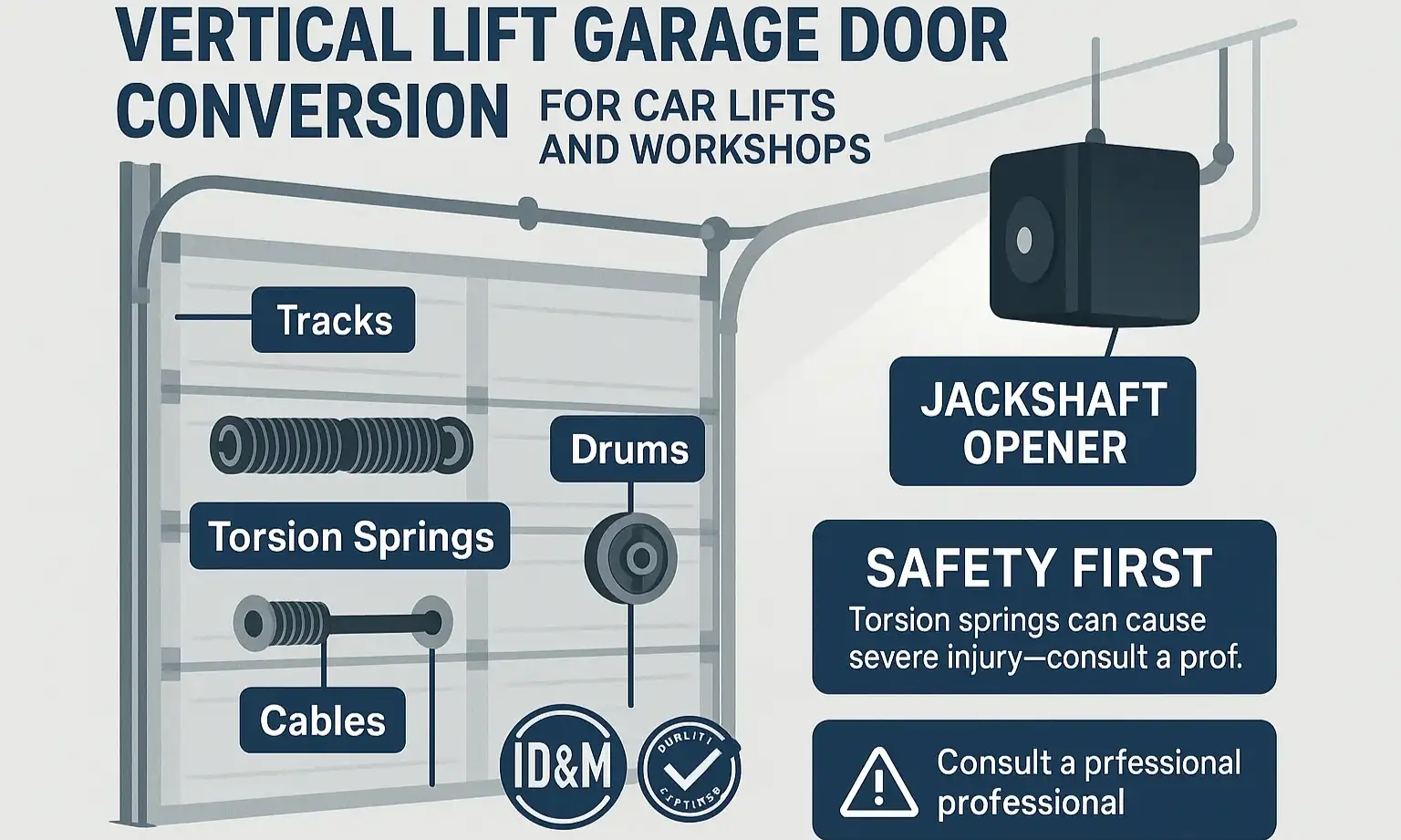
- New Vertical and Horizontal Tracks: The foundation of the conversion is a new, taller set of tracks that guide the door along its new path. A proper garage door track installation is critical for smooth, safe operation.
- High-Lift Torsion Springs and Drums: You cannot reuse your old springs. The new system changes the door's balance points, requiring new springs calibrated to the door's weight and lift height. The drums that the cables wind onto are also larger.
- Longer Lifting Cables: Since the door is traveling a greater vertical distance, you'll need longer, correctly rated steel cables.
- A Jackshaft Opener: Your old ceiling-mounted chain or belt drive opener is now directly in the way. The standard solution is a jackshaft opener, also known as a wall mount garage door opener. This compact motor mounts on the wall next to the door, turning the torsion bar directly. It’s quiet, reliable, and the key to a completely clear ceiling.
The Crossroads: DIY vs. Hiring a Professional
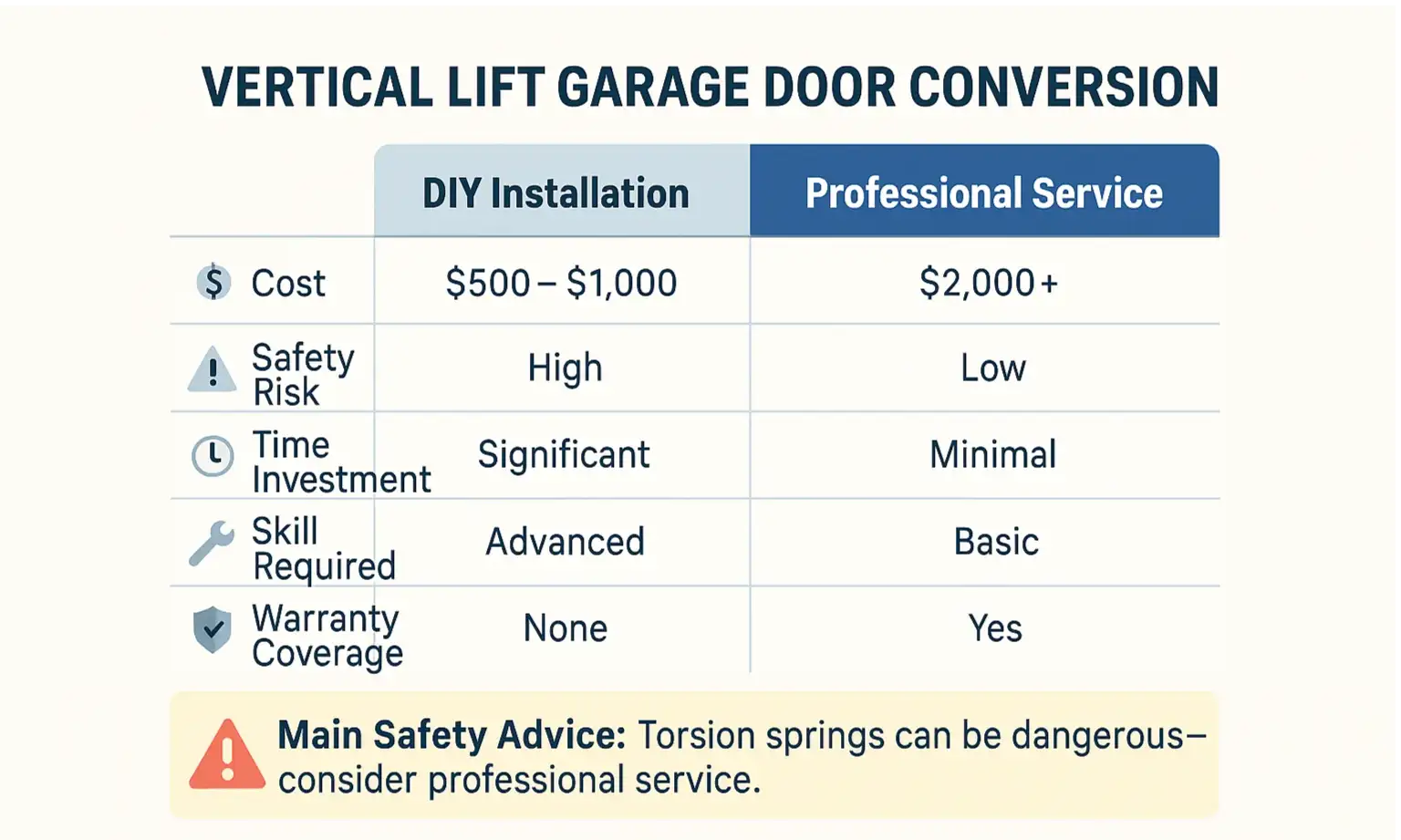
A Crucial Word on Safety
The Payoff: Your Actionable Next Steps
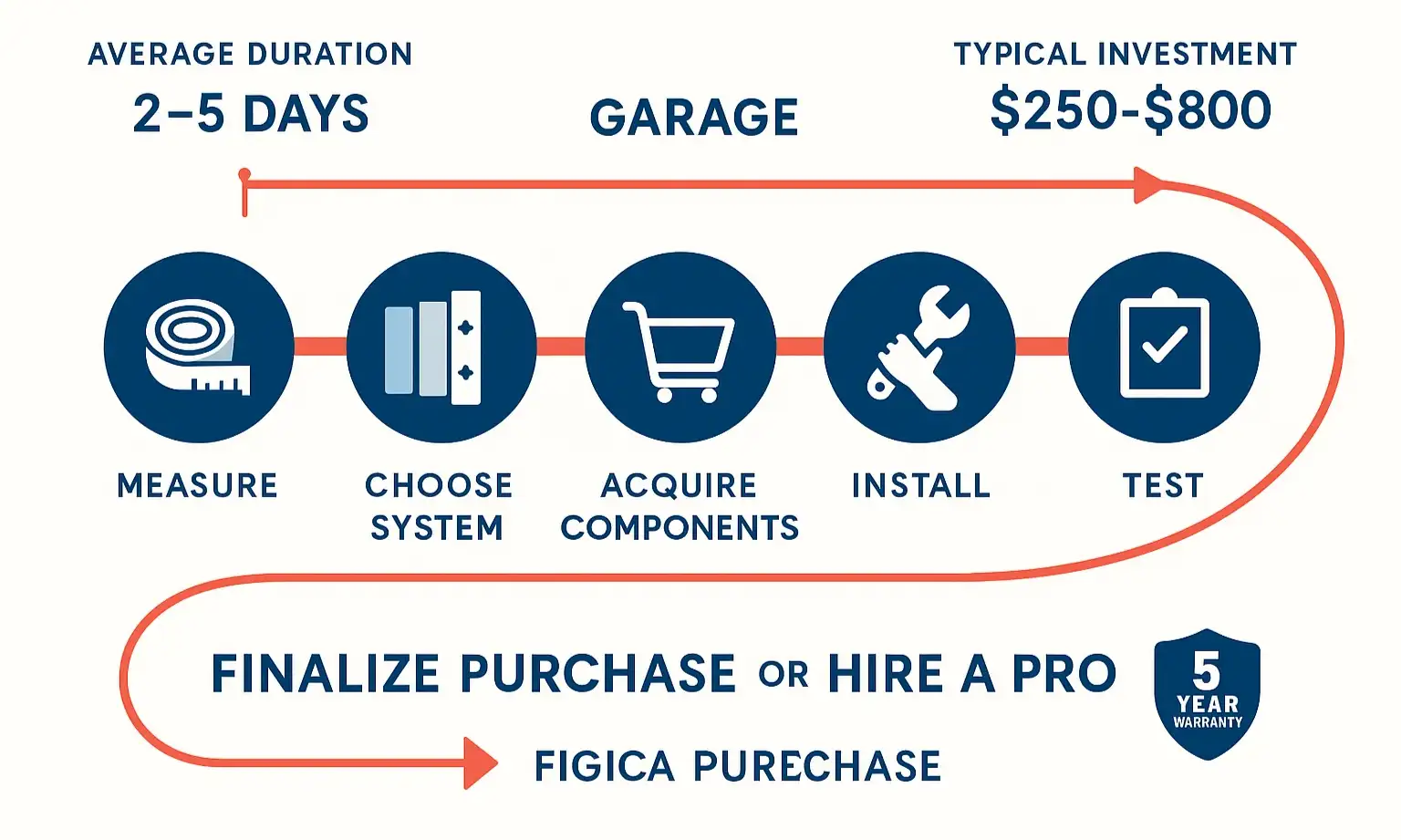
- Confirm Your Goal: Are you installing a specific car lift? Note its required height clearance. Are you building storage? Plan your shelf layout. Knowing your exact need will define the project's success.
- Measure Your Garage: Take the critical headroom, sideroom, and backroom measurements. This is the non-negotiable first step that determines your options.
- Identify the Right System: Based on your measurements and goals, decide if a high-lift or full vertical-lift system is the best fit.
- Choose Your Path: Honestly assess your skills, tools, and comfort level with the risks. Decide whether a DIY approach or professional installation is the right choice for you and your family's safety.
- Consult an Expert: A quick conversation with a garage door professional can validate your measurements, confirm your plan, and provide a clear quote, giving you the confidence to move forward.
Frequently Asked Questions (FAQ)
You may also like