Vertical Lift vs. High Lift Garage Doors: Which Overhead Solution is Best
Published: Jan 20, 2026
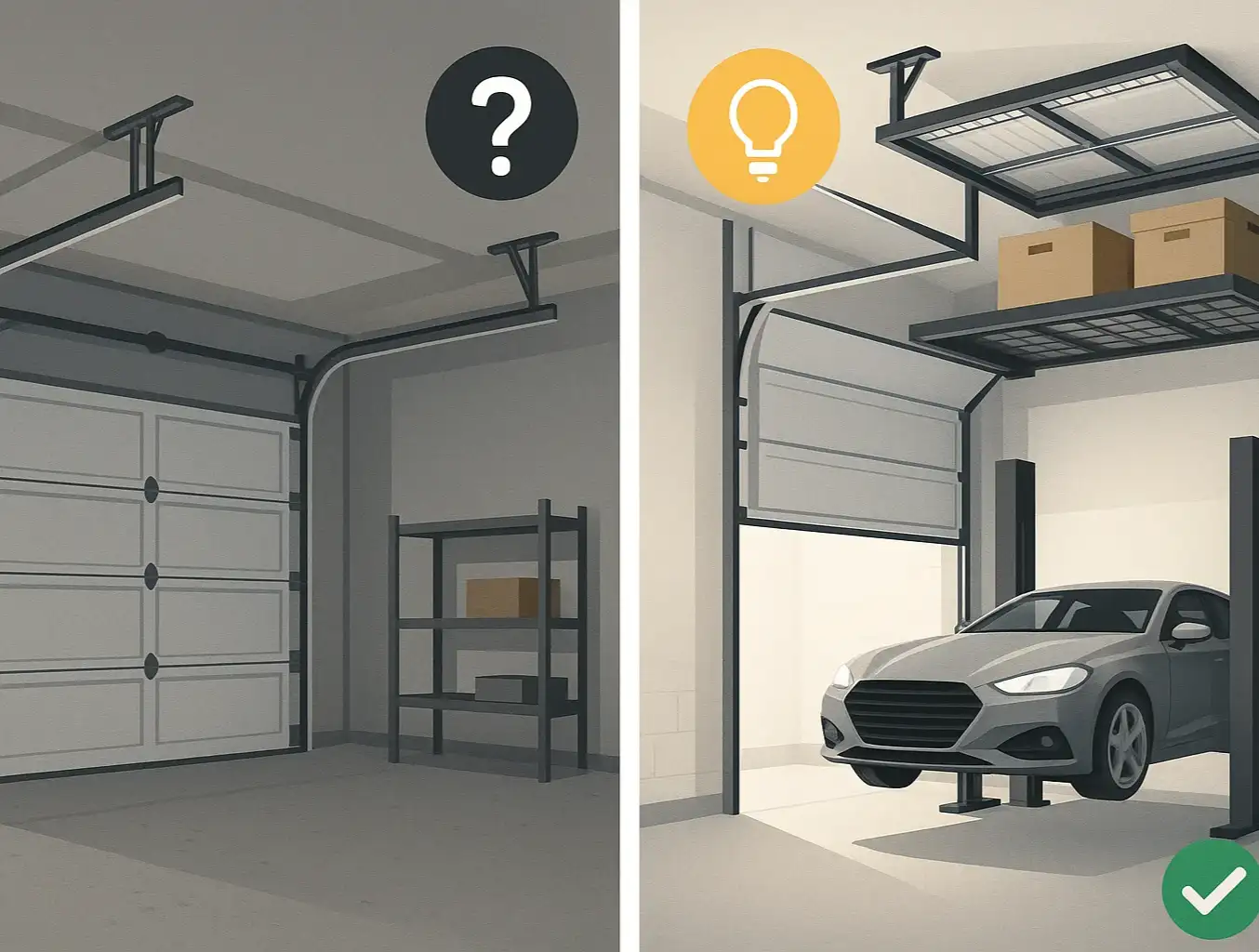
Imagine your garage wasn't just a place to park your car. What if it had the vertical space for a two-post car lift, a loft for your workshop, or floor-to-ceiling storage that finally gets everything off the ground? For many homeowners, this dream is cut short by one thing: the horizontal tracks of a standard garage door.
You park your car, press the button, and the door dutifully retracts, hugging the ceiling and occupying the most valuable real estate in the room. But what if it didn't have to?
This is where specialized lift systems come in. If you've ever wondered how to reclaim that precious overhead space, you've likely come across two terms: high lift and vertical lift. While they sound similar, they solve different problems and have unique requirements. Understanding the difference is the first step toward transforming your garage from a simple box into a high-functioning space.
Foundation: The Three Garage Door Paths Explained in 60 Seconds
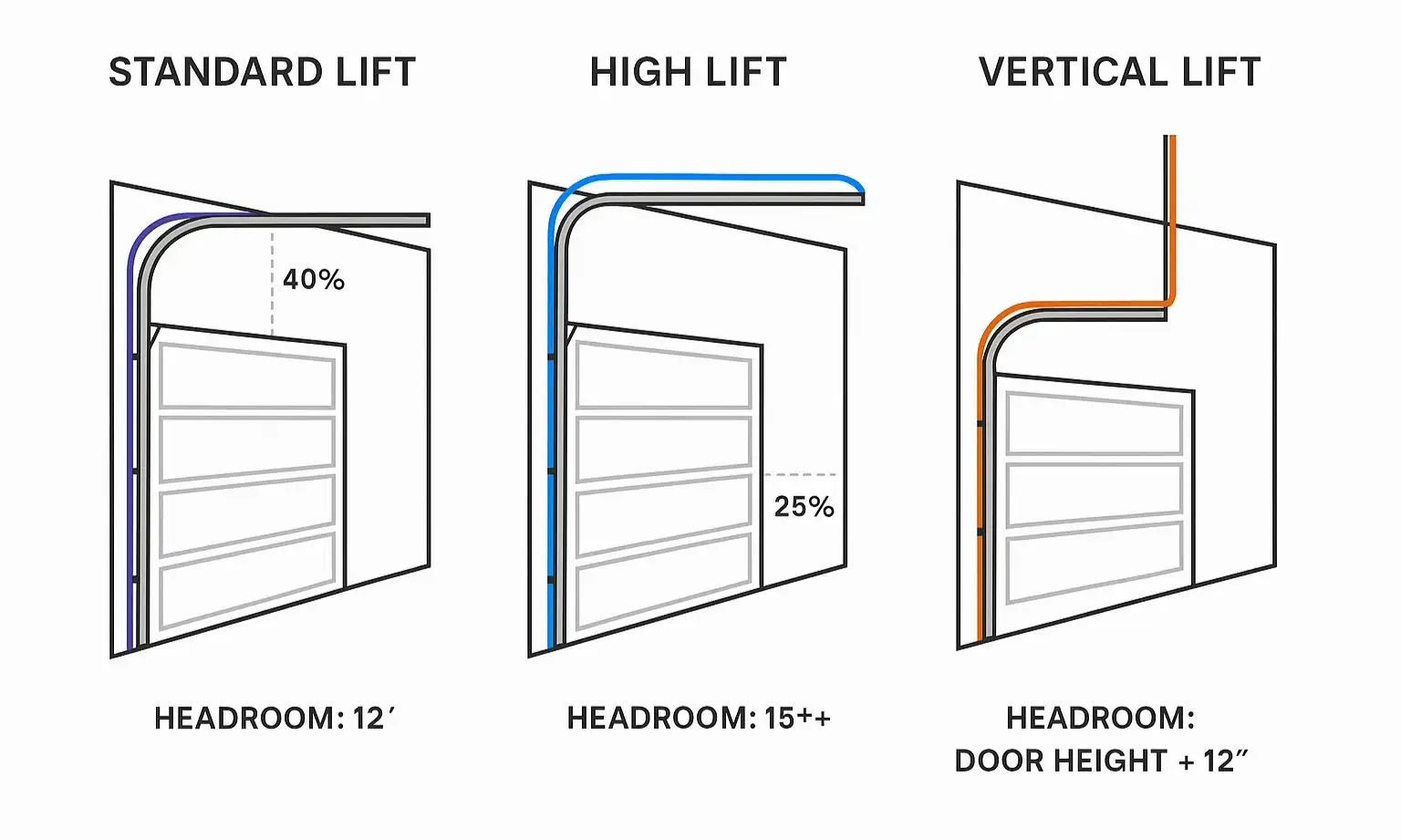
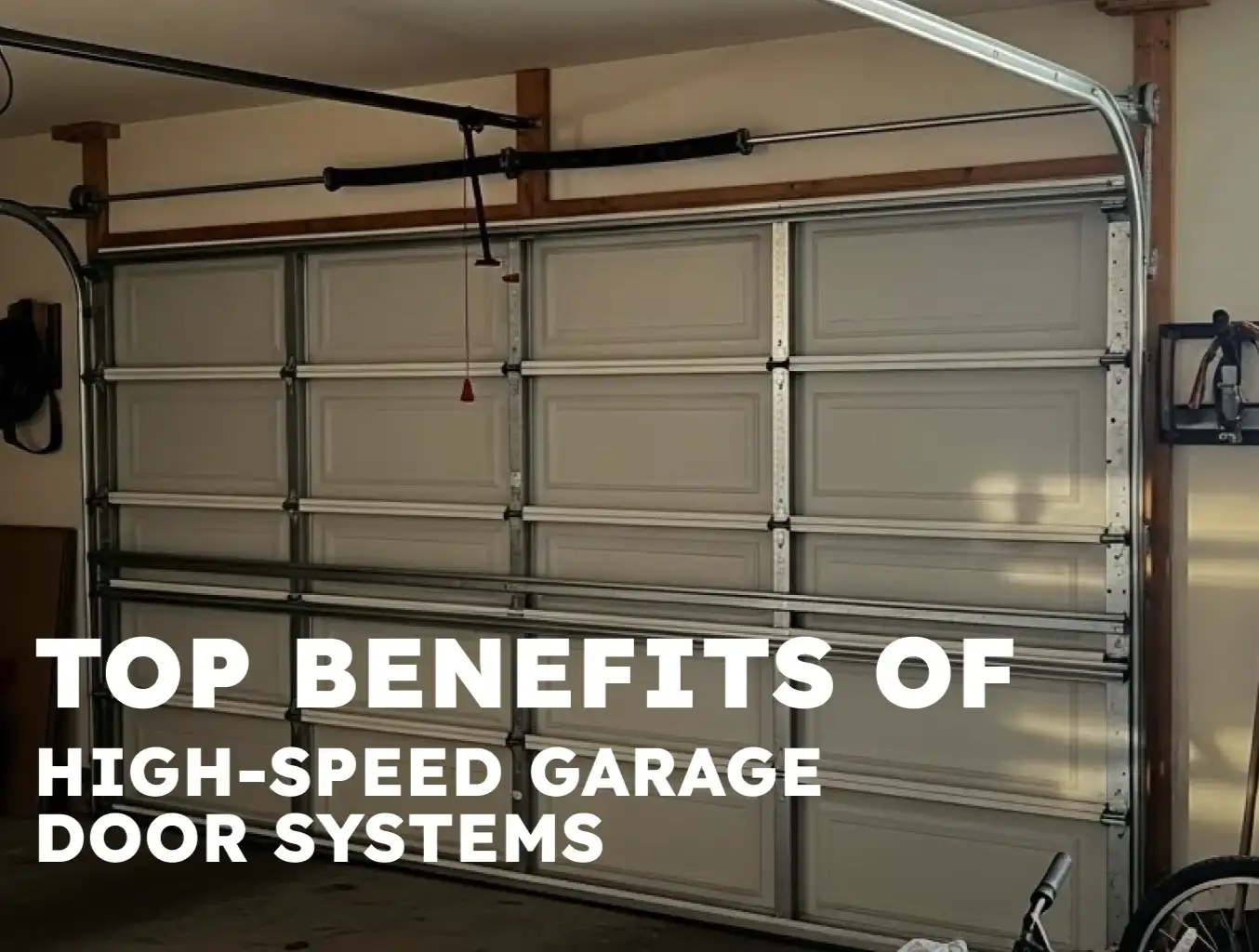
- Standard Lift: This is what 90% of homes have. The door rises a few inches vertically before the top section immediately begins to turn and travel horizontally along the ceiling. It’s efficient but requires significant overhead room above the car.
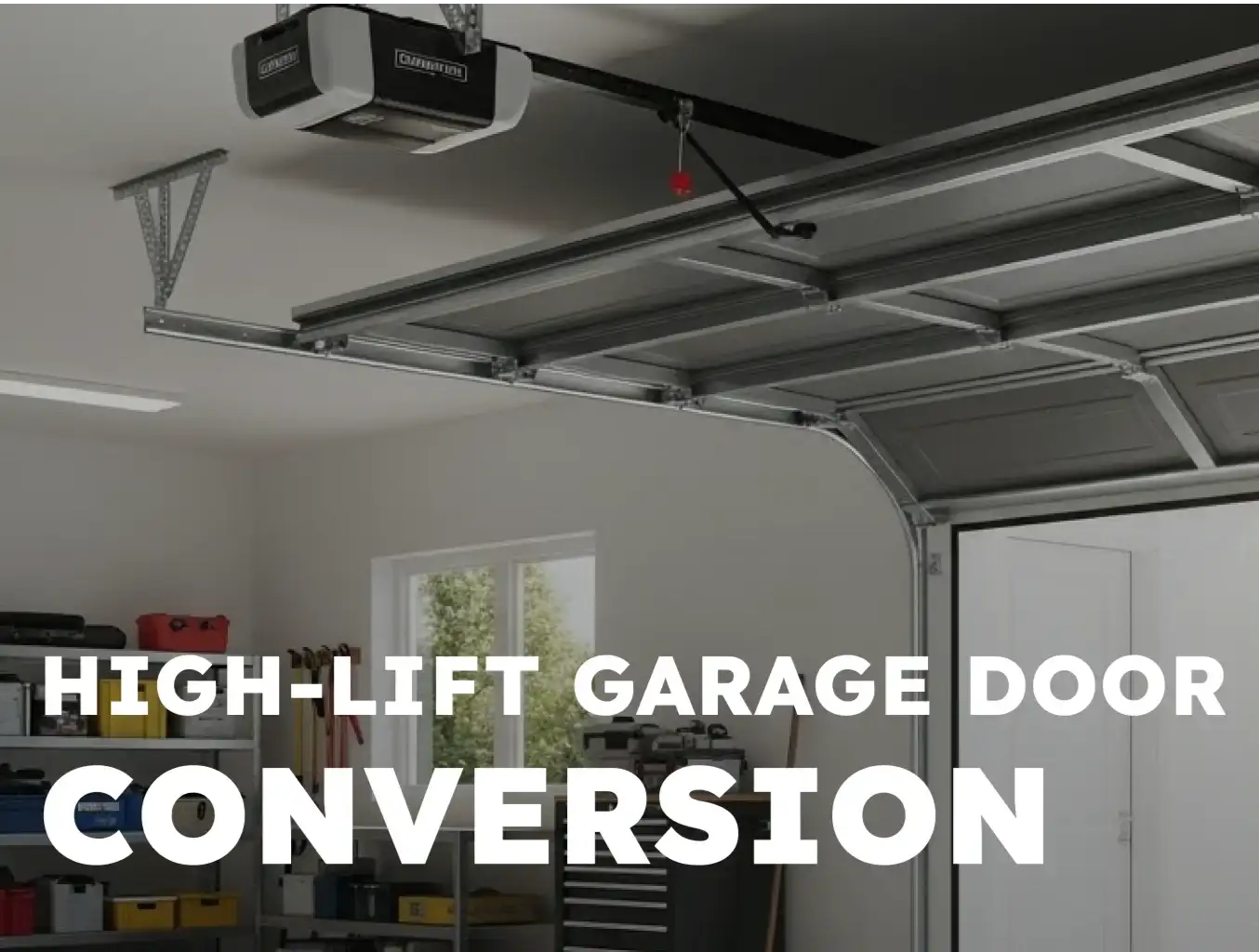
- High Lift: This is a hybrid system. The door travels further up the wall vertically before it makes the turn to run parallel with the ceiling. This "lifts" the horizontal tracks closer to the ceiling, freeing up the space below.
- Vertical Lift: This system eliminates the horizontal turn altogether. The door travels straight up the wall and rests parallel to it when open, completely clearing the overhead space. Think of it like a commercial warehouse door.
Building: Are You a Candidate? The 5-Minute Measurement Guide
- Measure the Door Opening Height (A): With the garage door closed, measure from the floor to the top of the door opening. A standard door is often 7 or 8 feet high.
- Measure the Total Ceiling Height (B): Measure from the garage floor to the ceiling. Be sure to measure to the lowest point if you have any obstructions like rafters, pipes, or storage racks.
- Calculate Your Available Headroom: Simply subtract the door height from the ceiling height.
- Standard Lift: Needs about 12 inches of headroom.
- High Lift: The requirement varies, but you generally need at least 15 inches of headroom plus the amount of "high lift" you want to add.
- Vertical Lift: Requires the most headroom—at least the height of your garage door plus about 12 inches for the system components.
Mastery: High Lift vs. Vertical Lift - The Nitty Gritty
High Lift Garage Doors: The Space Maximizer
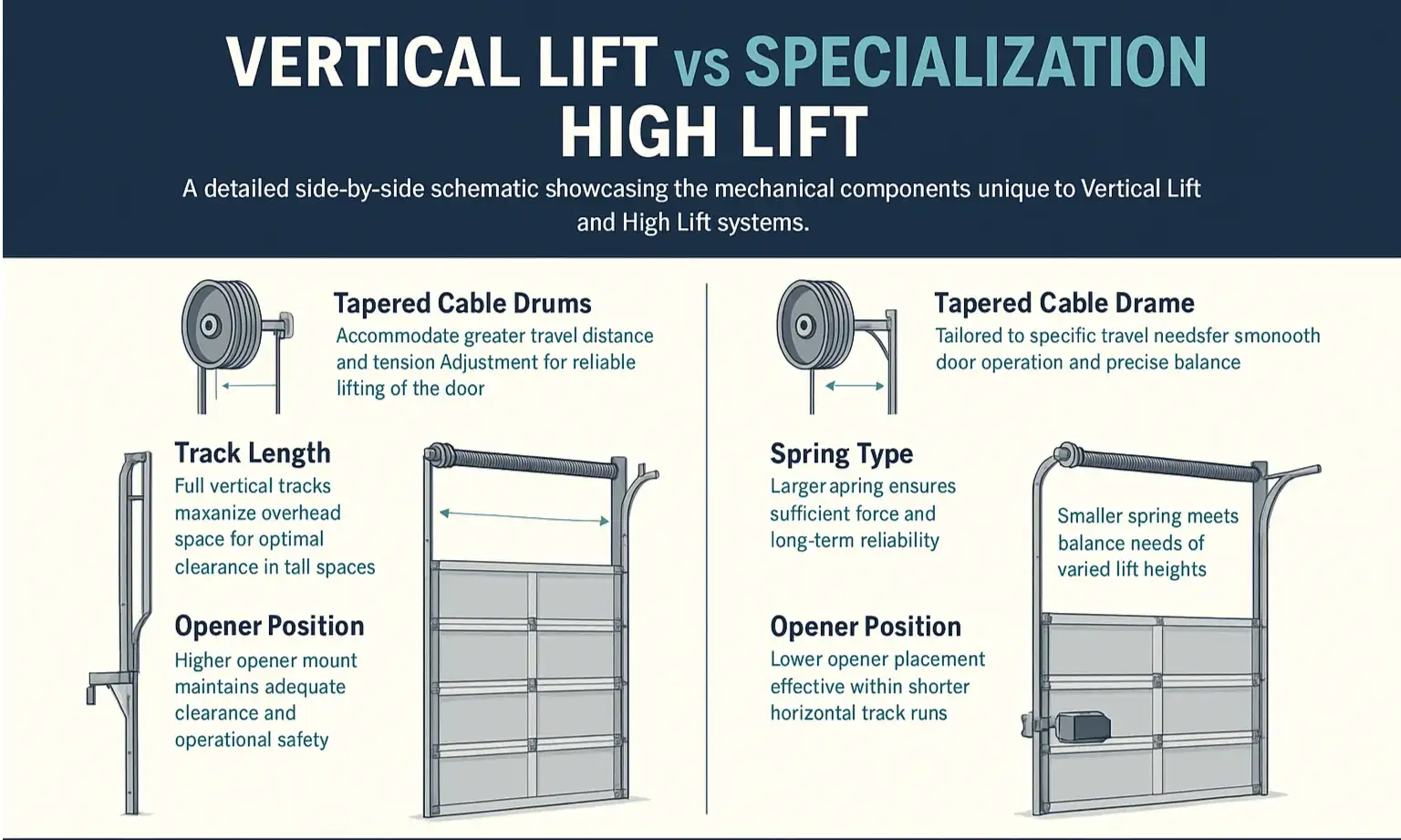
- Tapered Cable Drums: This is the magic component. Unlike standard drums, tapered drums have a varying diameter. As the door opens, the cable winds onto the larger part of the drum when the door is on the vertical track, then transitions to the smaller part as the door moves onto the horizontal track. This ensures the door remains balanced throughout its unique path.
- Springs and Shaft: The entire system is re-engineered. The torsion spring shaft is mounted higher on the wall, and the springs are specifically calibrated to handle the different lifting mechanics. Understanding how a garage door spring works is key to appreciating the complexity here.
- Opener Compatibility: A standard ceiling-mounted opener may still work, but only if the tracks don't get in its way. Most high lift conversions are paired with a wall-mounted jackshaft opener. These openers mount beside the door, leaving the ceiling completely clear and are often considered a quiet garage door opener option.
Vertical Lift Garage Doors: The Commercial Powerhouse
- Extended Vertical Tracks: The tracks run from the floor to the ceiling, guiding the door straight up the wall. A professional garage door track installation is essential for safety and proper function.
- Standard Cable Drums: Because the door doesn't need to transition to a horizontal path, it can use standard, non-tapered cable drums.
- High Torsion Spring Mount: The torsion system is mounted high up on the wall, often right below the ceiling.
- Opener Requirement: A jackshaft opener is mandatory for a true vertical lift system.
Need more information?
Get a free quote
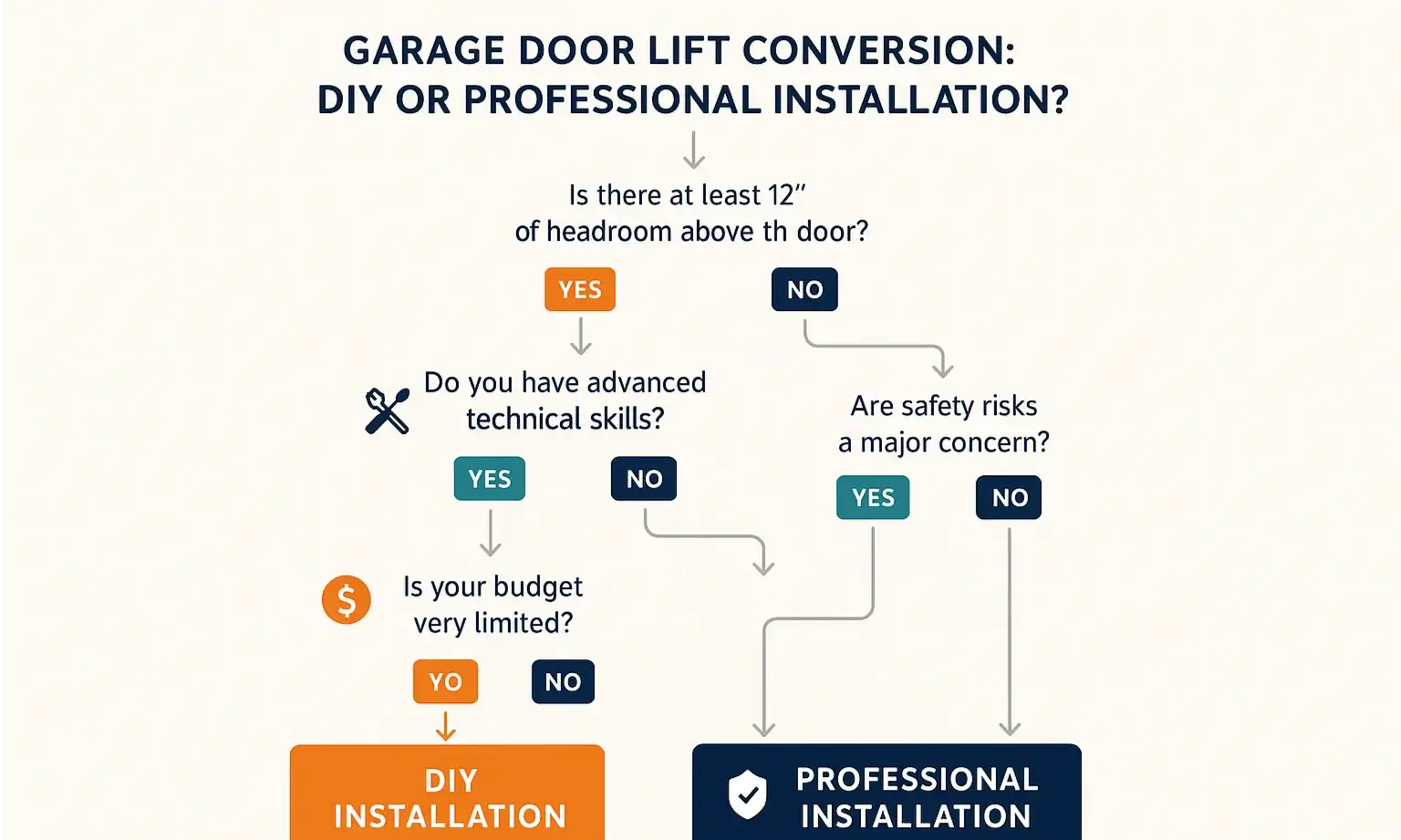
Action: Your Next Steps - DIY vs. Pro Installation
Frequently Asked Questions (FAQ)
What is the main difference between a high lift and vertical lift garage door?
Are high lift garage doors worth it?
Can any garage door be converted to a high lift system?
How much does a high lift conversion cost?
Do I need a special opener for a high lift or vertical lift door?
You may also like