How Extreme Weather Affects Garage Door Component Lifespan
Published: Jan 22, 2026
Ever noticed how your garage door seems to have a personality of its own? It groans and complains on the coldest winter mornings and acts sluggish and stuck on the hottest summer days. It's not your imagination. The truth is, your garage door is in a constant battle with the weather, and the outcome of that battle directly impacts its lifespan—and your wallet.
Most people only think about their garage door when it breaks. But what if you could understand the silent damage happening every day? The answer lies in simple physics, and learning it can help you prevent costly repairs and keep your door running smoothly, no matter what the forecast says.
Foundation: The Science of Weather Wear
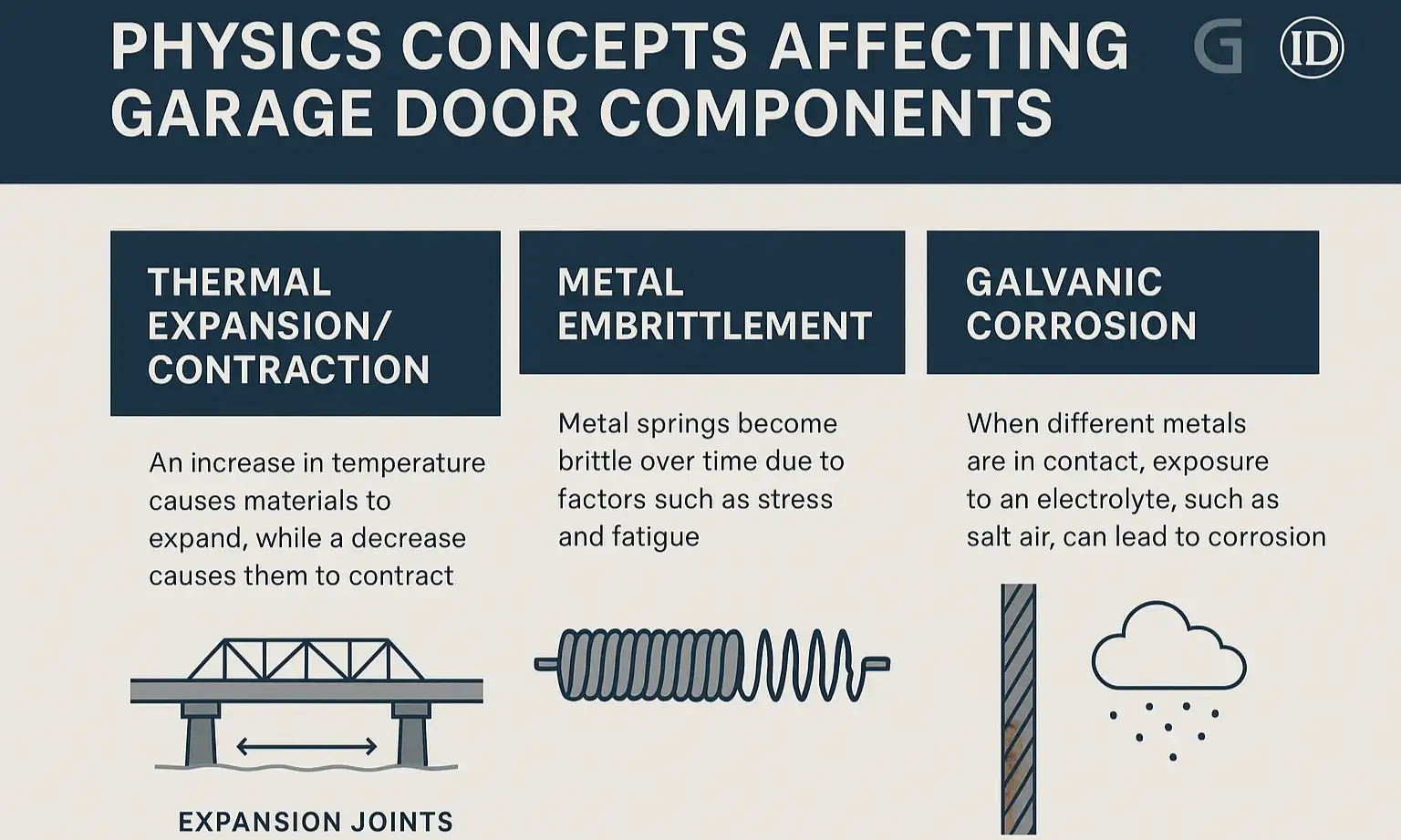
Your garage door isn't just a single slab of wood or metal; it's a complex system of interconnected metal parts—springs, cables, rollers, and hinges—all working in precise harmony. Extreme weather throws that harmony into chaos through three powerful forces.
1. Thermal Expansion and Contraction: The Invisible Push and Pull
Think of a massive steel bridge. Engineers build expansion joints into it so the metal can safely expand in the heat and shrink in the cold. Your garage door's metal tracks, springs, and panels do the same thing on a smaller scale.
- In the Heat: Metal parts expand. This can cause tracks to slightly misalign, making it harder for rollers to move. The door might seem "sticky" or strain the opener.
- In the Cold: Metal parts contract. This shrinkage can make moving parts stiffen, increase friction, and put immense strain on your garage door opener as it works harder to lift the same weight.
This constant cycle of expansion and contraction slowly fatigues the metal over years, leading to premature wear and unexpected failures.
2. Metal Embrittlement: Why Cold Snaps Springs
Have you ever left a plastic toy outside in the winter, only to have it snap when you tried to use it? Steel can behave similarly. In extreme cold, steel and other metals lose some of their flexibility and become more brittle. Your torsion and extension springs, which are under constant high tension, are especially vulnerable. A sudden cold snap can be the final straw that causes a brittle, contracted spring to break. Understanding how a garage door spring works is key to appreciating the immense stress it's under.
3. Corrosion: The Slow Creep of Rust and Decay
Humidity is the enemy of metal. In coastal areas with salty air or regions with high humidity, the process of oxidation—rust—is significantly accelerated. This isn't just a cosmetic issue. Rust weakens the structural integrity of steel cables, springs, and hinges, making them more likely to snap under pressure. For wooden doors, humidity can lead to rot, warping, and swelling, causing the panels to bind in their tracks.
A Climate-by-Climate Breakdown of Garage Door Risks
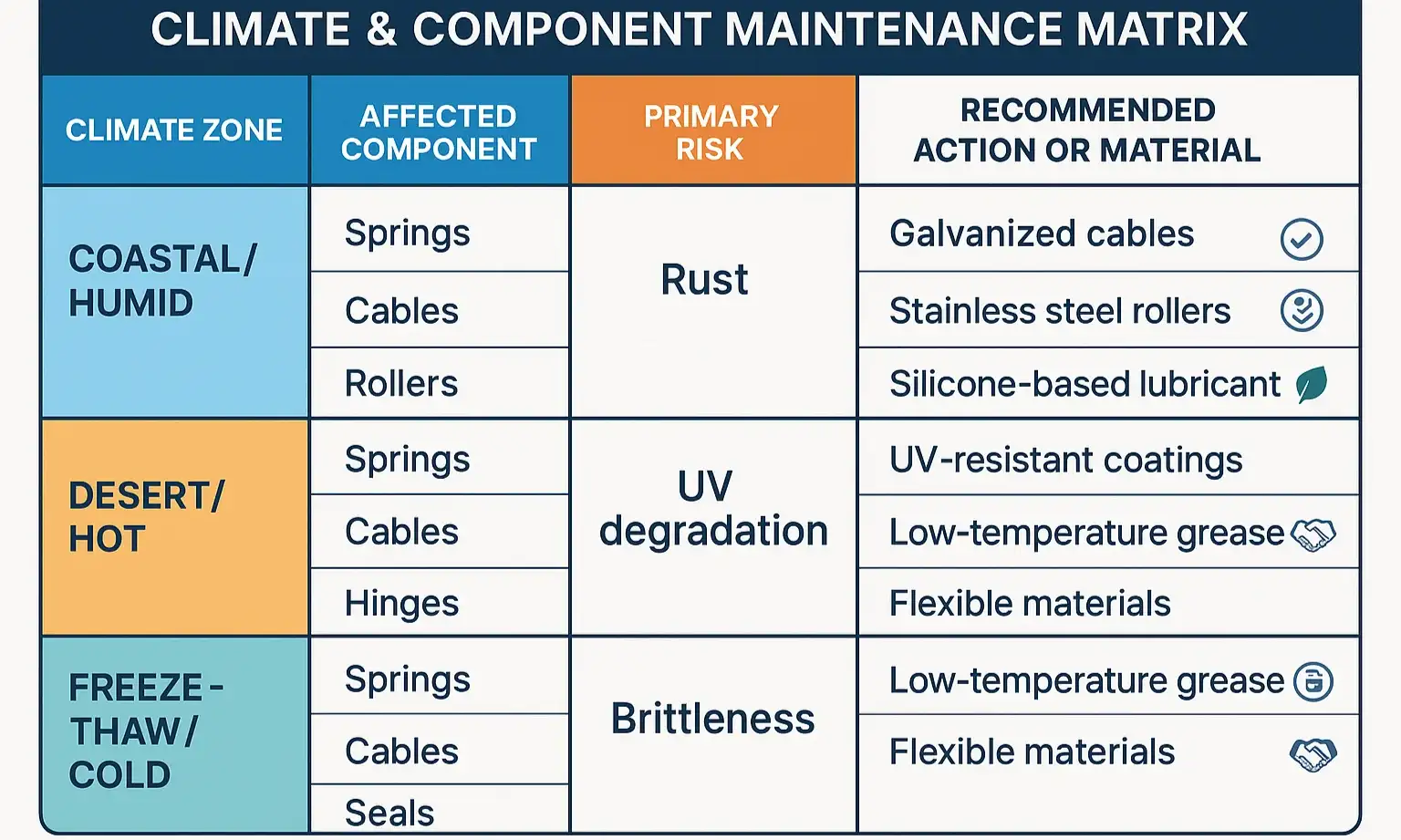
A homeowner in Phoenix faces a completely different set of challenges than one in Minneapolis. Generic advice doesn't cut it. Here’s what you need to watch for based on your local climate.
The Cold Climate Challenge (Freeze-Thaw Cycles)
For those in the Northeast and Midwest, winter is the ultimate stress test.
- Top Threat: Spring Failure. As explained by metal embrittlement, the sudden drop in temperature is the number one reason springs snap in the winter.
- Thickened Lubricant: The grease on your tracks, rollers, and hinges can thicken in the cold, turning from a helpful lubricant into a thick, sticky sludge. This forces your opener to work overtime.
- Ice Buildup: Melting snow can refreeze along the bottom of your door, creating a seal of ice. When you try to open it, you risk tearing the weather seal or even damaging the opener motor. If you find your garage door frozen shut, it's important to address it carefully.
The Hot Climate Challenge (Desert & Sunbelt)
Intense heat and UV radiation bring their own set of problems, particularly in states like Arizona and Texas.
- Top Threat: Sensor Malfunction. The photo-eye safety sensors near the bottom of your door use an infrared beam. Direct, intense sunlight and extreme heat can sometimes interfere with this beam, causing the door to reverse unexpectedly or refuse to close.
- Seal Degradation: Constant UV exposure can make the rubber and vinyl weatherstripping at the bottom and sides of your door brittle, cracked, and useless for keeping out dust, pests, and rain.
- Warping and Fading: Dark-colored metal or wood doors can absorb a tremendous amount of heat, leading to warping that affects alignment. The finish can also fade or peel, requiring premature refinishing.
The Humid Climate Challenge (Coastal & Southern)
Humidity and salt are a corrosive combination that can wreak havoc on your door's metal components.
- Top Threat: Pervasive Rust. Salt in the air is a catalyst for rust. It aggressively attacks springs, cables, hinges, and tracks. Galvanized or stainless steel components are essential in these environments, but even they require regular cleaning.
- Wood Door Damage: For wooden garage doors, high humidity is a constant threat. It can cause the wood to swell, rot, and delaminate, leading to serious structural issues.
- Electrical Issues: Moisture can find its way into the opener's circuitry or safety sensors, leading to shorts and malfunctions.
Mastery: A Component-by-Component Analysis
Now let's zoom in on the specific parts of your door and see how you can choose the right materials and perform the right maintenance for your climate.
Springs & Cables
These are the muscles of your garage door, doing the heavy lifting.
- Weather Impact: Extreme cold makes them brittle (springs), while humidity causes them to rust and weaken (springs and cables).
- Maintenance Tip: In cold climates, avoid sudden, jerky movements. In humid climates, check for any signs of rust monthly. If you see rust or fraying, it’s a sign that you may need to know how to adjust garage door cables or call a professional immediately, as these parts are under extreme tension.
Rollers & Hinges
These are the joints, allowing the door to move smoothly along the tracks.
- Weather Impact: Cold can thicken the grease in their bearings, while salty air can corrode them.
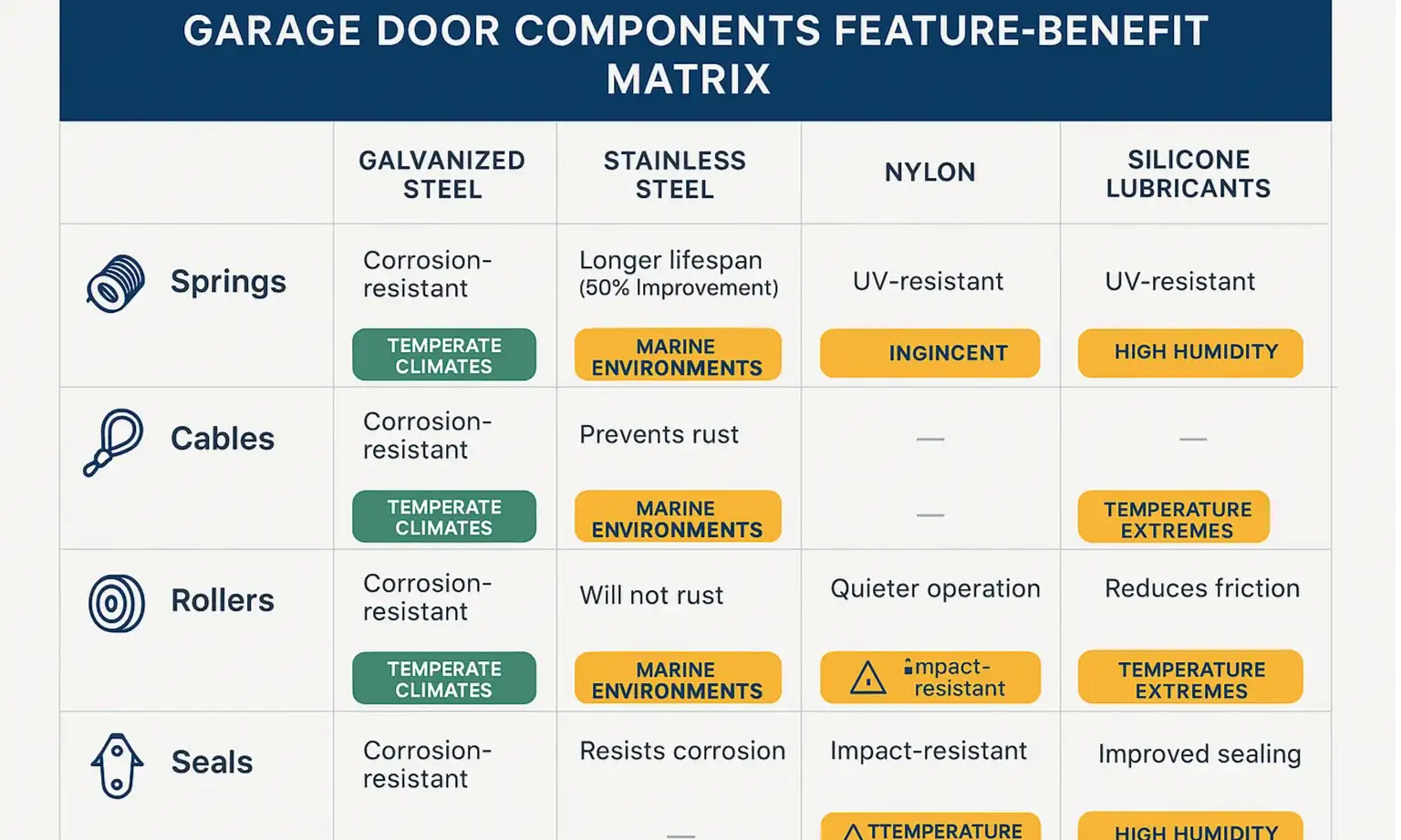
- Material Choice: Steel rollers are durable, but nylon rollers are quieter and more corrosion-resistant, making them a better choice for coastal areas. If you need to replace garage door rollers, consider a sealed-bearing nylon option for maximum longevity.
- Maintenance Tip: Knowing how to lubricate a garage door is crucial. Use a silicone or lithium-based spray, not WD-40, which can attract dust and gum up the works. Understanding different garage door hinge types also helps in identifying potential wear points.
Seals & Panels
This is the door's armor, protecting your garage from the elements.
- Weather Impact: UV rays in hot climates make rubber seals crack. Moisture in humid climates can rot wood panels or cause them to swell.
- Maintenance Tip: In sunny climates, inspect your bottom and perimeter seals twice a year for cracks. In humid areas, check wooden doors for soft spots or peeling paint, which can indicate moisture damage. Learning how to weatherproof your garage door effectively can save energy and protect the door itself.
Action: The Ultimate Maintenance Matrix & Checklists
Garage door components are affected differently depending on climate conditions. Understanding these risks helps homeowners choose the right materials and maintenance strategies.
Cold / Freeze–Thaw Climates
In freezing environments, torsion and extension springs are at risk of embrittlement, which can lead to snapping. Avoid operating the door during extreme cold, and never force a door that may be frozen. Lubricants can also thicken or gel in low temperatures, so it’s important to use a high-quality, silicone-based lubricant designed for cold weather. Bottom seals may freeze to the ground; keeping the area clear of snow and ice and ensuring the threshold slopes away from the door can prevent damage.
Hot / Desert Climates
Extreme heat and sun exposure accelerate wear on weather seals, causing UV degradation and cracking. Annual inspections are recommended, with replacement at the first signs of brittleness. Safety sensors may experience infrared interference in intense sunlight, so providing shade when possible and keeping lenses clean helps maintain proper function. Dark-colored door panels are especially prone to warping from heat; lighter colors or well-insulated doors can reduce heat absorption.
Humid / Coastal Climates
High moisture and salty air increase the risk of galvanic corrosion and rust, especially on cables and springs. Galvanized or powder-coated components are recommended, along with seasonal rinsing using fresh water. Hinges and rollers may rust and seize over time, making nylon rollers and powder-coated hinges a better choice. Regular lubrication of metal parts is essential. Wood panels are also vulnerable to swelling and rot, so proper sealing, painting, and annual moisture inspections are critical.
Your Seasonal Maintenance Checklist
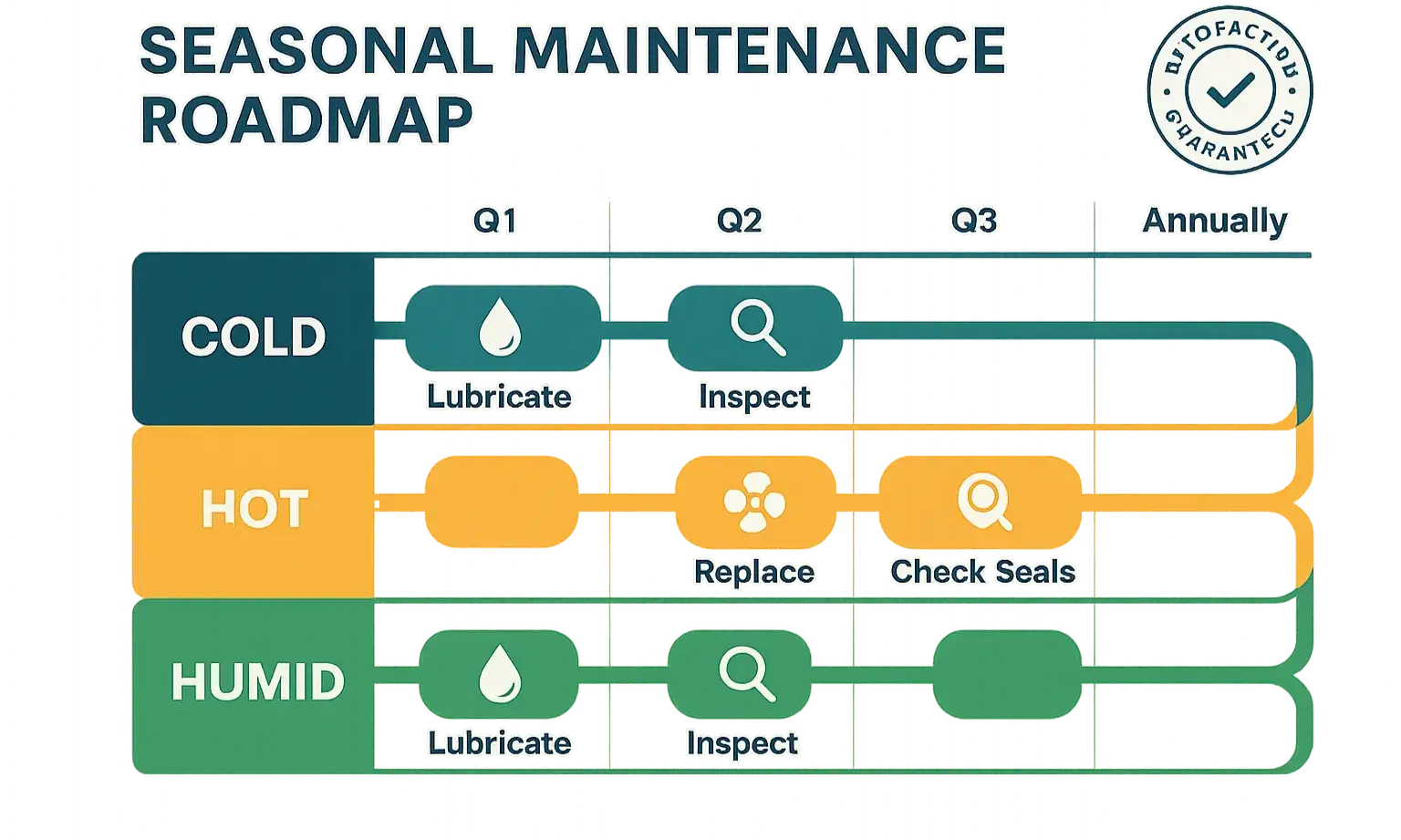
A little proactive care goes a long way. Use this as a guide for your regular garage door maintenance routine.
Spring Checklist (After Winter's Thaw):
- Inspect: Look closely at springs, cables, and rollers for any signs of rust or wear from the harsh winter.
- Wash: Gently wash the door panels to remove salt and grime.
- Lubricate: Apply lubricant to all moving metal parts, which may have been washed away by winter moisture.
- Balance Test: Disconnect the opener and lift the door manually. It should stay open halfway. If not, the springs may need adjusting by a professional.
Fall Checklist (Before Winter Hits):
- Weatherstripping: Check all seals for cracks or gaps. Replace any damaged sections to keep the cold out.
- Lubricate: Re-apply a silicone-based lubricant to prepare parts for cold-weather contraction.
- Clear Debris: Ensure tracks are completely clear of leaves and debris that could cause a jam.
Frequently Asked Questions
Why do garage door springs always seem to break in the winter?
It's due to a combination of factors. First, the cold makes the metal springs more brittle and prone to snapping. Second, all the moving parts of your door contract and get stiffer in the cold, forcing the springs to work harder to lift the same amount of weight. This extra load on a brittle spring is often the breaking point.
My garage door is reversing when it's cold. What's wrong?
This is a common cold-weather issue. The cold can make the lubricant on the tracks and rollers thick and sticky, increasing resistance. Your garage door opener's safety mechanism detects this extra resistance and thinks it has hit an object, causing it to reverse. A thorough cleaning and application of a temperature-appropriate lubricant often solves the problem.
Is it bad to use WD-40 on my garage door?
Yes, this is a common mistake. WD-40 is a solvent and degreaser, not a long-term lubricant. It can clean parts, but it also strips away any existing grease and attracts dust and dirt, which can gum up the mechanisms, especially in cold or dusty climates. Always use a silicone or white lithium grease spray designed for garage doors.
How can salt air affect a garage door that isn't right on the beach?
Salty, moist air can travel several miles inland. This corrosive air accelerates rust on any exposed steel components like springs, cables, and tracks. If you live within 5-10 miles of the coast, you should consider your home to be in a coastal environment and opt for rust-resistant hardware.
Your First Line of Defense
Your garage door is more than just a convenience; it's a critical part of your home's security and curb appeal. By understanding how the weather in your specific region wages a slow, silent war against its components, you can move from being reactive to being proactive. A few simple checks and the right maintenance plan can add years to the life of your door, saving you from the headache and expense of an emergency call on a freezing winter night.
You may also like