3 Times Your Garage Door Needs Service Right Now
Published: Mar 23, 2026
You probably have an annual checklist for your home’s health: clean the gutters, check the smoke detectors, maybe even schedule a furnace tune-up. Your garage door, the largest moving object in your home, is likely on that list for a yearly look-over. But what happens in between?
Your garage door worked perfectly yesterday. But after last night’s powerful thunderstorm, it’s making a strange, grinding noise. Or maybe you misjudged the distance and gave it a gentle tap with your car bumper—it looks fine, but is it?
These are the moments that fall outside the annual schedule. They’re the unexpected events and subtle warnings that, if ignored, can turn a minor issue into a major, costly, and potentially dangerous problem. This guide is your "triage manual" for those exact situations, helping you decide if it's a simple fix or a serious problem that needs a professional eye immediately.
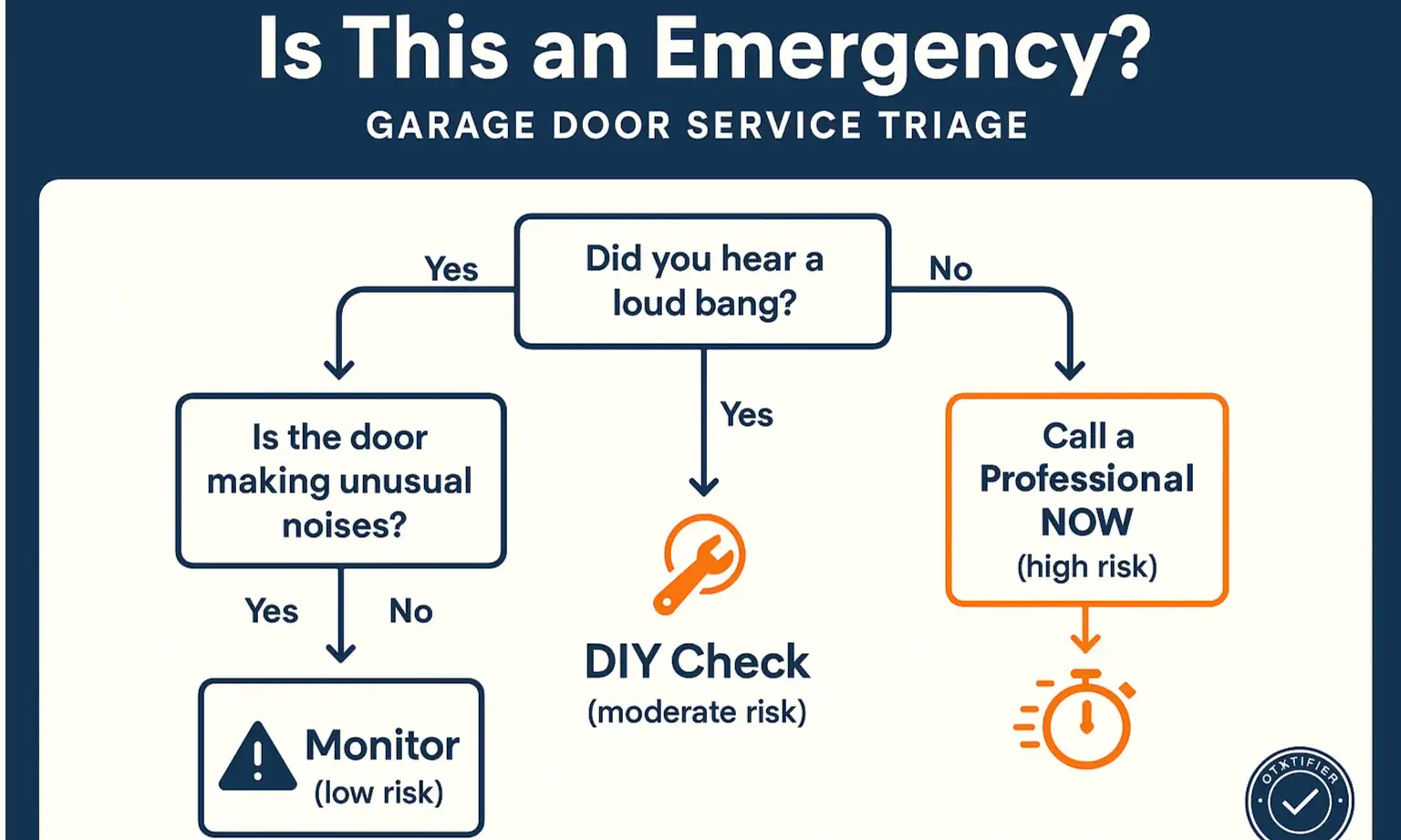
Your Garage Door Triage Chart: What’s Your Next Move?
Trigger 1: The Post-Event Inspection
After High Winds, Hail, or Heavy Rain
- Look for Dents and Dings: Hail can dent metal panels, affecting not just aesthetics but also the door's balance and insulation.
- Check the Tracks: Sustained high winds can push against the door, potentially knocking the rollers off track or slightly bending the vertical tracks. Look down the length of the tracks to ensure they are perfectly straight.
- Inspect Weather Stripping: Check the rubber seal at the bottom of the door. Has it been torn or damaged by debris or high water? A compromised seal can let pests, water, and drafts into your garage.
- Test the Photo-Eye Sensors: These small sensors near the bottom of the track can get knocked out of alignment by debris or heavy rain. If the small lights on them aren't solid (often one green, one amber), they need to be realigned.
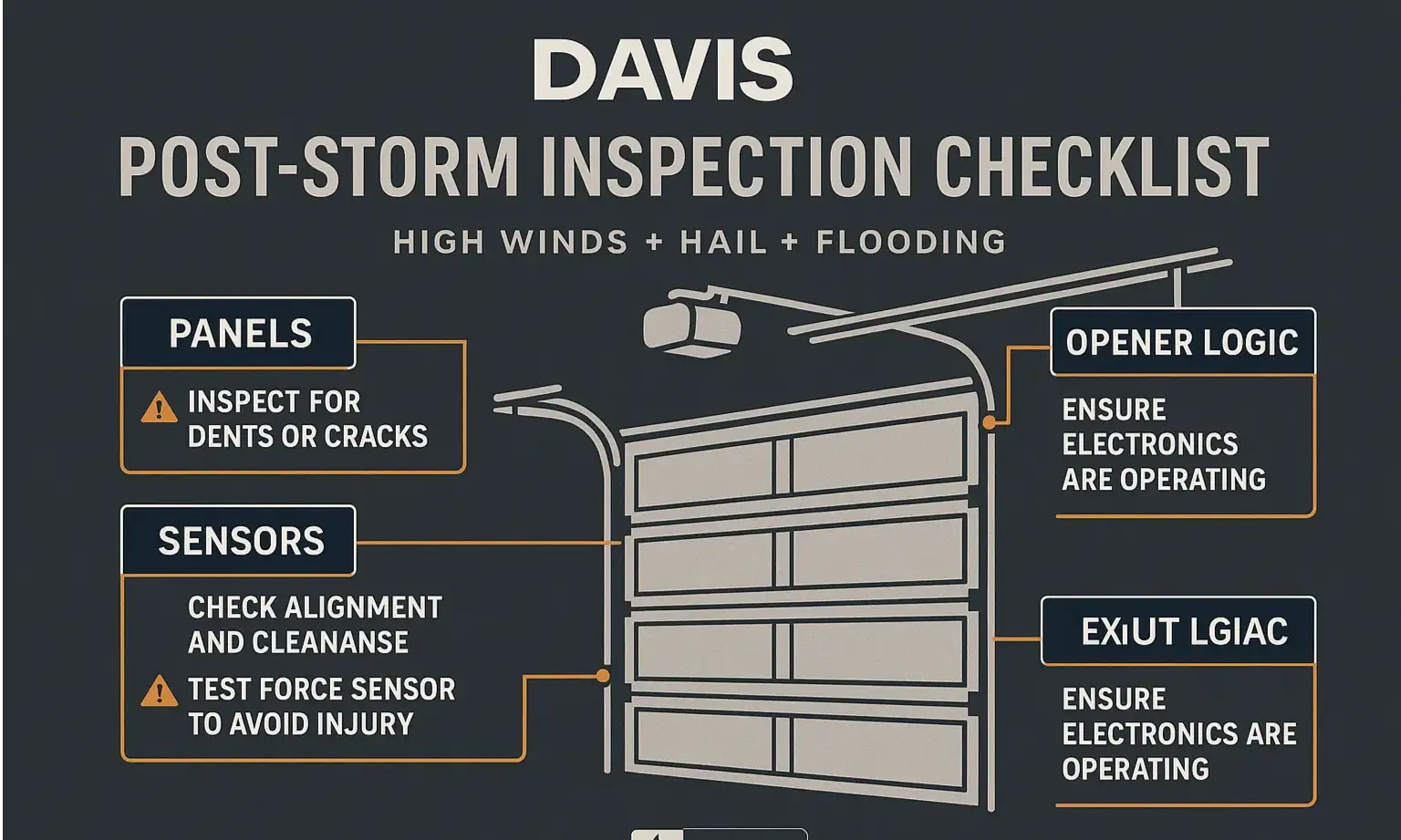
After a Power Surge or Outage
- Test the Opener: Once power is restored, does the opener function correctly? Power surges can damage the internal circuit board, leading to erratic behavior or complete failure.
- Reset and Reprogram: Sometimes, the opener simply needs to be reset. Unplug it for a minute, then plug it back in. You may need to reprogram your remotes and keypad.
- Check Safety Features: Re-test the auto-reverse mechanism by placing a roll of paper towels in the door's path. If the door doesn't immediately reverse upon contact, the logic board may be damaged and requires professional service.
Trigger 2: The Audible Warning System (A.K.A. Strange Noises)
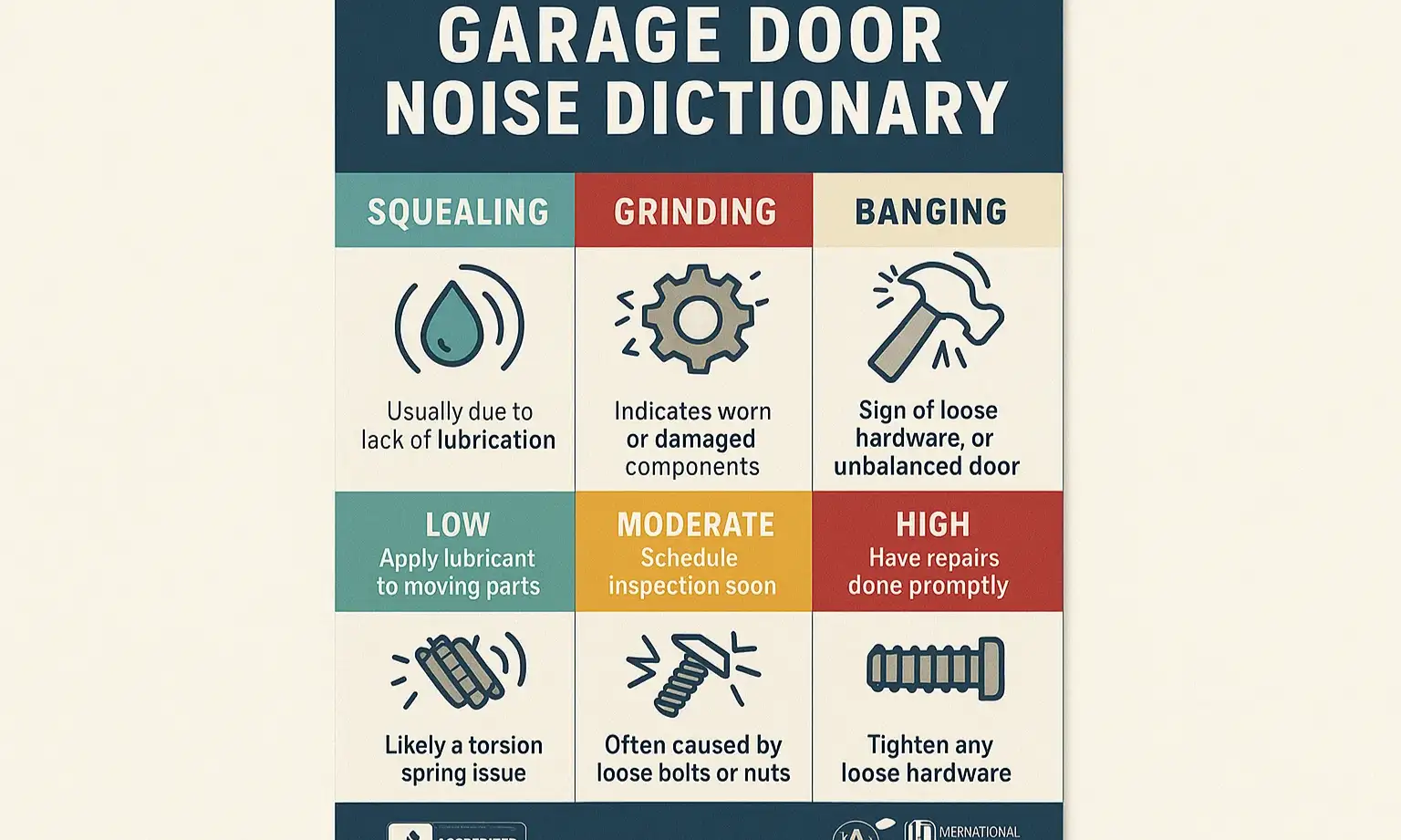
- Grinding or Squeaking: This often points to poor lubrication. Metal rollers scraping against a metal track will create a high-pitched squeal. You may be able to solve this with a proper lubricant, but it can also be a sign of a more serious alignment issue. A question we often hear is, "how often should you lubricate your garage door?"; typically, once or twice a year is sufficient unless you notice these sounds.
- Rattling: This could be as simple as loose nuts and bolts on the door or track. However, it can also indicate that the door is out of balance and shaking as it moves.
- Popping or Banging: This is the most urgent sound. A single, loud bang often signals a broken garage door spring. The springs are under extreme tension and do the heavy lifting. If one breaks, do not operate the door. It is extremely dangerous and requires immediate professional service.
Trigger 3: The Minor Impact Assessment
- Visually Inspect the Panels: Look for any cracks, creases, or deep dents where the impact occurred.
- Check the Rollers and Tracks: Did the impact knock a roller out of the track? Look closely to ensure all rollers are seated properly. Even a slightly bent track can cause the door to jam and lead to much bigger problems.
- Perform a Balance Test (Carefully): If there's no visible damage, pull the garage door emergency release cord to disconnect the opener. Carefully lift the door by hand to about waist height. Does it stay put? If it slams down or flies up, the balance is off, likely due to the impact, and it needs to be serviced before you use the opener again. If the door is completely stuck, you may need to know how to open a stuck garage door from the outside safely.
Need more information?
Get a free quote
Your Next Steps: A Clear Path Forward
- For "Monitor" Issues: If you find a loose bolt or a slightly misaligned sensor, you can often handle it yourself. Tighten the hardware or adjust the sensor until the light is solid. These fall under basic DIY garage door maintenance.
- For "DIY Check" Issues: A squeaky chain or track can often be quieted with a silicone-based garage door lubricant. Never use WD-40, which can attract dirt and gunk up the mechanisms.
- For "Call a Pro" Issues: Any loud bang, bent track, broken spring, or a door that won't stay balanced is a job for a trained technician. These issues involve parts under extreme tension and can be incredibly dangerous to fix yourself. Don't hesitate to call for emergency garage door repair to ensure your home remains safe and secure.
Frequently Asked Questions (FAQ)
What's the difference between a normal sound and a problem sound?
Can I still use my door if it was hit but seems to work fine?
How do I know if my garage door issue is a real emergency?
What should I do if the power is out and I need to open my garage door?
You may also like