




Anodized vs. Powder-Coated Aluminum Garage Door Frames Compared
Published: Nov 5, 2026
When evaluating high-end full-view glass sectional doors or architectural aluminum extrusions, decision-makers face a critical surface finishing choice: anodized or powder-coated aluminum frames. Anodizing electrochemically integrates a protective oxide layer into the metal for metallic sheen and scratch resistance, while powder coating bakes a polymer resin layer onto the surface, unlocking custom colors and UV resistance.
Choosing between these treatments requires balancing coastal atmospheric exposure, physical wear, tolerance limits, and total lifecycle investment.
Fundamental Chemistry and Manufacturing Differences
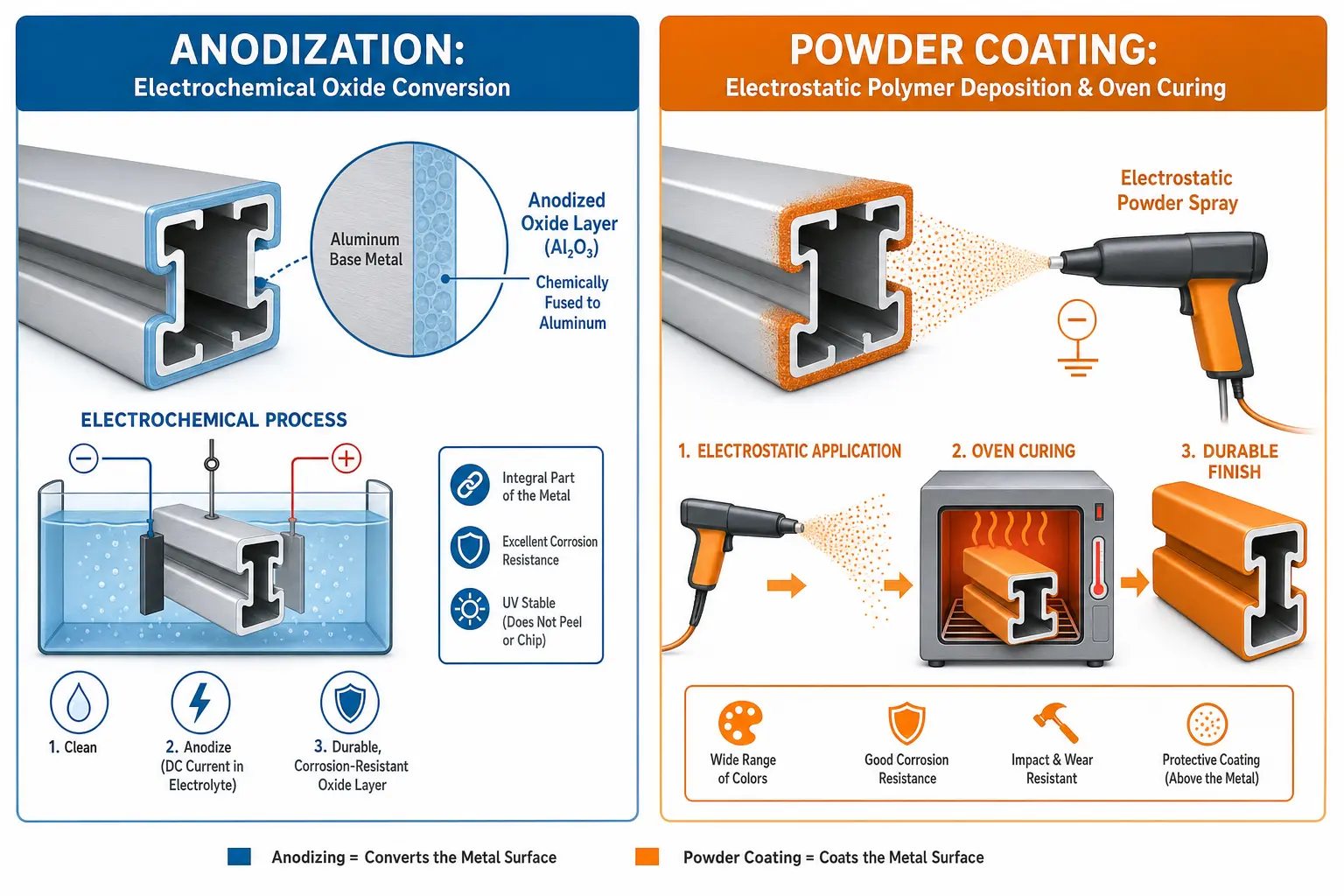
Anodization is an electrochemical bath process that converts the surface of 6063-T5/T6 extruded aluminum into an integral aluminum oxide layer. Under AAMA 611 Class I specifications (minimum 0.7 mil / 18 µm thickness), this anodic structure reaches a Mohs hardness of 8 to 9, rivaling sapphire. Because the finish is grown directly from the base metal, it cannot peel, chip, or flake under stress.
Conversely, powder coating electrostatically applies thermosetting polymers—typically super-durable polyesters or FEVE fluoropolymers—onto pretreated aluminum extrusions before heat-curing at 400°F. Operating under AAMA 2604 or AAMA 2605 architectural standards, powder coatings create a protective shell 2.0 to 4.5 mils (50 to 120 µm) thick. While softer (Mohs 2 to 4), this flexible polymer layer delivers exceptional color versatility and UV stability.
Performance Breakdown for Garage Door Frames
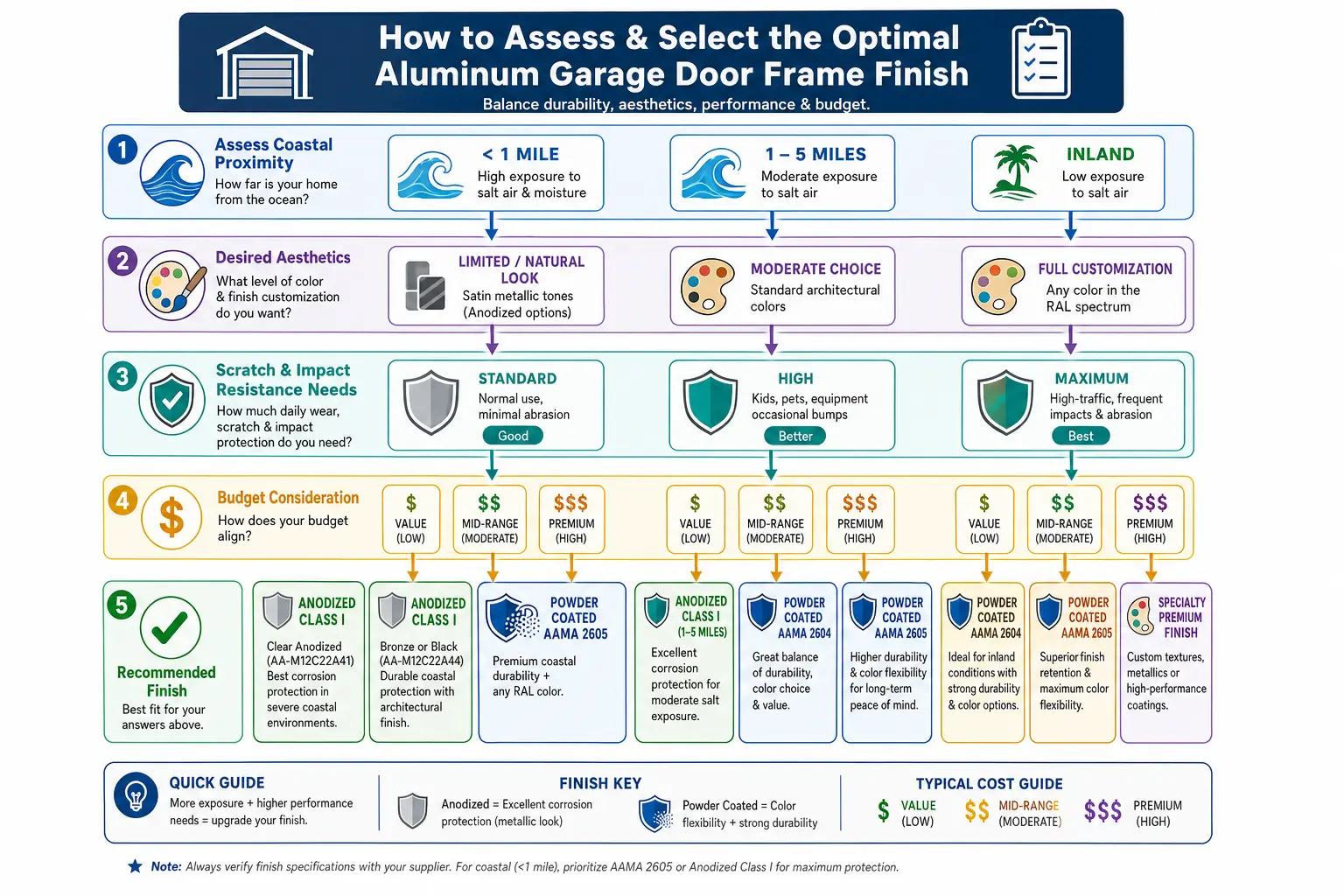
Selecting the appropriate finish depends heavily on environmental demands and operational usage. When weighing the pros and cons of choosing an aluminum garage door, consider how exposure conditions impact frame durability:
- Coastal Salt-Air Fog: Standard ASTM B117 salt spray testing confirms that Class I sealed anodizing withstands 3,000+ hours without surface pitting. However, premium AAMA 2605 FEVE/PVDF fluoropolymer powder coatings achieve 4,000+ hours, serving as a barrier against filiform corrosion within 1 mile of salt water. Following tailored garage door maintenance tips remains vital for coastal properties.
- UV Fading and Sun Exposure: In intense desert heat and sun, dark bronze or black anodized frames dyed with organo-metallic pigments can shift toward bronze or purple tones over 10 to 15 years. High-performance AAMA 2605 powder coats maintain strict color retention ($Delta E < 5$) for over a decade.
- Impact and Mechanical Resilience: Anodized surfaces resist abrasive contacts from sports equipment and lawn debris without scratching. However, heavy blunt impacts can dent the substrate beneath the oxide film. Powder coating absorbs physical shocks more flexibly, though sharp debris can chip the outer layer.
Dimensional Tolerances, Seals, and Field Touch-Ups
Architectural door performance relies on accurate frame tolerances and sealing system integrity:
- Dimensional Tolerances: Anodizing adds only ~0.0007 inches (18 µm) directly converted from the metal, preserving precise clearance allowances across glass retainer beads and panel joints. Powder coating adds 0.002 to 0.004 inches (50 to 100 µm), requiring fabricators to account for coating thickness in tight channel assemblies.
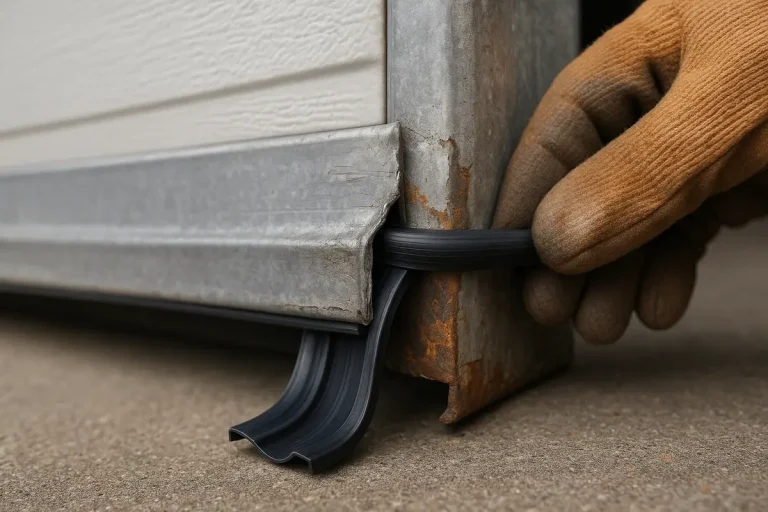
- Seal Interfacial Compatibility: Flexible inside garage door weather stripping slides smoothly across anodized metal, reducing friction wear, whereas heavy textured powder coats can increase friction against rubber seals over time.
- Field Touch-Up Realities: Scratched powder-coated frames can be sanded, primed, and field-repaired using matched air-dry acrylic fluoropolymers. Anodized frames cannot be spot-repaired in the field; deep gouges require replacing the full extrusion rail.
Whether configuring heavy-duty commercial garage doors or custom residential entries, hardware integration dictates long-term performance.
Lifecycle Cost and Warranty Analysis
Class I Clear Anodized extrusions represent the standard baseline upgrade, typically adding a 15% to 20% cost premium over mill finish aluminum. Standard stock anodized tones (Dark Bronze, Black) sit within a similar price band.
Standard AAMA 2604 polyester powder coating adds a 20% to 25% premium, while specifying high-performance AAMA 2605 fluoropolymer coatings with custom RAL garage door colors introduces a 25% to 35% premium depending on batch size.
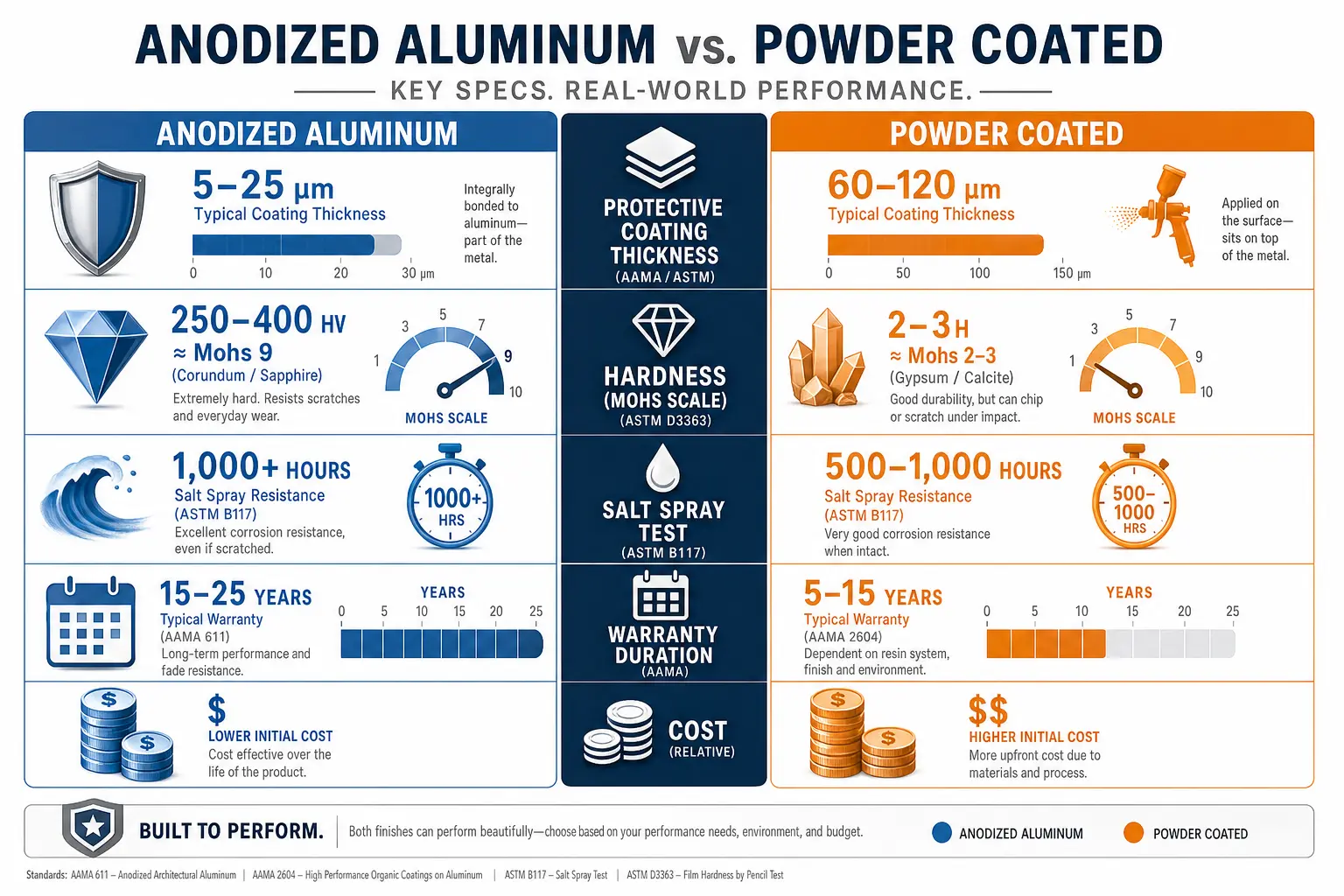
Investing in tailored custom garage doors engineered for specific microclimates lowers long-term maintenance costs and preserves total value over a 20- to 30-year operational life.
Frequently Asked Questions
Which finish is better for coastal salt air exposure?
For installations within one mile of ocean spray, AAMA 2605 fluoropolymer powder coatings generally provide superior barrier protection, resisting filiform corrosion and enduring over 4,000 hours of ASTM B117 salt spray testing compared to Class I anodizing.
Can you field repair scratched anodized aluminum garage door frames?
No, anodized surfaces cannot be spot-repaired in the field because the oxide layer is electrochemically grown into the substrate. While clear sealants can hide minor scuffs, deep gouges require replacing the affected rail or stile section.
Will dark anodized garage door frames fade in high-heat sun?
Yes, dark bronze or black anodized frames dyed with organic pigments can fade or shift toward bronze/purple tones after 10 to 15 years under high UV exposure. AAMA 2605 powder coatings offer superior resistance to UV color shift.
Next Steps for Your Garage Door Specification
Choosing between anodized and powder-coated aluminum frames depends on your site’s climate, design preferences, and performance demands. When scheduling a new garage door installation, consult certified door specialists to confirm architectural standards, verify structural seal fitment, and select the optimal finish for your property.
You May Also Like