





When a Bent Garage Door Panel Needs Replacement vs. Repair
Published: Jun 17, 2026
It happens in a split second. A moment of distraction while backing out, an icy patch on the driveway, or a misplaced sports ball—and now there’s a noticeable bend in your garage door. The first feeling is frustration, quickly followed by a flood of questions. Is this a simple fix, or am I looking at a major expense? Can it be hammered out, or is the whole door compromised?
Don’t panic. That dent or crease might look bad, but you have options. The key is understanding what kind of damage you’re dealing with. A minor cosmetic issue is one thing; a structural failure is another entirely. This guide will walk you through a simple assessment to help you make the safest, most cost-effective decision for your home.
The 5-Minute Damage Assessment
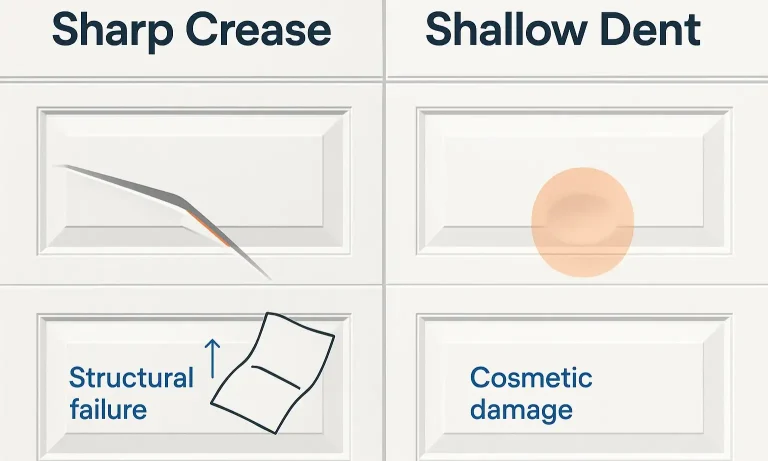
Before you pick up a hammer or a phone, take a few minutes to diagnose the problem. The most important distinction you need to make is between a “dent” and a “crease.” They might sound similar, but in the world of garage doors, they mean two very different things.
The “Crease vs. Dent” Test
This is the single most important factor in your repair-or-replace decision.
- A Dent: This is a shallow, smooth indentation where the metal is pushed in but not folded. Think of it like a ding on a car door. The panel’s overall structure is usually intact. Dents are often cosmetic and, if minor, may not affect the door’s operation.
- A Crease: This is a sharp fold or deep line in the panel. If you see a hard angle where the metal is folded over on itself, you have a crease. This is a sign of structural failure. The panel has been weakened at that point, much like a piece of paper that becomes flimsy after being folded back and forth.
A crease compromises the panel’s ability to bear its own weight and withstand the forces of opening and closing. Trying to repair a sharp crease is almost always a temporary, unsafe fix.
Other Key Factors to Check
- Damage at the Seams: Look closely at where the panels connect. If the damage is on the edge or seam, it’s much more serious. These interlocking points are critical for the door’s alignment and smooth operation. Damage here almost always requires a panel replacement.
- Panel Material: Steel doors crease, while aluminum doors are softer and dent more easily. Wood doors can splinter or crack, and vinyl can crack, especially in cold weather. The material will influence whether a repair is even possible.
Building: The "Why" Behind the Decision
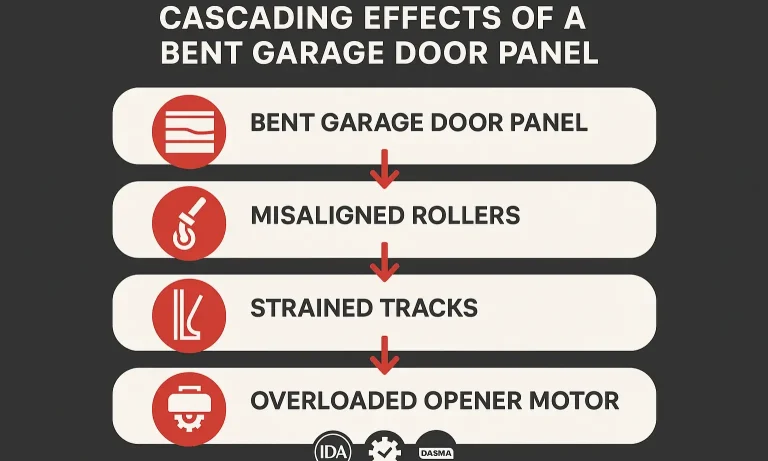
So, why is a crease such a deal-breaker? It’s not just about looks. A single structurally compromised panel can set off a cascade of expensive problems throughout your entire garage door system.
The Chain Reaction of Damage
A garage door is a balanced system where every part works together. When one panel is bent, it creates an imbalance that strains other components.
- Added Stress on Rollers and Tracks: A bent panel won’t sit flush in the tracks. As the door moves, it will grind and scrape, putting immense pressure on the rollers and potentially bending the tracks themselves. A minor incident that caused a damage garage door panel can quickly lead to track misalignment.
- Overworked Garage Door Opener: Your opener is calibrated to lift a specific, balanced weight. A damaged panel that drags or catches forces the motor to work much harder. Over time, this strain can burn out the motor, turning a panel problem into a full opener replacement—a significantly more expensive fix.
- Potential for Complete Failure: In a worst-case scenario, the added stress can cause rollers to pop out of the tracks or cables to snap, leading to the door getting stuck or failing completely.
Ignoring a creased panel isn’t saving money; it’s often just delaying a bigger, more costly repair down the road.
Mastery: The Logistics of Repair and Replacement
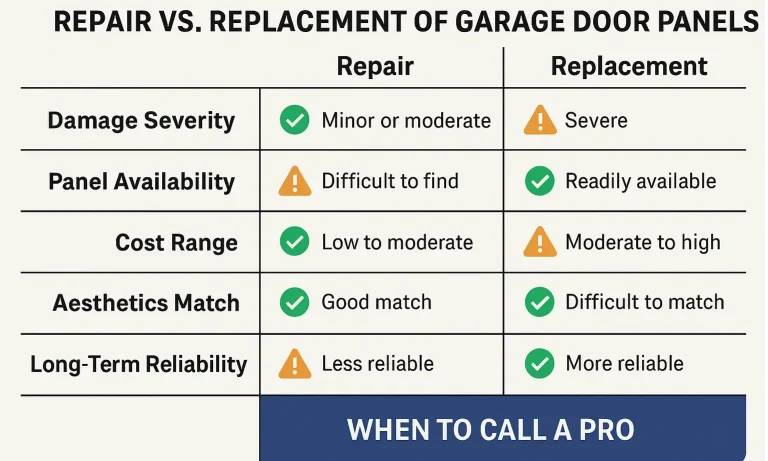
Once you’ve assessed the damage, you can explore your options with a clear understanding of the stakes.
When Repair Is an Option
Repair should only be considered for minor, shallow dents on one or two panels where there are no sharp creases. For a small dent, some homeowners might attempt a DIY fix using a rubber mallet and a block of wood from behind the panel.
However, even if a repair seems possible, it’s wise to understand the full process. For a deeper look at what’s involved, you can explore our detailed guide on how to fix a bent garage door panel. Often, the best solution for a compromised panel is installing a reinforcement strut, which can help support the panel and prevent further warping.
The Replacement Guide: The “Matching” Dilemma
If you have a creased, cracked, or severely damaged panel, replacement is the safest and most reliable solution. The process involves ordering a new panel from the original manufacturer. This is where homeowners often run into the biggest challenge: finding a perfect match.
Consider these factors:
- Model and Manufacturer: You’ll need to identify the brand and model of your door. Look for a sticker on the inside edge of the door panels.
- Color Fading: Even if you find the exact model, years of sun exposure can fade your existing panels. A brand-new panel might not be a perfect color match.
- Discontinued Models: If your door is over 10 years old, there’s a chance the manufacturer may have discontinued your specific panel style.
Because of these complexities, a professional garage door panel repair is often the most efficient path. A technician can quickly identify your door, source the correct panel, and ensure it’s installed safely and correctly.
Action: Your Final Decision Checklist & When to Call a Pro
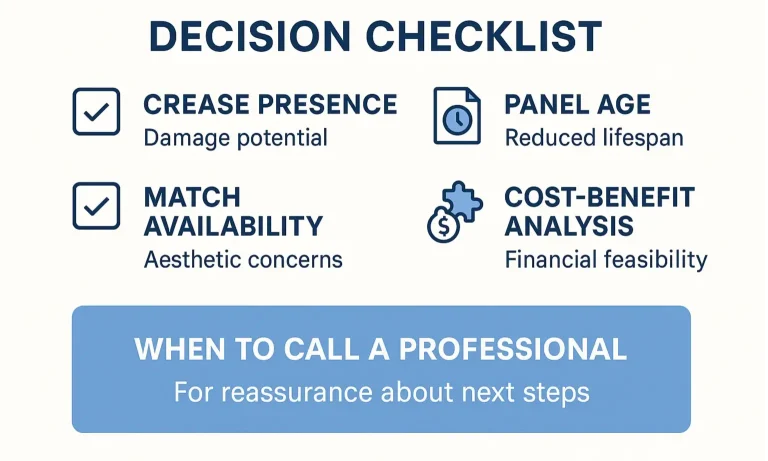
Use this simple checklist to guide your final decision.
- Damage Type: Is it a shallow dent or a sharp crease? (Crease = Replace)
- Location of Damage: Is it in the middle of the panel or on a seam/edge? (Seam/Edge = Replace)
- Number of Panels: Is only one panel damaged, or are multiple panels affected? (Multiple Panels = Consider Replacing the Entire Door)
- Age of Door: Is your door relatively new, or is it over 10-15 years old? (Older Door = Replacement panel may be unavailable)
If you’ve identified a crease, damage to multiple panels, or if you’re simply unsure, it’s time to call a professional. Garage door springs and cables are under extreme tension and can cause serious injury if handled improperly. In urgent situations, it’s best to seek emergency garage door repair to ensure your home remains secure and your family stays safe.
Frequently Asked Questions
Can you actually fix a bent garage door panel?
You can sometimes fix a minor, shallow dent without a sharp crease. However, a panel with a structural crease cannot be truly “repaired” to its original strength and should always be replaced to ensure safety and proper function.
Can I just replace one panel, or do I need a whole new door?
If only one or two panels are damaged and a matching replacement is available, you can absolutely replace just the affected panels. If three or more panels are damaged, or if the door is old and replacement panels are discontinued, it often becomes more cost-effective to replace the entire door.
What happens if I ignore a bent panel?
Ignoring a bent panel, especially one with a crease, will put continuous strain on your garage door opener, rollers, and tracks. This can lead to more expensive repairs down the line, including a burnt-out opener motor or a door that comes off its tracks.
How do I find a matching replacement panel for my door?
The best way is to find the manufacturer’s sticker on the inside of your garage door. It usually has the model number, size, and color information. A professional garage door technician can use this information to source the correct panel for you.
Ultimately, understanding the difference between cosmetic and structural damage is key. While a small dent may be a minor annoyance, a creased panel is a sign that your door’s integrity is compromised. For any damaged garage door, prioritizing safety and long-term function will always be the smartest investment.
You May Also Like
How To Fix a Bent Garage Door: Expert Repair Guide
A bent garage door panel can cause more than just cosmetic damage. From uneven movement to full mechanical failure, it can throw your whole system off. Whether you hit the garage door with a car or it warped over…
Published Date: Nov 17, 2025
Assessing Hail, Storm, and Impact Damage on Garage Door Frames
That sinking feeling is unmistakable. After a wild hailstorm, a wind-lashing storm, or the accidental tap from a car bumper, you see it—the damage to your garage door frame. It’s more than just an eyesore. A…
Published Date: Apr 20, 2026
How to Fix a Garage Door Panel: Repair Damaged Sections
A damaged garage door panel isn’t just cosmetic — it can affect how your entire door system operates. From small dents to cracks or warping, panel issues happen for many reasons. If you’re wondering how to fix a…
Published Date: Sep 29, 2025