The Definitive Guide to High-Cycle Commercial Garage Door Openers
Published: Apr 3, 2026
Your commercial garage door isn't just an entry point; it's the heartbeat of your operation. A loading dock door that’s stuck shut can halt shipments for hours. A parking garage gate that won't open can cause a traffic jam that frustrates tenants and reflects poorly on your facility. When a door is expected to open and close dozens—or even hundreds—of times a day, the opener doing the work isn't just a convenience, it's mission-critical infrastructure.
Choosing the right garage door opener for these high-cycle environments is one of the most important decisions a facility manager or business owner can make. It's a choice that directly impacts operational uptime, safety, and long-term maintenance costs. This guide will walk you through everything you need to know, from understanding the core differences between residential and commercial systems to matching the perfect opener to your business's unique demands.
Foundation: The Commercial Difference
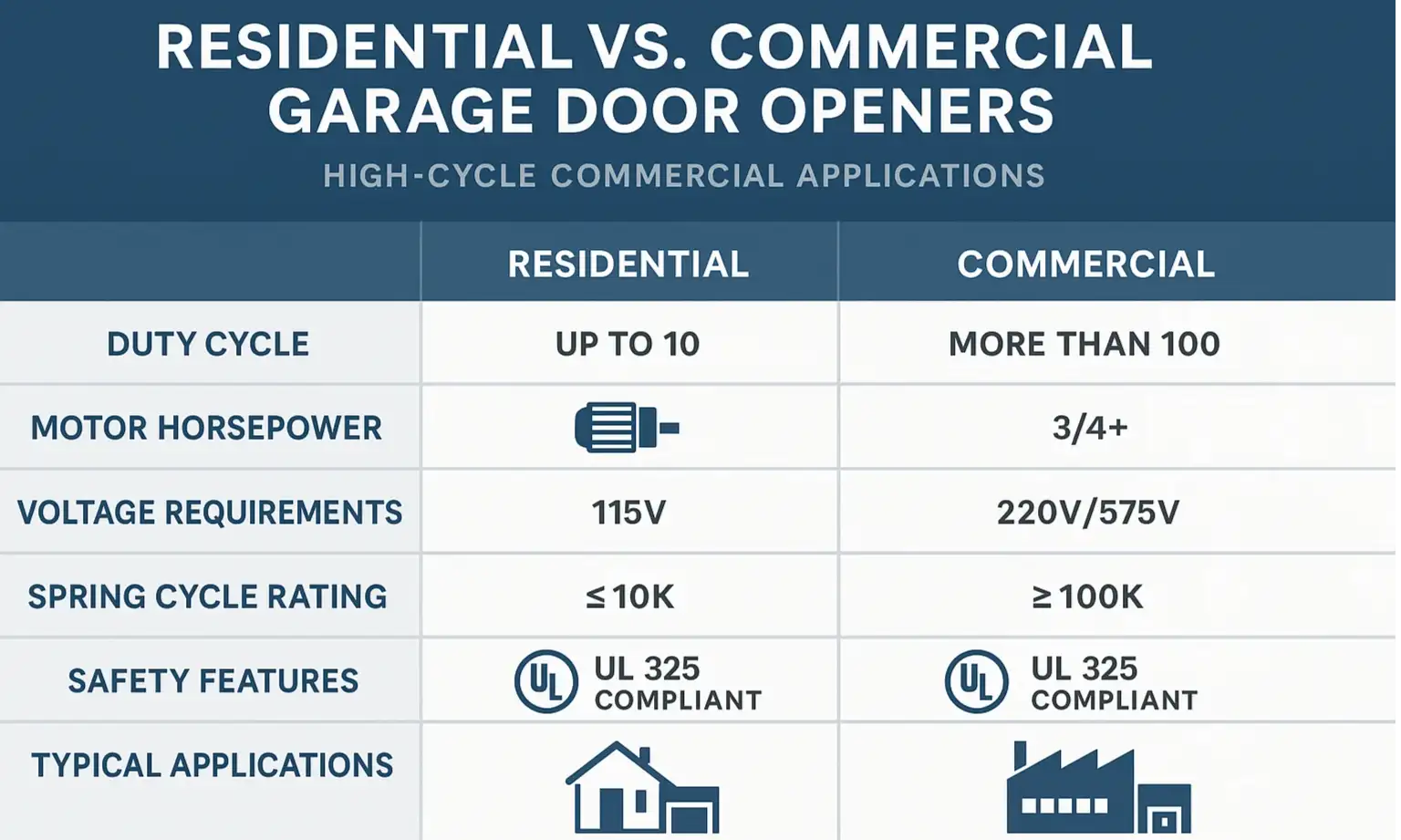
Duty Cycle
Motor Type and Horsepower (HP)
Voltage
Drive Mechanism
Safety Features
Building: Match the Opener to the Mission
1. Trolley Openers
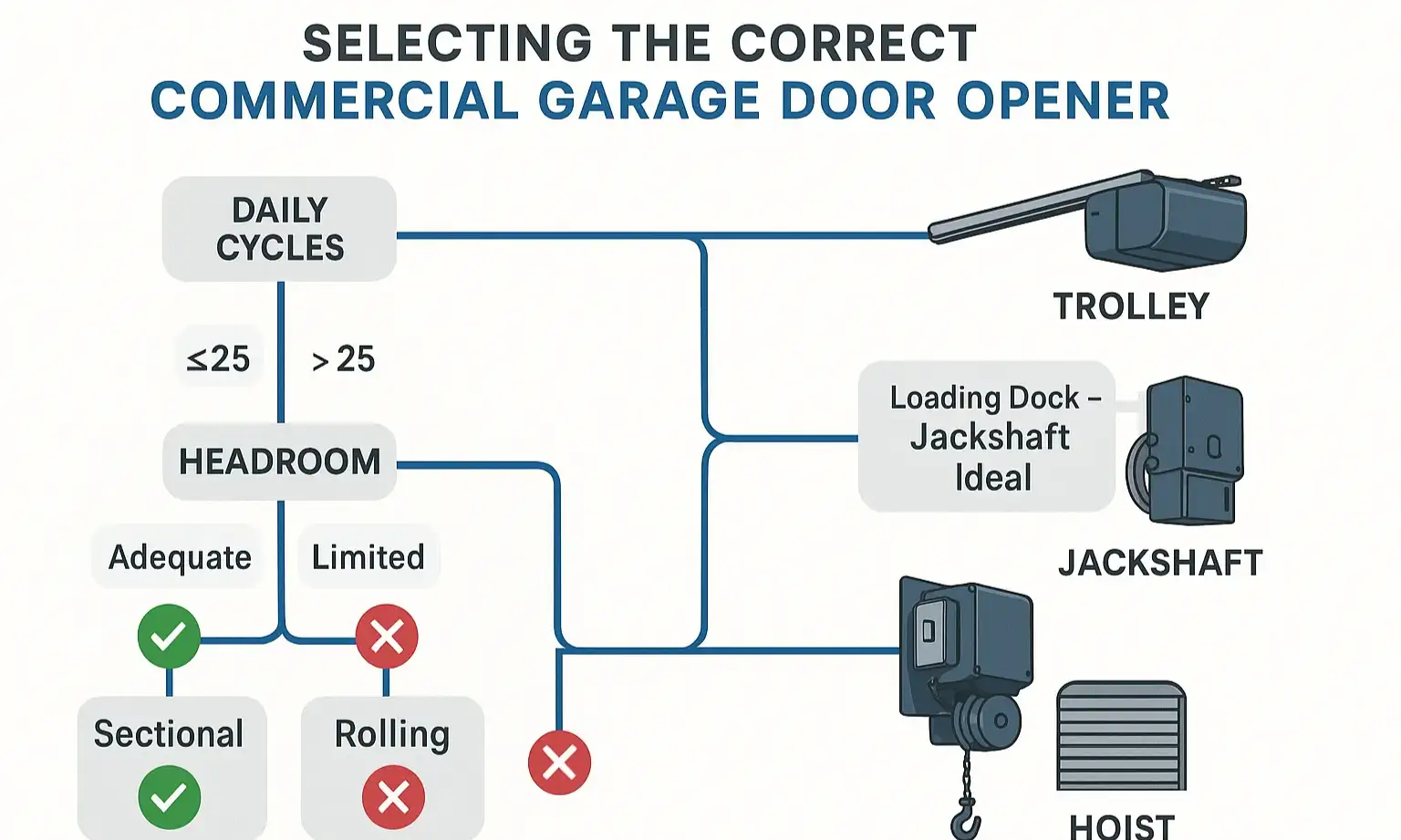
2. Jackshaft Openers
3. Hoist Openers
Real-World Scenarios
Mastery: The Installation Deep Dive
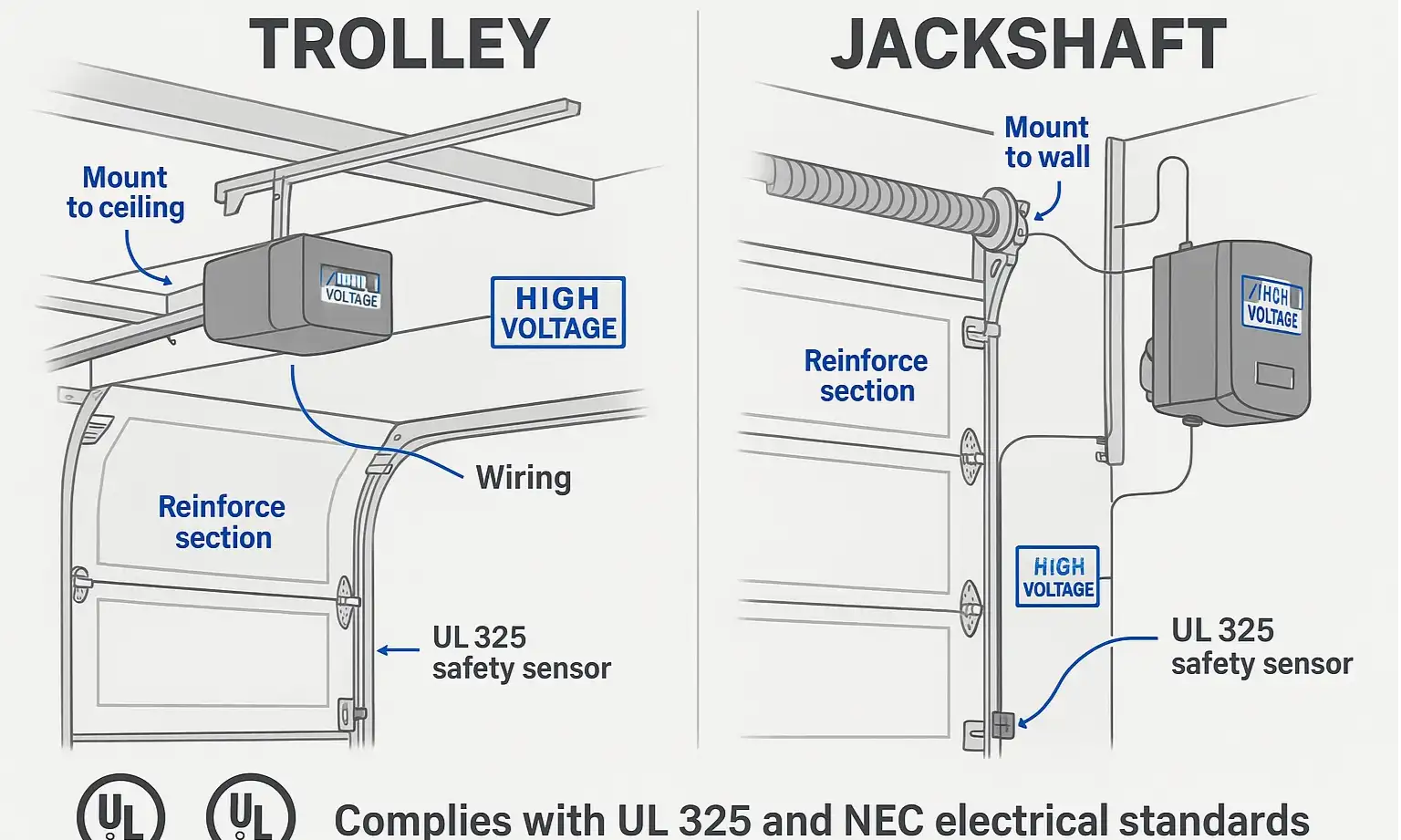
Critical Installation Considerations
- Electrical Wiring: This is the biggest difference. A licensed electrician is often required to run dedicated high-voltage lines to the opener. This isn't a simple plug-and-play setup; it's hardwired directly into your building's electrical system, often with its own disconnect box, per National Electrical Code (NEC) requirements.
- Mounting and Reinforcement: Commercial openers exert tremendous force. For a trolley system, the ceiling joists must be solid, and angle iron bracing is used to create a stable, vibration-resistant mount. For a jackshaft, the wall itself must be reinforced to handle the torsional stress, and the opener must be perfectly aligned with the door's torsion bar.
- Door and Spring Balance: Before any opener is installed, the door must be perfectly balanced. The springs are what do the actual lifting; the opener just provides the force. In a high-cycle environment, this often means using high-cycle springs rated for 50,000-100,000 cycles, not the standard 10,000-cycle residential springs. It's crucial to understand what size garage door opener you need in relation to your door's weight and balance.
- Safety System Installation: Commercial safety standards are stringent. This includes installing monitored photo-electric sensors or a pneumatic reversing edge on the bottom of the door. These systems must be tested rigorously to ensure they reverse the door instantly upon contact with an obstruction.
Action: The Pre-Installation Checklist & Ongoing Maintenance
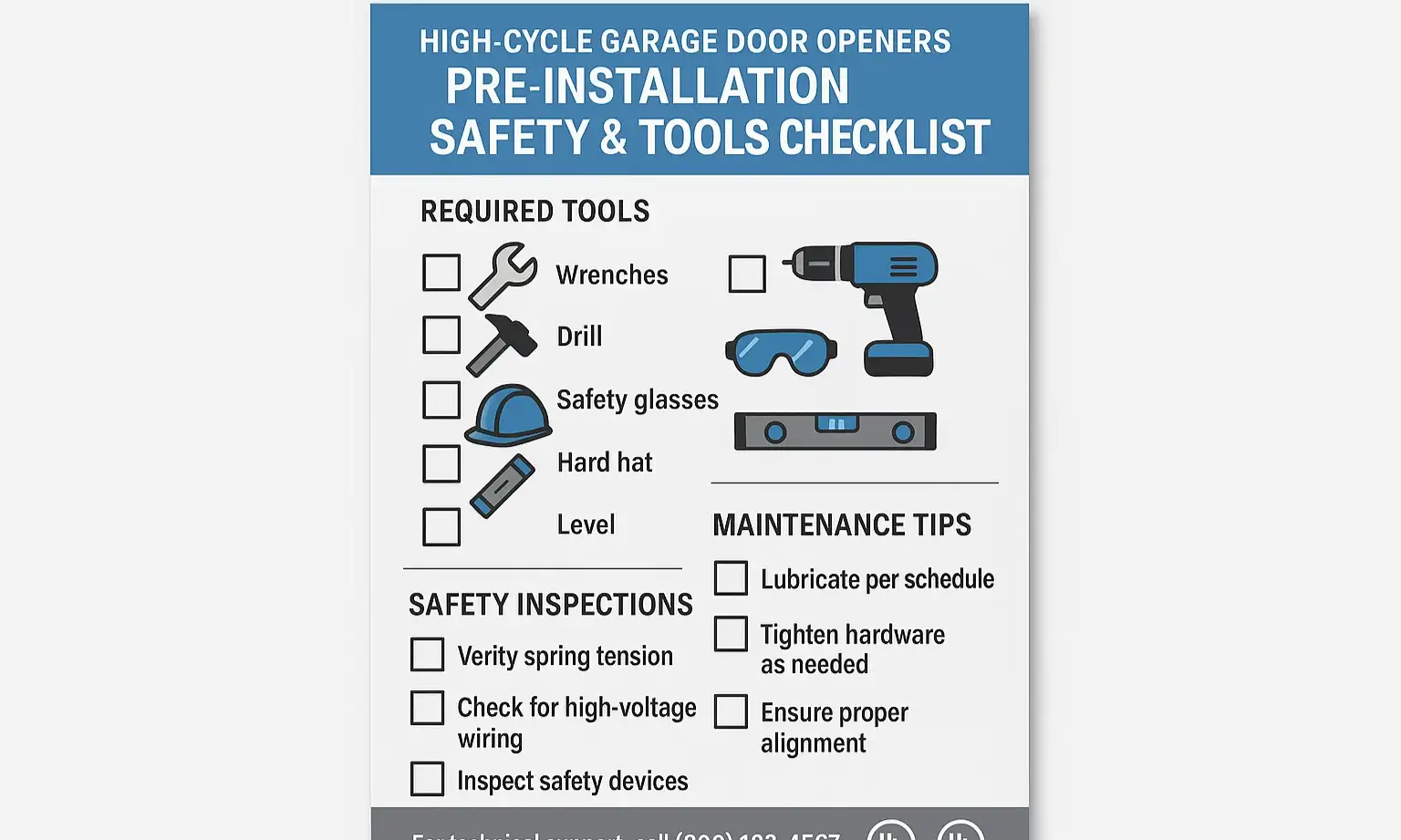
Your Pre-Installation Checklist:
- Calculate Your Daily Duty Cycle: How many times per day will this door open and close during peak hours? Be realistic—underestimating this is a recipe for premature failure.
- Confirm Power Availability: Do you have the required voltage (220V, 3-phase, etc.) available near the door? Consult with an electrician.
- Measure Your Space: Confirm you have the required headroom and side room for the opener type you've selected.
- Inspect the Door Itself: Is the door in good condition? Are the springs, cables, and rollers functioning properly? An opener will not fix a broken door; it will only break itself.
- Plan for Safety: Identify where safety sensors and activation controls (like push-button stations or loop detectors) will be installed.
Ongoing Maintenance for Longevity
Need more information?
Get a free quote
Frequently Asked Questions (FAQ)
How long do commercial garage door openers last?
Can I install a commercial opener myself?
Your Next Step
You may also like