





What To Do After Hitting Your Garage Door: A 5-Minute Safety Checklist
Published: May 28, 2026
The crunch of metal is a sound no homeowner wants to hear. Whether it was a moment of distraction backing out of the garage or a sudden, jarring failure of the system, a damaged garage door can turn a normal day into a stressful one. In that moment, your mind races with questions: Is it safe? Can I still open it? What do I do right now?
Before you touch a single button or try to lift the door, take a breath. The first few minutes after a garage door incident are the most critical for ensuring the safety of your family and preventing further damage. This guide is your calm, clear-headed friend, walking you through the immediate safety checks you can perform from a safe distance before professional help arrives.
Hook: The First 60 Seconds: Your Immediate Safety Protocol
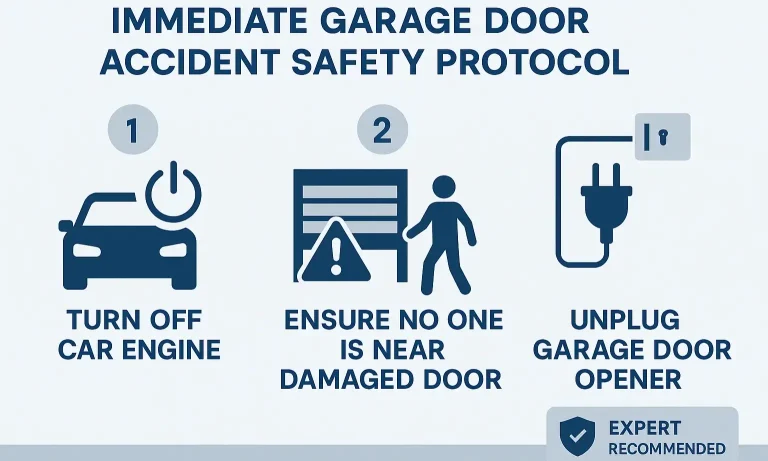
An accident is jarring. Your first instinct might be to assess the damage to your car or the door, but your top priority is to secure the scene. Follow this simple 3-step protocol immediately.
- Step1. Turn Off the Vehicle: If a car was involved, turn off the engine and remove the keys.
- 2. Clear the Area:Ensure all family members and pets are safely inside and away from the garage door area. The door could be unstable.
- 3. Unplug the Opener:This is the most important step. Unplug the garage door opener motor unit from the ceiling outlet. This prevents anyone from accidentally hitting the wall button and attempting to operate a compromised door, which could lead to a catastrophic failure.
Foundation: The Anatomy of a Garage Door
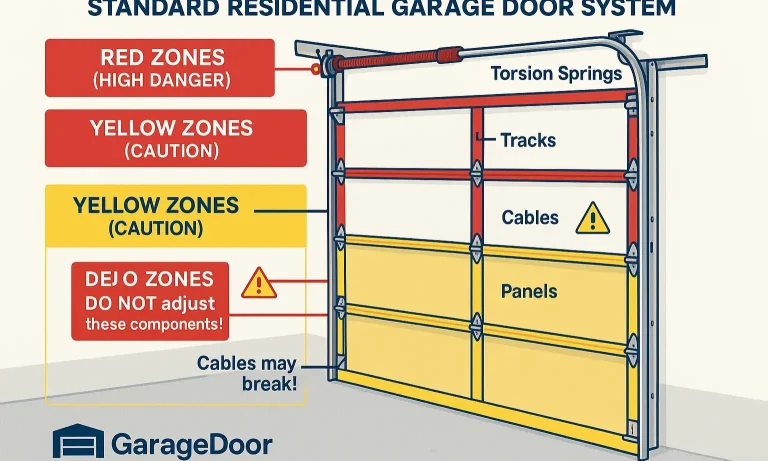
To safely assess the situation, you need to know what you’re looking at. A garage door is a complex system of parts working under extreme tension. We can separate them into two categories: “Red Zones” you should never touch, and “Yellow Zones” you can visually inspect from a distance.
- Red Zones (High Danger – Do Not Touch): Springs (Torsion or Extension): These are the muscular core of the system. A standard torsion spring holds enough energy to lift 400 lbs off the ground. A broken garage door spring is the single most dangerous failure. Never attempt to touch, adjust, or repair it yourself. – Cables: These high-tension steel cables do the actual lifting, powered by the springs. If you see signs of a fraying cable or one that has snapped or slipped off its drum, stay clear.
- Yellow Zones (Caution – Visually Inspect Only): Panels: The sections of the door itself. Damage here can seem cosmetic, but a bent panel can misalign the entire system. Tracks: The metal guides on either side of the door. The rollers run inside these tracks. Rollers: The small wheels that allow the door to move smoothly up and down the tracks.
Building: The 5-Point Visual Safety Inspection (From a Safe Distance)
With the opener unplugged and the area clear, you can now perform a hands-off visual inspection. Stand back at a safe distance and look for these five key signs of trouble. This initial garage door inspection will tell you almost everything you need to know about the immediate danger.<
- Check 1: The Springs
- Look at the spring (or springs) running along the metal bar directly above the garage door. Do you see a clean, two-inch gap in the coil? A separated spring is the clearest sign of a major failure.
- Check 2: The Cables
- Look at the drums at the ends of the torsion spring bar. The lift cables should be wound tightly and neatly around them. If you see loose, tangled, or dangling cables, the door has lost its primary support and is extremely unstable.
- Check 3: The Rollers
- Look along the sides of the door. Are all the small wheels (rollers) properly seated inside the metal tracks? Even one roller popping out can cause the door to jam or fall.
- Check 4: The Panels
- Look at the door as a whole. Does it appear straight and aligned, or is it sagging, crooked, or bowing in the middle? A minor dent is one thing, but any misalignment signals that the structural integrity is compromised. This can cause immense stress and lead to garage door track damage even if the tracks themselves weren’t hit.
- Check 5: The Tracks
- Visually inspect the vertical and horizontal metal tracks. Are they bent, crimped, or pulled away from the wall? Damaged tracks can prevent the door from moving or cause it to fall out of alignment suddenly.
Mastery: The 'Go / No-Go' Decision Tree: Your Next Move
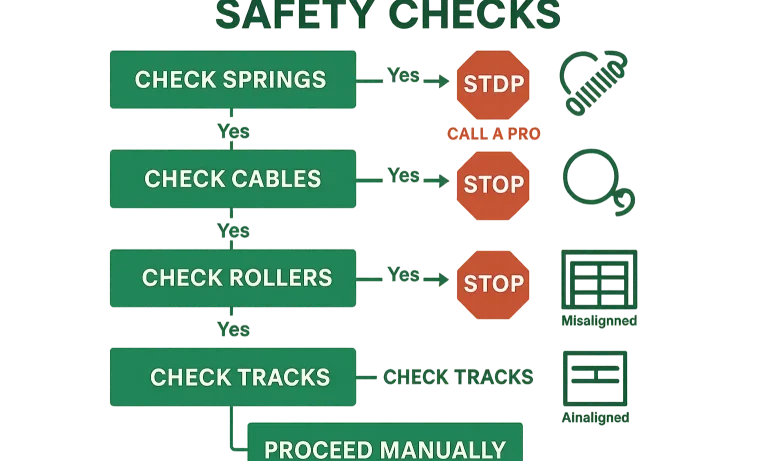
Now that you’ve done your visual check, this simple decision tree will help you determine the safest course of action. Your answers to the inspection questions will tell you whether it’s an absolute “STOP” or if you can cautiously proceed.
Make confident decisions quickly with this easy-to-follow ‘Go / No-Go’ safety checklist for post-accident garage door assessment.
- Did you see a broken spring or a loose/dangling cable?: – YES → STOP. The door is under immense, uncontrolled tension. Do not touch anything. This requires emergency garage door repair.
- Are any rollers out of the track or is the door visibly sagging/crooked?: – YES → STOP. The door is unstable and could fall. Do not attempt to move it.
- Is the only visible damage to the panels, with all springs, cables, and rollers appearing intact and aligned?: – YES → You MIGHT be clear for the next step. If the damage appears purely cosmetic and the system is aligned, you may be able to safely disengage the opener and test the manual operation. If you have any doubt, it’s always safer to wait for a professional. Our guide on how to manually open a garage door explains the process, but only proceed if you are confident the door is stable.
Action: Your Next Steps After the Assessment
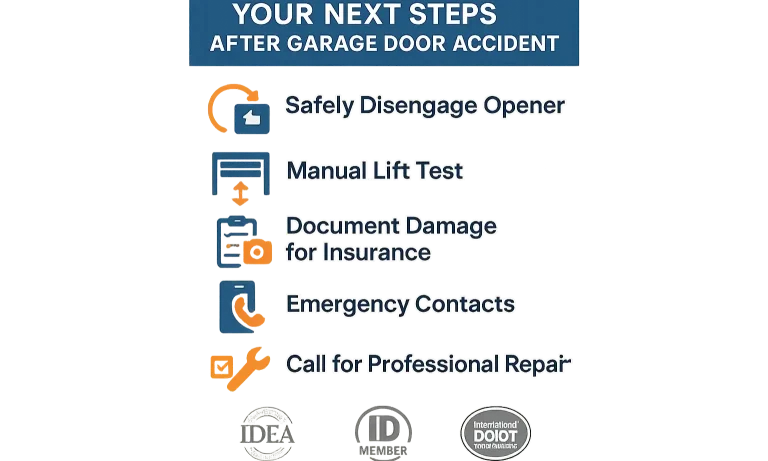
Regardless of the level of damage, having a clear plan for what to do next will reduce stress and help you get the problem resolved faster. Follow these expert-recommended next steps to ensure safety and streamline your repair and insurance process after a garage door incident.
- 1. Document the Damage:: Before anything is moved, take clear photos of all damaged components from multiple angles. This will be invaluable for your insurance claim.
- 2. Contact Your Insurance Agent:: Call your homeowner’s insurance provider to report the incident and ask about your coverage. Most policies cover accidental damage.
- 3. Call a Certified Professional:: Contact a reputable garage door repair company. When you call, be ready to describe what you found during your visual inspection (e.g., “I backed into the bottom panel, and now one of the rollers is out of the track,” or “The door made a loud bang, and I can see a gap in the spring above the door.”). This helps the technician come prepared. Many common garage door problems have clear visual indicators.
Frequently Asked Questions (FAQ)
1. I only have a small dent in one panel. Is it really that dangerous?
Even a small dent can be a big problem. A bent panel can throw off the door’s balance and put extra strain on rollers, tracks, and the opener motor. Over time, this “minor” issue can cause more significant and expensive failures. It’s always best to have it inspected.
2. Why can’t I just hit the opener button to see if it still works?
This is one of the most dangerous things you can do. If a roller is off-track or a cable is loose, the opener motor can exert hundreds of pounds of force on a misaligned system. This can cause the door to buckle, bend tracks, or even have the door come crashing down. Always unplug the opener and rely on a visual inspection.
3. Will my homeowner’s insurance cover backing my car into the garage door?
In most cases, yes. Standard homeowner’s insurance policies typically cover accidental damage to structures on your property, including the garage door. However, you’ll still have a deductible to pay. Your auto insurance might also play a role. It’s best to call your agent to understand your specific policy.
4. What’s the main difference between torsion springs and extension springs?
Torsion springs are typically located on a metal bar directly above the closed garage door. They work by twisting to create torque. Extension springs are found on either side of the door, parallel to the tracks, and they work by stretching and contracting. Torsion springs are generally considered safer because when one breaks, it stays on the bar, whereas an extension spring can snap and fly across the garage if it’s not secured with a safety cable.
You May Also Like
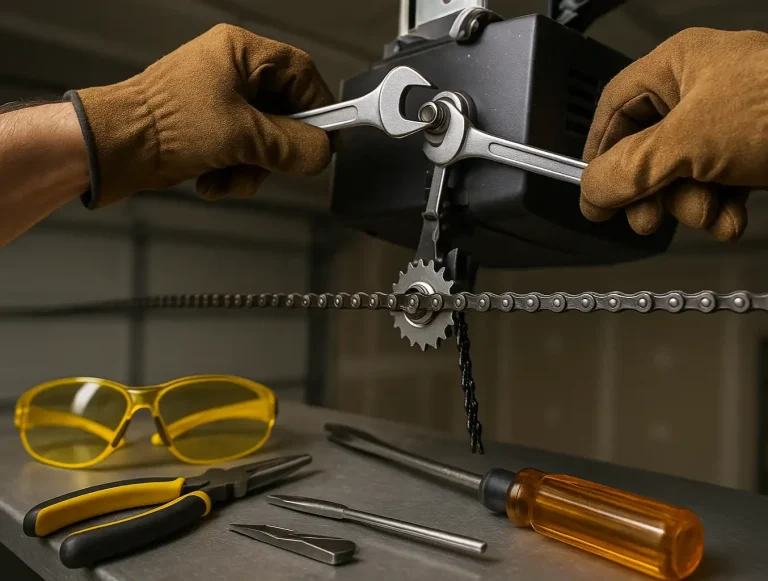
Safety Precautions and Essential Tools for DIY Garage Door Chain
It’s a sound every homeowner dreads: a sudden clatter and grind from the garage, followed by the sight of a sagging, useless chain dangling from the opener. Your first thought might be an expensive repair call, but…
Published Date: Apr 23, 2026
When NOT to Reengage Your Garage Door Opener: Identifying Safety Risks
You’re heading out, you press the button on your garage door remote, and… nothing. Or worse, a horrible grinding sound fills the air, and the door stops halfway, hanging at a crooked angle. Your first instinct is…
Published Date: Apr 6, 2026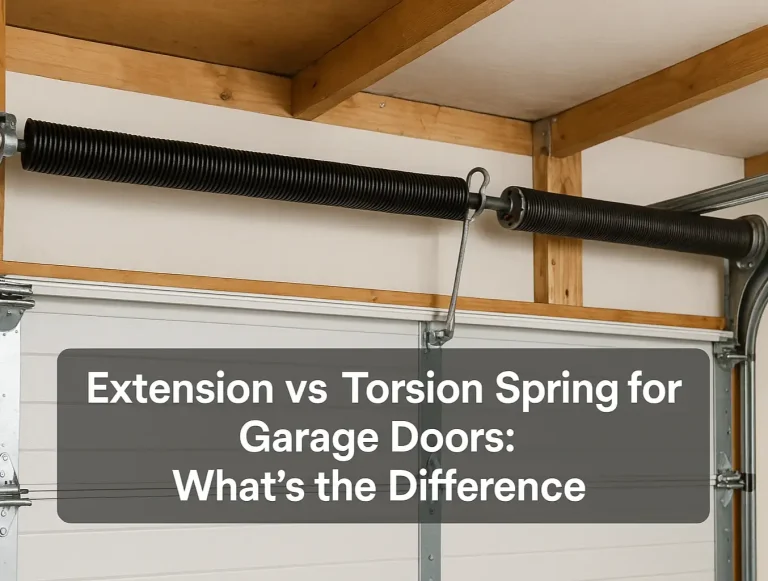
Extension vs Torsion Spring for Garage Doors: What’s the Difference
Ever wonder about the hardworking parts that make your garage door go up and down so smoothly? Those unsung heroes are your garage door springs! Understanding the two main types, extension vs torsion spring, is…
Published Date: Sep 26, 2025