





Safety Precautions and Essential Tools for DIY Garage Door Chain
Published: Apr 23, 2026
It’s a sound every homeowner dreads: a sudden clatter and grind from the garage, followed by the sight of a sagging, useless chain dangling from the opener. Your first thought might be an expensive repair call, but for many, reattaching a garage door opener chain is a manageable DIY project.
The difference between a successful fix and a frustrating, dangerous afternoon comes down to two things: prioritizing safety and having the right tools. Many online guides gloss over these critical details, but we believe you should feel confident and secure before you even touch the ladder.
This guide is different. We’ll walk you through the essential safety precautions and the specific tools you need, transforming this intimidating task into an empowering home repair win.
Foundation: Anatomy & Safety
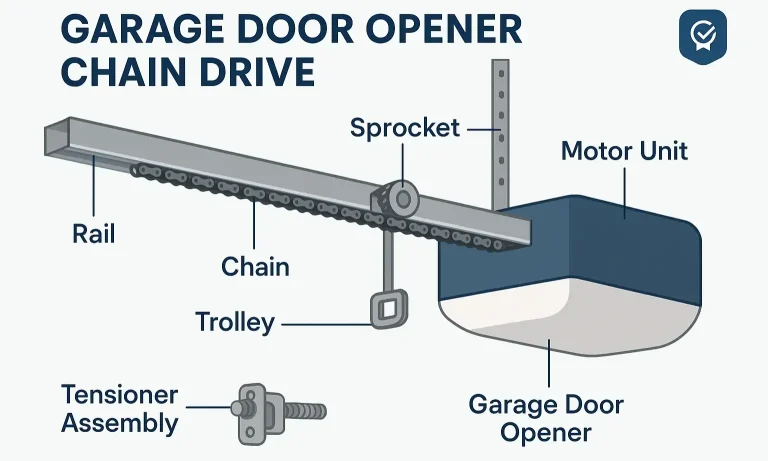
Before we get into the “how,” we need to cover the “what” and the “what not to do.” Understanding the machinery you’re working with is the first step toward a safe repair. A garage door system is simple in principle, but its components work under significant tension.
The Unskippable 5-Point Safety Checklist
If you only remember one part of this guide, make it this. Attempting any work without following these steps can lead to serious injury or damage to your property.
- Disconnect All Power: Unplug the garage door opener from the electrical outlet. Don’t just rely on the wall switch. This eliminates the risk of the motor engaging unexpectedly.
- Ensure the Door is Fully Closed: A closed garage door is in its most relaxed state. The powerful springs that help lift the door are under the least amount of tension, making the entire system more stable and safer to work on.
- Visually Inspect the Springs: Look at the large springs (either torsion springs above the door or extension springs along the sides). If you see any cracks, gaps, or signs of breakage, STOP IMMEDIATELY. Broken springs are extremely dangerous and require a professional.
- Wear Protective Gear: At a minimum, wear safety glasses to protect your eyes from falling debris or dust. A pair of work gloves is also highly recommended to protect your hands from grease and sharp edges.
- Use a Sturdy Ladder: You’ll be working above your head. Make sure your stepladder is stable, placed on level ground, and allows you to work comfortably without overreaching.
Familiarizing yourself with these key parts of a garage door opener will make the following steps much clearer. The sprocket on top of the motor unit is where the chain often slips off. The trolley is the piece that moves along the rail, connected to the door. The tensioner is what you’ll use to adjust the chain’s tightness.
Your Essential Toolkit
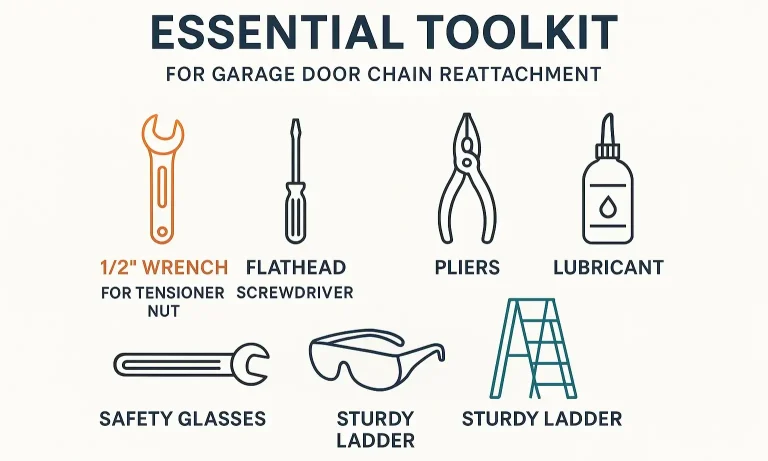
Having the exact tools ready prevents frustrating trips back and forth to the toolbox. Vague advice like “get a wrench” isn’t helpful. Here’s what you’ll actually need:
- Two wrenches or socket wrenches: Most opener models use a 1/2″ nut for the tensioner and a 7/16″ nut for the lock nut. Having two allows you to hold one in place while turning the other.
- Flathead screwdriver: For prying open the master link clip.
- Needle-nose pliers: Helpful for maneuvering the master link back into place.
- Stepladder: Sturdy and tall enough for you to work comfortably.
- Safety glasses and gloves: Non-negotiable safety gear.
- Rag or paper towels: To clean up excess grease.
Building: The Step-by-Step Reattachment Process
With your safety checks complete and tools in hand, you’re ready to begin. This process is for when the chain has come off the sprocket but is not broken.
Step 1: Disconnect the Trolley
First, pull the emergency release cord (the red-handled rope) to disconnect the trolley from the chain assembly. This allows you to move the chain freely without moving the entire door. If you need a refresher, check our guide on how to manually open a garage door safely.
Step 2: Loosen the Chain Tensioner
Using your wrenches, locate the tensioner nuts on the trolley. There will be an inner nut and an outer lock nut. Hold the inner nut steady with one wrench and use the other to loosen the outer lock nut. Once it’s loose, you can turn the inner nut to create slack in the chain. Give it several turns until the chain is visibly loose.
Step 3: Re-seat the Chain on the Sprocket
Climb your ladder to access the motor unit. Carefully lift the chain and guide the links back into the teeth of the sprocket. Ensure it’s seated properly and centered. If the garage door chain came off the sprocket, this is the moment you’re correcting that core issue.
Step 4: Reconnect the Chain to the Trolley (If Needed)
Sometimes, the chain detaches at the master link connection to the trolley. If so, use your flathead screwdriver to gently pry off the master link’s clip. Re-insert the pins through the chain and trolley connector, then use your needle-nose pliers to snap the clip securely back into place.
Step 5: Set the Correct Tension
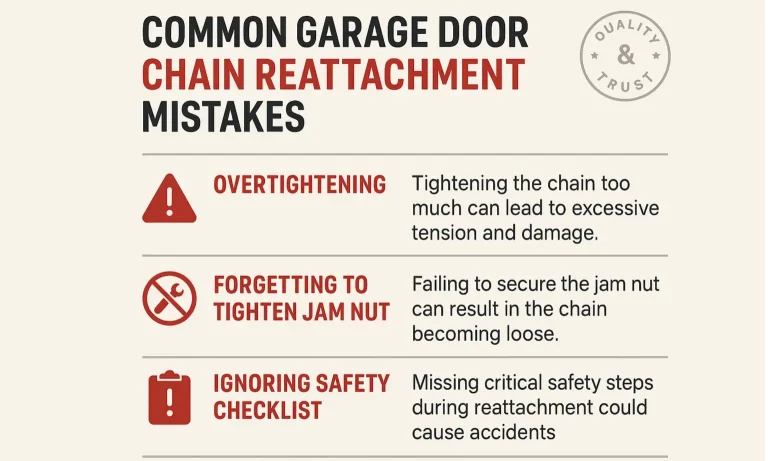
This is where many DIY attempts go wrong. Go back to the tensioner nuts. Tighten the inner nut to remove slack from the chain. So, how tight should the chain be on a garage door opener? The goal is not to make it guitar-string tight.
The “Aha!” Moment: A correctly tensioned chain should have about 1/4 to 1/2 inch of slack, allowing you to lift it slightly off the rail. It should never droop down and touch the rail. Once you have the right tension, hold the inner nut in place and firmly tighten the outer lock nut against it.
Step 6: Test and Adjust
Plug the opener back in. Re-engage the trolley by running the opener until it clicks back into place. Now, run the door through a full open and close cycle. Watch the chain and listen for any unusual sounds. If it runs smoothly, you’re done!
Mastery: Troubleshooting & Maintenance FAQ
Sometimes, things don’t go perfectly. Here are answers to common questions and problems.
Why does my garage door chain keep falling off?
This usually points to one of two issues: incorrect tension (either too loose or too tight) or a worn-out sprocket. Inspect the sprocket’s teeth on the motor unit. If they look worn down, rounded, or broken, the chain won’t be able to grip them properly, and the sprocket will need to be replaced. This is often a sign it’s time for more in-depth garage door opener troubleshooting.
What if a link in the chain is broken?
You can purchase a replacement master link from a hardware store. You’ll need to remove the broken link (which may require a chain breaker tool or bolt cutters) and insert the new master link to splice the chain back together.
How often should I maintain the chain?
Preventative maintenance is key. At least once a year, you should lubricate the garage door chain with a white lithium grease or a spray lubricant specifically designed for garage doors. Avoid thick grease like WD-40, which can attract dirt and gunk up the system.
When to Call a Professional
Empowerment is knowing what you can do, but wisdom is knowing what you shouldn’t. This DIY guide is for a simple chain reattachment. You should stop and call a professional service if you encounter any of the following:
- Broken or damaged springs: This is the most critical one. Spring replacement is not a DIY job.
- A bent or damaged rail: If the rail the chain runs along is bent, it will cause chronic chain issues.
- A worn-out drive sprocket: Replacing the sprocket itself is a more involved repair.
- You simply don’t feel comfortable: There is no shame in prioritizing your safety. If you feel unsure at any point, it’s always better to get an expert opinion.
By following these safety guidelines and using the right tools, you can confidently tackle a loose garage door chain and get your door running smoothly again.
You May Also Like
How to Reattach a Garage Door Chain: Step-by-Step Guide
When a garage door chain slips or detaches, the opener can’t do its job. It might look like a serious issue, but reattaching the chain is often something you can handle with a little care and attention. The key is…
Published Date: Jun 13, 2025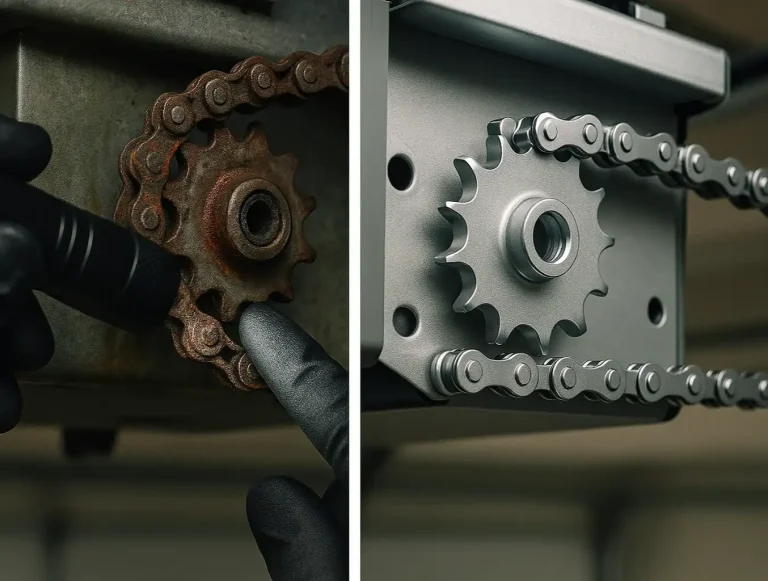
Identifying Damaged Garage Door Opener Chain Components
You’ve done everything right. You noticed your garage door opener chain was sagging, you looked up a guide, and you tightened it. For a few days, everything was perfect—the door ran smoothly and quietly. But now,…
Published Date: Apr 22, 2026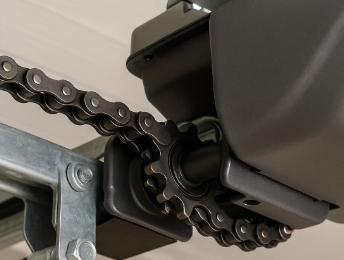
How to Lubricate a Garage Door Chain: Quick & Easy Guide
A noisy or stiff garage door chain usually means one thing: it needs lubrication. Whether your door squeaks on the way up or shudders on the way down, regular chain maintenance keeps everything working smoothly and…
Published Date: Jun 16, 2025