





How a Compromised Garage Door Frame Impacts Home Security
Published: Apr 17, 2026
You’ve invested in a smart lock, maybe a security camera, and you diligently lock your doors every night. You feel secure. But what if the most glaring vulnerability in your home’s security isn’t the lock, but the wooden frame holding your garage door in place?
It’s a detail most homeowners overlook. We focus on the high-tech gadgets and the strength of the door itself, but we ignore the foundation. Here’s the “aha moment” that changes everything: Most burglars don’t bother picking a lock; they break the frame.
A rotted, cracked, or compromised garage door frame is like leaving a key under the mat. It’s an open invitation for a low-skill, high-force break-in that renders your expensive lock completely useless. This guide will teach you how to see your garage door frame through the eyes of a security expert, spot the warning signs, and understand why its integrity is non-negotiable for your family’s safety.
The Anatomy of a Secure Entryway
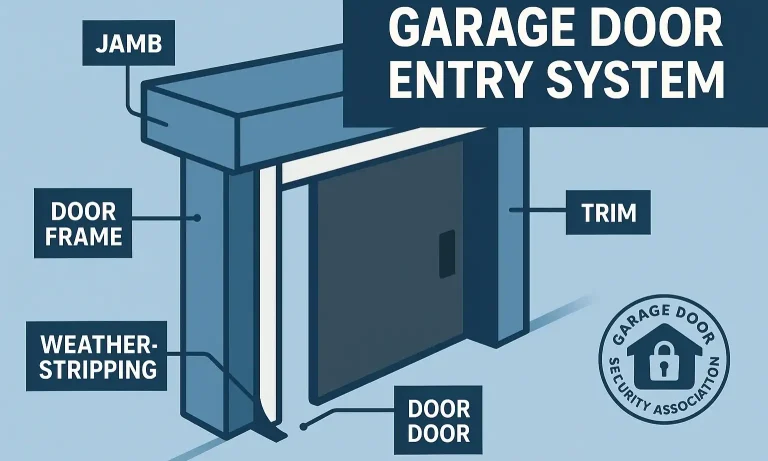
Before you can spot a problem, you need to know what you’re looking at. A garage door frame isn’t just a decorative trim; it’s a structural system designed to hold the largest moving object in your home securely in place and resist physical force.
The key components include:
- The Jambs: The vertical parts of the frame on either side of the door. This is where the lock’s strike plate is mounted and where a burglar will apply force.
- The Head Jamb (or Header): The horizontal part at the top of the frame.
- Weatherstripping: The vinyl or rubber seal that runs along the jambs and header to keep out the elements. While its main job is insulation, a tight seal also eliminates gaps that could be exploited with a pry bar.
- The Trim (or Brickmould): The outer layer of wood that provides a finished look but also serves as the first line of defense against moisture.
These parts must work together as a single, solid unit. If one part fails—especially the jambs—the entire system’s security is compromised.
What to Look For: A Visual Guide to Frame Failure
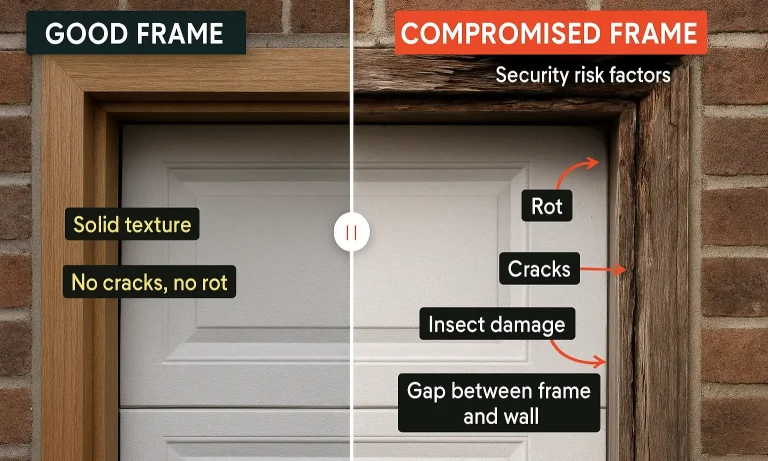
You don’t need to be a contractor to spot the red flags. Take a walk outside and look closely at the bottom 12 inches of your garage door frame—this is where water damage and rot almost always begin.
Here are the most common signs of a security risk in progress:
- Wood Rot: Look for wood that is dark, soft, or crumbly. It might be flaking away or look spongy. This is the most critical security risk, as rotted wood has virtually no structural strength.
- Cracks and Splits: Long vertical cracks, especially near the bottom of the jambs or around the lock area, weaken the frame’s ability to resist impact.
- Gaps: Check for any separation between the wood frame and the wall of your house. These gaps allow moisture in, accelerating rot, and can provide a starting point for a crowbar.
- Peeling or Bubbling Paint: While sometimes just a cosmetic issue, blistering paint is often a sign that moisture is trapped underneath, eating away at the wood you can’t see.
How Burglars Win: The Physics of a Forced Entry
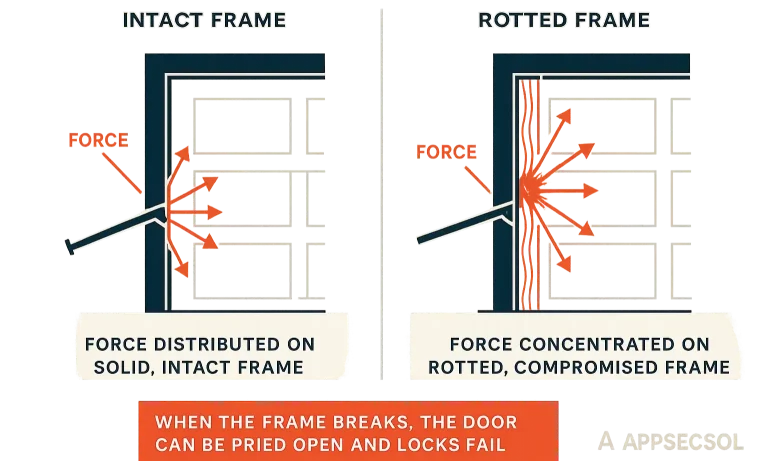
This is where everything clicks. Why does a little rot matter so much? Because it completely changes how the frame responds to force.
- On a Solid Frame: When force is applied (like a kick or a pry bar), a healthy wood frame distributes that energy along its entire length. The wood fibers are strong and interconnected, resisting the impact and holding the lock mechanism firmly in place.
- On a Compromised Frame: When that same force hits rotted or cracked wood, the energy has nowhere to go. Instead of distributing, it concentrates on the weak point. The soft, disconnected wood fibers splinter and break apart with minimal effort.
The lock and deadbolt may hold perfectly, but they are ripped right out of the frame they were anchored to. It’s a quiet, fast, and shockingly effective way to bypass a home’s security. A burglar isn’t defeating your lock; they are defeating the rotten wood holding it.
Your 5-Minute Frame Security Audit

Ready to check your own home? You can do this right now. This simple audit will give you a clear picture of your garage door’s security integrity.
Step 1: The Visual Check
Walk the perimeter of your garage door, paying close attention to the bottom foot of the wooden frame. Look for the visual signs we discussed: dark or discolored wood, cracks, peeling paint, and any gaps between the frame and the house siding.
Step 2: The Screwdriver Test
This is the most definitive test. Take a screwdriver and gently but firmly press the tip against the wood in several spots, especially anywhere that looks suspicious.
- If the wood is firm and resists the pressure, your frame is likely solid.
- If the screwdriver tip sinks in easily, the wood feels soft and spongy, or flakes away, you have rot. The structural integrity is compromised, and it is a significant security risk.
Step 3: Know When to Call a Pro
If your visual check reveals major cracks or the Screwdriver Test confirms rot, the frame needs to be replaced, not patched. Cosmetic fixes like wood filler and paint will hide the problem but won’t restore the strength needed to prevent a break-in. Understanding the potential cost to replace garage door frame can help you budget for this essential security upgrade. A professional can ensure the new frame is properly installed, sealed, and secured to protect your home.
Frequently Asked Questions
What causes garage door frame rot?
The primary cause is moisture. Rainwater splashing up from the driveway, snow sitting against the base, or a leaky gutter above the garage can all saturate the wood. Once moisture gets in, it creates the perfect environment for fungus to grow, which is what we call rot.
Can’t I just use wood filler or paint over the damage?
This is a common mistake. Wood filler and paint are cosmetic solutions, not structural ones. They may make the frame look better temporarily, but they do nothing to restore the wood’s strength. Painting over rot actually makes it worse by trapping moisture inside and accelerating the decay.
Is a metal frame better than a wood frame for security?
While a properly maintained wood frame is very secure, steel frames offer superior resistance to rot, insects, and warping. A professional metal door frame garage door installation can be a great long-term solution for homeowners looking for maximum durability and peace of mind.
Besides the frame, what else can I do to protect my garage?
Securing your frame is the most important first step. Beyond that, there are many effective strategies. Learning how to secure garage door entry points involves upgrading locks, reinforcing the door itself, and improving visibility with lighting and cameras. Upgrading to a more robust lock is also a good idea, and a proper garage door handle installation can be a simple yet effective deterrent.
Your First Line of Defense
Your home’s security is a system of layers, and your garage door frame is one of its most critical foundations. By taking a few minutes to inspect it and understand its condition, you are moving from a passive homeowner to an active guardian of your property. Don’t let a simple, fixable issue like a compromised frame undermine all your other security efforts. Your home, and your peace of mind, are worth it.
You May Also Like
How to Know When It’s Time to Replace Your Garage Door Frame
A strong garage door frame is the foundation of your garage's security and operation. However, even the strongest frames are susceptible to deterioration over time, which reduces their usefulness. Early detection of…
Published Date: Jan 30, 2025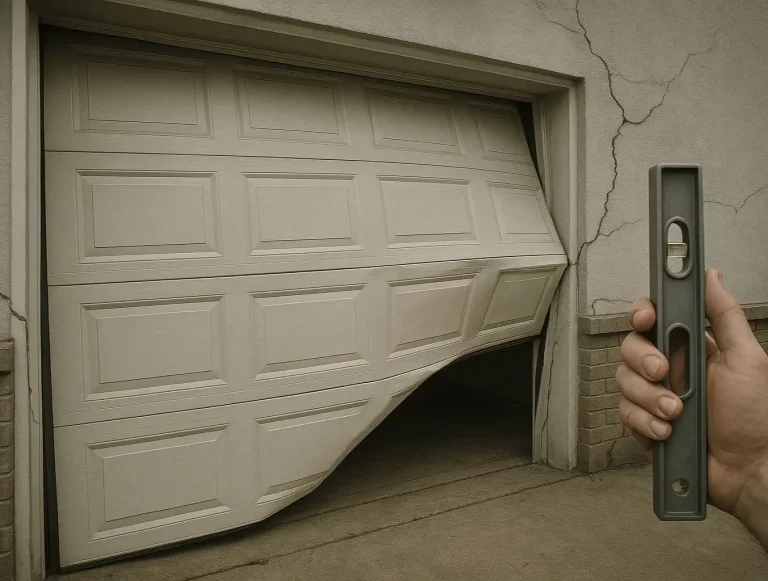
Identifying and Addressing Garage Door Frame Damage
You’ve been there. You press the button on your remote, the garage door starts its descent, and then… it stops. Or it closes unevenly, leaving a gap on one side. You’ve done the usual dance: you’ve checked the…
Published Date: Apr 16, 2026
The Ultimate Guide to Garage Door Frame Installation and Repair
Your garage door frame is more than just a border—it keeps your door running smoothly. Even a brand-new door might not function properly if your frame is off. It’s similar to a house foundation—the structure can’t…
Published Date: Mar 18, 2025