





Why Your Garage Door Opener Trips the Circuit Breaker
Published: Apr 20, 2026
You press the button on your garage door remote, expecting the familiar rumble of the door opening. Instead, you get… silence. The light on the opener is off. A quick check of the breaker box confirms your suspicion: the circuit for your garage has tripped.
It’s a frustrating moment, but here’s the good news: that tripped breaker is a safety feature doing its job perfectly. It detected a problem in the electrical circuit and shut off the power to prevent damage or a potential fire. Think of it less as a problem and more as a clear signal that something needs your attention.
Before we dive in, a crucial safety warning: Always prioritize your safety when dealing with electricity. The steps below are for basic diagnosis. If you are ever unsure, uncomfortable, or if the breaker trips immediately after you reset it, stop what you are doing and call a certified professional.
Your 60-Second Electrical Primer: What's Happening in Your Breaker Box?
Your circuit breaker is like a vigilant gatekeeper for the electrical circuits in your home. It monitors the flow of electricity (amperage) and will instantly cut the power if it senses a dangerous situation. For a garage door opener, this usually happens for one of three reasons:
- Circuit Overload: This is the most common and least alarming cause. It’s like asking a single person to carry too many grocery bags—eventually, they’ll drop everything. If your opener, a second freezer, and a power tool are all running on the same circuit, the total power demand can exceed the circuit’s capacity, causing a trip.
- Short Circuit: This is more serious. It happens when a “hot” wire touches a “neutral” wire, creating a low-resistance path for electricity to flow. This surge of current is dangerous, and the breaker trips instantly to prevent overheating and fire. This can be caused by damaged wiring or a fault within the opener itself.
- Ground Fault: Similar to a short circuit, this occurs when a “hot” wire touches the ground wire or a grounded part of an appliance (like the metal casing of the opener). This also causes a dangerous surge of electricity, and the breaker or a GFCI outlet will trip to protect you from electric shock.
Understanding these basics helps turn a confusing electrical issue into a solvable puzzle. Now, let’s figure out which piece is causing the problem.
A Step-by-Step Guide to Diagnosing the Problem
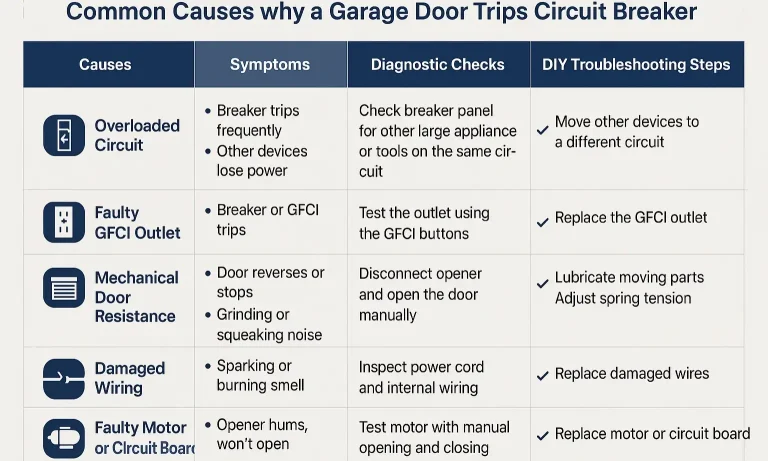
We’ll work through a diagnostic funnel, starting with the simplest, most common issues and moving toward more complex ones. This logical process helps you rule out causes one by one without getting overwhelmed.
This comparison matrix quickly clarifies the primary reasons a garage door opener trips a breaker alongside actionable troubleshooting steps, making complex electrical diagnostics accessible and user-friendly.
Step 1: Check for a Circuit Overload
Before you even look at the opener, look at what else is on the circuit. Garages often become workshops, storage spaces, and charging stations.
How to Check: Go to your garage and unplug everything else on the same circuit as the opener. This could be a deep freezer, a beer fridge, power tool chargers, or holiday lights.
The Test: Go back to the breaker box and firmly reset the breaker to the “On” position.
The Result: Try to operate your garage door. If it works without tripping the breaker, you’ve found your culprit: a simple circuit overload. The long-term solution is to move some of your appliances to a different circuit.
Step 2: Look at the GFCI Outlet
Many building codes require a Ground Fault Circuit Interrupter (GFCI) outlet in garages. This special outlet has its own mini-breaker built-in for added safety.
How to Check: Look at the outlet the opener is plugged into. Does it have “Test” and “Reset” buttons on it?
The Test: If the “Reset” button has popped out, press it back in until it clicks. You may see a small indicator light turn on.
The Result: If this restores power, the GFCI may have tripped due to moisture or a minor fault. If it keeps tripping, there could be a ground fault issue in the opener or the wiring itself.
Step 3: Inspect the Mechanical Side of Your Door (The “Aha” Moment)
Here’s a connection most people miss: a mechanical problem with your door can cause an electrical problem at the breaker. If your door is physically difficult to lift, the opener’s motor has to work much harder, drawing more electricity (amps) than it’s designed for. This extra power draw can be enough to overload the circuit and trip the breaker.
How to Check: Pull the emergency release cord (usually a red handle) to disconnect the opener from the door. Now, try to lift the door by hand.
The Test: It should be relatively easy to lift with one hand and should stay open on its own. Does it feel excessively heavy? Does it grind, stick, or get stuck in the tracks?
The Result: If the door is hard to move, you have a mechanical issue—like a broken spring, misaligned tracks, or seized rollers. Fixing this mechanical problem will likely solve your electrical one. If you’re encountering other issues, our guide to garage door opener troubleshooting can offer more insights.
Step 4: Examine the Wiring for Obvious Damage
Visually inspect all the accessible wiring associated with your opener. You’re looking for clear signs of trouble.
How to Check: With the breaker still off, use a flashlight to examine the opener’s power cord, the wiring running to the wall button, and the thin garage door sensor wire along the tracks.
The Test: Look for any frayed areas, chew marks from pests, pinched sections, or staples that have been driven through the wire. Check that the connections at the back of the motor unit are secure.
The Result: Damaged wiring can easily cause a short circuit or ground fault. If you find any evidence of bad wiring, it must be repaired by someone qualified to do so.
Step 5: Consider the Opener Itself
If you’ve ruled out everything else, the fault may lie within the opener’s motor or main logic board.
How to Check: Listen closely. After resetting the breaker, do you hear a faint humming or buzzing from the motor unit when you try to operate it?
The Test: A hum without any movement can indicate a seized motor or a faulty starting capacitor. A breaker that trips the instant you press the remote button often points to a serious short circuit on the logic board.
The Result: Internal electronic failures are not typically a DIY fix. If you suspect the opener is the problem, it’s best to consult a professional. For specific models, a Chamberlain garage door opener troubleshooting guide might provide more model-specific clues.
Level Up: Understanding Dedicated Circuits and Power Surges
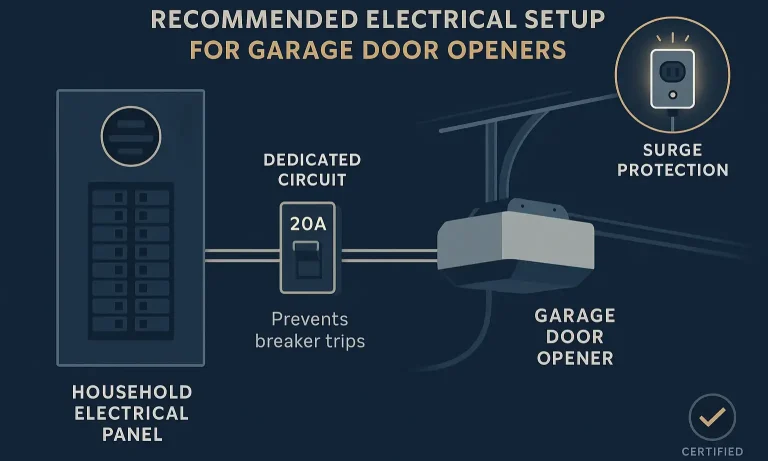
As you troubleshoot, you might wonder about the ideal electrical setup for your opener. Addressing this can prevent future problems.
Experts agree that a garage door opener should be on its own dedicated circuit. This eliminates the possibility of circuit overloads caused by other high-draw appliances. Furthermore, protecting the sensitive electronics in your opener with a quality surge protector is a smart, inexpensive investment that can save you from costly repairs caused by power spikes. Understanding how many amps does a garage door opener use is key to ensuring your circuit can handle the load without issue.
This visual clarifies the expert-recommended electrical setup for garage door openers, demonstrating the importance of dedicated circuits and surge protection to avoid breaker trips, enhancing trust in professional guidance.
The Final Check: Is It DIY or Time to Call a Professional?
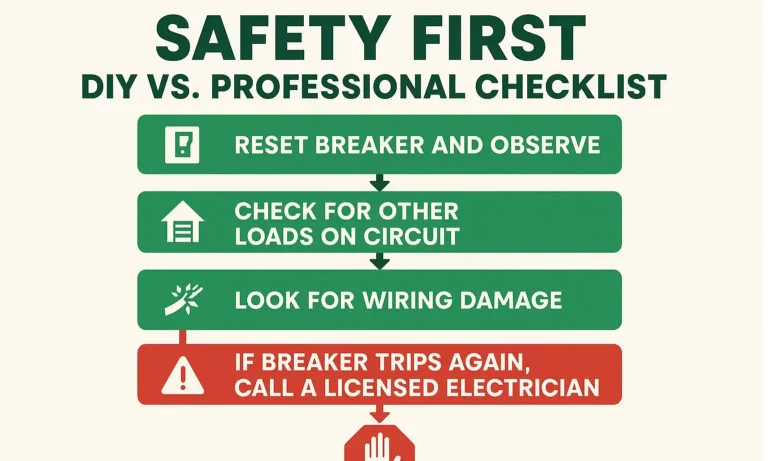
Knowing your limits is the most important part of any home repair project. Use this checklist to decide on your next move.
This checklist empowers users to safely attempt simple fixes while clearly indicating when professional help is necessary, lowering purchase anxiety and guiding confident, informed decisions.
The most critical red flag is a breaker that won’t stay reset. If you flip it back on and it immediately trips again without you even touching the garage door remote, STOP. This indicates a persistent short circuit or ground fault that requires professional diagnosis.
Frequently Asked Questions (FAQ)
Can a bad extension cord cause the breaker to trip?
Absolutely. If you’re using an extension cord that is too long, too thin (not the proper gauge), or damaged, it can fail to deliver adequate power to the opener. The motor will try to draw more current to compensate, leading to an overload that trips the breaker. Always use a heavy-duty, properly rated extension cord, if one must be used at all.
Is it normal for a breaker to trip occasionally?
No. A breaker trip is always a sign of an underlying issue. While a one-time circuit overload from running a vacuum cleaner might be easy to explain, frequent or unexplained trips from your garage door opener mean there’s a problem that needs to be diagnosed and fixed.
How do I know if the circuit breaker itself is bad?
While less common, the breaker can fail. Signs include a breaker that feels loose or “mushy” when you flip it, won’t stay in the “On” position even with nothing plugged into the circuit, or shows physical signs of damage or scorching. Replacing a breaker is a job for a licensed electrician.
Could my garage door sensors cause the breaker to trip?
It’s highly unlikely. The safety sensors use very low voltage and are not powerful enough to trip a standard 15 or 20-amp circuit breaker. However, damaged or shorted sensor wiring could potentially cause issues with the opener’s logic board, so checking the garage door wiring is always a good step.
Your Path to a Smooth-Running Garage Door
A tripped circuit breaker can be a hassle, but it’s also a valuable clue. By following a logical diagnostic process, you can often identify the root cause, whether it’s a simple overload or a sign of a deeper mechanical or electrical issue.
By taking the time to understand why it’s happening, you’re not just fixing a problem—you’re ensuring the safety and reliability of one of your home’s most important systems. If you’ve walked through these steps and are still facing issues, or if you’ve uncovered a problem that’s beyond your comfort level, don’t hesitate. The experienced technicians at Up & Down Garage Doors are available 24/7 to provide professional diagnosis and repair, ensuring your door operates safely and smoothly.
You May Also Like
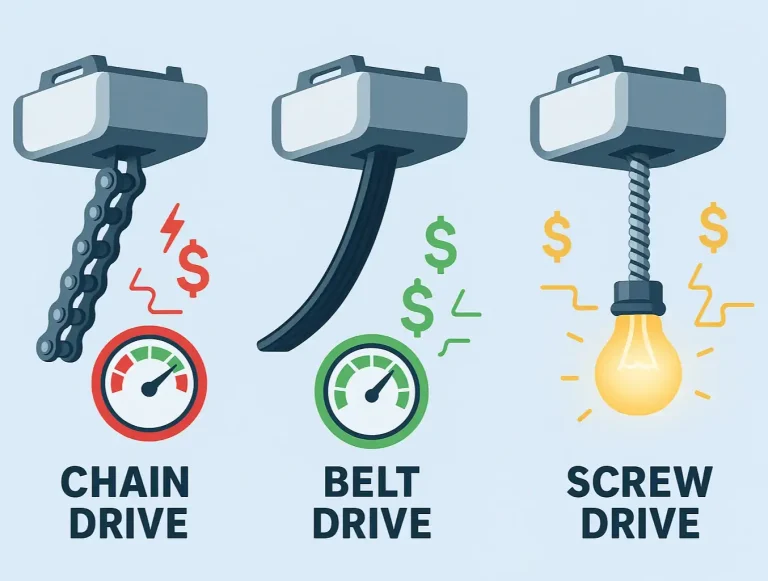
Garage Door Opener Power Usage: Belt vs. Chain vs. Screw Drive
It’s a sound most of us hear every day: the familiar hum and clank of the garage door opener, a simple convenience we take for granted. But have you ever paused to think about what that convenience costs on your…
Published Date: Apr 17, 2026
How Many Amps Does a Garage Door Opener Use: Power Requirements Explained
A new garage door opener can make everyday life more convenient — but there’s one detail that’s easy to overlook: power requirements. Whether you’re setting up a new garage or replacing an older system, Up & Down…
Published Date: Aug 21, 2025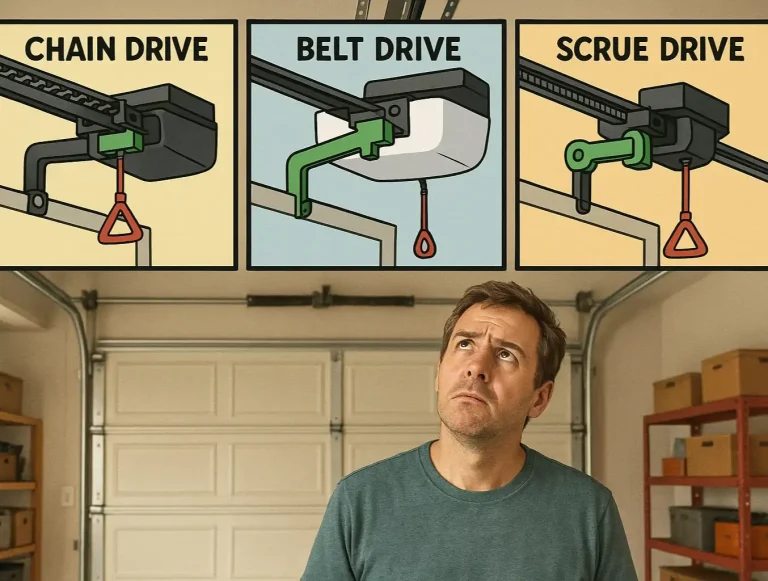
Reengaging Chain, Belt, and Screw Drive Openers
You followed the online guide perfectly. You pulled the red emergency cord, handled the power outage, and now you’re ready to reconnect your garage door. You press the button on the remote, the motor hums to life,…
Published Date: Apr 8, 2026