Our company logo

State

Understanding Garage Door Problems in Bridgeport Homes


Published: Feb 11, 2026

Is your garage door trying to tell you something? That sudden shudder, the high-pitched squeal, or the frustrating refusal to open—these aren't just minor annoyances. They're signals. Your garage door, one of the hardest-working pieces of equipment in your home, is asking for attention.

For many homeowners in Bridgeport, a malfunctioning garage door can feel like a major, unexpected problem. You might be wondering, "What's wrong with it? Is this going to be expensive? Who can I trust to fix it?"

You've come to the right place. This guide is designed to be your trusted first touchpoint, transforming confusion into clarity. We'll demystify the common issues, help you understand the components working behind the scenes, and empower you to make informed decisions—without any confusing industry jargon. Consider this your friendly, expert advice on everything you need to know about garage door repair in Bridgeport.

Anatomy of a Garage Door: A 5-Minute Guide for Homeowners
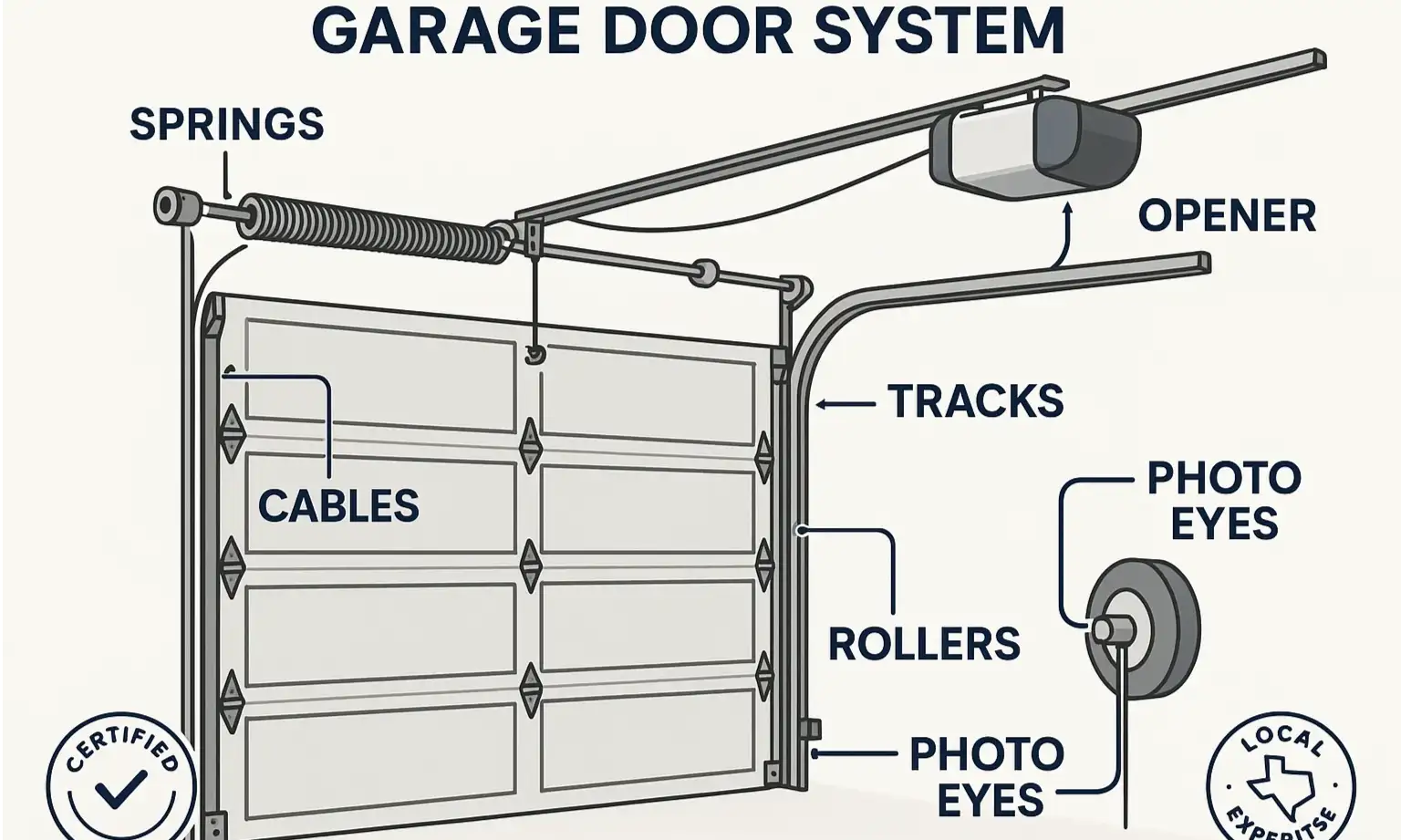

Before we dive into problems, let's get familiar with the key players. Understanding the basic parts of your garage door system makes it much easier to diagnose an issue. Think of it as a team where every member has a critical job.
Expert visual guide explains key garage door parts to help identify issues and choose the right repairs.

  • Springs (The Muscle): These are the true heavy lifters. Torsion or extension springs counterbalance the door's weight, making it light enough for you (and the opener) to lift.
  • Cables (The Tendons): These steel cables connect the springs to the bottom of the door, transferring the lifting force.
  • Rollers & Tracks (The Skeleton): Rollers are the wheels that guide your door along the metal tracks on either side of the opening.
  • Opener (The Brain): The motorized unit that automates the opening and closing process. It receives the signal from your remote or keypad.
  • Photo Eye Sensors (The Guardians): These two small sensors at the bottom of the door create an invisible beam. If anything breaks this beam while the door is closing, it automatically reverses, preventing accidents.
Expert visual guide explains key garage door parts to help identify issues and choose the right repairs.

The 7 Most Common Garage Door Problems (And What They Mean)


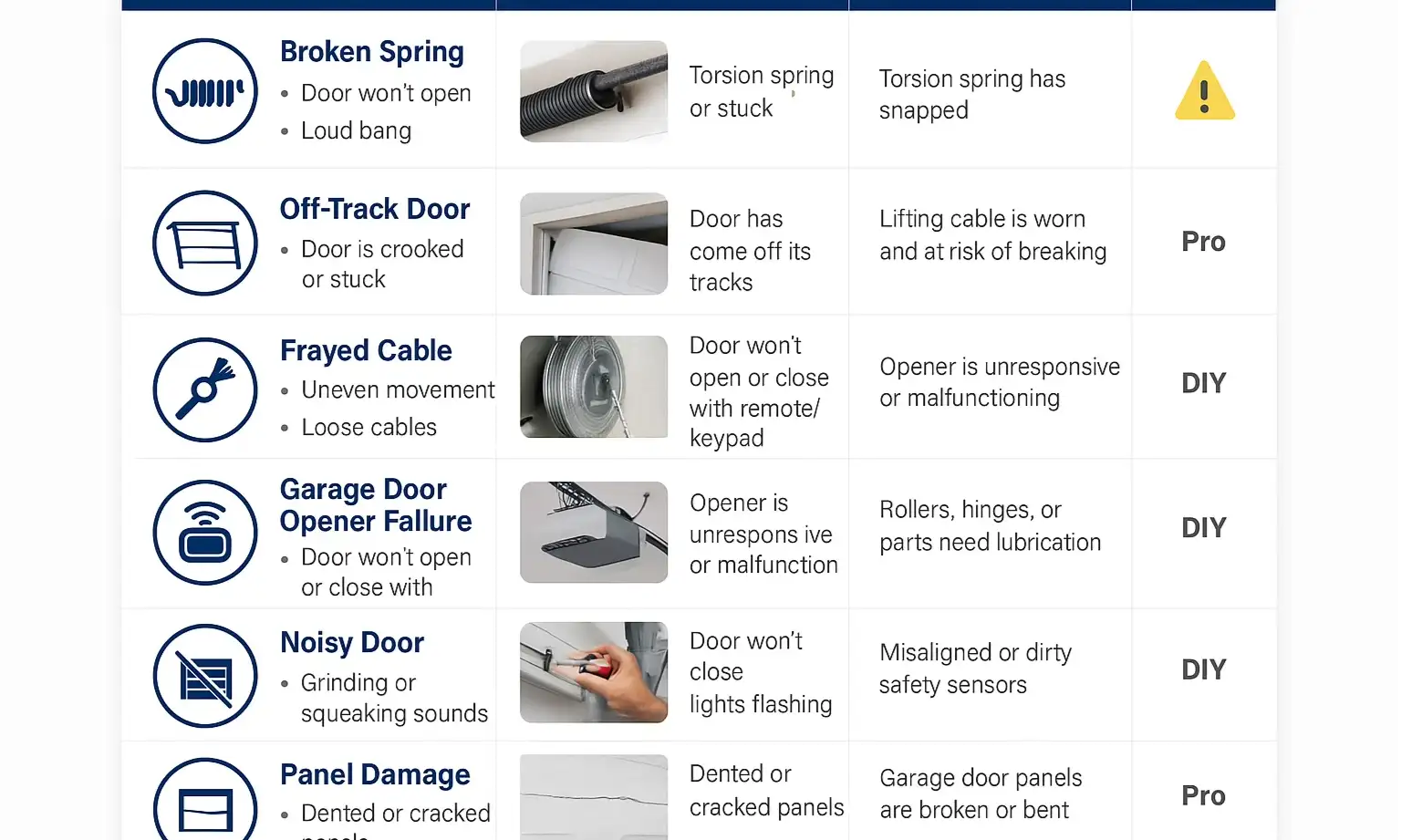
Now that you know the parts, let's look at the common ways they can cause trouble. Here’s a visual guide to the most frequent issues homeowners face.

1. Broken Garage Door Spring

Symptoms: You hear a loud "bang!" from the garage. The door feels incredibly heavy, won't open more than a few inches, or the opener strains but can't lift it. You may see a visible gap in one of the springs above the door.
What's Happening: The spring, which is under immense tension, has snapped. The "muscle" of the system is gone.
DIY or Pro? PRO ONLY. This is the most dangerous garage door repair. Attempting to handle a broken garage spring repair without proper tools and training can result in serious injury.

2. Snapped or Frayed Cable

Symptoms: The door hangs crooked, gets stuck partway, or slams shut on one side. You can see a loose, frayed, or broken cable near the bottom of the door.
What's Happening: The cable that helps lift the door has failed, causing an imbalance.
DIY or Pro? PRO. Like springs, cables are under high tension and connected to the spring system. A professional garage door technician should handle this.
At-a-glance guide explains common garage door issues and when to DIY or call a professional.

3. Door is Off-Track

Symptoms: The door is visibly out of its vertical tracks, often looking crooked and jammed. The rollers may have popped out completely.
What's Happening: This can be caused by something hitting the door or by worn-out rollers or cables.
DIY or Pro? PRO. Forcing an off-track door can cause more damage to the panels and tracks. A professional can safely realign the door and fix the underlying cause.

4. Malfunctioning Garage Door Opener

Symptoms: The remote or wall button doesn't work, the door reverses immediately after hitting the floor, or the motor runs but the door doesn't move.
What's Happening: The issue could be anything from dead remote batteries or misaligned photo eyes to a stripped gear inside the garage door opener unit itself.
DIY or Pro? DIY First, then Pro. You can safely try replacing batteries, clearing obstructions from the photo eyes, and checking the power source. If those simple fixes don't work, it's time to call a technician for a proper diagnosis.

5. Damaged Garage Door Panels

Symptoms: You see visible dents, cracks, or warping on one or more sections of the door, often from an accidental impact.
What's Happening: The structural integrity of the door is compromised, which can affect its movement and insulation.
DIY or Pro? PRO. While it might seem simple, replacing a panel requires disconnecting the door from the opener and springs. A professional can ensure the new panel matches and is installed correctly. Proper garage door panel repair is crucial for long-term function.

6. Worn Out Rollers

Symptoms: The door makes a loud grinding, scraping, or squeaking noise as it moves. The movement seems jerky or shaky.
What's Happening: The small wheels (rollers) that guide the door have worn out, cracked, or lost their lubrication.
DIY or Pro? DIY-Friendly (with caution). Experienced homeowners can often replace rollers themselves, especially the ones that are easily accessible. However, the bottom rollers are under spring tension and should be left to a professional.

7. Misaligned Photo Eye Sensors

Symptoms: The garage door won't close. It starts to go down, then immediately reverses and goes back up. The opener light might be blinking.
What's Happening: The safety sensors are not aligned, meaning the invisible beam is broken. The opener thinks there's an obstruction and won't allow the door to close.
DIY or Pro? DIY. This is one of the most common and easily fixable issues. Gently adjust the sensors until their indicator lights are solid, wipe the lenses clean, and ensure nothing is blocking their path.

At-a-glance guide explains common garage door issues and when to DIY or call a professional.

Repair or Replace? Making the Smart Choice


When faced with a significant repair, it's natural to wonder if you should fix the problem or invest in a full replacement. The answer often depends on a few key factors:

  • Age of the Door: If your garage door is over 15-20 years old, replacing it may be more cost-effective in the long run than continuing to pay for repairs on aging parts.
  • Extent of the Damage: A single broken spring is a straightforward repair. However, multiple damaged panels, rusted tracks, and a failing opener might mean the cost of repairs is approaching the new garage door cost in Bridgeport, CT.
  • Energy Efficiency: Older, uninsulated doors can be a major source of heat loss in a Connecticut winter. A modern, insulated door can lower your energy bills and make your garage more comfortable.
  • Modern Features & Safety: A new garage door installation gives you access to modern safety features, quieter operation, and conveniences like the best smart garage door opener technology that lets you control your door from your phone.

Need more information?

Your Next Steps: A Clear Path to a Working Garage Door
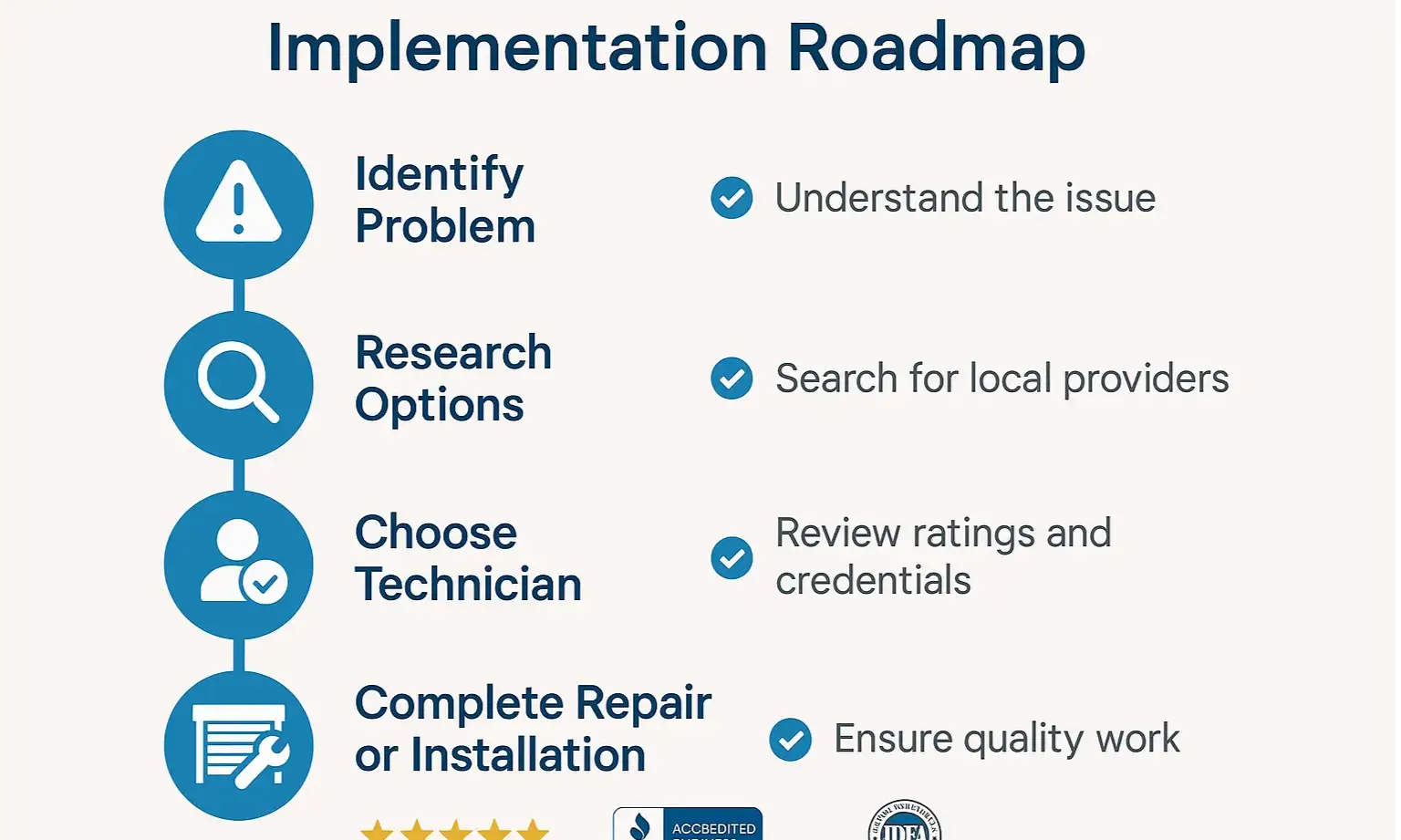

Feeling more confident? Great. Knowledge is the first step. When you're ready to hand the problem over to a professional, here’s how to ensure you're choosing the right team for the job.
Step-by-step roadmap helps you repair or replace your garage door with confidence.

  1. Look for Local Experts: Choose a company with a proven track record in the Bridgeport area. Local companies understand the climate and common issues homeowners face here.
  2. Check Reviews and Reputation: Look at reviews on Google, Yelp, and Angi. Consistent positive feedback is a strong indicator of reliable service.
  3. Ask About Emergency Service: Problems don't always happen during business hours. A company offering emergency garage door repair in Bridgeport, CT, shows a commitment to its customers.
  4. Get a Clear Quote: A reputable technician will diagnose the problem and provide a clear, itemized quote before starting any work. Be wary of anyone who gives a vague price or pressures you into an immediate decision.
  5. Inquire About Warranties: Ask about warranties on both parts and labor. This gives you peace of mind that the company stands behind its work.
Step-by-step roadmap helps you repair or replace your garage door with confidence.

Frequently Asked Questions About Garage Door Service in Bridgeport


What is the most common problem with garage doors?

Broken springs are one of the most frequent major repairs. For minor issues, misaligned photo eye sensors are a very common and easily fixed problem.

Can I repair a broken garage door spring myself?

We strongly advise against it. Garage door springs are under extreme tension and can cause severe injury or property damage if they are not handled with the correct tools and expertise. It's a job best left to a trained garage door technician in Bridgeport, CT.

Is it cheaper to repair or replace a garage door opener?

If your opener is over 10 years old and the repair is significant (like a new motor or circuit board), replacement is often the smarter financial choice. You'll get a new warranty and more modern, reliable technology.

How do I choose between the garage door companies near me in Bridgeport, CT?

Look for a combination of experience, positive reviews, fair pricing, and 24/7 availability. A family-owned business like Up & Down Garage Doors often provides a personal touch and a deep commitment to customer satisfaction. When you need a reliable garage door service in Bridgeport, CT, we're here to help.

You may also like


blog photo

Garage Door Maintenance Tips

The garage door is one of the most important parts of your home. Its functioning is responsible not only for your convenience but also for your safety. In addition, it is also the largest and heaviest moving mechanism in your home and something that you use several times a day, each day. That's why taking care of your garage doors is important. However, how often do we regularly check our garage doors? After all, this is something that we use every day in the morning while leaving for work and again at night when we return home. Usually, only during these situations do we pay more attention to certain malfunctions. Sometimes we just don't have enough time for immediate repairs. That is how minor breakdowns can become more serious over time. Due to improper use, the mechanism wears out and at some point, may stop working altogether. This causes not only many inconveniences but also affects the overall level of protection of your home. That is why it is so important to take care of any malfunctions your garage door has in time. In this article, we put together a garage door maintenance checklist to help you out, so keep reading!