





Impact of Garage Door Side Gaps on Home Security
Published: Apr 16, 2026
Ever look at the thin gaps along the sides of your garage door and think nothing of them? A little daylight peeking through seems harmless—a normal part of a house settling. But what if that tiny gap was a welcome mat for unwanted guests?
Here’s a startling fact that might change how you see your garage: research shows that 9% of burglars gain access to homes through an unsecured garage door. They don’t always need to break a window or pick a lock. Sometimes, all they need is a quarter-inch of space and a simple piece of wire.
Those seemingly insignificant gaps are one of the most overlooked vulnerabilities in home security. They offer a direct line of attack to your garage’s emergency release mechanism, turning your largest moving object into your home’s weakest link. The good news? Securing it is easier than you think. Let’s walk through how thieves exploit this weakness and the simple, effective ways you can reinforce your garage door today.
The Anatomy of a Break-In: How Thieves Exploit Small Gaps
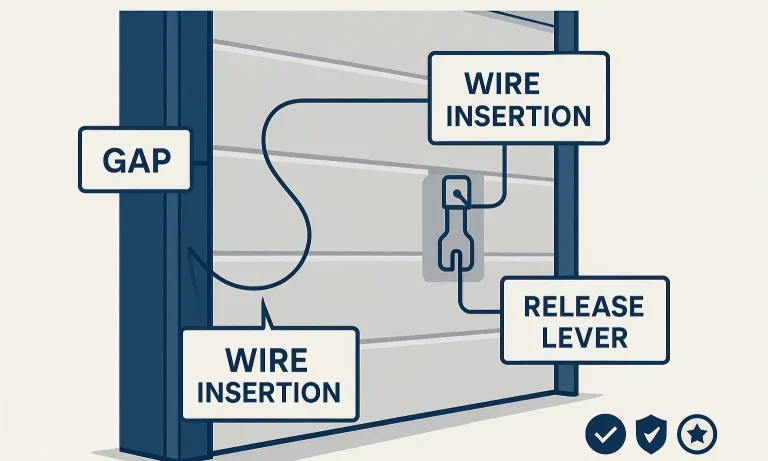
To a burglar, a gap along the side of your garage door isn’t just a gap—it’s an opportunity. It allows them to bypass your expensive opener and security codes using a shockingly simple technique often called the “coat hanger method.”
Here’s how it works: An intruder snakes a piece of wire or a straightened coat hanger through the gap between your door and the frame. They fish around for the emergency release cord—the red-handled rope hanging from your opener’s track. With a quick tug, the opener is disengaged from the door, allowing them to lift it manually from the outside. The entire process can take less than a minute.
Larger gaps also create leverage points. Intruders can insert a crowbar or other prying tool into the space, applying force to bend panels or even pop the door off its tracks entirely. Older wooden doors are particularly susceptible to this, but even steel doors can be compromised if the gaps are wide enough. The first step to preventing this is understanding just how vulnerable your door currently is.
Your 5-Minute Garage Gap Security Audit
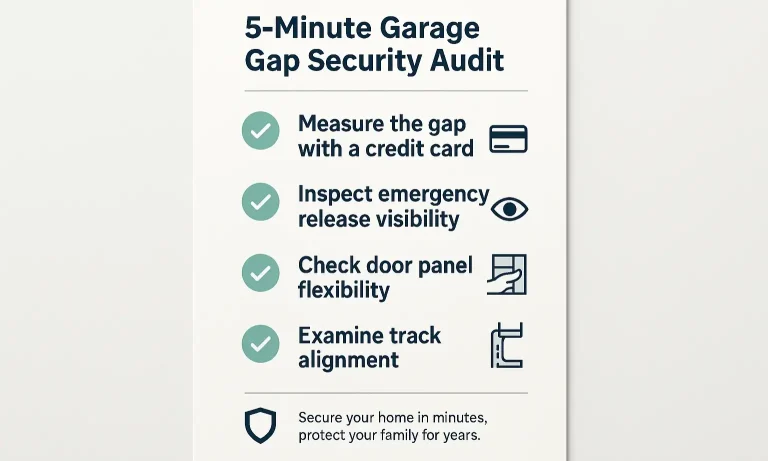
You don’t need special equipment to check your door’s security. Grab a flashlight and spend five minutes in your garage performing this simple audit. It’s a crucial first step in identifying and fixing potential problems.
Follow these steps to assess your risk:
- The Credit Card Test: Close your garage door. From the outside, try to slide a credit card into the gap between the door and the side frame. If it slides in easily, the gap is large enough for a wire.
- Visual Inspection from Inside: Go inside the garage and close the door. Turn off the lights. Can you see significant slivers of daylight around the sides, top, or bottom? These are your weak points.
- Check the Release Cord Visibility: Stand outside and peer through the top section of your garage door, especially if it has windows. Can you see the red emergency release handle? If you can see it, a burglar can see it, too.
- Test the Panel Flexibility: Press firmly on the center of your garage door panels from the outside. Do they flex inward easily? Excessive flexibility can make it easier for someone to create a temporary gap to fish a wire through.
- Examine the Weatherstripping: Look at the vinyl or rubber seals along the sides and top of the door frame. Are they cracked, brittle, or missing in sections? Degraded seals not only fail to keep the weather out but also create security vulnerabilities. If you’re wondering how to fix garage door gaps on the sides, replacing worn weatherstripping is often the best place to start.
If this audit revealed any issues, don’t worry. There are several straightforward solutions to secure these entry points.
Mastery: A Complete Toolkit of Solutions
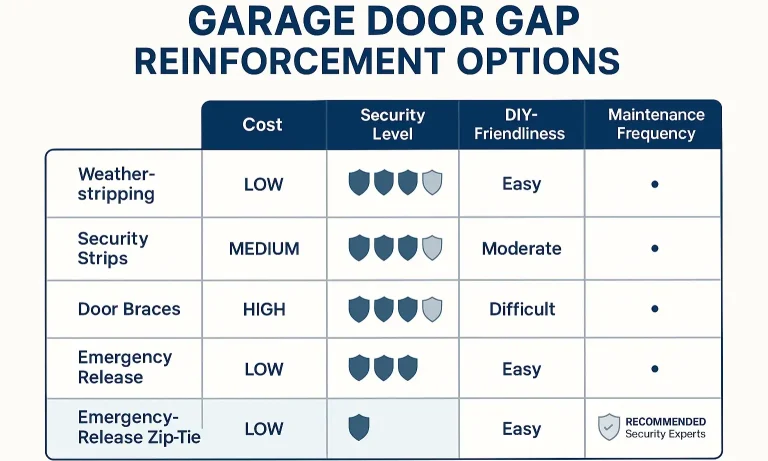
Reinforcing your garage door against gap-related threats involves a layered approach. You can combine several methods, ranging from simple DIY fixes to professional-grade installations, to create a robust defense.
Sealing & Shielding for Basic Protection
The first line of defense is closing the gaps themselves. This not only boosts security but also improves insulation.
- Upgraded Weatherstripping: This is more than just an energy-saving upgrade. High-quality vinyl or rubber weatherstripping creates a snug seal that physically blocks access for wires and prying tools. Understanding the importance of garage door weather stripping is key to both security and efficiency. It’s a simple upgrade with significant benefits.
- Garage Door Shields: These are small, inexpensive plastic or metal plates that attach to the opener’s trolley mechanism. They act as a physical barrier, blocking a wire from hooking onto the emergency release lever.
Reinforcing the Door Against Forced Entry
If your concern is less about wires and more about brute force, reinforcing the door itself is the next step.
- Slide Locks: A garage door slide lock is a manual deadbolt that you engage from the inside. It physically bars the door from moving up its tracks. It’s a low-tech but highly effective solution, especially when you’re away on vacation.
- Door Braces: For ultimate garage door protection, a vertical brace can be installed. These heavy-duty bars anchor into the floor and reinforce the door against high winds and forced entry attempts, making it nearly impossible to pry open.
Disabling the Weak Point: The Emergency Release Trick
One of the quickest and most effective security measures costs virtually nothing.
The Zip-Tie Method: Loop a zip-tie through the hole in the emergency release lever and the trolley it’s attached to. This prevents the lever from being pulled down by a wire from the outside. Crucial Safety Note: The zip-tie should be tight enough to prevent remote activation but loose enough that you can still break it by hand in a true emergency, like a power outage.
Action: Choosing Your Reinforcement Strategy
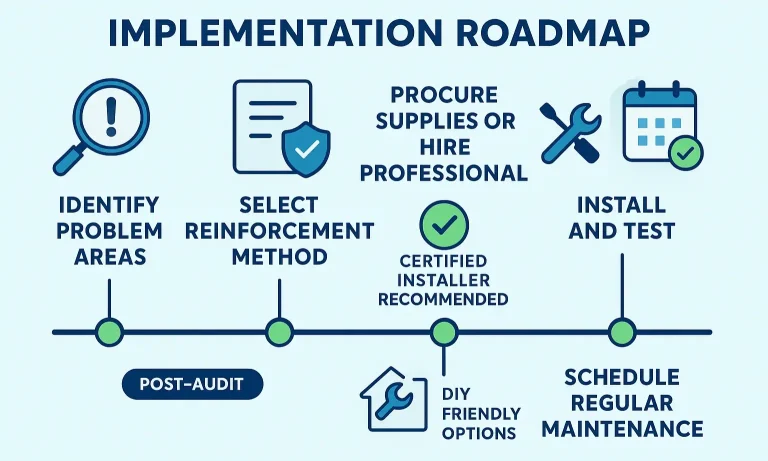
Now that you’ve audited your door and reviewed the solutions, it’s time to take action. For many homeowners, a combination of new weatherstripping and a simple zip-tie on the release lever provides a significant security boost for a minimal investment.
However, if your audit revealed major issues like warped tracks or a door that’s severely out of alignment, these surface-level fixes might not be enough. The root cause of gaps is often improper balance or track issues. Simply sealing the gap without addressing the underlying problem can lead to further damage. Regular garage door track maintenance can prevent many of these issues from developing in the first place.
If your door is old, damaged, or the gaps are too large for simple fixes, it’s wise to consult a professional. A trained technician can diagnose the root cause, properly align your door, and install robust security solutions that give you true peace of mind.
Frequently Asked Questions (FAQ)
How can I stop thieves from opening my garage door with a wire?
The two most effective methods are installing a garage door shield over the release lever or using the zip-tie method described above. Both create a physical barrier that prevents a wire from hooking and pulling the release mechanism.
Are some garage doors more secure than others?
Absolutely. Modern steel doors, especially those with insulated double-wall construction, are much more resistant to prying and flexing than older, single-layer wood or aluminum doors. Doors with fewer windows also offer fewer opportunities for burglars to see inside.
Is professional installation for security upgrades worth it?
For simple fixes like adding a shield or replacing basic weatherstripping, DIY is often sufficient. However, for issues involving track alignment, spring tension, or installing heavy-duty braces, a professional is highly recommended. Improper adjustments can create new safety hazards or even make your security problem worse.
Besides gaps, what are other major garage security risks?
Other key vulnerabilities include using old, factory-set opener codes that neighbors might share, leaving your garage door remote in a car parked outside, and not having adequate lighting or motion sensors. A holistic approach to strong garage door security involves addressing all these potential weak points.
Your Next Step to a Secure Home
Your garage door should be a convenience, not a liability. By taking just a few minutes to inspect for gaps and a little effort to reinforce them, you can shut the door on one of the most common methods burglars use to enter homes.
Start with the 5-minute audit today. What you find might surprise you. Whether you opt for a simple DIY fix or decide you need a professional eye, taking action is the most important step you can take. A secure garage is the first step toward a secure home.
You May Also Like
How to Fix Garage Door Gaps on the Sides: Step-by-Step Guide
Noticing a chilly garage door draft or seeing daylight creeping in around your closed garage door? If your garage lets in cold air, daylight, or pests from the sides, it’s time to learn how to fix garage door gaps on…
Published Date: Nov 11, 2025
DIY Garage Door Side Gap Fixes: When to Call a Professional
You pull into the driveway after a long day, hit the remote, and as your garage door rumbles shut, you notice it—a sliver of daylight peeking through the side. It’s a small thing, easy to ignore. But that tiny gap is…
Published Date: Apr 15, 2026
Garage Door Side Gaps: Is It Your Door, or Your House
You see it every time you leave—that sliver of daylight peeking around the edge of your closed garage door. It might seem like a small annoyance, a source of drafts, or an open invitation for pests. The natural first…
Published Date: Apr 10, 2026