Our company logo

State

How to Spot Impending Garage Door Spring Failure


Published: Apr 8, 2026

That strange groaning sound your garage door makes has become part of your home’s daily soundtrack. You might even ignore the way it shudders for a second before it starts moving. It's easy to dismiss these little quirks as the signs of an aging house. But what if they're not just quirks? What if your garage door is sending you a clear warning message?

Most homeowners only think about their garage door springs when they hear a sudden, deafening BANG!—the sound of a spring snapping under tension. But well before that catastrophic failure, a weakening spring sends out subtle distress signals. Learning to recognize these auditory, visual, and operational cues is the key to moving from reactive panic to proactive maintenance, potentially saving you from an emergency call and a car trapped in your garage.

The Unsung Hero of Your Garage Door

Before we dive into the warning signs, let’s have a quick chat about what these springs actually do. It's a common misconception that the automatic opener does all the heavy lifting. In reality, the opener just provides the push to get things started. The real muscle is the spring system.
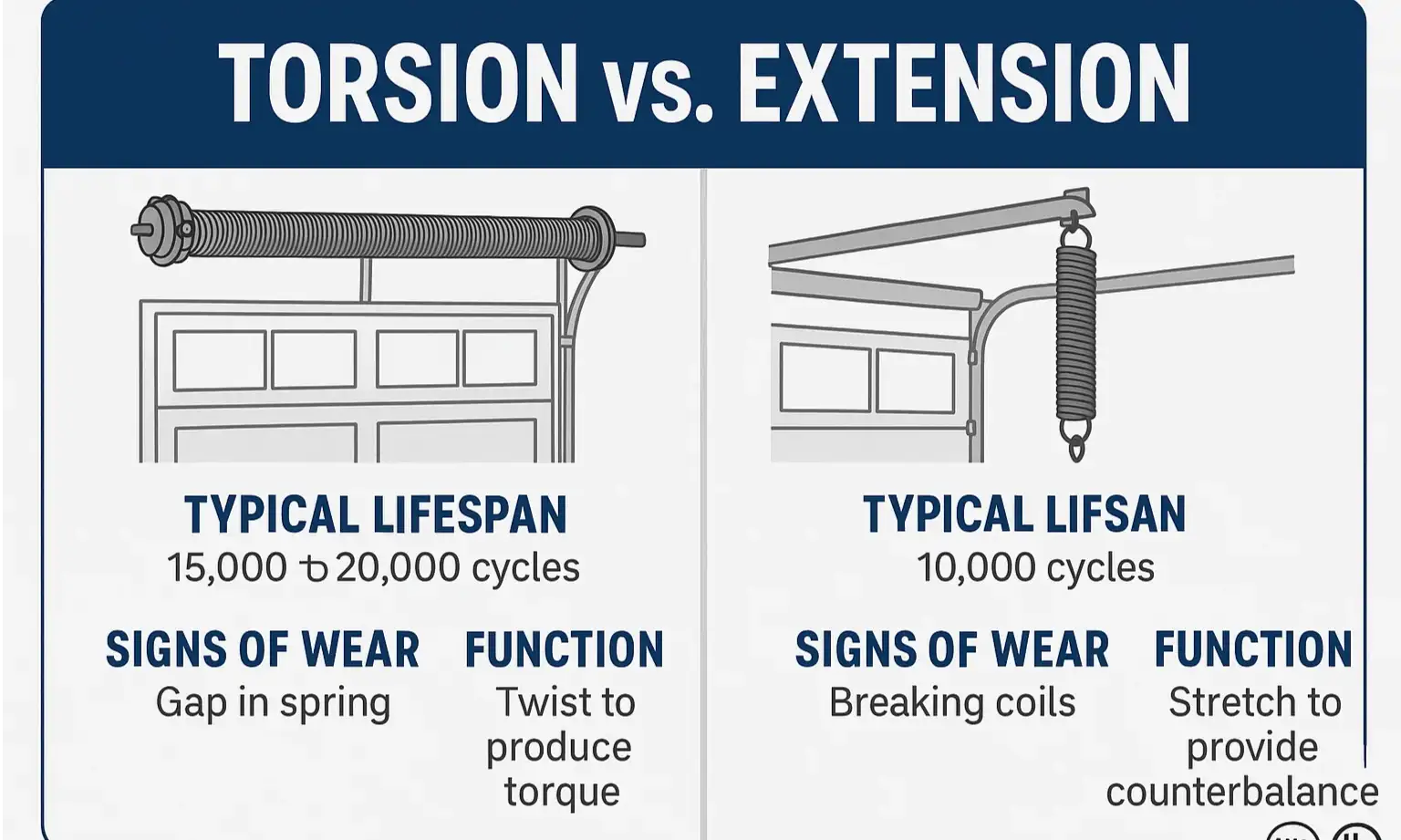
Visual comparison of torsion vs. extension springs highlights key differences and maintenance needs.
These tightly wound pieces of metal are under enormous tension, acting as a counterbalance to the immense weight of your garage door (which can be anywhere from 150 to 400 pounds). They make it possible to lift that heavy door with just one hand or with the gentle force of a small motor.
There are two main types you'll find in a residential garage:

  • Torsion Springs: These are mounted on a metal bar directly above the garage door opening. They work by twisting (or "torquing") to lift the door. Most modern homes use this system because it's generally safer and more durable.
  • Extension Springs: These are found on either side of the door, running parallel to the overhead tracks. They work by stretching and contracting, like a massive rubber band.
Knowing which type you have is the first step in knowing what to look for. Exploring the key differences between a garage door torsion spring vs extension spring can help you better understand your system.
Visual comparison of torsion vs. extension springs highlights key differences and maintenance needs.

The Pre-Failure Checklist: A Sensory Guide to Weakening Springs


Regular maintenance checks should go beyond a quick glance. By tuning into what you can see, hear, and feel, you can catch a spring that’s nearing the end of its life.

Auditory Cues: What to Listen For

Close your eyes and just listen the next time your door operates. A healthy spring system is surprisingly quiet.
  • Groaning or Squeaking: Loud, strained noises often mean the spring coils are rubbing against each other under stress. This can be a sign of uneven tension or a desperate need for proper lubrication.
  • Rhythmic Popping or Clicking: If you hear a consistent popping sound as the door moves, it could indicate that the coils on your torsion spring are binding instead of rotating smoothly.
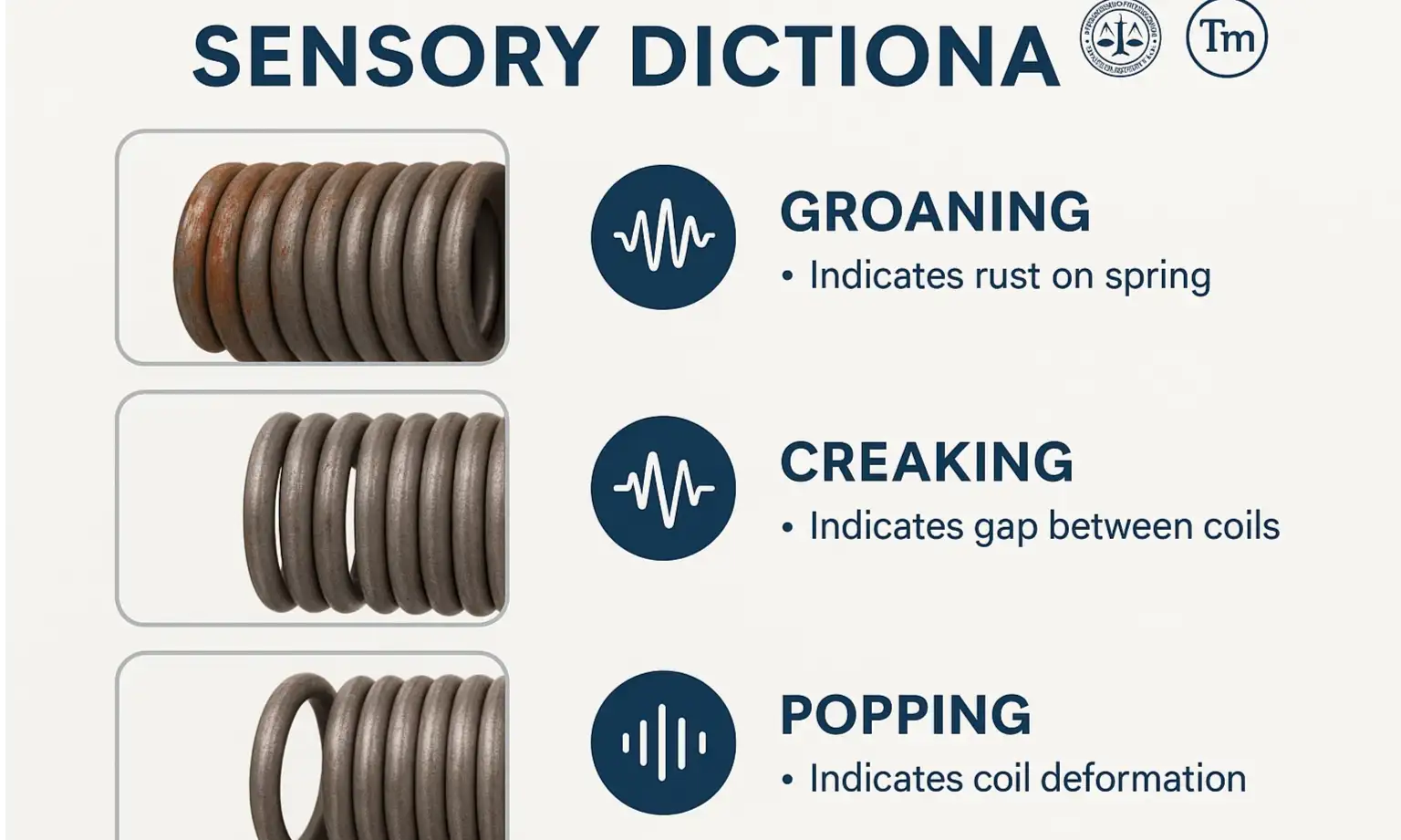
Sensory guide links sounds and visual cues to help spot early spring failure signs.

Visual Cues: What to Look For

SAFETY FIRST: Never touch your garage door springs. They are under extreme tension and can cause severe injury. These checks are purely visual.

  • For Torsion Springs: Look closely at the spring. When it’s new, the coils are tight and uniform. As it ages and weakens, you might notice a small gap appearing between the coils, often around 1/4 to 1/2 inch wide. This is a classic sign of metal fatigue and an indicator that a break is imminent.
  • For Extension Springs: A healthy extension spring should be straight and uniform. Look for signs of stretching or deformation. Do you see any coils that look elongated, bent, or have gaps between them? If the springs look "slinky-like" when the door is closed, they have lost their tension and are failing.
  • Rust and Corrosion: A light layer of surface rust can often be managed with cleaning and lubrication. However, deep, pitted corrosion eats away at the metal, significantly weakening the spring and making it brittle. This is one of the most important signs a garage door spring replacement is needed.

Operational Cues: How It Feels

The way your door moves is a huge clue to the health of your springs.
  • Jerky or Erratic Movement: Does your door seem to shudder or shake on its way up or down? This often happens when one of a pair of extension springs is weaker than the other, causing the door to lift unevenly.
  • Slows Down During Operation: If the door starts opening at a normal speed but then slows down significantly halfway up, the springs may no longer have the strength to carry the load through the full cycle.
  • Feels Extremely Heavy: When you disconnect the opener (more on that next) and try to lift the door manually, it should feel relatively light, maybe 10-15 pounds. If it feels incredibly heavy and you struggle to lift it, the springs are not doing their job.
Sensory guide links sounds and visual cues to help spot early spring failure signs.

Mastery: The 30-Second Balance Test Every Homeowner Should Know
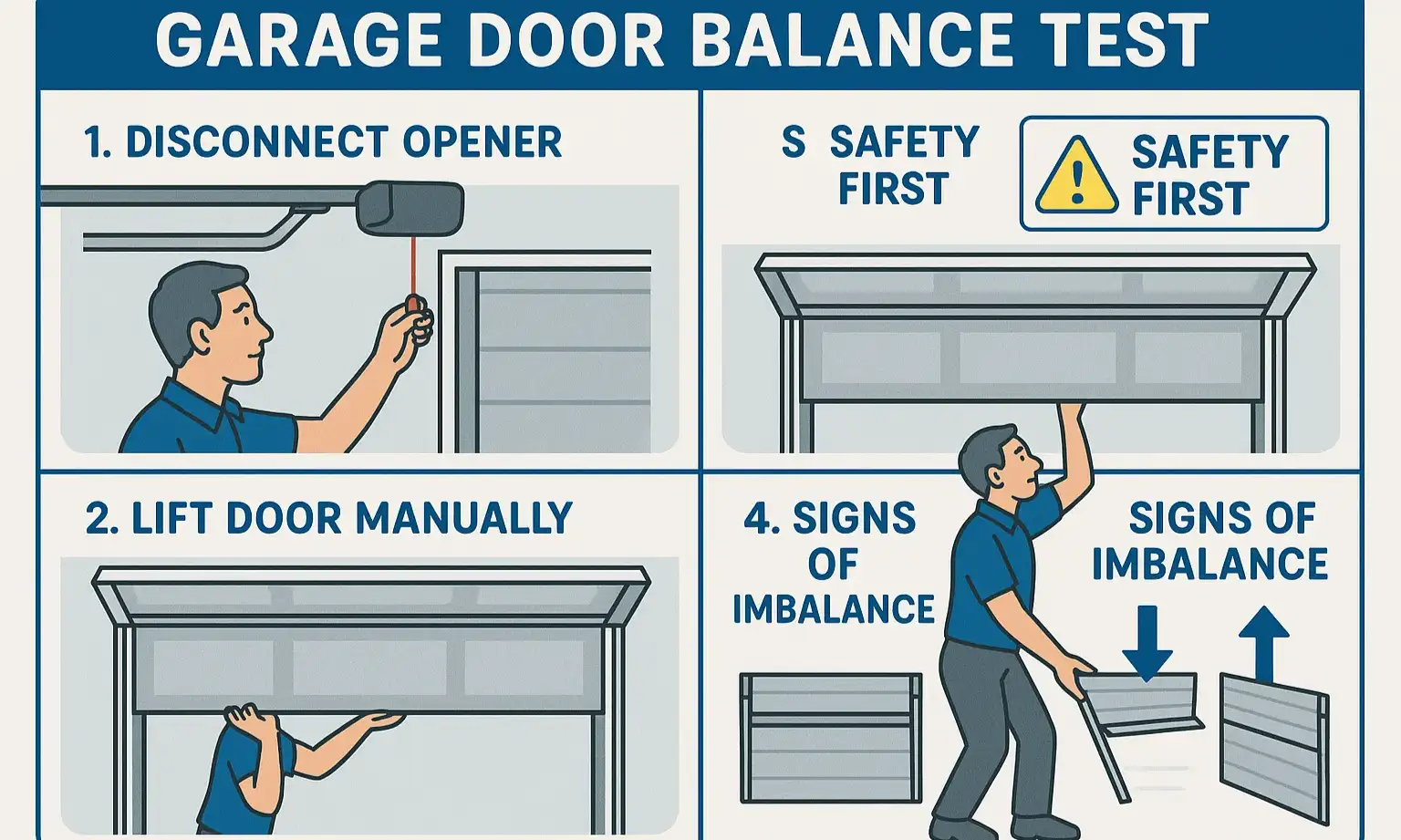

The single best way to diagnose a weakening spring system is the balance test. It’s a safe and simple procedure that tells you exactly how well your springs are counterbalancing the door's weight.
Balance test guide helps homeowners assess issues and avoid unnecessary repair costs.
Here's how to do it:

  1. Close the Garage Door: Make sure the door is fully shut before you begin.
  2. Disconnect the Opener: Pull the red emergency release cord hanging from the automatic opener track. This will disengage the motor and allow you to operate the door by hand.
  3. Lift the Door Manually: Raise the door until it’s about halfway open (three to four feet off the ground).
  4. Let Go Carefully: Hold it for a moment, then gently let go.
What to watch for:
  • Pass: A well-balanced door will stay put, or move up or down just an inch or two before settling. This means your springs are still in good shape.
  • Fail: If the door slams shut or drifts all the way open, you have an unbalanced garage door. A door that falls indicates the springs are weak and no longer able to hold the weight. A door that flies open means the springs are under too much tension, which can also lead to problems.
Balance test guide helps homeowners assess issues and avoid unnecessary repair costs.

You've Found a Warning Sign. What's Next?
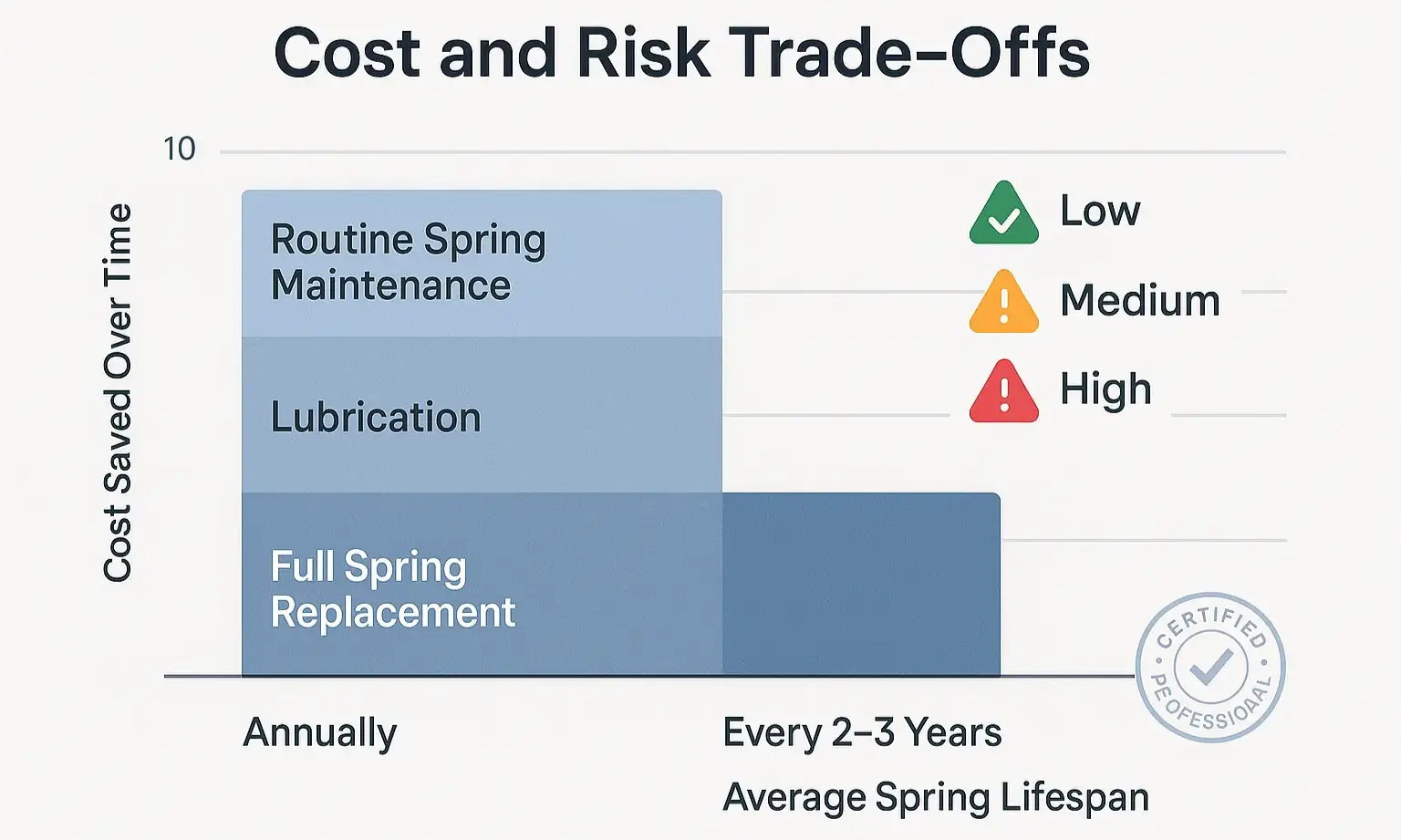

Proactive maintenance vs. replacement: understand value, reduce costs, and act early.
Discovering an early warning sign doesn't mean you need to panic. It means you have the power to act before a crisis occurs.
If your only symptom is a bit of squeaking, proper lubrication might solve the problem. But if you've noticed visual gaps, stretching, corrosion, or if your door failed the balance test, it's time to call a professional.
A broken garage door spring is not a DIY project. The immense tension stored in the springs can be released uncontrollably during removal or installation, turning metal parts into dangerous projectiles. Professionals have the specialized tools and training to replace garage door spring systems safely and correctly, ensuring your door operates smoothly for years to come.

Proactive maintenance vs. replacement: understand value, reduce costs, and act early.

Need more information?

Frequently Asked Questions About Garage Door Springs


How long do garage door springs last?

The lifespan of a garage door spring is measured in "cycles," with one cycle being one full opening and closing of the door. Standard builder-grade springs are typically rated for about 10,000 cycles. If you use your garage door four times a day, that translates to about 7 years of service. High-cycle springs are available that can last 20,000 cycles or more.

Should you lubricate garage door springs?

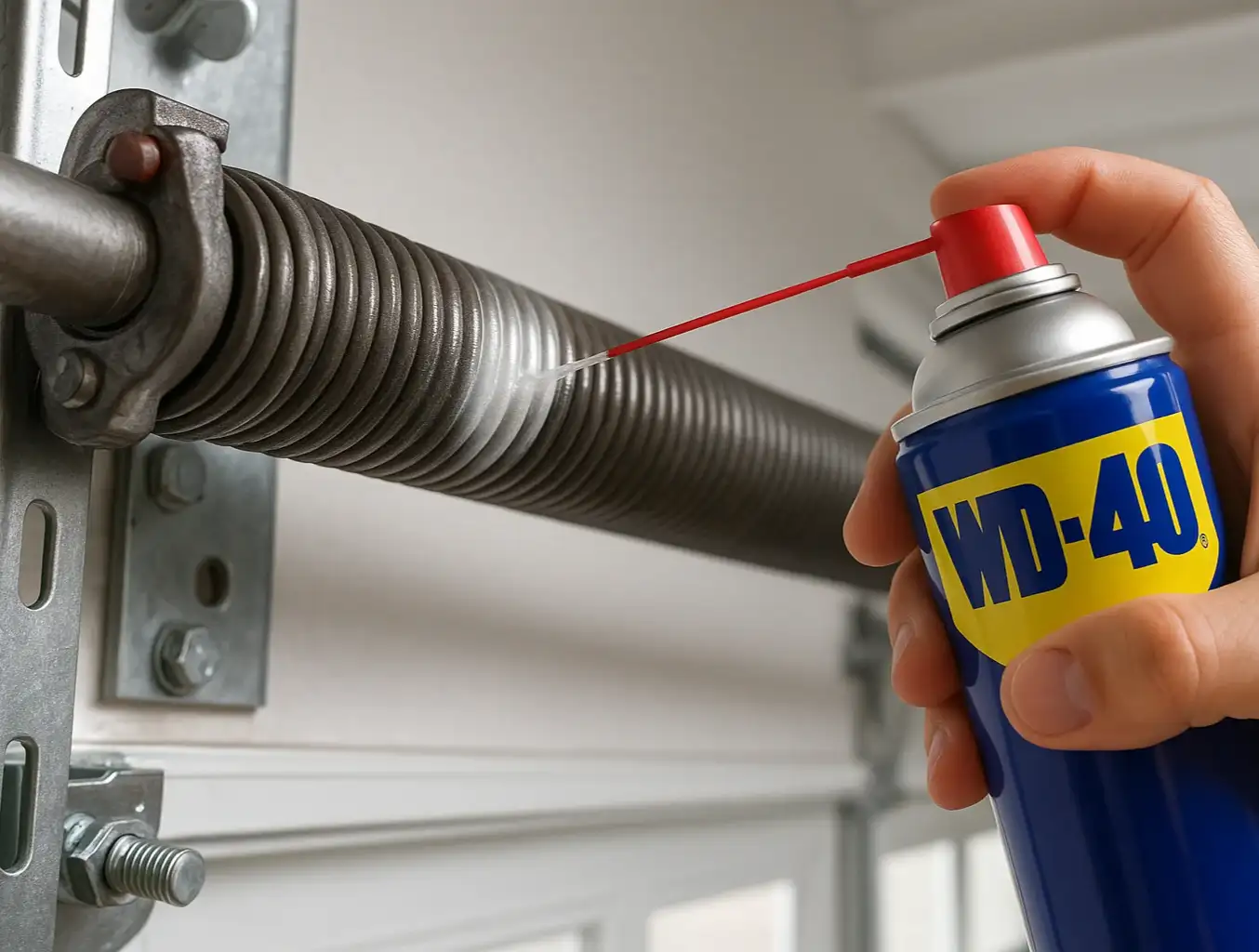
Yes, but only with the right product! Torsion springs benefit from a light coat of a silicone-based spray or white lithium grease to reduce friction between the coils. However, you should never use a penetrating oil like WD-40. It's a degreaser and can strip away the necessary lubrication, actually shortening the spring's life. This is one of the most common issues seen by garage door maintenance services. Extension springs do not typically require lubrication.

What causes a garage door spring to break?

The most common cause is simply wear and tear. Over thousands of cycles, the steel fatigues and eventually breaks. Other factors like rust, extreme cold, and poor maintenance can accelerate this process.

Can I still open my garage door if a spring is broken?

It's extremely dangerous and not recommended. Without the spring's support, the automatic opener is trying to lift the full dead weight of the door, which can strip the gears and burn out the motor. Manually lifting a door with a broken spring is also very difficult and risky.

Stay Proactive, Stay Safe


Your garage door is the largest moving object in your home. By taking a few minutes every few months to listen, look, and perform a simple balance test, you can stay ahead of potential problems. Paying attention to those early whispers of wear and tear ensures you can address the issue on your own terms, rather than dealing with the sudden shout of a complete failure.

You may also like


blog photo

Your Ultimate Guide to Garage Door Spring Lubrication

That ear-splitting screech your garage door makes isn’t just an annoying wake-up call. It's a cry for help from the hardest-working part of the entire system: the springs. Before you resign yourself to the noise or start worrying about a massive repair bill, we have some good news. The solution is often simpler and cheaper than you think, and it’s a task you can confidently tackle yourself. Properly lubricating your garage door springs is one of the most effective pieces of preventive maintenance you can perform. It silences that awful noise, protects against rust, and dramatically extends the life of both your springs and your garage door opener. This guide will walk you through everything you need to know, transforming you from a casual browser into an empowered homeowner.

blog photo

The Maintenance Mistake Most Homeowners Make

You have the paperwork tucked away in a file cabinet—a warranty for your new garage door, your promise of protection against defects and failures. But what if that promise has a giant loophole you don't know about? Imagine this: a few years after installation, a critical part fails. You pull out the warranty, make the call, and are met with a surprising rejection. The reason? You can't prove you’ve been taking care of the door. It's a frustratingly common scenario. Some industry sources estimate that over 75% of warranty claims are denied due to skipped maintenance or missing documentation. That piece of paper isn't a magic shield; it's a contract. And your side of the bargain is regular, documented upkeep. Think of your warranty not as a passive guarantee, but as an investment that requires active protection. This guide will walk you through exactly what manufacturers expect, how to keep your coverage valid, and how to ensure you're fully protected when you need it most.