





The Maintenance Mistake Most Homeowners Make
Published: Mar 27, 2026
You have the paperwork tucked away in a file cabinet—a warranty for your new garage door, your promise of protection against defects and failures. But what if that promise has a giant loophole you don’t know about? Imagine this: a few years after installation, a critical part fails. You pull out the warranty, make the call, and are met with a surprising rejection. The reason? You can’t prove you’ve been taking care of the door.
It’s a frustratingly common scenario. Some industry sources estimate that over 75% of warranty claims are denied due to skipped maintenance or missing documentation. That piece of paper isn’t a magic shield; it’s a contract. And your side of the bargain is regular, documented upkeep.
Think of your warranty not as a passive guarantee, but as an investment that requires active protection. This guide will walk you through exactly what manufacturers expect, how to keep your coverage valid, and how to ensure you’re fully protected when you need it most.
Warranty 101: Understanding Your Coverage and the Risks
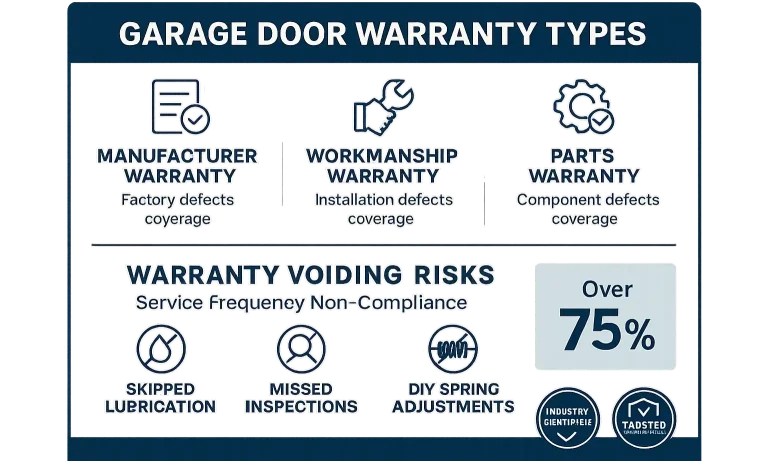
Before we dive into maintenance, let’s quickly cover the basics. Most garage door systems come with two primary types of warranties, each covering different aspects of your investment.
- Manufacturer’s Warranty: This comes from the company that made the door and its parts (like Clopay or LiftMaster). It typically covers defects in materials and construction for specific components, such as panels against rust-through, springs for a certain number of cycles, or the opener motor for a set number of years.
- Workmanship or Installation Warranty: This is provided by the company that installed your door, like Up & Down Garage Doors. It covers issues arising from the installation process itself, ensuring that the door was installed correctly and functions properly from day one.
While these warranties offer peace of mind, they aren’t unconditional. Manufacturers include clauses that can void your coverage entirely, and the most common reason is homeowner neglect. Failure to perform and document routine maintenance is often interpreted as neglect, giving the manufacturer grounds to deny your claim.
The Core Lesson: How to Keep Your Warranty Valid Through Service
Manufacturers require maintenance for a simple reason: a garage door is a complex system of moving parts under extreme tension. Regular service prevents small issues (like dry rollers or a loose bolt) from cascading into major, costly failures. It’s about safety and ensuring the product lasts as long as it was designed to.
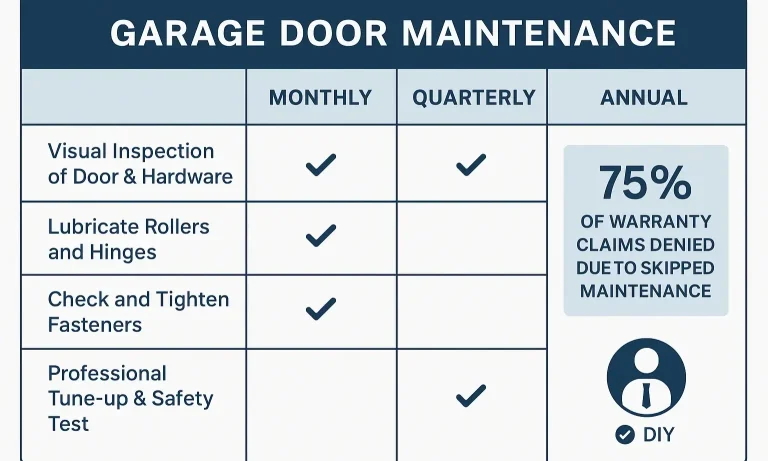
So, what does “regular service” actually mean? While you should always consult your specific warranty document, most manufacturers expect a cadence of simple checks you can do yourself and an annual inspection by a professional.
Seasonal Maintenance Schedule & Checklist
Sticking to a schedule is the easiest way to stay on top of maintenance. It turns a daunting task into a series of small, manageable habits.
For a complete breakdown of each step, you can use a comprehensive garage door maintenance checklist to guide you through the process.
The DIY vs. Professional Divide
While many monthly and quarterly tasks are DIY-friendly, some jobs are best left to professionals for both safety and warranty compliance.
- What you can (and should) do: Visual inspections, lubrication of rollers and hinges, testing safety features, and cleaning tracks are all tasks most homeowners can handle.
- What requires a professional: Any adjustments or repairs to high-tension components, especially springs and cables, should only be performed by a trained technician. Attempting these repairs yourself is incredibly dangerous and will almost certainly void your warranty.
Most manufacturers strongly recommend, and some even require, an annual garage door maintenance appointment with a certified professional. This service call not only ensures everything is working correctly but also provides a crucial piece of documentation for your records.
Warranty Voiding Action! A common mistake homeowners make is using the wrong lubricant. Products like WD-40 are degreasers, not lubricants. They can strip away the existing grease and attract dust, making the problem worse over time. Always use a silicone-based or white lithium grease spray designed for garage doors.
Mastery: Building Your "Proof Portfolio" for Claims
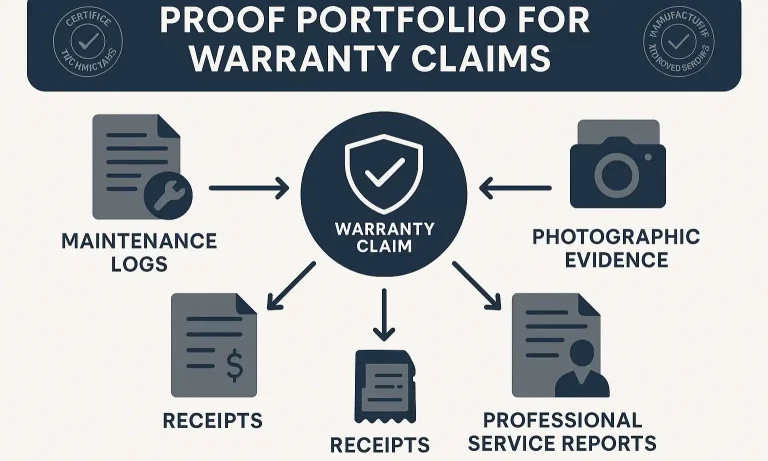
If you ever need to file a warranty claim, the burden of proof is on you. The manufacturer will ask for evidence that you’ve upheld your end of the agreement. This is why documentation isn’t just a good idea—it’s essential.
The “Proof” Portfolio
Your goal is to build an unassailable record of care for your garage door system. Keep a dedicated folder (physical or digital) with the following items:
- Your Original Warranty Document: This is the contract. Keep it handy.
- A Maintenance Log: Create a simple sheet where you log the date and description of every maintenance task you perform (e.g., “Feb 15, 2024 – Lubricated all rollers and hinges.”).
- Receipts and Invoices: Save every receipt from professional service calls. These are your most powerful pieces of evidence. An invoice should detail the date of service and the work performed.
- Before-and-After Photos: If you notice an issue, take a dated photo before calling for service and after it’s been repaired. This can help demonstrate that the issue was not due to neglect.
What to Do If Your Claim Is Denied
If your claim is rejected, don’t panic. Calmly ask for the specific reason for the denial in writing. If they cite “lack of maintenance,” this is where your proof portfolio comes in. Provide them with copies (never originals) of your maintenance log and professional service invoices. A clear, documented history of care is your best tool for successfully appealing their decision.
Your Action Plan for Warranty Protection
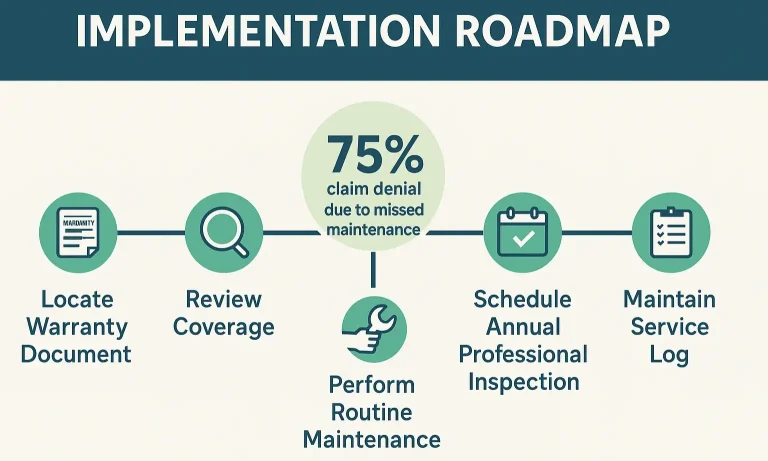
Feeling motivated? Here are the three things you should do right now to protect your investment and ensure your warranty remains valid.
- Find and Read Your Warranty: Locate the document you received during your garage door installation. Read it carefully and highlight the section on required maintenance. Note any specific requirements or exclusions.
- Start Your Maintenance Log: Create your “Proof Portfolio” today. Start a log and schedule your first DIY inspection for this weekend.
- Schedule a Professional Tune-Up: If it’s been over a year since your door was installed or last serviced, schedule a professional tune-up. This sets a great baseline and gives you your first critical piece of documentation. And if a problem ever arises that stops your door from functioning, calling for emergency garage door repair from a reputable company ensures the work is done right and properly documented.
Frequently Asked Questions About Garage Door Warranties
What is a garage door warranty?
A garage door warranty is a guarantee from the manufacturer or installer that they will repair or replace defective parts or correct faulty workmanship for a specified period. It’s a contract that requires both parties—the company and the homeowner—to meet certain obligations.
How long does a warranty typically last?
This varies widely. Basic warranties might last for one to three years, while more comprehensive limited lifetime warranties can cover certain parts, like panels, for as long as you own your home. Opener motors often have warranties of five years to a lifetime, while parts like springs are usually covered for a shorter period or a set number of open/close cycles.
Are parts like springs and openers covered?
Yes, they are usually covered by the manufacturer’s warranty against defects. However, they are also the parts most likely to fail due to lack of maintenance. A broken spring on a door that hasn’t been serviced may not be covered, as the manufacturer could argue neglect contributed to the failure.
Is the installation itself covered by a warranty?
Yes, this is called a workmanship warranty and is provided by the installation company. It covers any issues that arise from the quality of the installation, such as improper track alignment or incorrect spring balancing. It is separate from the manufacturer’s warranty on the parts.
Can I do maintenance myself without voiding the warranty?
For the most part, yes. Simple tasks like visual inspections, cleaning, and lubricating moving parts are fine for homeowners to perform. However, performing complex repairs on high-tension systems like springs or cables will almost always void your warranty and is extremely dangerous. Always check your warranty document for specific clauses.
You May Also Like
How Often Should My Garage Door Be Serviced
Your garage door is an essential part of your home. Therefore, its proper and regular maintenance ensures security and peace of mind. Meanwhile, neglecting it may potentially lead to serious malfunctions and costly…
Published Date: Aug 26, 2024
How 15 Minutes of DIY Can Save You a Service Call
That sound. The cringe-inducing screech of metal on metal, the shuddering groan as your garage door struggles to open. It’s a sound that most homeowners know and try to ignore, hoping it will just go away. But that…
Published Date: Mar 26, 2026
The Smarter Way to Predict and Prevent Garage Door Repairs
It’s one of the most jarring sounds a homeowner can experience: a sudden, explosive BANG from the garage that sounds like a gunshot. You rush to see what happened, only to find your garage door won't open and a…
Published Date: Mar 25, 2026