




Frosted, Satin-Etched, and Obscure Glass: The Definitive Garage Privacy Guide
Published: Nov 6, 2026
Adding natural light to a garage while protecting high-value vehicles, tools, and workshop equipment presents a classic architectural dilemma. Standard clear float glass offers maximum sunlight—delivering an 88%–90% Visible Light Transmission (VLT)—but provides a minimal Privacy Rating of 1/10, effectively turning your garage interior into an open display for passersby.
Selecting privacy glass resolves this security issue, but making the right investment requires navigating technical trade-offs between manufacturing methods, maintenance requirements, light diffusion, and nighttime visibility.
Technical Breakdown: Manufacturing Methods & Architectural Styles
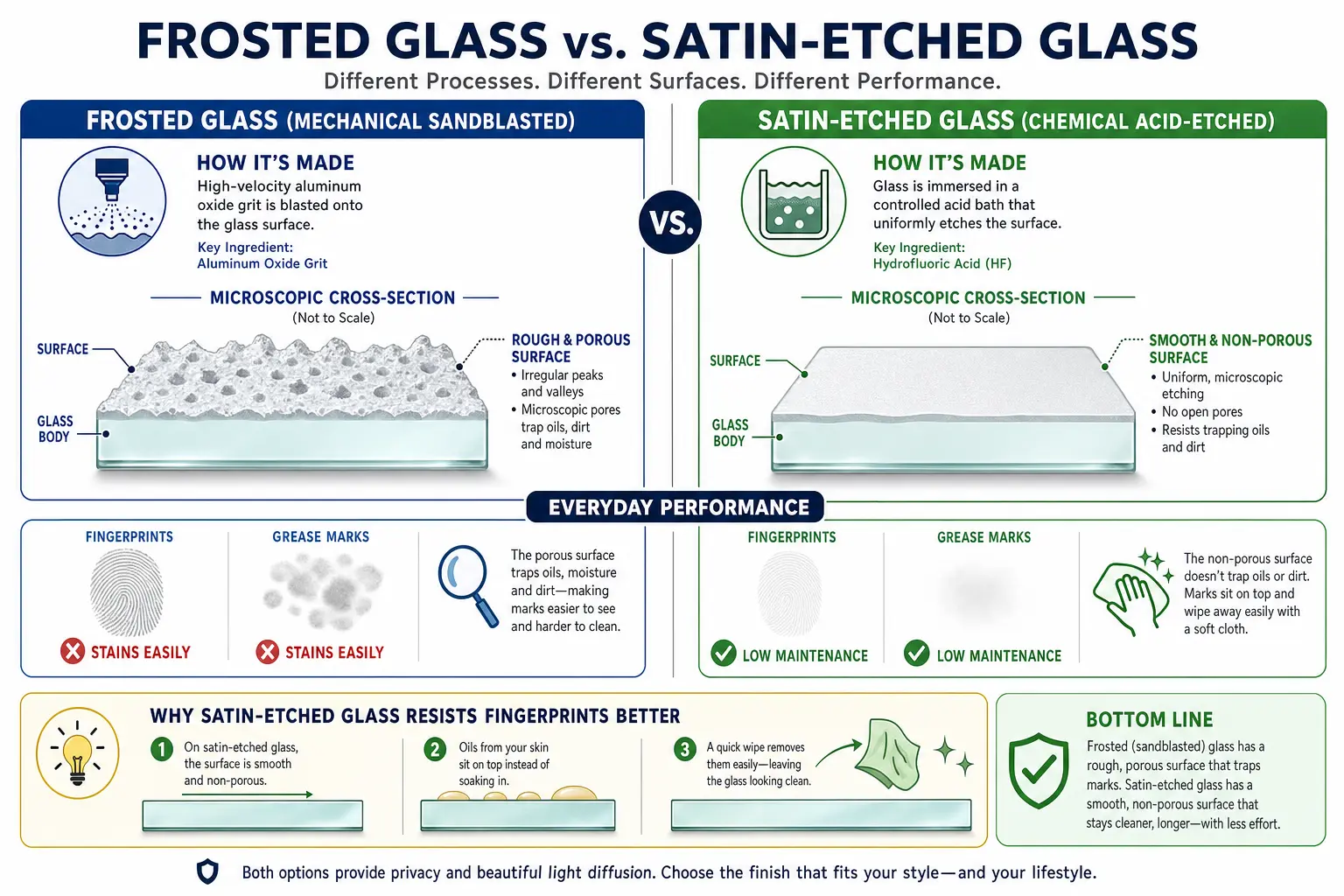
While homeowners and renovators frequently use “frosted” and “satin-etched” as interchangeable terms, their distinct manufacturing processes result in vastly different surface physics and long-term durability:
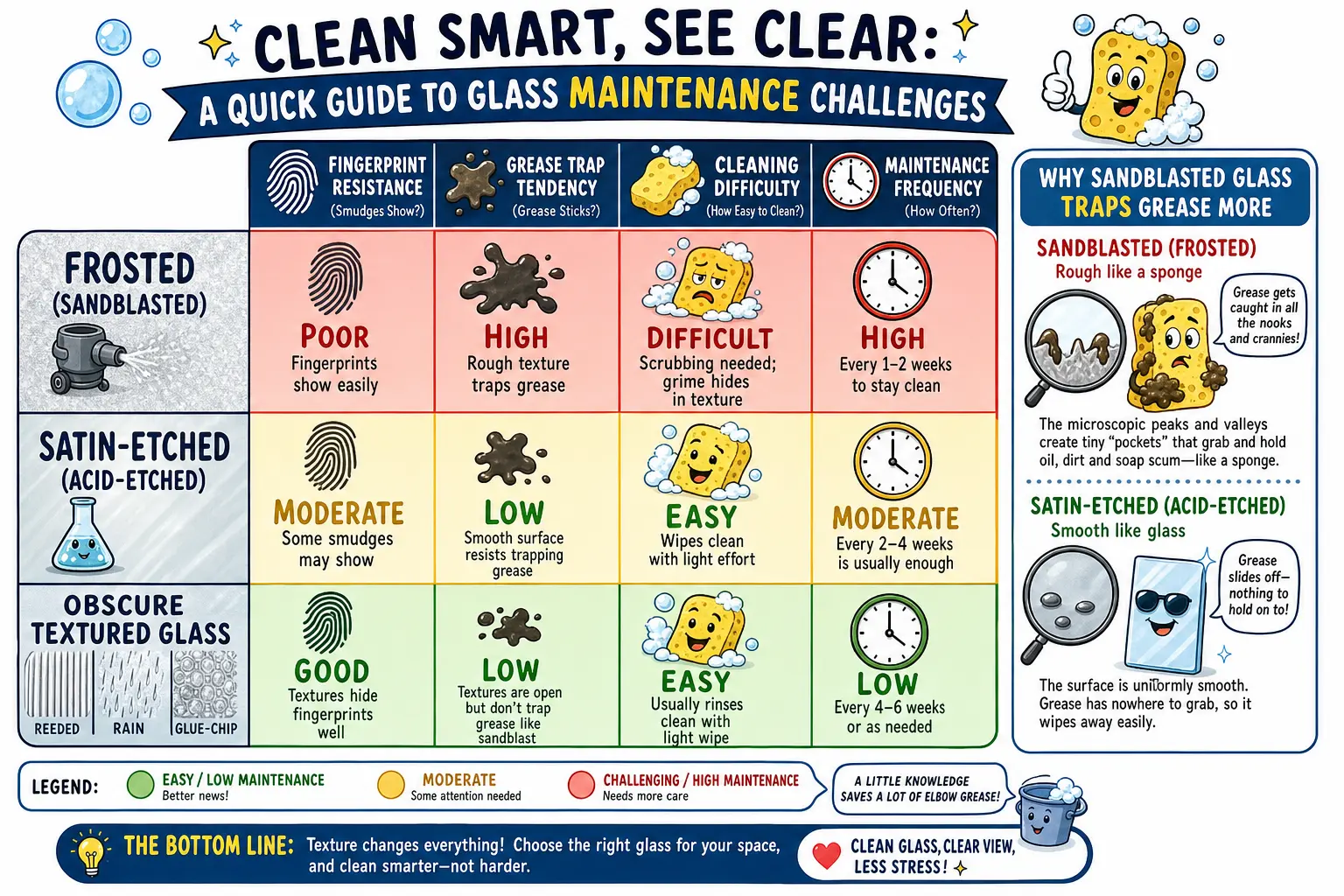
- Frosted Glass (Sandblasted): Produced by blasting high-pressure aluminum oxide grit against clear glass. This mechanically pits the outer layer to create a cool, opaque matte finish. However, sandblasting opens microscopic surface pores that easily trap grease, fingerprints, and road dust.
- Satin-Etched Glass (Acid-Etched): Formed via an industrial hydrofluoric acid bath that chemically transforms the glass surface. This creates a soft, translucent daylight filter with a silky smooth, non-porous finish that inherently resists smudges, oil, and water spots.
- Textured & Obscure Patterns: Styles like Reeded (fluted directional lines), Rain (organic water-droplet diffusion), and Glue-Chip (crystalline fern patterns) scatter light mechanically while adding distinct mid-century or modern character to residential glass garage doors.
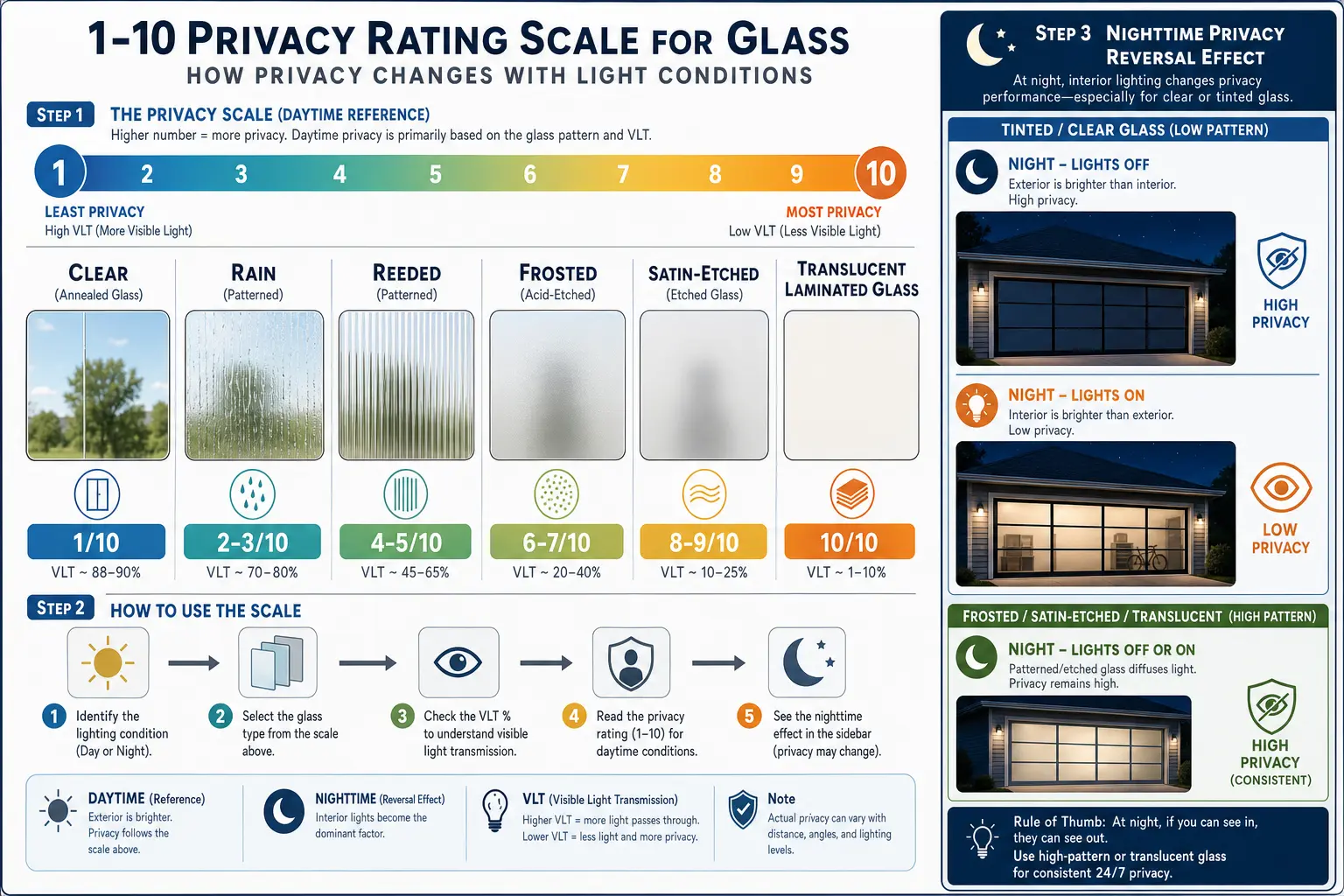
Privacy Ratings & The Nighttime Reversal Trap
Evaluating garage glass requires balancing VLT % against standardized privacy metrics under both daytime and nighttime conditions:
- Satin-Etched Glass: 75%–82% VLT | Privacy Rating: 9.5/10 (Day & Night)
- Frosted Glass (Sandblasted): 70%–78% VLT | Privacy Rating: 9/10 (Day & Night)
- Reeded / Fluted Glass: 80%–85% VLT | Privacy Rating: 6.5/10 (Directional distortion)
- Rain Glass: 75%–80% VLT | Privacy Rating: 6/10 (Water-stream scattering)
- Glue-Chip Glass: 68%–74% VLT | Privacy Rating: 7.5/10 (Fern-like crystal distortion)
- Translucent Laminated: 50%–65% VLT | Privacy Rating: 10/10 (Complete opacity)
- Bronze / Gray Tinted Glass: 35%–50% VLT | Privacy Rating: 6/10 (Day) / 1/10 (Night)
Buyers must watch out for the Nighttime Privacy Reversal Trap. Tinted and mirrored glass rely on ambient outdoor sunlight to generate surface reflection. At night, when exterior illumination drops below 10 lux and interior garage lights are switched on (300–500 lux), tinted glass becomes 85% to 95% visually transparent from the driveway.
Conversely, acid-etched and frosted glass rely on surface light scattering rather than external reflection. They maintain 90%+ visual opacity regardless of interior lux levels, making them the superior choice when specifying options for custom garage doors.
Maintenance, Code Compliance, and Financial Options
Garage environments subject glass to unique stresses, including high operational vibration, dust, and vehicle exhaust grease.
Maintenance & Cleaning Realities
Because sandblasted glass features a porous micro-surface, handling panels during maintenance can leave oily fingerprints that are difficult to eliminate without ceramic sealants. Satin-etched glass provides a non-porous structure that wipes clean effortlessly using standard window spray.
Structural Safety & Code Compliance
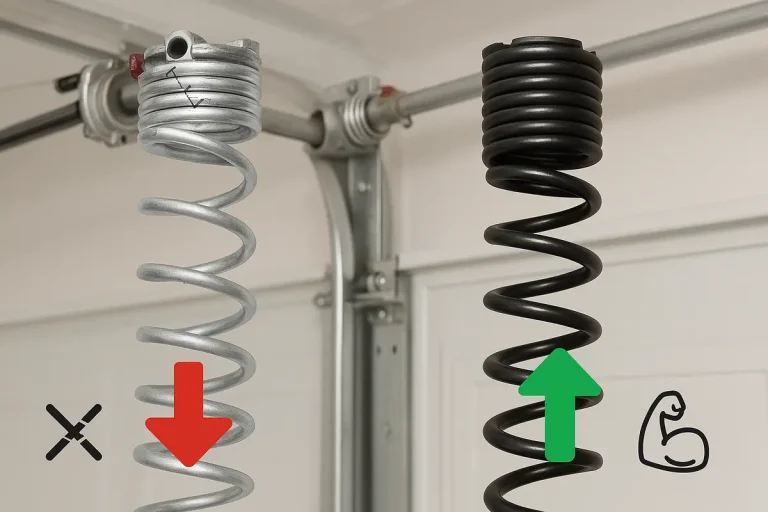
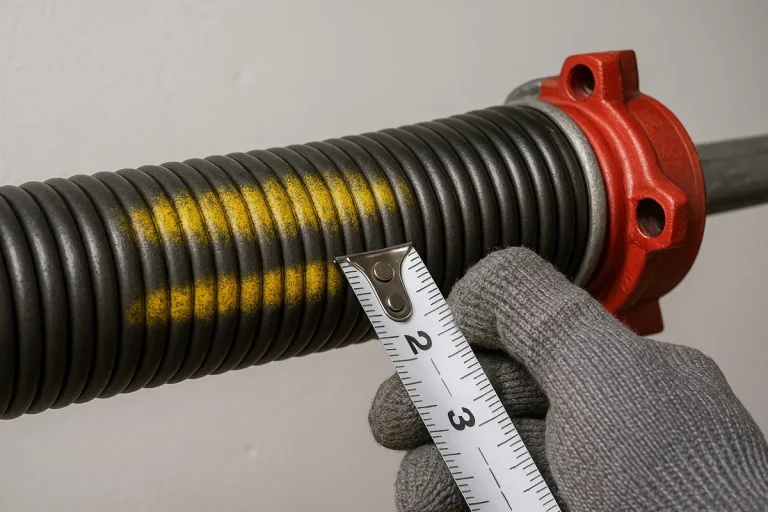
Per CPSC 16 CFR 1201 and ANSI Z97.1 safety standards, garage door glass must consist of Fully Tempered Safety Glass or Laminated Glass. Standard annealed glass lacks impact resistance and poses severe laceration hazards under overhead door vibration. Upgrading to heavy 1/2″ dual-pane Insulated Glass Units (IGUs) also adds substantial section weight, requiring recalibrated high-duty torsion springs.
Cost Tier Comparisons
- DIY Frosted Window Film: $30–$60 per roll ($1.50–$3.00/sq. ft.). Affordable upfront, but prone to peeling and bubbling within 2–4 years due to garage humidity and temperature swings.
- Factory Window Insert Upgrade: +$50–$150 per section over standard clear glass on traditional steel types of garage doors.
- Replacement Tempered IGUs: $25–$45 per sq. ft. for replacement dual-pane panels in existing frames.
- Full-View Aluminum Assemblies: $2,500–$8,500+ installed for modern architectural full-view specialty garage doors.
When evaluating options for modern garage doors, partnering with an experienced service team ensures safety compliance and long-term operating balance. The team at Up & Down Garage Doors brings over 15 years of family-owned expertise to help you select the ideal privacy glass, recalibrate torsion springs, and install your system flawlessly.
Frequently Asked Questions
Can people see inside my garage at night with frosted glass?
No. Quality satin-etched or sandblasted frosted glass diffuses incoming and outgoing light across its surface rather than relying on exterior reflection. When interior overhead LED lights are on at night, passersby will only see faint, blurred silhouettes with zero visible detail, preserving complete interior privacy.
What is the practical difference between satin-etched and frosted glass?
Frosted glass is typically made through mechanical sandblasting, which leaves a porous matte surface that easily traps fingerprints, dust, and grease. Satin-etched glass is created using a chemical acid bath, resulting in a smooth, non-porous translucent finish that repels smudges and cleans easily with basic glass cleaner.
Will adding heavy dual-pane privacy glass affect my garage door opener?
Yes. Upgrading to 1/2″ dual-pane insulated privacy glass adds significant weight to the door sections. Operating heavy glass panels on springs calibrated for standard steel doors will strain your electric opener motor and create serious safety hazards. The torsion springs must be professionally calculated and recalibrated to safely balance the updated door weight.
You May Also Like