





Navigating Specialty and Full-View Garage Doors: An Engineering and Aesthetic Evaluation Guide
Published: Sep 16, 2026
For homeowners and architects designing modern facades, standard steel sectional doors rarely suffice. High-end specialty garage doors—such as full-view glass, aluminum-framed, and custom architectural systems—transform standard properties into architectural statements. However, transitioning from inspiration to execution reveals critical engineering questions: How do you prevent heavy glass panels from sagging over time? How do you maintain energy efficiency? And how do you ensure safety without sacrificing design?
By looking past marketing gloss to analyze structural engineering, realistic thermal performance, and smart privacy choices, you can select a system that is as durable as it is visually striking.
Frame Engineering: Why Most Specialty Doors Sag (Welded vs. Bolted)
Aluminum and glass frames are uniquely lightweight—often 30% to 60% lighter than solid custom wood doors of the same dimensions. This reduces strain on torsion springs and automatic openers. However, the structural durability of these doors depends entirely on frame construction.
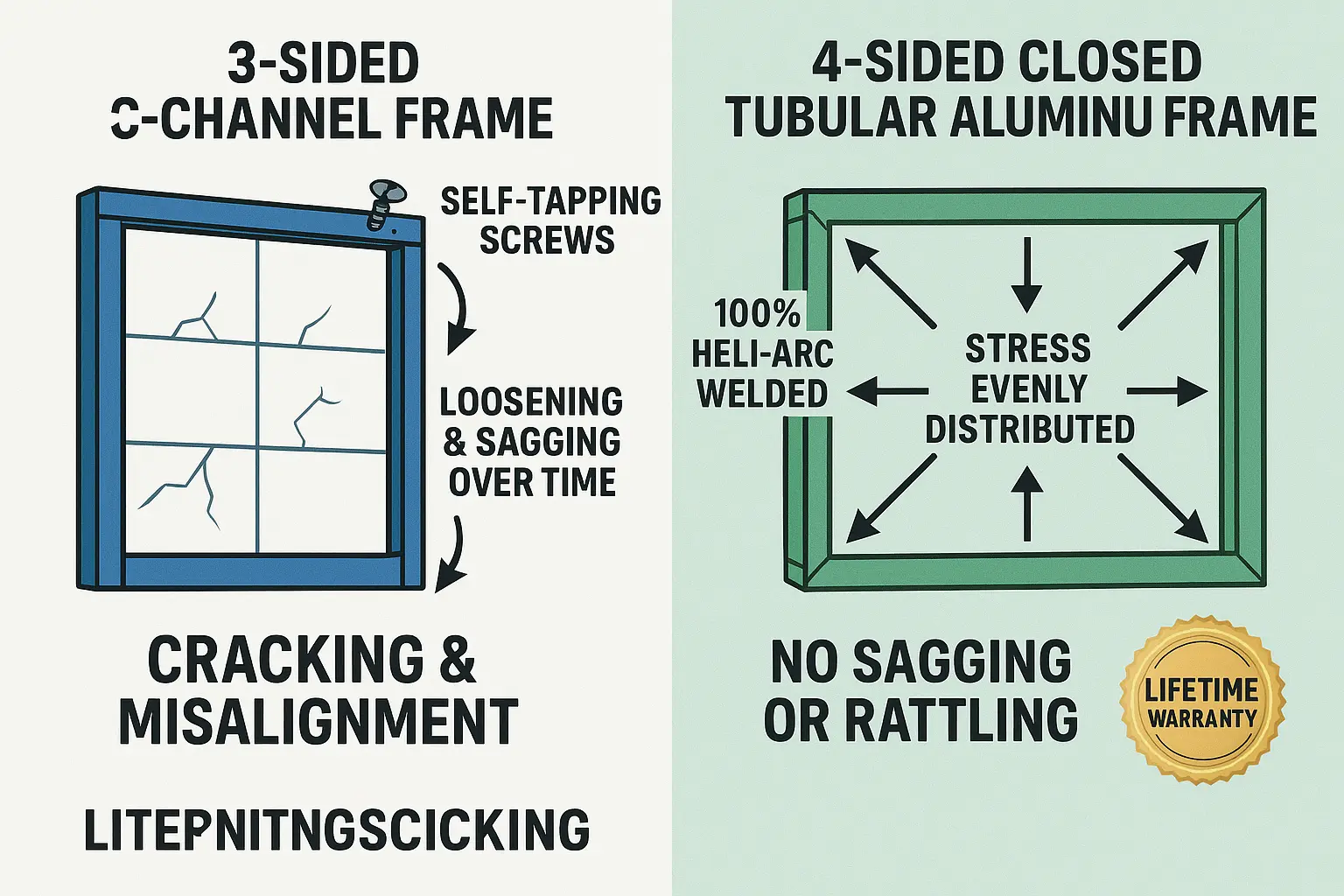
Most mass-market manufacturers rely on mechanically fastened or bolted frames. Over time, the rotational torque of opening and closing causes self-tapping screws and three-sided C-channel bolts to loosen, resulting in frame sagging, alignment failures, and cracked glass.
To prevent this, premium custom systems utilize 100% heli-arc welded frame construction. This method fuses four-sided closed tubular extrusions into a single monolithic block, eliminating racking and structural warping. When investing in custom garage doors, choosing a fully welded structure protects your investment for decades.
The Thermal Reality of Modern Insulated Garage Doors
A common concern with high-end glass garage doors is thermal performance. While manufacturers boast high R-values for steel doors, the rules differ for glass.
Standard single-pane 1/8″ glass provides a baseline performance of only R-1.0. Upgrading to double-pane, 1/2″ Argon-gas-filled insulated glass units (IGUs) jumps the R-value to R-2.0 to R-3.2. To maximize energy efficiency, look for systems engineered with integrated Thermal Breaks—extruded rubber or plastic barriers that prevent external cold from transferring through the highly conductive aluminum frame. High-performance models (such as Clopay’s Avante AXU with polyurethane-insulated stiles) achieve system R-values of R-3.8.
If you are looking to balance aesthetics with thermal performance in challenging climates, integrating robust garage door insulation with specialized modern insulated garage doors ensures your space remains comfortable year-round.
Privacy vs. Daylighting: Decoupling the "Fishbowl Effect"
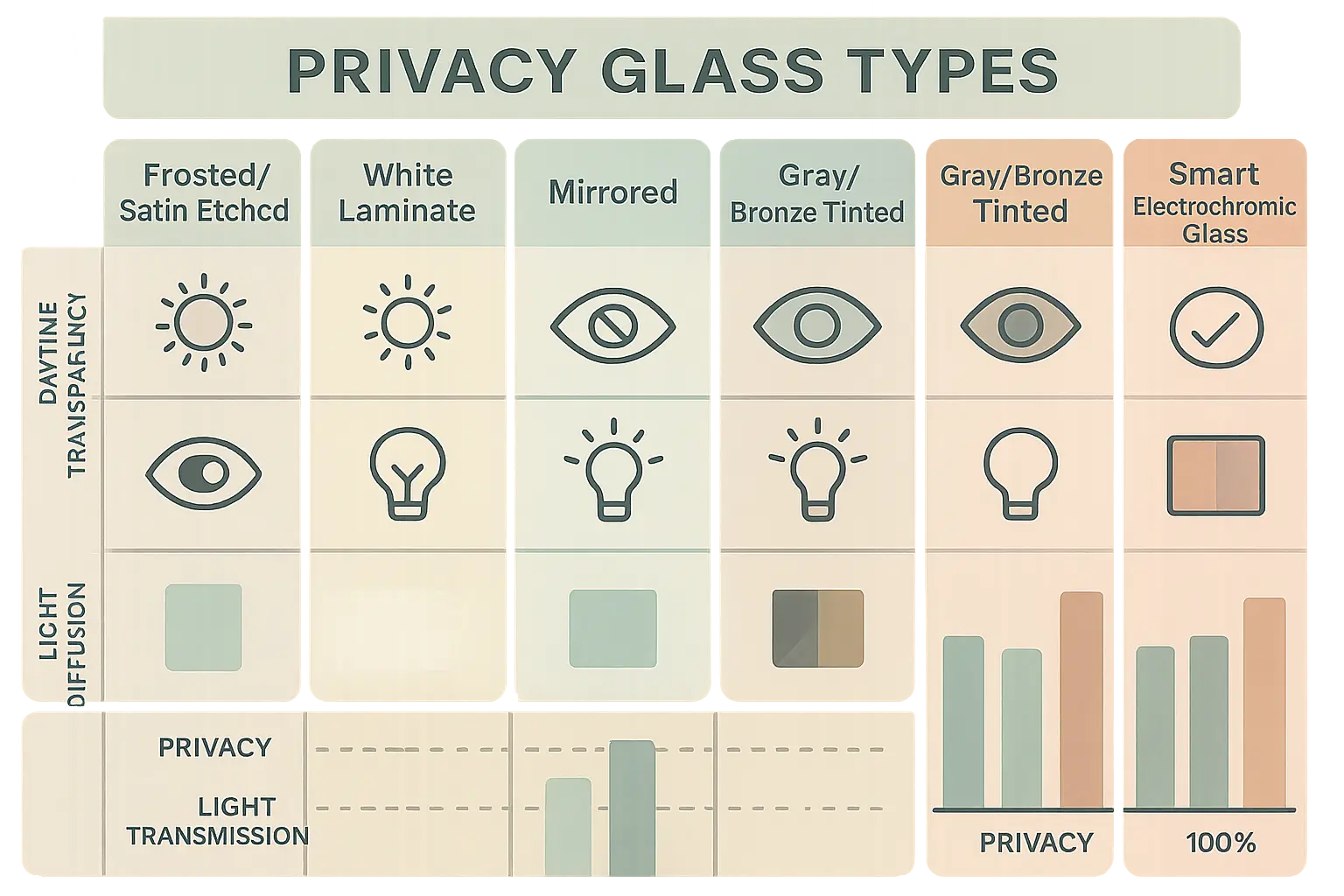
Homeowners love natural light but worry about exposing their garage interiors. Selecting the right glazing is key to maintaining garage door window privacy while welcoming daylight.
- Frosted / Satin Etched: Blocks 95% of direct visibility while transmitting roughly 80% of natural light.
- White Laminate: Provides total visual privacy, glowing beautifully from the inside during the day.
- Mirrored Glass: Highly reflective under daylight, though it loses privacy at night if interior lights are on.
- Smart Electrochromic Glass: Uses advanced click-to-conceal technology to transition from crystal clear to opaque white via a remote control.
Overcoming the Tempered Glass Safety Label Pain Point
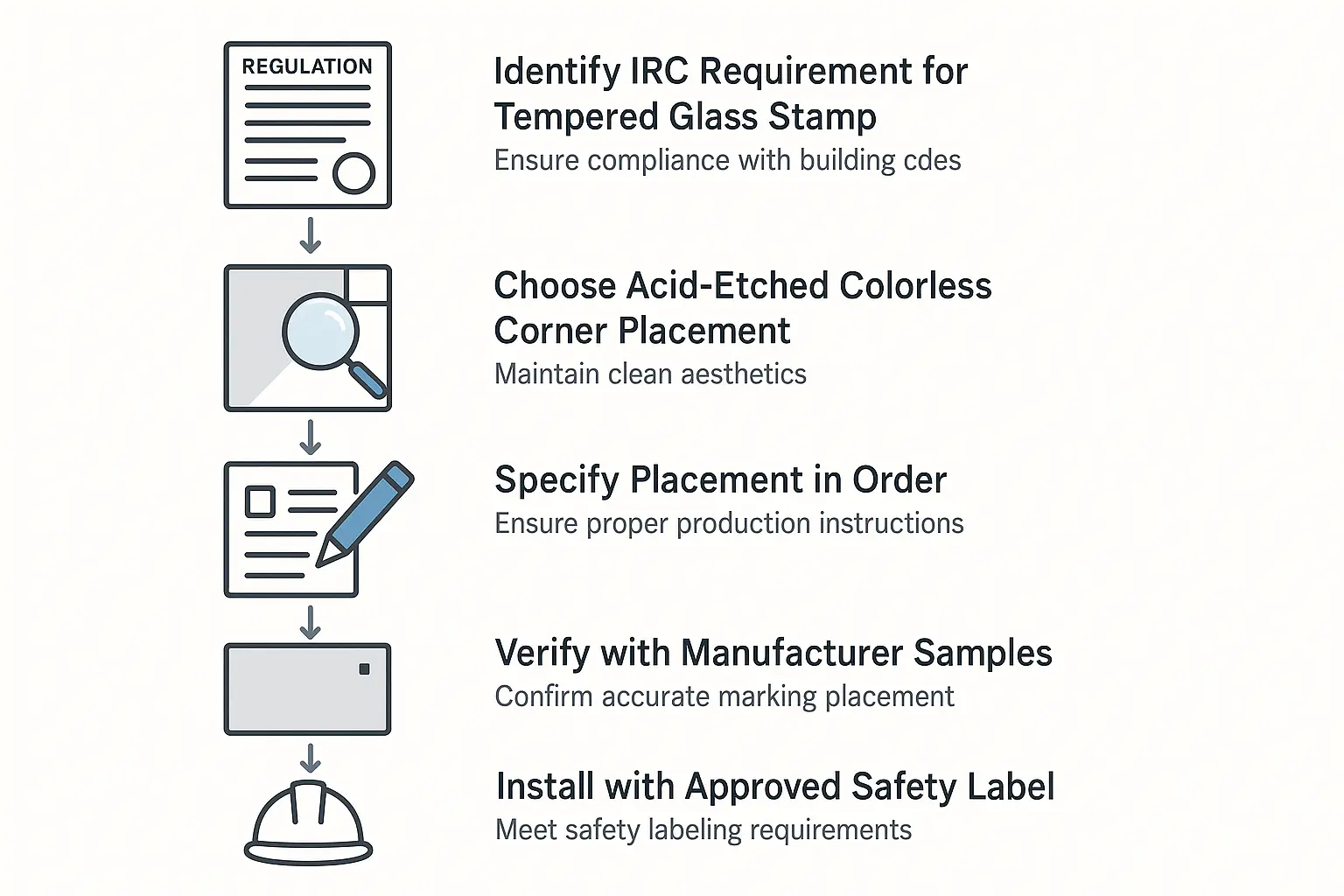
The International Residential Code (IRC) requires tempered safety glass to display a permanent certification stamp. Mass-market doors often use highly visible white ceramic ink safety stamps, which ruin clean, minimalist aesthetics.
The workaround is simple: specify discreet, colorless acid-etched stamps placed in the extreme bottom corners of the panels during the fabrication phase.
High-Value Functional Customizations: Walkthrough Doors and High-Speed Action
For active garages, specialized functional enhancements offer ultimate usability.
- Pedestrian Walkthrough Doors: Often called passing doors, these are integrated directly into your sectional glass panels, featuring flush step-over thresholds, commercial-grade panic hardware, and safety limit switches to prevent automatic operation when open.
- High-Speed Operational Systems: For high-traffic commercial zones and luxury auto galleries, utilizing a specialized high speed garage door minimizes cycle times and maintains climate control. These can range from heavy-duty aluminum sections to advanced fabric high-speed doors for distribution.
- Wind Load and Structural Ratings: In high-velocity hurricane zones, your door must withstand severe wind loads (up to 180 mph), requiring impact-rated laminated glass with a structural polyvinyl butyral (PVB) interlayer.
At Up & Down Garage Doors, we provide the honest technical guidance, high-quality manufacturing, and professional installation required to bring your vision to life safely and reliably.
Frequently Asked Questions
How heavy are glass garage doors compared to wood?
Aluminum-and-glass doors are roughly 30% to 60% lighter than solid custom hardwood doors of the exact same dimensions. This lighter weight reduces overall structural strain on your torsion springs and makes manual override operation significantly easier.
What R-value can I realistically expect from a glass garage door?
While steel doors reach much higher R-values, a standard single-pane glass door offers roughly R-1.0. Upgrading to a thermal-break aluminum frame with insulated double-pane glass units elevates the operational system R-value up to R-3.8.
Can a glass garage door withstand hurricane-force winds?
Yes. In coastal zones, specialized glass doors are engineered with heavy-duty aluminum extrusions and impact-rated laminated safety glass to meet structural requirements for wind loads up to 180 mph.
You May Also Like
Garage Door Top Seal and Header Weatherstrip: Sealing the Gap Above the Door
Published Date: Oct 7, 2026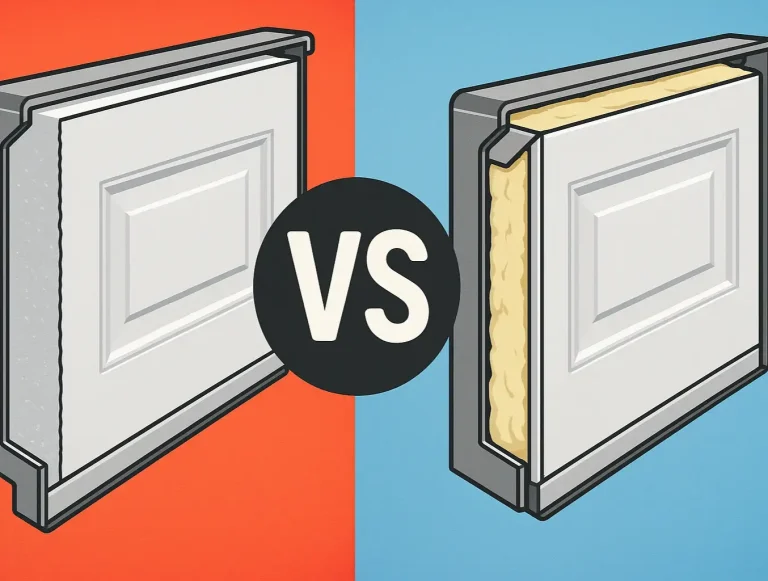
Fiberglass Batt vs. Foam: The Ultimate Garage Door Panel Insulation Guide
If you have ever stepped into your garage during a mid-July afternoon, you know it can feel less like a home utility space and more like an oven. Under direct sunlight, uninsulated steel garage door panels act as…
Published Date: Aug 18, 2026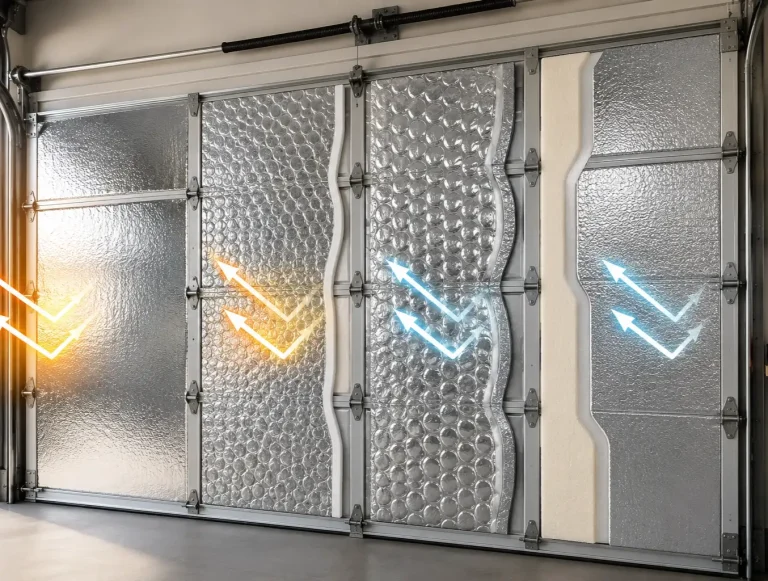
Reflective Foil Insulation for Garage Doors: Beyond the R-Value Myth
Under the intense heat of the summer sun, uninsulated steel garage doors behave exactly like giant radiators. They absorb solar radiation and heat up to 130°F–150°F, turning your garage into a suffocating oven. While…
Published Date: Aug 17, 2026