





High-Speed Fabric vs. Rigid Panel Doors for Manufacturing
Published: Jun 5, 2026
Choosing a new high-speed door for your facility can feel like a simple equipment purchase. You look at specs, compare prices, and pick one. But here’s an insight many facility managers learn the hard way: the wrong high-speed door is costing you far more than you think. It’s not just about the invoice; it’s about the hidden costs in energy loss, operational downtime, and constant maintenance headaches.
The choice between a high-speed fabric door and a rigid panel door isn’t just a matter of material preference. It’s a critical business decision that impacts your productivity, your budget, and even your compliance with safety standards. This guide will walk you through that decision, transforming you from a browser into an expert ready to choose the perfect door for your unique environment.
The Need for Speed: More Than Just a Fast Door
Before we dive into the great debate, let’s establish what we’re talking about. What is a high-speed industrial door? Simply put, it’s a door designed to open and close very quickly, often multiple times per hour, minimizing the time an entryway is open.
But the benefits go far beyond just speed. The core advantages of high performance doors are about creating a controlled environment. Think of them as rapid-acting airlocks that:
- Boost Energy Efficiency: By opening and closing in seconds, they drastically reduce the escape of heated or cooled air, slashing your HVAC costs.
- Improve Traffic Flow: Forklifts and personnel can move between areas without long waits, keeping your operations smooth and efficient.
- Enhance Environmental Control: They are essential for preventing cross-contamination, controlling humidity, and stopping pests from entering sensitive areas like food processing plants.
- Increase Safety: Modern high-speed doors come equipped with advanced sensors, light curtains, and soft bottom edges to prevent accidents.
The Great Debate: High-Speed Fabric vs. Rigid Panel Doors
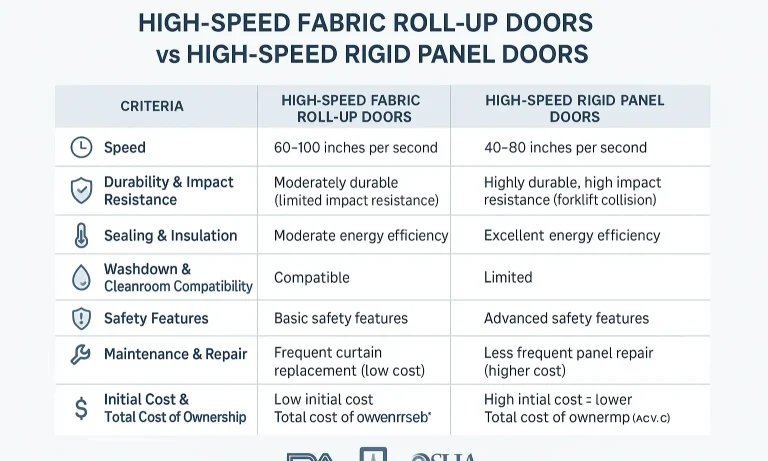
This is the heart of the matter. Both door types are fast, but their construction dictates where they excel and where they fall short. The right choice depends entirely on your operational reality.
A Look Under the Hood: Construction & Materials
High-Speed Fabric Doors: These are typically made from durable, flexible materials like PVC or vinyl. They roll up quickly into a head unit above the door. Many feature a “breakaway” design, meaning if they are accidentally struck by a vehicle, the curtain can release from its side guides and be easily reinserted, often without tools.
High-Speed Rigid Doors: Constructed from materials like aluminum, steel, or advanced composites, these doors offer a more robust physical barrier. They roll or fold up with incredible speed but provide the security and durability of a conventional sectional door.
Head-to-Head: A Feature-by-Feature Breakdown
Making an informed decision requires a direct comparison across the factors that matter most in a demanding industrial environment.
Durability & Impact Resistance
This is where one of the biggest differences emerges. What happens when a forklift driver misjudges a turn?
- Fabric Doors: Excel in high-traffic areas. Their breakaway and self-repairing features are a game-changer for minimizing downtime. Instead of a costly repair call, the door is often operational again in minutes.
- Rigid Doors: Offer superior resistance to direct, heavy impact and provide a much higher level of security against intrusion. However, a significant impact will likely result in dented or broken panels that require professional replacement, leading to longer downtime.
Washdown & Cleanroom Compatibility
For food processing, pharmaceutical, and other hygiene-critical industries, this is non-negotiable.
- Fabric Doors: This is their specialty. Many models are specifically designed for washdown environments, with non-porous surfaces, stainless steel components, and sloped head units to prevent water pooling. They create a tight seal to help maintain positive pressure and prevent airborne contaminants.
- Rigid Doors: While they can be cleaned, they are generally not designed for the daily high-pressure, chemical washdowns common in food processing. The seams between panels can potentially harbor bacteria if not perfectly sealed.
- Rigid Doors: Typically offer better insulation options (higher R-values) due to their solid panel construction, making them the superior choice for freezers, coolers, and external doorways in extreme climates.
- Fabric Doors: Provide an excellent seal around the perimeter to control airflow and pests, but their insulation value is generally lower than that of a rigid door.
Sealing & Insulation
Controlling your climate means controlling your costs.
Beyond the Material: Matching the Door to the Mission
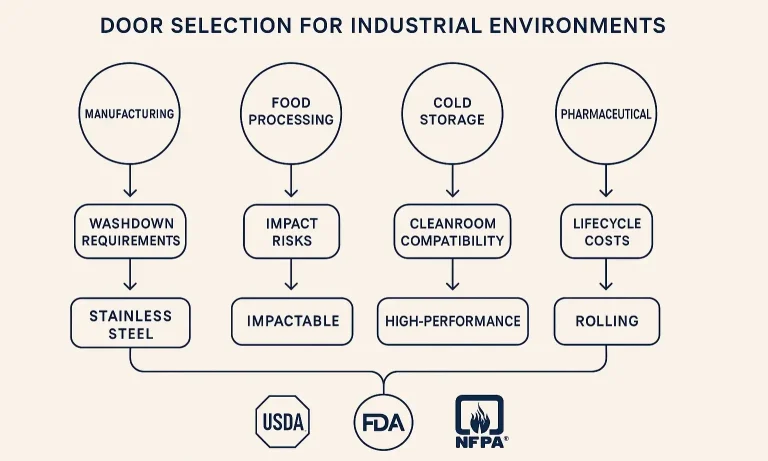
Here’s the “aha moment”: The right door isn’t about the material itself; it’s about the operational environment where it will live. Let’s look at some common scenarios.
Scenario A: The Food Processing Plant
- Challenges: Daily high-pressure washdowns, strict USDA/FDA regulations, constant forklift traffic, and zero tolerance for pests or contaminants. These are facilities that need reliable commercial high cycle doors.
- Winning Choice: High-Speed Fabric Door. Its washdown-rated materials, breakaway/self-repairing capability, and tight perimeter seal make it the ideal solution for maintaining hygiene and uptime.
Scenario B: The High-Security Warehouse or Manufacturing Floor
- Challenges: Risk of heavy impact from machinery, security concerns for high-value goods, and the need for a durable physical barrier.
- Winning Choice: High-Speed Rigid Door. It provides superior security and can withstand more significant impacts than a fabric door. It’s the perfect choice when protection and durability are the top priorities over washdown capability.
- Challenges: Maintaining sub-zero temperatures, preventing ice buildup, and maximizing energy efficiency.
- Winning Choice: High-Speed Rigid Door (Insulated). The higher R-value of insulated rigid panels is critical for preventing thermal loss. When paired with heated side frames, they offer the best performance for freezer and cold storage applications.
Scenario C: The Cold Storage Facility
The Bottom Line: Understanding the Total Cost of Ownership (TCO)
The price tag on the quote is just the beginning of the story. A cheaper door that requires frequent repairs or causes operational bottlenecks is far more expensive in the long run.
Think about TCO in three parts:
- Initial Cost: Rigid doors often have a higher upfront purchase price.
- Maintenance & Repair Costs: This is where fabric doors often win. A forklift impact might cost you 10 minutes of labor to reset a breakaway curtain, while the same incident with a rigid door could mean thousands in panel replacement and days of downtime. A good up and over garage door maintenance plan is essential, but the nature of the repairs differs greatly.
- Downtime Costs: How much money do you lose per hour when a critical doorway is out of service? In a busy production line or loading dock, this can be the single most expensive factor.
How to Choose Your Door & Avoid Common Mistakes
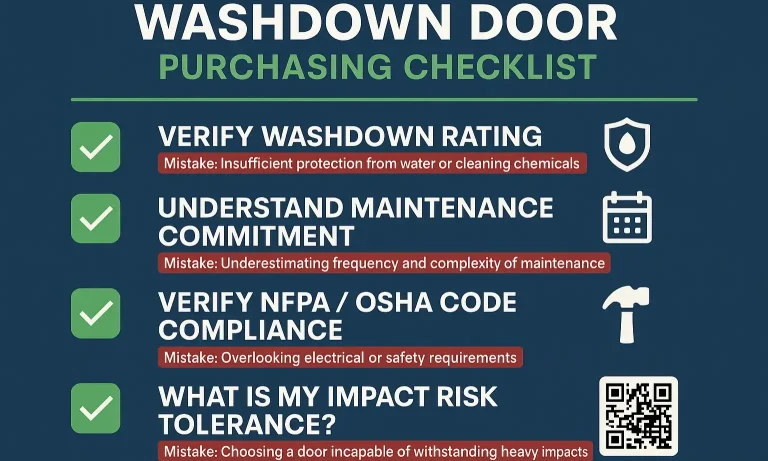
You’re now equipped with the foundational knowledge to make a smart decision. Use this checklist to guide your process and ensure you cover all your bases. Knowing how to choose the best commercial garage door is about asking the right questions.
Key Questions for Your Vendor:
- What is the door’s cycle rating?
- Can you demonstrate the breakaway/self-repair feature?
- What specific materials are used in the side frames and head unit (e.g., stainless steel, galvanized steel, aluminum)?
- What safety features are standard (e.g., photo-eyes, reversing edge, light curtain)?
- What are the warranty details for the motor and the curtain/panels?
- It’s also worth asking, “Do garage doors need to be fire rated?” in your facility, as this can add another layer of requirements to your decision.
Frequently Asked Questions (FAQ)
What exactly is a high-speed door?
It’s an industrial door designed to open and close at high speeds (typically over 20 inches per second) to improve efficiency, control environments, and save energy.
How long do they last?
With proper maintenance, high-speed doors are designed for millions of cycles and can last for many years. The lifespan is more dependent on the number of cycles and the quality of maintenance than on time alone.
What are the most important safety features to look for?
Look for a combination of features. A reversing bottom edge, multiple photo-eye sensors, and a full-width light curtain that detects any obstruction in the doorway offer the highest level of protection. Many are designed to work with sophisticated commercial garage door openers that integrate these safety systems.
Your Next Step
Choosing the right high-speed door is a strategic investment in your facility’s efficiency and safety. By understanding the fundamental differences between fabric and rigid doors and, most importantly, analyzing the unique demands of your environment, you can select a solution that pays dividends for years to come.
While this guide covers high-speed doors, remember that there are many types of commercial doors, including traditional sectional garage doors that serve different purposes. If your needs are unique, exploring custom garage doors can provide a tailored solution for any application.
You May Also Like
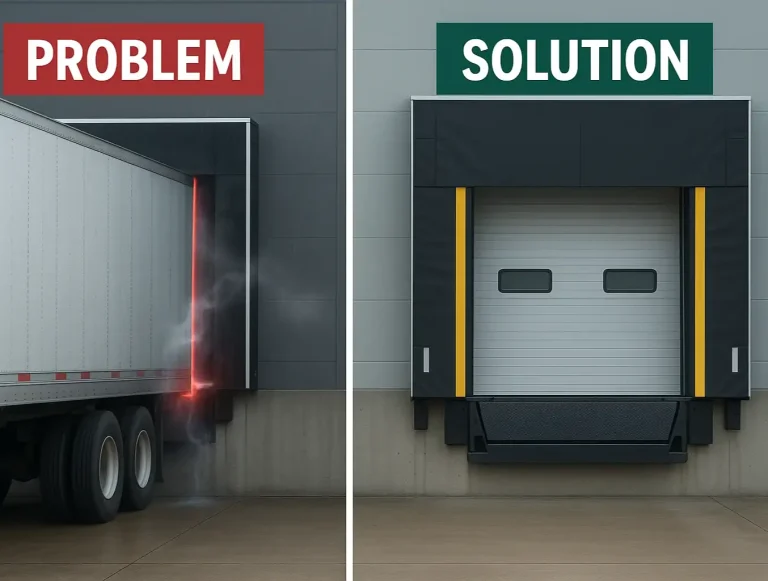
Shelter Integration with Overhead Loading Dock Doors
That gap between the truck and your loading dock wall? It might look small, but it’s a massive drain on your resources. Every day, it’s leaking heated or cooled air, inviting in rain and pests, and creating potential…
Published Date: Jun 4, 2026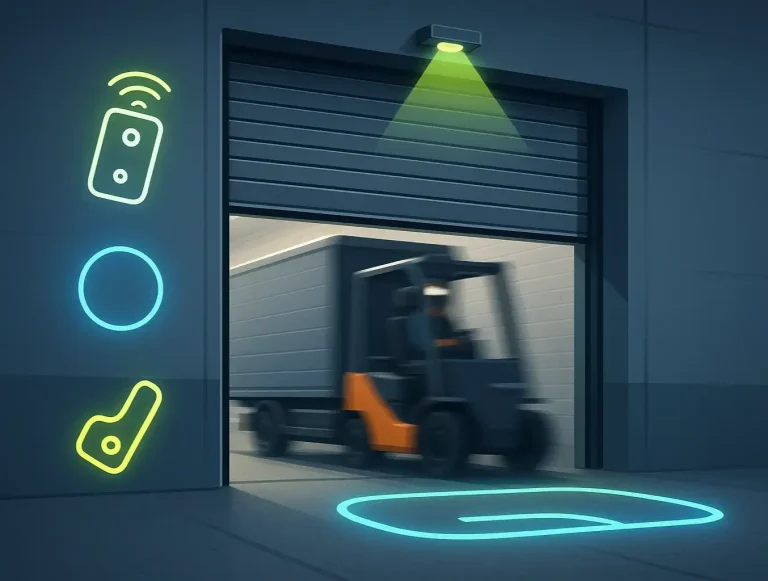
Activating Commercial Garage Doors
Imagine a busy warehouse. Every day, dozens of trucks arrive and depart. Each time, the driver has to stop, get out, walk to a wall-mounted button, wait for the massive door to open, get back in the truck, and drive…
Published Date: Jun 3, 2026
Emergency Exterior Access for Commercial or Rolling Steel Garage Doors
The power is out. Your delivery truck is loaded and needs to leave, but the massive rolling steel door to your warehouse is sealed shut. Or maybe the motor made a grinding noise and now refuses to budge. Panic starts…
Published Date: May 27, 2026