





Emergency Exterior Access for Commercial or Rolling Steel Garage Doors
Published: May 27, 2026
The power is out. Your delivery truck is loaded and needs to leave, but the massive rolling steel door to your warehouse is sealed shut. Or maybe the motor made a grinding noise and now refuses to budge. Panic starts to set in. Every minute the door stays closed costs you time and money.
You’ve probably opened a residential garage door from the outside before—find the little red cord, pull it, and lift. Easy. But as you stare at your heavy-duty commercial door, you realize there’s no red cord in sight. Just a heavy-looking chain, a mysterious keyhole, or seemingly no manual override at all.
This is a common “aha moment” for business owners: commercial and residential garage doors are fundamentally different beasts, especially in an emergency. Using residential advice for a commercial door isn’t just ineffective; it can be incredibly dangerous.
Before you do anything else, stop. This guide will walk you through the process safely. We’ll help you identify your system, understand the mechanics, and make the right decision for your situation, turning a moment of panic into a moment of control.
Before You Touch Anything: The Critical 60-Second Safety Check
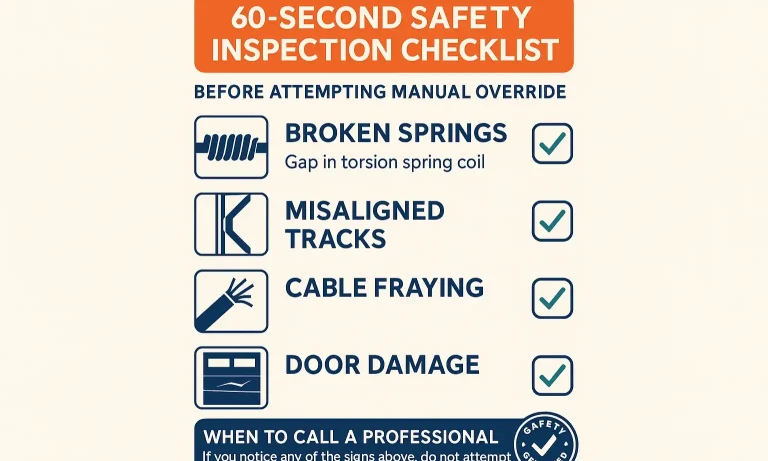
A stuck commercial door isn’t just an inconvenience; it can be a sign of a critical mechanical failure. A commercial garage door can weigh anywhere from 400 to over 1,000 pounds. That weight is managed by high-tension springs and cables. If one of these components has failed, attempting to manually operate the door can lead to it free-falling, causing catastrophic damage or serious injury.
This 60-second check is the most important part of this guide.
- Look Up at the Springs: Above the door, you’ll see one or two large, coiled springs running on a metal shaft. Visually inspect them. Do you see a distinct gap or separation in the coils? If so, you have a broken spring. STOP IMMEDIATELY. A broken spring means the door’s full weight is no longer counterbalanced. Disengaging the motor will make the door dangerously heavy and nearly impossible to lift. This is a job for a professional, as an improper garage door spring replacement can be extremely hazardous.
- Inspect the Cables and Tracks: Look at the vertical tracks on either side of the door. Is the door sitting squarely in them? Check the cables that run from the bottom of the door up to the drums near the springs. Are they frayed, tangled, or have they come off the drums? If anything looks out of place, proceed with extreme caution.
- Check for Physical Damage: Is there any visible damage to the door panels or slats, such as dents from a forklift or vehicle impact? A damaged door can easily get jammed in the tracks when you try to move it.
If you see any of these danger signs, the safest bet is to call a professional. If everything looks normal, you can proceed to the next step.
Step 1: Identify Your Manual Override System
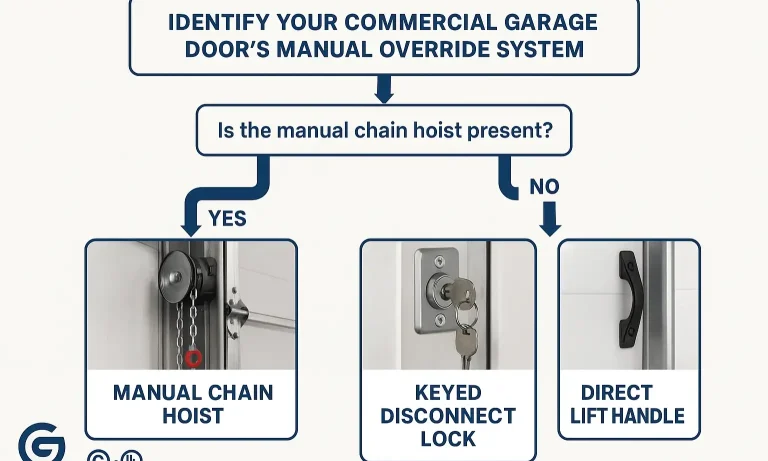
Unlike the standardized red cord on residential openers, commercial doors use several different types of manual overrides. You must correctly identify yours to use it safely. Trying to force the wrong mechanism can damage the opener or the door.
Find the system that matches what you see on your door:
- Manual Chain Hoist: The most common system on large rolling steel or sectional doors. It’s a metal chain, similar to one on a pulley, that hangs down from the motor unit. This is designed to lift the heavy door with mechanical advantage.
- Keyed Disconnect Lock: Common on commercial doors that serve as the primary entry/exit point without another door nearby. From the outside, you’ll see a small, round lock. Turning the key disengages the opener from the door, allowing you to lift it by hand.
- Direct Lift / Push-Up Operation: Typically found on smaller, lighter rolling doors, like those on concession stands or service counters. These doors are spring-balanced to be light enough to be pushed up and pulled down by hand, often with a handle at the bottom. There is no opener to disengage.
Step 2: Follow the Correct Procedure for YOUR System
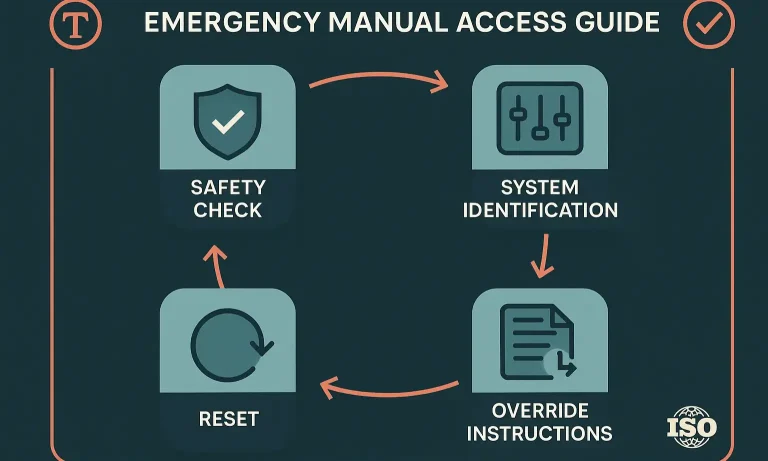
Once you’ve identified your system, follow the specific instructions below. Do not try to mix and match steps from different systems. Knowing how to open a stuck garage door from the outside is about precision, not force.
How to Use a Manual Chain Hoist
The chain hoist gives you the leverage needed to lift a heavy door without the motor.
- Locate the Engagement Lever: Near the chain on the motor unit, there is a small lever or cord. This disengages the motor gears and engages the chain mechanism. It is often red, but not always.
- Disengage the Motor: Pull the lever or cord. You may hear a distinct “clunk” as the gears shift.
- Operate the Chain: Pulling on one side of the chain loop will raise the door, and pulling on the other will lower it. The movement will be slow and require steady effort. Pro-Tip: If the door is very difficult to move with the chain, this could be another sign of a broken spring. Do not force it.
- Secure the Door: Once the door is at the desired height, it should stay in place. However, for safety, do not leave it unattended for long periods.
How to Use a Keyed Disconnect Lock
This system disconnects the “trolley” (the part that moves along the track) from the door itself. While residential doors often use a simple rope for the garage door emergency release, this keyed version provides necessary security for businesses.
- Insert and Turn the Key: Place the key into the exterior lock and turn it. This will pull an internal cable that detaches the opener’s trolley arm from the door bracket.
- Lift the Door Manually: With the opener disengaged, you can now lift the door by hand. Grasp the bottom and lift smoothly. It should feel heavy but manageable. If it feels immensely heavy, the spring may be broken.
- Secure the Door: A manually lifted door will not stay open on its own. You must either open it fully until it rests on the horizontal tracks or prop it open securely with locking pliers or C-clamps on the tracks. Never prop it open with unsecured objects.
- Check the Locks: Ensure any manual slide locks or keyed cylinder locks on the bottom bar are fully disengaged.
- Lift Evenly: Grasp the handle or bottom bar with both hands, spaced apart, and lift with your legs. The door should lift smoothly. If it feels crooked or binds in the tracks, stop and inspect the tracks for obstructions.
How to Use a Direct Lift / Push-Up Door
This is the most straightforward system, as there is no motor to disengage. If a push-up door is stuck, it’s almost always due to a mechanical issue.
Step 3: Re-Engaging the Motor and When to Call a Professional
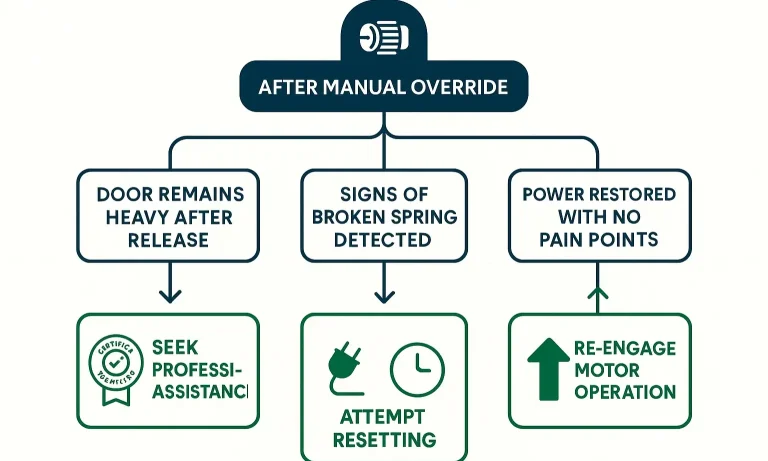
After the power is restored or the emergency has passed, you’ll need to reconnect the opener. The final step is knowing when the problem is beyond a simple manual override.
Reconnecting Your Opener
For a keyed disconnect, you simply need to run the opener until the trolley reconnects with the door bracket. For a chain hoist, you must push the engagement lever back to its original position to re-engage the motor. The process can vary, so consulting a guide on how to reconnect a garage door opener is a wise next step.
When to Call the Pros
DIY has its limits, especially when safety and expensive equipment are on the line. This decision tree can help you determine the safest course of action.
A professional technician can diagnose the underlying issue—whether it’s with the motor, springs, or tracks—and perform a safe repair.
Beyond the Emergency: Proactive Measures for Reliable Access
The best way to handle an emergency is to prevent it. Regular commercial door preventative maintenance is the single most effective way to ensure your door works when you need it most. Additionally, understanding how robust commercial garage door openers are designed for power and reliability can help you make better equipment choices in the future, such as investing in a model with a battery backup.
Frequently Asked Questions
What’s the main difference between a commercial and residential garage door emergency release?
The biggest difference is security and force. A residential release is a simple cord inside the garage because security is secondary to ease of use. A commercial garage door manual release is designed to be more secure (keyed locks) or to provide mechanical advantage (chain hoists) to move a much heavier and larger door.
I disengaged the motor, and now the door is incredibly heavy. What does that mean?
This is a classic symptom of a broken torsion spring. The spring is what counterbalances the door’s weight, not the opener. When it breaks, the opener (and you) must lift the full dead weight of the door. Do not try to lift it. This is a dangerous situation that requires immediate professional service.
My door doesn’t have an external release. Can one be installed?
Yes, in most cases. If your facility relies on a single commercial garage door for access, installing an external keyed disconnect is a wise investment. It provides a secure way to gain entry during a power outage without compromising the building’s security.
Your Partner in Commercial Door Reliability
Navigating a commercial door emergency can be stressful, but understanding your equipment is the first step toward a safe resolution. By prioritizing safety, correctly identifying your system, and knowing when to call for help, you can protect your property, your inventory, and your people.
At Up & Down Garage Doors, we believe in empowering our customers with knowledge. If you’ve run through the safety checks and are still unsure or facing a problem too big to handle, our 24/7 expert technicians are always ready to help.
You May Also Like
How To Open Open Garage Door Manually During Outage
The scenario is all too common: the power goes out, your car is inside the garage, and you're stuck on the outside. Your trusty remote is useless, and the keypad is dark. It’s a moment of pure frustration, but don't…
Published Date: May 26, 2026
How to Open a Stuck Garage Door from the Outside Safely
You pull into your driveway during a storm, the power is out, and your garage door is stuck. You’re locked out of your garage, and your tools — or even the main house entry — are inside. The quickest solution is…
Published Date: Nov 18, 2025
Garage Door is Stuck: Common Causes and How to Fix Them
When your garage door is stuck, it can quickly turn into a safety and security problem. Homeowners often notice the issue during bad weather, power interruptions, or after years of regular use. Sometimes the door…
Published Date: Dec 16, 2025