





How To Open Open Garage Door Manually During Outage
Published: May 26, 2026
The scenario is all too common: the power goes out, your car is inside the garage, and you’re stuck on the outside. Your trusty remote is useless, and the keypad is dark. It’s a moment of pure frustration, but don’t panic. Getting into your garage is often possible—if your door is equipped with one crucial feature.
This guide will walk you through the entire process, from identifying the right hardware on your door to safely getting it open and resetting everything once the power returns. We’ll turn that moment of stress into a moment of “aha!”
First: Check for This Keyhole on Your Garage Door
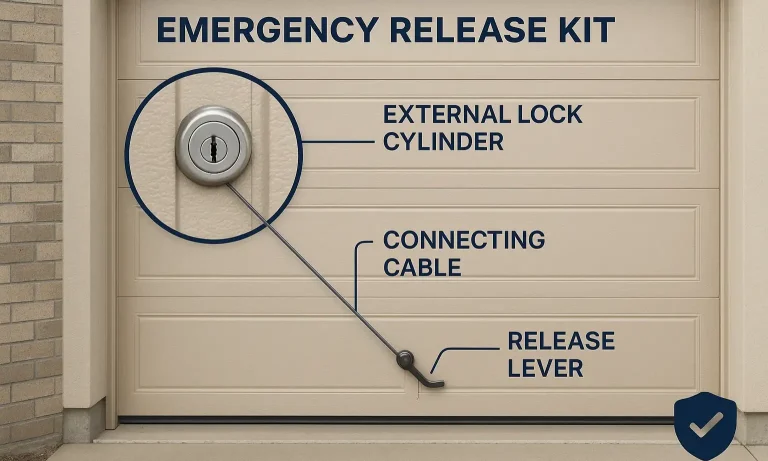
Before we go any further, let’s establish the most important fact: manually opening your garage door from the outside is only possible if you have a garage door emergency release kit installed.
What does that look like? Walk up to your garage door and look for a small, circular lock, usually located near the top center of the door. It will look like a simple keyhole, just like any other lock. This is the external component of the garage door manual release system.
If you don’t see this lock, you won’t be able to open the door from the outside without power. The red cord you may have heard about is for manual release from inside the garage. If you can’t find this lock, skip ahead to our section on “Future-Proofing Your Garage” to learn how to prepare for the next outage.
The 4-Step Emergency Access Method
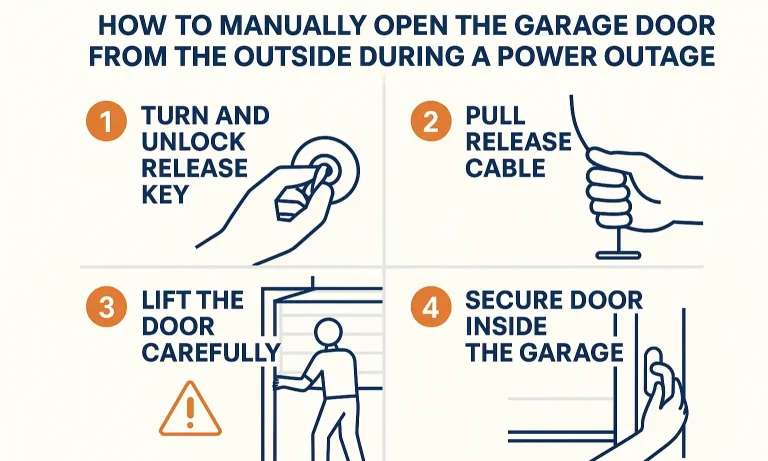
Found the lock? Excellent. Now you have a clear path inside. Grab the key that came with the release kit and follow these steps carefully.
Step 1: Unlock the Release Mechanism
Insert the key into the lock on the outside of your garage door. Turn the key—this may be a quarter or half turn. You should feel the lock cylinder disengage.
Step 2: Pull the Lock Cylinder and Cable Out
Once unlocked, pull the entire lock cylinder housing straight out from the door. It is attached to a steel cable that runs through the door to the garage door opener’s trolley system. As you pull, you are physically pulling on the cable that will disengage the opener from the door itself. You should hear a “click” or “clunk” as the trolley release arm disconnects.
Step 3: Carefully Lift the Door Manually
With the opener disengaged, the door is now free to move manually. Squat down, get a firm grip on the bottom of the door, and lift with your legs, not your back.
Safety First! A properly balanced garage door should feel relatively light and lift smoothly. If the door feels incredibly heavy or is difficult to lift, STOP immediately. This could be a sign of a broken spring, which is under extreme tension. Trying to force a door with a broken spring is dangerous and can cause the door to slam shut. Understanding the basics of manual garage door safety is crucial before you lift.
Step 4: Secure the Door
Once you’ve opened the door enough to get inside, make sure it is propped open securely if it doesn’t stay up on its own. You can then access whatever you need from your garage. When you are done, you can carefully lower the door by hand. Keep in mind it will not be locked by the opener until you re-engage the system.
Now you know how to open a garage door without power, but the job isn’t done until the electricity is back.
Mastery: Getting Back to Normal After Power Returns
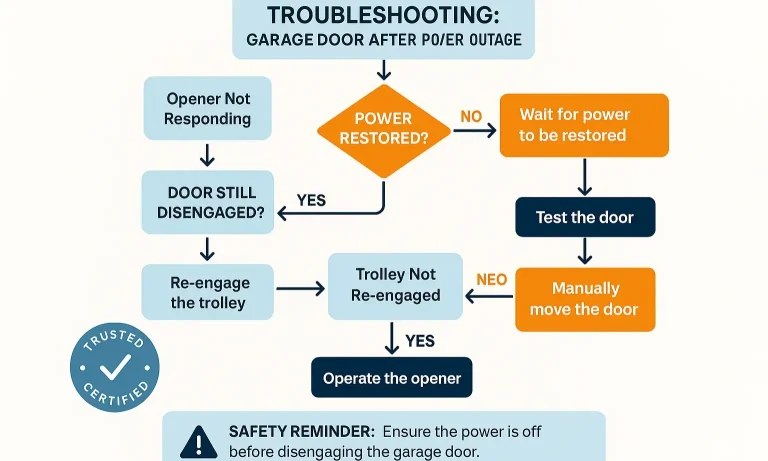
Once the lights come back on, your garage door opener won’t automatically reconnect to the door. You’ll need to re-engage the trolley system manually. This is where many people get stuck, but it’s usually a simple fix.
- Close the Garage Door: Make sure the door is fully closed.
- Pull the Red Emergency Cord: Pull the red cord on the trolley assembly towards the opener motor (away from the door) to reset the release arm into the “ready to connect” position.
- Run the Opener: Press your remote or wall button to run the garage door opener. As the chain or belt moves the trolley, it will automatically reconnect to the corresponding part on the door, usually with a loud click.
- Test the Door: Run the door through a full open and close cycle to ensure it’s working correctly.
If you’re having trouble, knowing how to fix a garage door not working after a power outage can save you a headache.
Action: Future-Proofing Your Garage
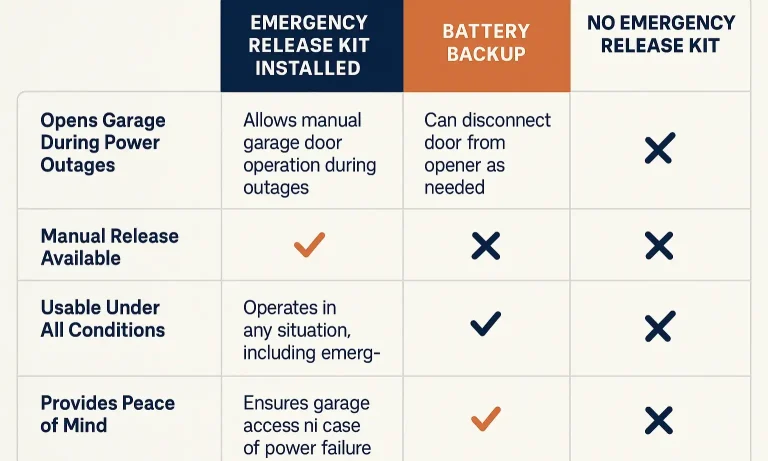
A power outage highlights the weak points in our home systems. If you were unable to get in or found the process stressful, now is the perfect time to prepare for the future. You have two excellent options.
- Install an Emergency Release Kit: If you don’t have one, this is a must-have, especially if your garage has no other entry door. It’s an inexpensive and simple installation that provides total peace of mind.
- Upgrade to a Battery Backup System: The ultimate solution is an opener with a built-in battery backup. These modern systems detect a power outage and automatically switch to battery power, allowing you to use your garage door with your remote just like normal for up to 20 cycles. Investing in garage door openers with battery backup means you’ll barely even notice the next outage.
Frequently Asked Questions
What if I don’t have an emergency release kit?
Unfortunately, if there is no other entry point to your garage (like a side door), you will not be able to open the door from the outside during an outage. Your only options are to wait for the power to return or call a professional for emergency garage door repair.
What if I lost the key to my emergency release lock?
A professional locksmith or a garage door technician can often help you get a replacement key or replace the lock cylinder itself. It’s a good idea to have a spare key kept in a safe place.
Can a power outage damage my garage door opener?
While a simple outage is unlikely to cause damage, a power surge when the electricity returns can sometimes harm the sensitive circuit board in your opener. If your opener isn’t working after the power is restored, you may need some basic garage door opener troubleshooting.
Why isn’t my garage door remote working after the power came back?
Sometimes, a power outage can cause the opener’s logic board to “forget” the codes for your remotes. You may need to reprogram your remotes to the motor unit, a process that is usually outlined in your owner’s manual.
You May Also Like
How to Open a Stuck Garage Door from the Outside Safely
You pull into your driveway during a storm, the power is out, and your garage door is stuck. You’re locked out of your garage, and your tools — or even the main house entry — are inside. The quickest solution is…
Published Date: Nov 18, 2025
Garage Door Is Stuck Open: Protect Your Home With These Quick Steps
When your garage door is stuck open, it’s not just frustrating — it can leave your home exposed to weather and security risks. Whether it’s a quick fix or a sign of a bigger issue, knowing what to do next matters.…
Published Date: Feb 3, 2026
Garage Door is Stuck: Common Causes and How to Fix Them
When your garage door is stuck, it can quickly turn into a safety and security problem. Homeowners often notice the issue during bad weather, power interruptions, or after years of regular use. Sometimes the door…
Published Date: Dec 16, 2025