





Garage Door Top Seal and Header Weatherstrip: Sealing the Gap Above the Door
Published: Oct 7, 2026
Many homeowners focus on sealing their garage floors, but the single largest source of thermal siphoning is the gap above the door. Garages account for up to 15-20% of a home’s total heat loss according to ASHRAE standards. Because hot air naturally rises, an unsealed header acts like a chimney. This dynamic, known as the stack effect, constantly pulls cold air in through the lower gaps while siphoning warm, conditioned air straight out of the top.
While investing in high-quality garage door insulation is a vital step toward climate control, overlooking the header weatherstrip severely undermines its effectiveness. Resolving this issue requires balancing material science with physical door mechanics to discover how to seal garage door gaps permanently.
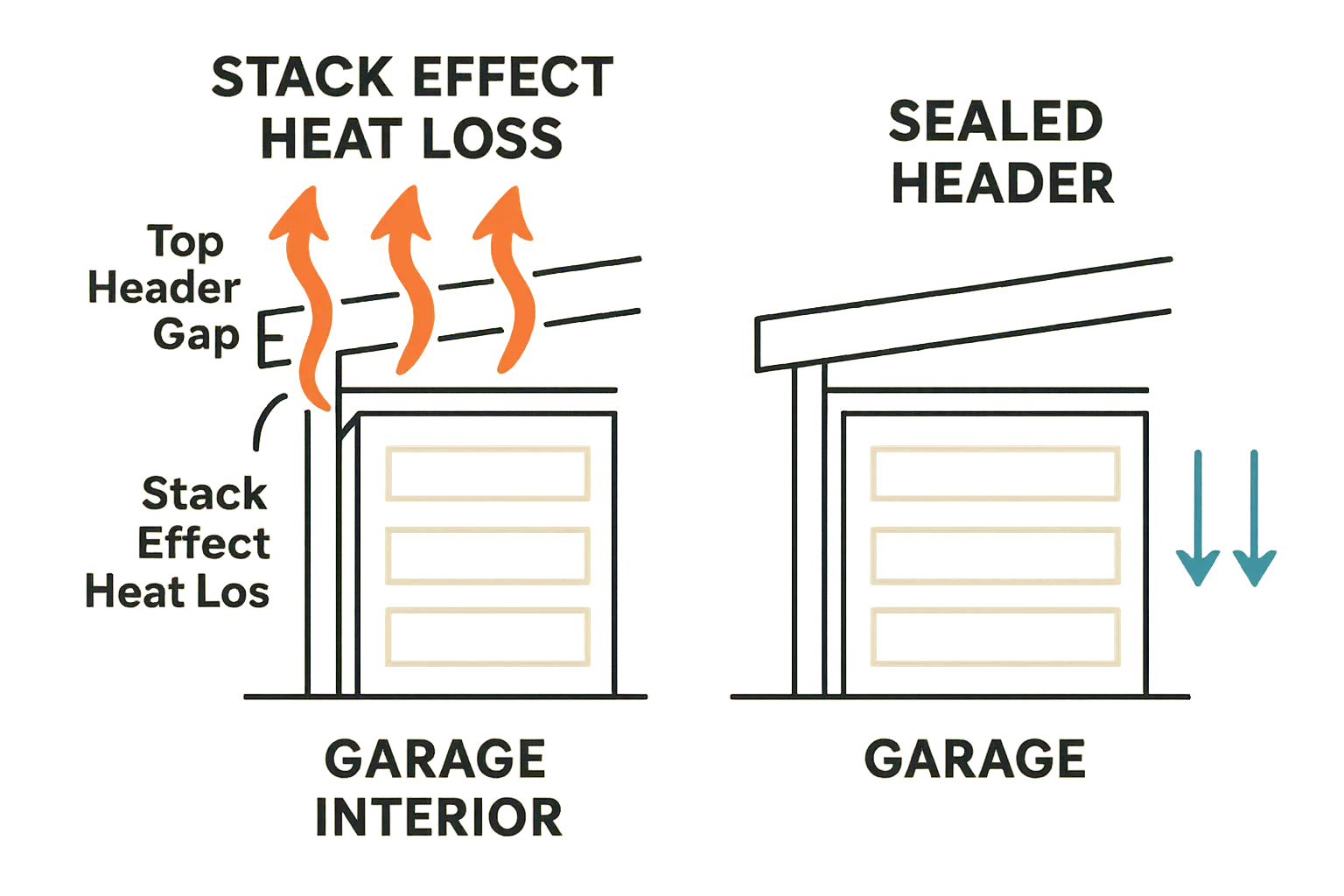 This image clarifies how warm air rises and escapes through the unsealed gap above your garage door, leading to significant heat loss and energy waste. Understanding the ‘forgotten gap’ highlights why top seals are critical beyond bottom weatherstripping.
Pre-Installation Mechanical Audit (The 'Zero-Dollar' Fix)
Before purchasing any new weatherstripping, evaluate your door’s existing mechanical alignment. Often, a noticeable gap at top of garage door frames can be corrected entirely through physical adjustments.
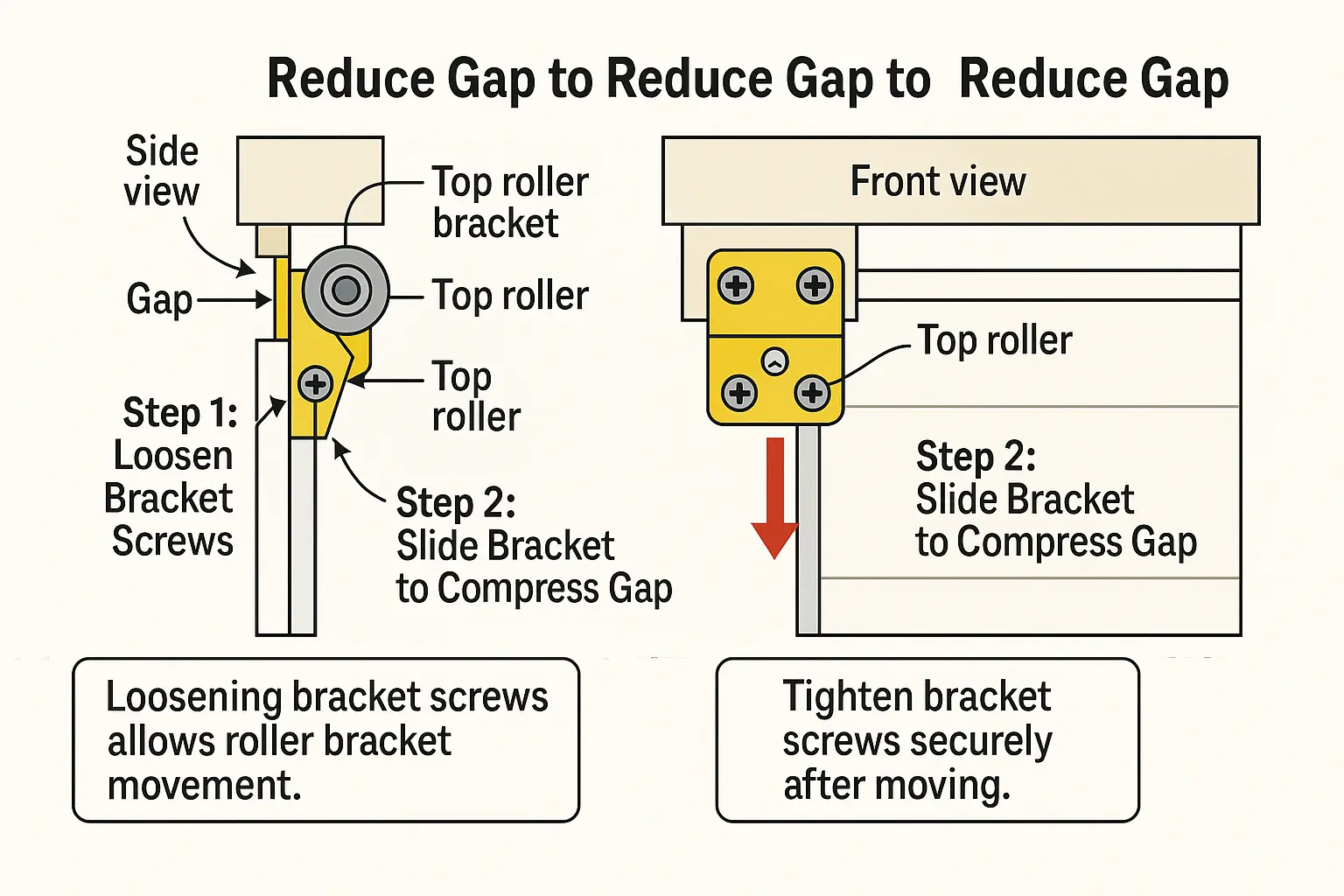 This illustration educates homeowners on performing the crucial mechanical adjustment of their garage door’s top roller brackets, a ‘zero-dollar’ fix that often closes the header gap before applying any weatherstripping.
To perform this mechanical audit, close your door completely and gently push against the top panel. If there is significant play or a visible opening, you can adjust the top roller fixtures. Loosen the securing bolts on the top roller brackets—remembering to never touch the bottom brackets, which remain under dangerous spring tension. Slide the bracket body toward the wall to pull the top panel flush against the door stop, and then retighten. If your rollers are worn out or sticking during this process, it is best to learn how to replace garage door rollers safely before applying new seals.
Material Selection Matrix: Vinyl vs. EPDM vs. Brush vs. Composite
Selecting the right seal requires matching your local climate to the physical properties of the material. Cheap vinyl weatherstripping is highly accessible, but it loses 50% of its flexibility at temperatures below 32°F, turning brittle and cracking easily under impact. EPDM synthetic rubber, on the other hand, retains its elasticity from -58°F up to 300°F, making it the ideal multi-season barrier for residential use.
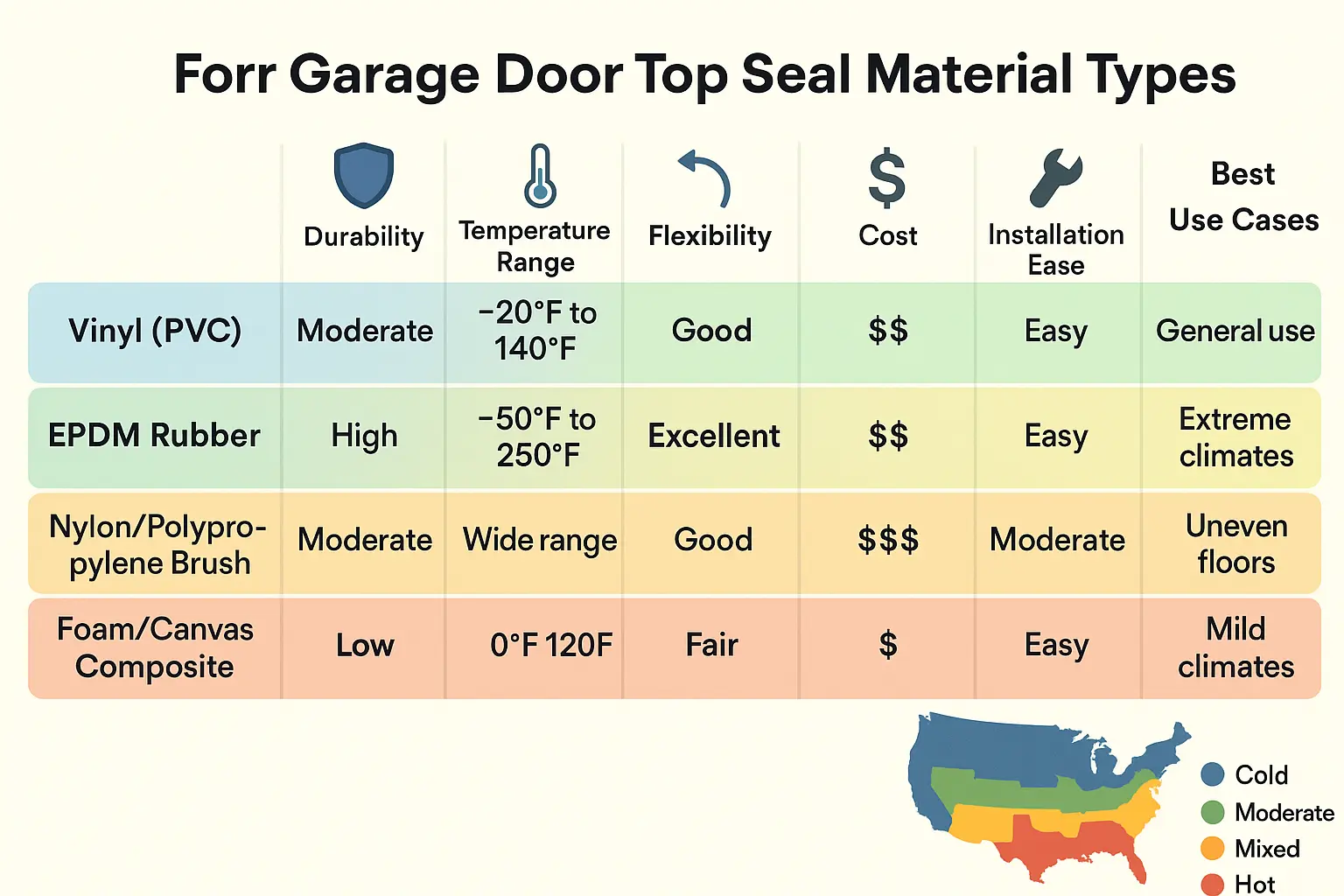 Memorize the critical differences between top weatherstripping materials with this clear visual guide — matching durability, temperature resistance, and application scenarios to help select the optimal product for your climate and door type.
For highly irregular or uneven headers, commercial-grade nylon or polypropylene brush seals are the gold standard. According to ASTM E283 commercial air infiltration testing, brush weatherstripping reduces air leakage by up to 98% compared to an unsealed header. If your garage has uneven surfaces on multiple sides, pairing a top brush seal with a specialized garage door bottom seal for uneven floor will ensure a completely draft-free space. Unresolved gaps along the gap between garage door and frame allow cold air and pests to bypass your insulation entirely, so selecting high-performance materials is crucial.
Step-by-Step Engineering-Grade Installation Protocol
To achieve a professional, weather-tight finish, follow this precise installation sequence. Incorporating these simple checks into your annual garage door maintenance checklist guarantees optimal insulation year-round.
- Install the Top Seal First: Always mount the header weatherstrip before applying your vertical side seals. This allows the horizontal top flap to rest safely behind the side flaps, which prevents the material from buckling or tearing when the door cycles.
- Mitigate the ‘Triangle Leak’: The upper corners of a garage door are notorious entry points for rodents and pests. Avoid simple butt joints; instead, cut the junction points where the header and side seals meet at a precise 45-degree mitered angle, leaving a micro-overlap to seal the corner.
- Use Premium Fasteners: Standard nails can rust, creating unsightly black streaks down your trim. Secure your weatherstripping with stainless steel or polymer-coated screws spaced every 8 to 12 inches to prevent sagging.
Specialty Architectural Solutions
Standard sectional steel and wood doors are easily retrofitted with vinyl or EPDM flap molding. However, other architectural designs require customized sealing strategies:
- Commercial Rolling Steel Doors: Because rolling steel doors travel vertically without a standard track curve, standard stop molding will bind. These systems require heavy-duty aluminum retainers with integrated brush seals mounted directly to the steel header.
- Single-Panel Tilt-Up Doors: These classic doors swing outward during operation. To prevent binding, use flexible canvas/foam composites or EPDM loop seals that expand and compress dynamically without catching.
Frequently Asked Questions
Why does my top seal squeak during high winds?
Squeaking is caused by dry weatherstripping rubbing against the painted outer face of the garage door panel. To eliminate this noise, apply a thin layer of high-quality, silicone-based lubricant to the vinyl or EPDM flap. Avoid petroleum-based lubricants, as they degrade synthetic rubbers over time.
Can I paint my PVC stop molding weatherstripping?
Yes, you can paint the rigid PVC mounting strip to match your home’s exterior trim, but you must use 100% acrylic latex paint. Never paint the flexible rubber or vinyl flap itself; dried paint will stiffen the material, causing it to crack and fail prematurely.
How do I know if my garage door opener travel limits need adjusting?
If your door reverses unexpectedly after installing a new top seal, or if you notice a gap at the bottom because the door cannot fully close, your opener’s down-travel limit is set too tight. Refer to your opener manual to adjust the down-limit travel in small increments until the door seals fully without putting excessive pressure on the header.
You May Also Like

Navigating Specialty and Full-View Garage Doors: An Engineering and Aesthetic Evaluation Guide
Published Date: Sep 16, 2026
Fiberglass Batt vs. Foam: The Ultimate Garage Door Panel Insulation Guide
If you have ever stepped into your garage during a mid-July afternoon, you know it can feel less like a home utility space and more like an oven. Under direct sunlight, uninsulated steel garage door panels act as…
Published Date: Aug 18, 2026
Reflective Foil Insulation for Garage Doors: Beyond the R-Value Myth
Under the intense heat of the summer sun, uninsulated steel garage doors behave exactly like giant radiators. They absorb solar radiation and heat up to 130°F–150°F, turning your garage into a suffocating oven. While…
Published Date: Aug 17, 2026