





Fiberglass Batt vs. Foam: The Ultimate Garage Door Panel Insulation Guide
Published: Aug 18, 2026
If you have ever stepped into your garage during a mid-July afternoon, you know it can feel less like a home utility space and more like an oven. Under direct sunlight, uninsulated steel garage door panels act as heat magnifiers, pushing interior temperatures past 120°F when it is only 95°F outside.
Choosing the right garage door insulation is the single most effective way to drop those temperatures by 15°F to 20°F, reducing strain on your home HVAC. However, you must evaluate how material properties—especially weight and thermal bridging—impact your door’s mechanics. If you’re looking for professional garage door insulation dallas services, assessing these variables is critical. Let’s look at how to safely optimize your garage.
Introduction & The Structural Physics of Garage Doors
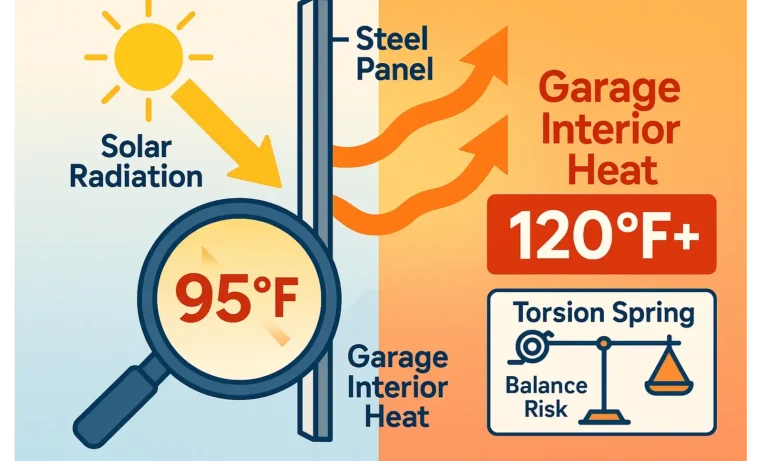
Every garage door relies on physical balance. When you add insulation, you are adding dead weight. If you install heavy rigid materials on a door designed for lightweight, uninsulated operation, you risk throwing off the tension of your springs. This strains your automatic motor and can cause critical mechanical failure.
To make an informed decision, you must compare thermal efficiency, weight load, and structural fit side-by-side.
The Comprehensive Head-to-Head Comparison Grid
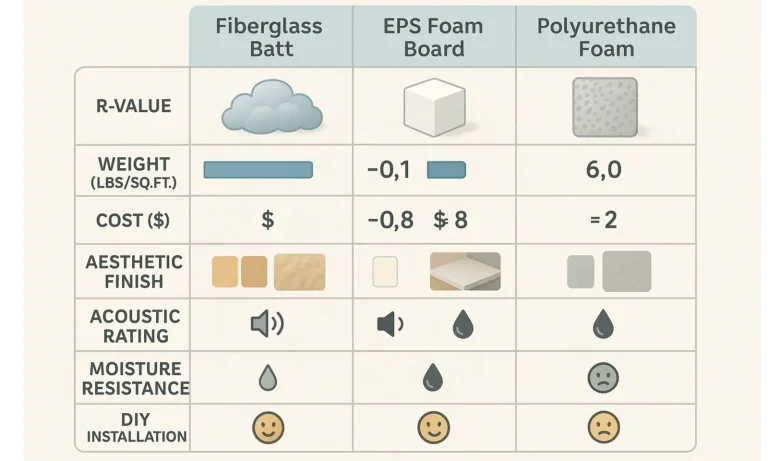
Choosing between fiberglass batts, rigid polystyrene, and factory-injected polyurethane requires balancing raw thermal efficiency against added weight. Understanding your door’s target garage door r value will guide you toward the best option.
Material-Specific Deep-Dives
Fiberglass Batt Panel Kits (The Budget & Low-Weight Solution)
Fiberglass batt kits use lightweight glass fibers encased in protective vinyl membranes. They average an R-3.0 to R-3.8 per inch (reaching R-8 in a standard 2.25″ panel). They weigh an ultra-low 0.12 to 0.18 lbs/sq. ft., making them safe for existing springs. However, if compressed too tightly into thin panels, fiberglass loses the loft necessary to trap air, drastically lowering its real-world thermal rating.
Polystyrene (EPS) Rigid Foam Panels (The DIY Balance)
Pre-cut polystyrene garage door insulation boards offer a clean, puncture-resistant white finish with an R-value of R-3.6 to R-4.0 per inch. While easy to slide into panels, rigid foam panels can leave slight perimeter gaps. These gaps create convective loops where warm air still transfers through the steel rails, though they remain highly popular for DIYers looking for immediate results. Learn how to insulate a garage door using EPS to minimize these gaps.
Polyurethane Foam (The Engineered Powerhouse)
Factory-injected closed-cell polyurethane foam bonds directly to double-steel skins, yielding an elite R-6.0 to R-7.0 per inch (up to R-18 total). This material fills every crevice, eliminating thermal bridging entirely and providing outstanding structural rigidity. However, because a factory-injected door weighs 1.5 to 2.2 lbs/sq. ft., it cannot be added as a simple retrofit and requires a complete system rebalance.
The Hidden Risk: Torsion Spring Balance Guide (DIY Step-by-Step)
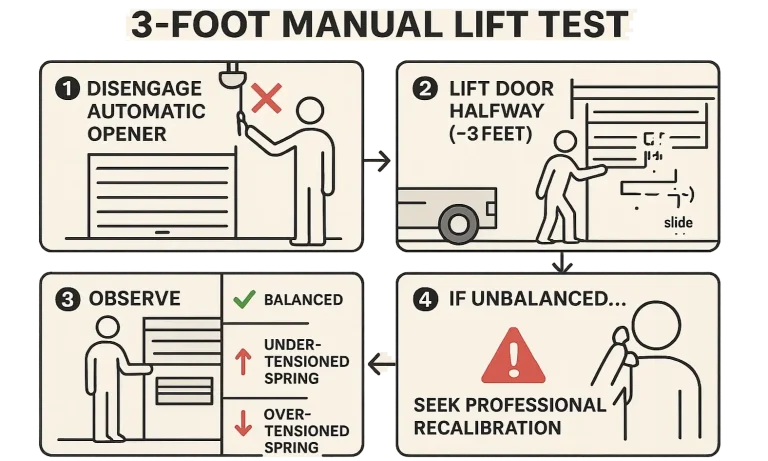
Adding weight to your garage door changes its physical balance. Standard garage doors are counterbalanced by springs calibrated to the ounce. Adding dense DIY panels can strain or burn out your automatic opener and risk a sudden, dangerous spring snap. Knowing how does a garage door spring work is key to avoiding catastrophic failures.
Before and after any insulation project, always test the system balance. If the door feels heavy, fails to stay open halfway, or falls quickly, do not operate it. Contact a professional for garage door spring tension adjustment near me to safely recalibrate your torsion system.
Mitigating Moisture and Thermal Air Leaks
To maximize your thermal efficiency, you must look beyond panels. Steel frames act as conductive thermal bridges, and gaps around the door can nullify insulation. Implementing effective garage door condensation solutions will prevent humid air from condensing and rusting your steel panels from the inside out.
Pair your panel insulation with a high-quality perimeter seal by learning how to seal garage door gaps and recognizing the importance of garage door weather stripping to lock out drafts and maintain a stable internal temperature.
Frequently Asked Questions
Does insulating a garage door affect my spring warranty?
Yes. Adding DIY weight without professional spring calibration can void your automatic opener’s warranty and accelerate spring fatigue, leading to premature failure.
Can I wash vinyl-faced fiberglass insulation?
Yes. Unlike raw fiberglass batts, vinyl-faced kits feature a sealed plastic outer layer that is easily wiped clean with mild soap, making them ideal for high-dust garage workshops.
Will adding insulation completely soundproof my garage?
No insulation will achieve 100% soundproofing, but fiberglass batts act as excellent acoustic dampeners. They absorb structural steel vibrations and noticeably reduce ambient neighborhood noise.
Next Steps: Secure Your Home’s Thermal Shield
Whether you choose lightweight fiberglass batts or a professional factory-insulated door, precision matters. Up & Down Garage Doors’ licensed professionals are available 24/7 across Connecticut, Texas, New York, Illinois, and Arizona to ensure your installation is safe, balanced, and durable. Contact us today to balance your springs or upgrade your garage door.
You May Also Like
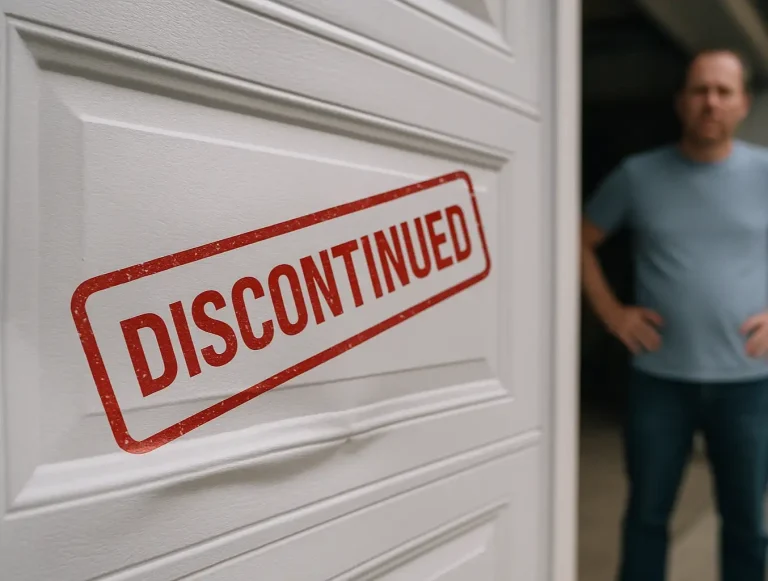
Why Are Garage Door Panels Discontinued: The Homeowner’s Diagnostic Guide
A minor bump from a car or storm-blown debris often damages just a single panel, leaving the rest of your door fully functional. Naturally, you search for a quick garage door panel replacement only to meet a…
Published Date: Aug 10, 2026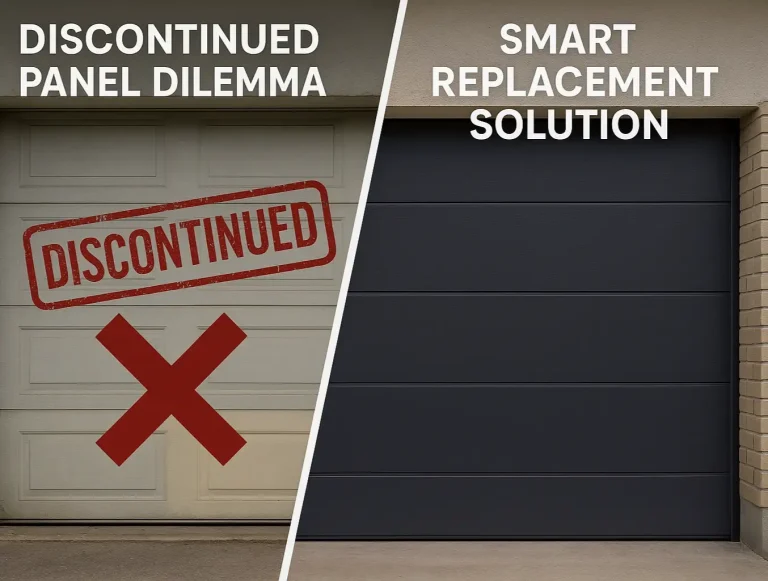
Navigating Discontinued Door Panels: Why Replacing the Whole Garage Door Saves Money
You notice a deep dent in your bottom garage door panel. Your first thought is straightforward: I’ll just order a single replacement section, hire a pro to swap it out, and be done with it. It sounds like a quick,…
Published Date: Aug 5, 2026
The Sourcing Trap: Risks of Replacing Discontinued Garage Door Panels
It is a frustratingly common scenario: you back out of your driveway a bit too quickly, or a rogue storm flings a heavy branch, leaving a deep crease in a single garage door panel. Naturally, your first instinct is…
Published Date: Aug 3, 2026