





Why Are Garage Door Panels Discontinued: The Homeowner’s Diagnostic Guide
Published: Aug 10, 2026
A minor bump from a car or storm-blown debris often damages just a single panel, leaving the rest of your door fully functional. Naturally, you search for a quick garage door panel replacement only to meet a frustrating roadblock: “This panel has been discontinued.”
It can feel like a sales tactic, but panel obsolescence is a real structural and industrial reality. This guide explains why panels disappear and how to make a safe, smart decision for your home.
Why Are Garage Door Panels Discontinued? (The Core "Why")
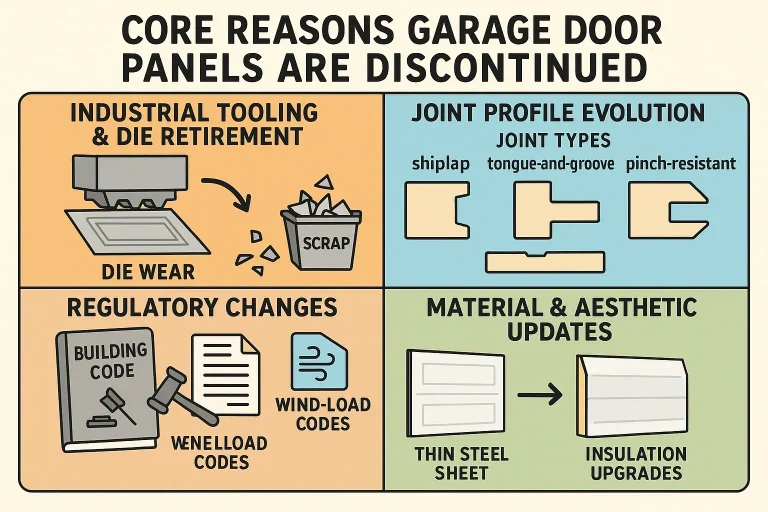
Modern garage doors last 15 to 30 years, yet manufacturers typically retire panel styles every 7 to 10 years. This creates a 10-to-20-year gap where a mechanically sound system can become unrepairable with matching OEM parts. Several industrial factors drive this:
- Tooling & Die Retirement: Heavy steel parts of a garage door are shaped by massive, expensive industrial stamping dies. When these dies wear down or a product cycle ends, manufacturers scrap them because maintaining old tooling is cost-prohibitive.
- Joint Profile Evolution: Older doors featured “shiplap” joints, which presented safety hazards. The industry has shifted to modern “pinch-resistant tongue-and-groove” designs. Because these joint shapes do not interlock, old panels are phased out for safety compliance.
- Wind-Load & Energy Mandates: Stricter building codes (e.g., wind-pressure laws in coastal zones) require certified wind-load ratings. Concurrently, energy codes require highly insulated, polyurethane-injected profiles. Legacy, unrated, non-insulated panels are legally retired to make room for energy-efficient garage doors.
- Brand Consolidation: Over the decades, major brand mergers have led to the destruction of legacy lines.
The Compatibility Myth: Why Brands Aren't Interchangeable
Homeowners often wonder: “Can I use a Clopay section on an Amarr or Wayne Dalton track?” Unfortunately, there are no universal sizing standards for garage door panels repair.
Even a tiny 1/16th of an inch variance in tongue depth, steel gauge, track thickness, or hinge-point geometry makes cross-brand panels structurally incompatible. Forcing unmatched joint profiles together can cause the door to bind, creating high motor strain and risking catastrophic mechanical failure.
Diagnostic Checklist: Identifying Your "Golden Ticket" Model Sticker
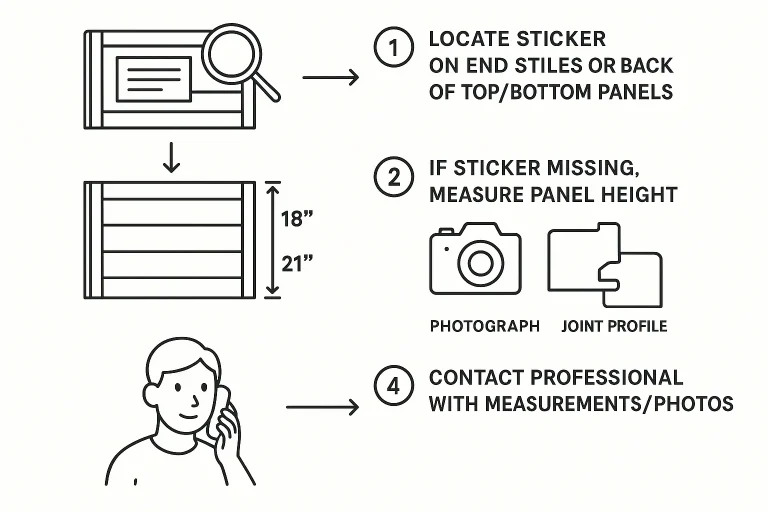
Before giving up, you must verify your exact door details. Finding the manufacturer sticker is the ultimate key to checking for remaining warehouse stock.
- Check the Stiles: Look at the inside metal end stiles (the vertical pieces on the left and right edges).
- Inspect the Bottom/Top Sections: The sticker is often on the interior face of the very bottom or top panel.
- Note the Serial: Write down the 15-to-16-digit serial number.
If the sticker is completely gone, measure the exact section height (typically 18″ or 21″) and take a clear, close-up photo of the interlocking joint profile from the side so a technician can run a cross-reference search.
Sourcing & Creative Solutions for Discontinued Panels
If your panel is discontinued, you aren’t completely out of options. Here are four practical avenues to resolve the issue:
- New Old Stock (NOS): Local installers sometimes have a “scratch-and-dent” pile or keep intact panels from tear-downs. They may have the exact panel you need sitting in local distributor inventory.
- Approximate Match & Paint-Matching: If you find a structurally compatible panel with minor cosmetic differences, you can install it and paint-match the entire door. Because UV rays fade exterior paint over time, even a brand-new original panel would mismatch visually without a full repaint.
- Cosmetic Masking: If you are dealing with minor surface dings, consider using magnetic faux windows or decorative hardware. This is a popular $30 to $50 upgrade that distracts from cosmetic blemishes.
- Upgrading the Weatherstripping: For aging doors with minor joint gaps, installing fresh garage door weather stripping seals the opening without requiring structural panel work.
The "Repair vs. Replace" Financial Calculator
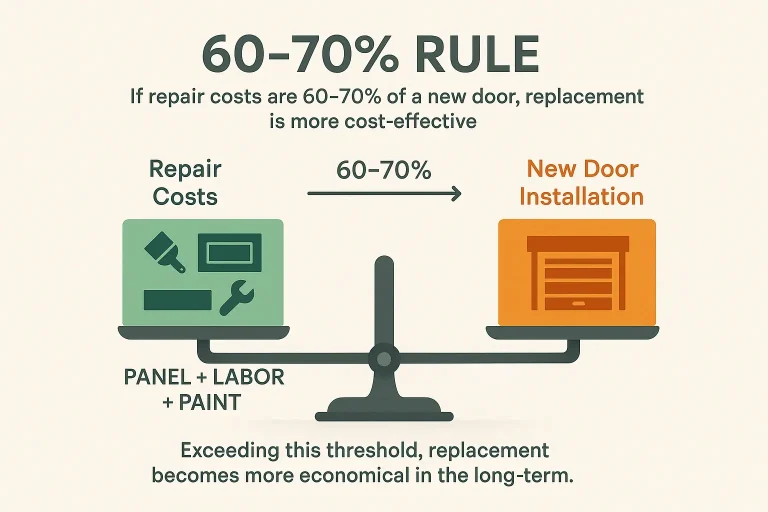
Determining whether can a damaged garage door be repaired requires a pragmatic look at the numbers.
Apply the 60-70% rule: If repairing a single panel, plus painting and labor exceeds 60% to 70% of a brand-new insulated door system, full replacement is the wiser investment.
Keep in mind that repairing garage door panels is not a safe DIY job. The door is under immense mechanical strain from high-tension torsion systems, making a professional garage door spring replacement and panel alignment critical for safety.
Frequently Asked Questions
-
Can I mix panel brands if the dimensions are identical?
- No. Minor variances in joint designs (shiplap vs. tongue-and-groove) or hinge-hole alignment make mix-and-matching panels dangerous for the door’s operation.
-
Will a new panel look different due to sun fading?
- Yes, even an exact OEM model replacement will show a color mismatch due to UV fading. Plan to paint the entire door to restore a uniform look.
-
How do I find out if my panel is discontinued?
: Locate the 15-to-16-digit model sticker on the inside stiles or bottom section and contact a professional dealer to search active and historic manufacturer inventories.
Take the Hassle-Free Path to a Beautiful, Secure Home
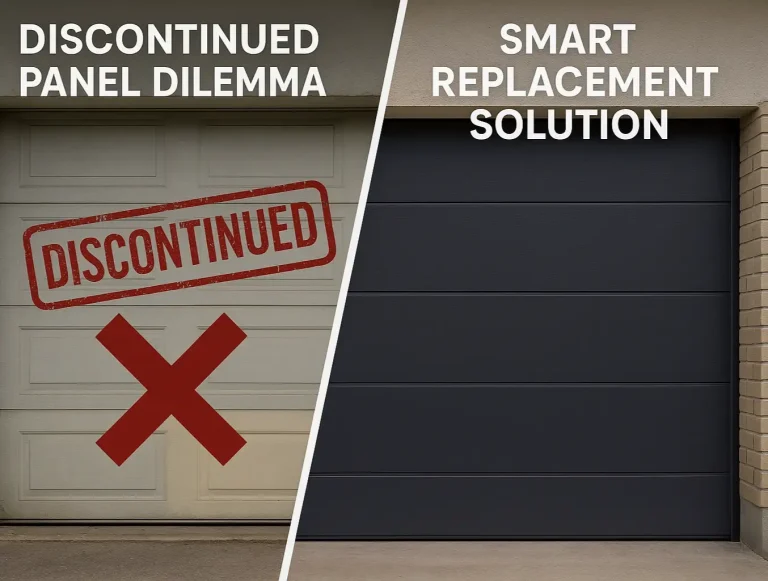
Instead of spending weeks searching for non-existent parts for an obsolete door, invest in a modern, reliable system that enhances your home’s safety and value.
At Up & Down Garage Doors, our family-owned business brings over 15 years of industry experience and a personal, honest approach to every project. We operate across multiple states with 24/7 availability and fair, transparent pricing. Contact us today to schedule your upgrade consultation and get a precise, upfront quote.
You May Also Like
Navigating Discontinued Door Panels: Why Replacing the Whole Garage Door Saves Money
You notice a deep dent in your bottom garage door panel. Your first thought is straightforward: I’ll just order a single replacement section, hire a pro to swap it out, and be done with it. It sounds like a quick,…
Published Date: Aug 5, 2026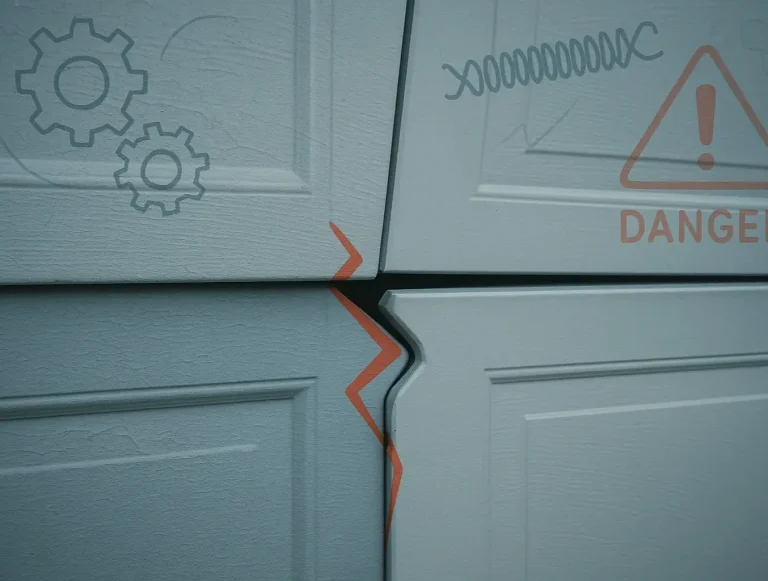
The Sourcing Trap: Risks of Replacing Discontinued Garage Door Panels
It is a frustratingly common scenario: you back out of your driveway a bit too quickly, or a rogue storm flings a heavy branch, leaving a deep crease in a single garage door panel. Naturally, your first instinct is…
Published Date: Aug 3, 2026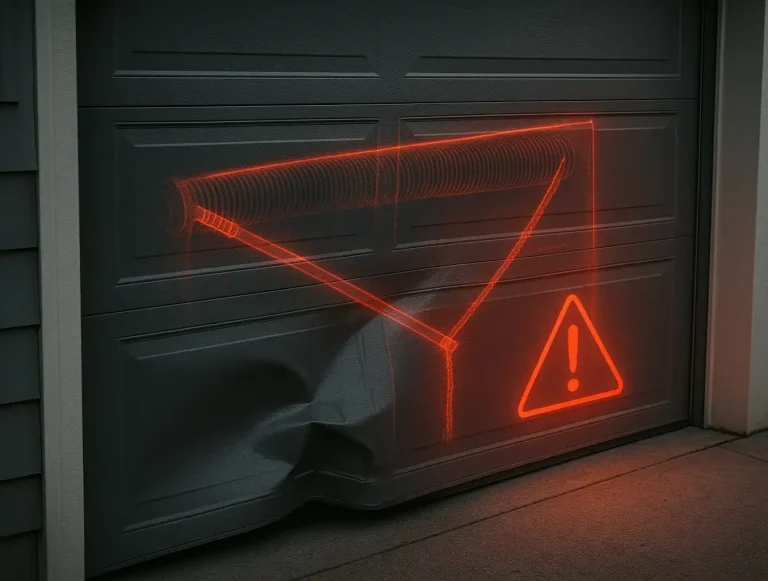
Safety Risks of Operating a Bent Garage Door
That new dent in your garage door is glaring. Maybe a car bumped it, or a stray basketball found its mark. Your first thought might be about the cosmetic damage, but the real issue isn't what you see—it's what you…
Published Date: Jun 19, 2026