





Insulated Garage Doors for Attached Garages
Published: May 27, 2026
Think of your attached garage as a giant, uninsulated window on the side of your house. During a blazing summer day or a frigid winter night, that thin metal door becomes the biggest source of energy loss in your entire home, forcing your HVAC system to work overtime.
It’s a thermal hole in your home’s wallet.
You might not feel it in the living room, but you certainly see it on your utility bill. The rooms adjacent to or directly above the garage are always a little too hot or too cold, and the garage itself is an uncomfortable, forgotten space.
But what if you could plug that hole?
This isn’t just about keeping your car cozy. An insulated garage door is one of the smartest upgrades a homeowner can make, directly impacting your home’s comfort, energy consumption, and even its value. Let’s break down how it works and why it’s a game-changer for homes with attached garages.
What Makes a Garage Door "Insulated"?
At first glance, insulated and uninsulated doors look similar. The difference is in their construction. An uninsulated door is typically a single layer of steel. An insulated door, however, is a three-layer sandwich:
- An Interior Steel or Vinyl Layer: Faces inside the garage.
- An Insulation Core: A thick layer of insulating material is bonded to the steel layers.
- An Exterior Steel Layer: Faces the outside and provides durability and curb appeal.
This sandwich construction does more than just block temperatures; it makes the door stronger, more dent-resistant, and significantly quieter. If you’re tired of the whole house rattling when the garage door opens, the simple decision to upgrade to insulated garage door panels can be a revelation.
The "Winter Coat" Analogy: Making Sense of R-Value
When you start looking at insulated doors, you’ll see the term “R-value” everywhere. It sounds technical, but the concept is simple.
Think of R-value as the thickness of a winter coat for your garage.
A higher R-value means better thermal resistance—a thicker, warmer coat.
- R-8: This is like a light fleece jacket. It’s a good entry-level choice for moderate climates where temperatures are rarely extreme.
- R-12 to R-14: This is a solid winter coat. It offers a significant boost in performance and is an excellent all-around choice for regions with distinct seasons.
- R-18+: This is the heavy-duty parka. It provides the highest level of thermal protection, ideal for climates with scorching summers or brutal winters.
This “coat” doesn’t just keep cold out; it also keeps it in. In a hot climate, a high R-value door prevents the sweltering heat of your garage from seeping into your air-conditioned home.
The Two Faces of Insulation: Polystyrene vs. Polyurethane
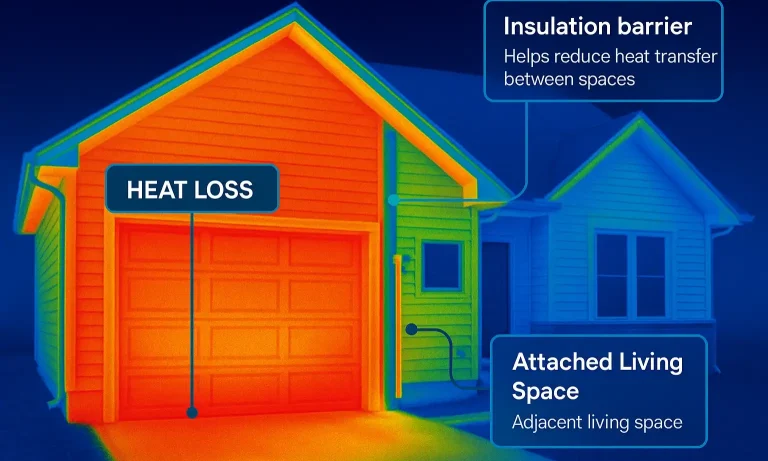
The R-value of a door is determined by the type and thickness of its insulation core. The two most common materials are Polystyrene and Polyurethane.
Polystyrene Insulation
This is a rigid foam board that is cut to fit and glued into the panels of the garage door. It’s a cost-effective solution that offers good insulating properties. If you’re looking for a solid upgrade from a non-insulated door without a major price jump, exploring polystyrene garage door insulation is a great starting point.
- Best for: Budget-conscious homeowners in mild to moderate climates.
- Pros: Lower cost, effective insulation.
- Cons: Lower R-value per inch compared to polyurethane.
Polyurethane Insulation
This is a liquid foam that is injected between the steel panels, where it expands to fill every single gap and crevice. This process creates a stronger, denser, and more rigid door with a significantly higher R-value. For those seeking maximum performance, durability, and soundproofing, high-quality polyurethane garage door insulation is the premium choice.
- Best for: Homeowners in extreme climates or those who use their garage as a workspace, gym, or playroom.
- Pros: Superior R-value, exceptional strength, excellent noise reduction.
- Cons: Higher initial cost.
How to Choose the Right "Coat" for Your Climate
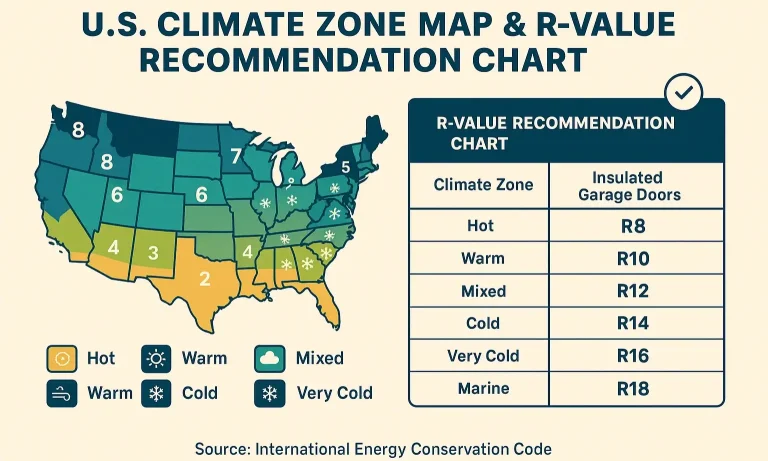
So, what R-value is right for you? It’s not just about picking the highest number. The goal is to match the door’s performance to your environment.
1. Find Your Climate Zone
The U.S. Department of Energy divides the country into climate zones. Finding your zone is the first step to choosing the right level of insulation.
- Zones 1-2 (Hot/Humid): An R-value of 8-12 is often sufficient to block summer heat.
- Zones 3-4 (Mixed/Moderate): An R-value of 12-16 provides a great balance for hot summers and cool winters.
- Zones 5-7 (Cold/Very Cold): An R-value of 16 or higher is recommended to combat significant heat loss in winter.
2. Consider Your Garage’s Role
How you use your garage matters. If it’s just for parking cars, matching your climate zone is enough. But if it doubles as a workshop, home gym, or laundry room, a higher R-value will make the space comfortable year-round.
3. Don’t Forget the Seals
The best insulated door in the world won’t be effective if air is leaking around the edges. Ensure your door has high-quality weatherstripping along the bottom and perimeter seals (vinyl stops) along the sides and top to create a complete thermal barrier.
Making the right choice involves balancing these factors. If you need more guidance on what materials and styles will work best for your home, our guide on how to choose a garage door can help you navigate all the options.
Is It Worth It? Calculating Your Return on Investment
An insulated garage door costs more than a standard one, so it’s fair to ask: are insulated garage doors worth it? When you look at the complete picture, the answer is a resounding yes.
Energy Savings
While exact savings vary, some studies suggest that replacing a non-insulated door with an insulated one can reduce energy loss through the garage by over 70%. For a room above the garage, this can translate into a more stable temperature and noticeable savings on your monthly heating and cooling bills.
Beyond the Bills: The Other Benefits
The benefits of garage door insulation go far beyond your energy bill:
- Increased Durability: The three-layer construction is tougher and more resistant to dents and dings.
- Quieter Operation: The insulation core dampens vibrations and noise from the door opening and closing, as well as from the street.
- Improved Comfort: Rooms sharing a wall with the garage will maintain a more consistent and comfortable temperature.
- Higher Home Value: An energy-efficient, durable garage door is an attractive feature for potential home buyers.
Your 5-Step Checklist for Buying an Insulated Garage Door
Feeling ready to make a change? Here’s a simple checklist to guide your decision:
- Assess Your Climate: Identify your U.S. Climate Zone to determine your baseline R-value needs.
- Define Your Garage Use: Decide if you need extra insulation for a workspace or hobby area.
- Choose Your Insulation: Compare Polystyrene (value) vs. Polyurethane (performance).
- Verify the R-Value: Don’t just look for the word “insulated.” Confirm the R-value meets your needs.
- Check the Seals: Ensure the door comes with robust perimeter and bottom weatherstripping.
Frequently Asked Questions (FAQ)
What is a good R-value for an attached garage door?
A great all-around choice for most U.S. climates is an R-value between 12 and 16. If you live in a very hot or very cold region, or if you plan to heat or cool your garage, investing in an R-18+ door is a wise decision.
Can I just insulate my existing garage door myself?
DIY insulation kits (typically foam boards) are available. They can provide a modest improvement over a completely uninsulated door. However, they will not match the performance, durability, or airtightness of a professionally manufactured insulated door with a polyurethane core and integrated weather seals.
Do insulated garage doors really make a difference in hot climates?
Absolutely. Insulation works by slowing the transfer of heat. In summer, it slows the intense heat from the outside from getting in. This keeps your garage cooler and, more importantly, prevents that heat from radiating into your home and making your air conditioner work harder.
The First Step to a More Efficient Home
Your garage door is more than just an entryway; it’s a major component of your home’s thermal envelope. Choosing the right garage door insulation turns it from a liability into an asset, improving comfort, saving money, and making your entire home a more pleasant place to be. Whether you have a traditional sectional door or are considering modern insulated roll up garage doors, taking the time to understand your options is the first step toward a smarter, more efficient home.
You May Also Like

How Insulated Garage Doors Muffle Street Sounds and Opener Noise
Is your garage door the loudest part of your house? For many, the answer is a resounding yes. It might be the jarring rattle and hum of the opener that wakes the whole family, or perhaps it's the constant drone of…
Published Date: May 26, 2026
Insulated vs. Uninsulated Garage Doors: Which Option Offers the Best Value for Your Home?
Are you tired of walking into a freezing garage in the winter or a stifling one in the summer? Or maybe you’re looking to upgrade your garage to enhance your home’s appearance. The right garage door can make a big…
Published Date: Dec 26, 2024
Insulated Garage Door Benefits for Workshops
You’ve finally done it. You’ve claimed the detached garage as your own—a sanctuary for woodworking, a gym for personal records, or a studio for your next masterpiece. But as the seasons change, you notice something.…
Published Date: May 25, 2026