





Insulated Garage Door Benefits for Workshops
Published: May 25, 2026
You’ve finally done it. You’ve claimed the detached garage as your own—a sanctuary for woodworking, a gym for personal records, or a studio for your next masterpiece. But as the seasons change, you notice something. The winter chill seeps into your bones, and the summer heat makes the air thick and heavy.
You’ve probably heard that an insulated garage door saves on energy bills. But for a detached garage, that argument falls flat. Your workshop isn’t connected to your house, so who cares about home energy savings?
This is the exact moment most people make the wrong assumption. They conclude insulation isn’t worth it.
The truth is, for a workshop, insulating your garage door has almost nothing to do with your home’s energy bill and everything to do with protecting your passion projects and expensive tools. It’s not about saving a few dollars on your home’s HVAC—it’s about creating a stable, functional environment where you can actually get work done.
Beyond Temperature: The 3 Pillars of a Conditioned Workshop
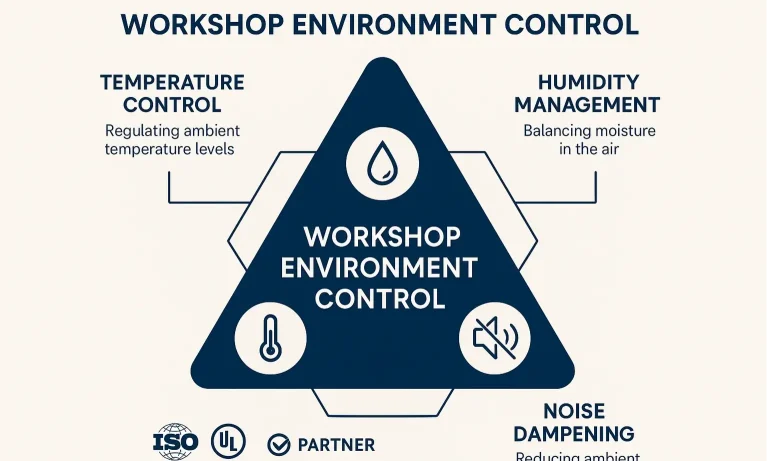
When we shift our thinking from “heating and cooling” to “environment control,” the value of an insulated door becomes crystal clear. A truly functional workshop, gym, or studio stands on three pillars, and the garage door is foundational to all of them.
- Temperature Control: This is the most obvious benefit. An insulated door helps maintain a stable temperature, making the space comfortable enough to use year-round. It drastically reduces the effort and cost required from a space heater in the winter or a fan in the summer.
- Humidity Management: This is the silent killer of workshops. Extreme temperature swings invite condensation. That moisture can cause havoc, leading to rusted hand tools, warped lumber, and peeling paint. An insulated door is your first line of defense against the damaging effects of humidity. For those in particularly hot and humid climates, a weatherproofed garage door is essential.
- Noise Dampening: Ever worry about your table saw bothering the neighbors at 8 AM on a Saturday? The layers of an insulated door provide significant sound dampening, keeping the noise of your work in and the street noise out. This creates a more focused work environment for you and a more peaceful neighborhood for everyone else.
Your Workshop is a System (Don't Just Plug One Hole)
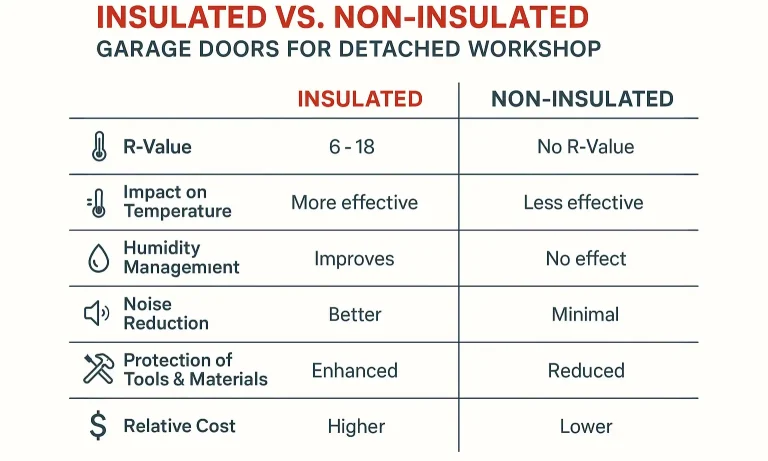
Here’s an “aha moment” that can save you a lot of frustration: thinking of your garage as a complete system.
Imagine trying to stay warm in a room with four open windows. If you close just one, you won’t feel much of a difference. The cold air will still rush in through the other three.
Your detached garage is that room. An uninsulated garage door is the biggest open window. But the walls and ceiling are windows, too. Focusing only on the door without considering the rest is why some people are disappointed with their results. To truly feel the benefits of garage door insulation, you need to see it as the critical first step in a larger system.
Part 1: The Garage Door (The Biggest Hole)
The garage door is often a thin sheet of metal, making it the largest and least-insulated surface in your workshop. It’s a massive thermal bridge, transferring heat and cold directly into your workspace. Starting here gives you the biggest return on your investment.
When choosing a door, you’ll encounter two key factors:
- Insulation Material: Most doors use polystyrene or polyurethane. Polystyrene is a rigid foam board, offering good value. Polyurethane is an injected foam that expands to fill every cavity, providing a higher insulation value and greater structural rigidity. You can explore the pros and cons of polystyrene garage door insulation to see which fits your needs.
- R-Value: This number measures how well the door resists heat flow. A higher R-value means better insulation. For a detached workshop, an R-value between 8 and 12 is a great starting point for moderate climates, while colder regions may benefit from R-16 or higher. Understanding the right garage door R-value is crucial for making an effective choice.
Part 2: Walls & Ceiling
Once your door is insulated, you may find that the walls and ceiling are now the weakest links. Insulating them with fiberglass batts or foam board is the next logical step to completing the thermal envelope of your workshop.
Part 3: Ventilation
A common mistake is creating a perfectly sealed, airtight box. This can trap moisture and harmful fumes from paints, stains, or running equipment. A simple ventilation fan or a cracked window is crucial for maintaining air quality and managing humidity within your newly insulated space.
Mastery: How an Insulated Door Directly Impacts Your Work
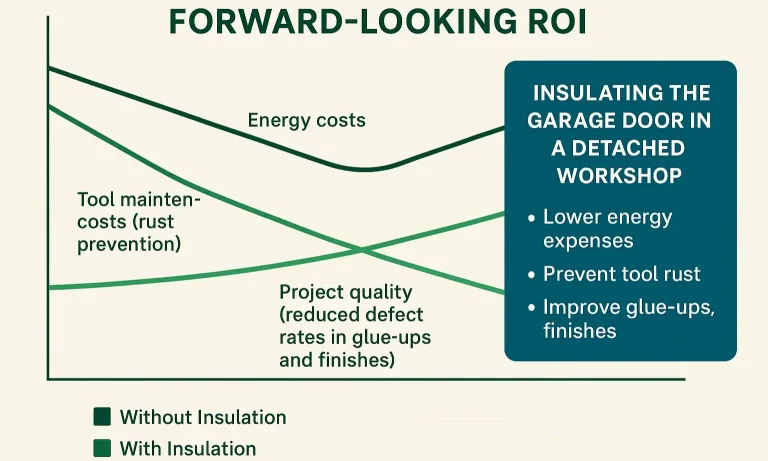
Let’s move beyond the abstract and look at how these environmental controls translate into real-world results for your projects and hobbies.
Protect Your Tools and Materials from Rust and Warping
That expensive cast-iron table saw top? It’s a magnet for rust in a humid garage. Your carefully stored stack of hardwood? It can twist and warp with drastic temperature and moisture changes, rendering it useless. An insulated door stabilizes the environment, acting as a 24/7 guardian for your most valuable assets. This simple upgrade to an insulated garage door can save you thousands in replacement costs over time.
Achieve Flawless Finishes and Stronger Glue-Ups
Many wood glues, epoxies, and finishes have optimal temperature ranges for curing. Applying polyurethane on a cold, damp day can result in a cloudy, tacky finish that never fully hardens. Trying to glue up a project in a sweltering garage can cause the glue to set too quickly, leading to weak joints. An insulated space gives you the control you need for professional-quality results.
Be a Better Neighbor: The Unexpected Perk of Noise Reduction
The structural density of an insulated door is fantastic for dampening sound. Whether you’re a musician using the garage as a practice space, a mechanic running an air compressor, or a woodworker with a loud planer, this can be a game-changer. It makes your workshop a more pleasant place to be and keeps the peace with those living nearby. If noise is a major concern, exploring options for quiet garage doors can offer even more soundproofing benefits.
Your Action Plan: From Confusion to Clarity
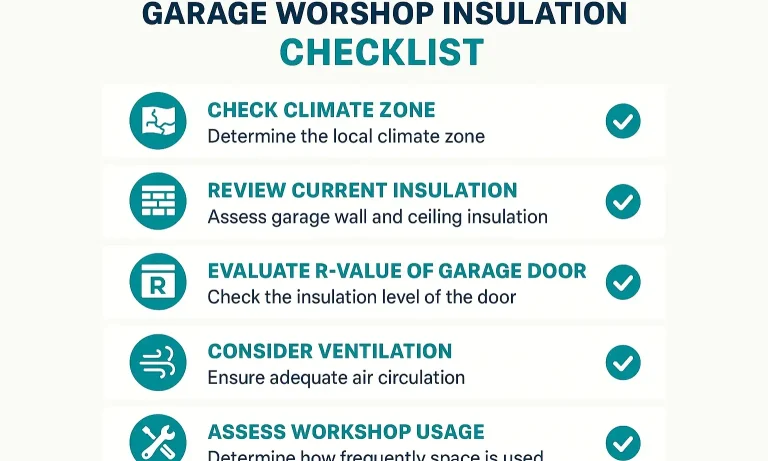
Feeling ready to take control of your workshop environment? Use this simple checklist to assess your situation and determine your next steps.
- Assess Your Climate: Do you experience freezing winters or scorching summers? The more extreme your climate, the higher the R-value you’ll need and the more you’ll benefit.
- Define Your Use: Will you be in the workshop daily or just on occasional weekends? The more you use the space, the more you’ll appreciate the comfort and stability of an insulated environment.
- Take Inventory of Your Assets: What is the value of the tools, materials, and equipment you’re storing? Consider insulation an insurance policy against rust, warping, and damage from extreme temperatures.
- Evaluate Your Current Door: Is your door old, dented, or uninsulated? If so, a full replacement is often the most effective solution. If your door is in good shape, a DIY insulation kit can be a budget-friendly first step. There are many guides on how to insulate a garage door yourself.
- Consider the Whole System: Look at your walls and ceiling. Are they insulated? If not, budget for that as a future project to maximize the performance of your new insulated door.
Frequently Asked Questions (FAQ)
What is R-value and why does it matter for a workshop?
R-value is a measure of thermal resistance—basically, how well the door stops heat from moving through it. For a workshop, a higher R-value means the space will hold its temperature longer, making it cheaper and easier to heat or cool with a portable unit. It also helps prevent condensation by keeping the interior surface of the door closer to the room’s temperature. Our garage door R-value comparison can help you visualize the differences.
What’s better: polystyrene or polyurethane insulation?
Both are effective, but polyurethane generally offers a higher R-value per inch and adds more strength to the door. Polystyrene is a more budget-friendly option that still provides a significant upgrade over a non-insulated door. The choice depends on your climate, budget, and performance needs.
Will I save money with an insulated door on a detached garage?
You won’t save money on your home’s energy bill, but you will save in other ways. You’ll spend less on running a space heater or portable AC unit in the workshop. More importantly, you’ll save by protecting your tools from rust and your materials from damage, which can be far more costly over the long run.
Is it better to install a new insulated door or add a kit to my old one?
If your current door is old, damaged, or poorly sealed, a new, pre-insulated door is the superior choice. Modern insulated doors have thermal breaks and better weather stripping, creating a much tighter seal. If your door is in excellent condition, a DIY kit can be a cost-effective improvement.
The Final Verdict: It’s an Investment in Your Craft
For the dedicated hobbyist, artist, or fitness enthusiast, an insulated garage door for a detached workshop isn’t a luxury—it’s a fundamental piece of equipment.
It gives you the freedom to work comfortably in any season, the peace of mind that your expensive tools are protected, and the environmental control needed to achieve professional results. By reframing the benefit from simple energy savings to complete workshop environment control, the decision becomes clear. It’s a smart investment in your space, your assets, and your passion.
If you’re ready to transform your garage into a year-round workspace, exploring the pros and cons of different garage door materials or looking into professional garage door & opener installation are excellent next steps.
You May Also Like

Insulated vs. Uninsulated Garage Doors: Which Option Offers the Best Value for Your Home?
Are you tired of walking into a freezing garage in the winter or a stifling one in the summer? Or maybe you’re looking to upgrade your garage to enhance your home’s appearance. The right garage door can make a big…
Published Date: Dec 26, 2024
Top Benefits of Upgrading to Insulated Garage Door Panels
Upgrading to insulated garage door panels is one of the smartest home improvements you can make — especially if you live in an area with extreme temperatures. Whether you’re a homeowner, builder, or property manager,…
Published Date: Dec 12, 2025
How an Insulated Roll-Up Garage Door Saves Energy
Looking for ways to improve energy efficiency without a major remodel? An insulated roll-up garage door could be the answer. From better temperature control to quieter operation, insulation adds value in both…
Published Date: Jan 6, 2026