





Sectional vs. Roll-Up Garage Doors for Quiet Operation
Published: Apr 29, 2026
That jarring rumble of the garage door opening is a sound most of us accept as normal. It’s the soundtrack to early morning departures and late-night arrivals. But what if it didn’t have to be? What if that grating, shuddering noise could be replaced by a smooth, quiet hum?
For homeowners with a bedroom above the garage, a home office nearby, or a sleeping baby in the house, a noisy garage door isn’t just an annoyance—it’s a daily disruption. The good news is that a quiet garage door isn’t a myth. It’s an achievable reality that starts with understanding one fundamental choice: the type of door you have.
This guide will walk you through the differences in noise levels between the two most common types of garage doors—sectional and roll-up—and give you a clear roadmap to achieving quieter operation, whether you’re buying new or upgrading your current setup.
Foundation: Which Door is Naturally Quieter? Sectional vs. Roll-Up
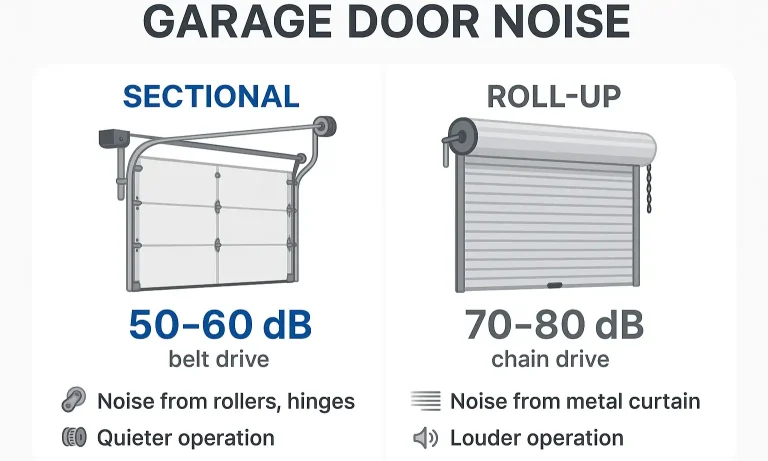
At a glance, sectional and roll-up doors serve the same purpose, but their design and mechanics are fundamentally different. These differences are the root cause of the distinct sounds they make.
The Sectional Door: More Parts, More Polish
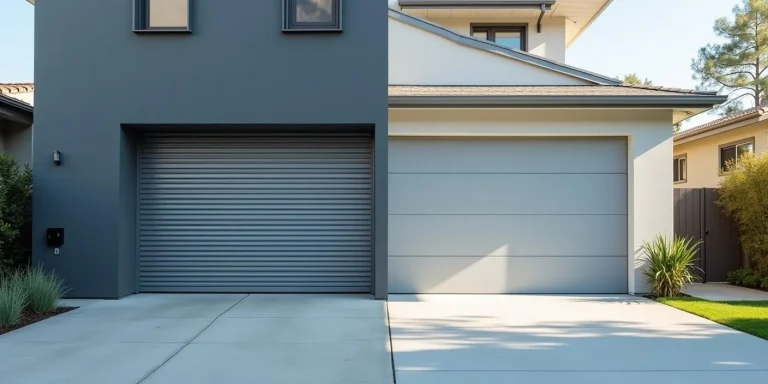
A sectional door is what most people picture when they think of a residential garage door. It’s made of several horizontal panels (sections) connected by hinges. As the door opens, rollers on the edge of each panel guide it along a vertical track that curves to run parallel with the ceiling.
- Noise Profile: The primary noise sources are the many moving parts—the rollers in the track and the hinges between panels. However, the individual panels are often insulated, which not only improves thermal efficiency but also dampens sound significantly, preventing the large surfaces from rattling.
- Verdict: With proper maintenance and the right components (like nylon rollers), a sectional door can be incredibly quiet. The design allows for more noise-control upgrades.
The Roll-Up Door: Simple, But Louder
Often seen in commercial settings or storage units, a roll-up door (or rolling steel door) is made from a single curtain of corrugated steel slats. When it opens, this entire curtain rolls up into a coil above the door opening, much like a roll of paper towels.
- Noise Profile: The main advantage of a roll-up door is its simplicity—fewer moving parts means fewer points of failure. However, the large, uninsulated metal curtain is prone to vibrating and rattling, especially during operation or in high winds. The sound of metal-on-metal as it coils can be loud and distinct.
- Verdict: While durable and space-saving, roll-up doors are generally louder by design. They are built for function and security over acoustic comfort.
When making a choice between a sectional roll up garage door, it’s clear that for most residential applications where noise is a concern, a well-maintained sectional door is the superior option for quiet operation.
Building: The 4 Sources of Garage Door Noise (Your Diagnostic Guide)
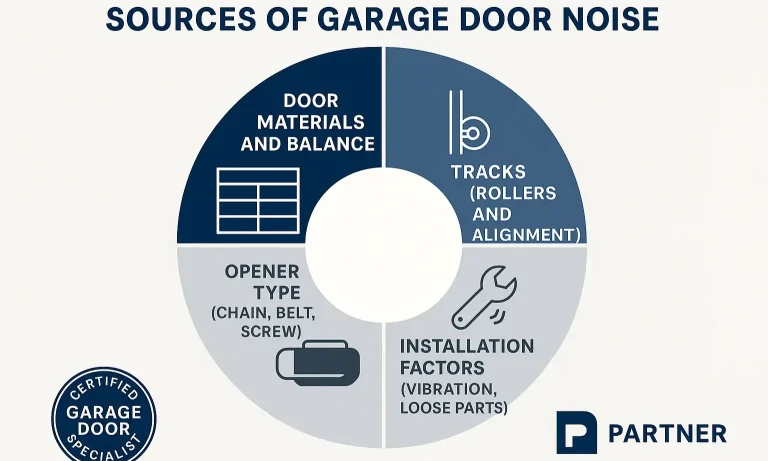
Choosing the right door type is just the beginning. To truly conquer the noise, you need to think like a detective and identify the source of the sound. Nearly all garage door noise comes from one of four areas. Understanding them is the first step toward finding the right noisy garage door fix.
1. The Door Itself
This includes the panels, hinges, and overall balance. An unbalanced door forces the opener to work harder, causing strain and noise. Loose hinges or hardware will rattle and vibrate with every movement.
Sounds like: Popping, creaking, rattling, or a “jerky” motion.
2. The Tracks & Rollers
The rollers guide your door along the metal tracks. If the rollers are worn, unlubricated, or made of steel, they will scrape and grind against the track. Misaligned tracks can also cause binding and loud noises.
Sounds like: A high-pitched squeal, a low-pitched rumble, or a scraping sound.
3. The Opener
The garage door opener is the motorized heart of the system, and its design has the single biggest impact on noise.
- Chain-Drive: A metal chain moves the trolley that opens the door. These are durable and affordable but notoriously loud, producing a rattling, clanking sound. They operate around 70-80 decibels (dB), similar to a vacuum cleaner.
- Screw-Drive: A threaded steel rod rotates to move the trolley. They have fewer parts than chain drives but can be noisy, especially if not well-lubricated.
- Belt-Drive: A steel-reinforced rubber belt moves the trolley. These are the quietest option on the market, operating at a whisper-quiet 50-60 dB—about the level of a normal conversation.
- Sounds like: A loud hum, clanking, or rattling (chain) vs. a soft whirring (belt).
4. The Installation
Even the highest-quality door will be noisy if improperly installed. Vibrations from the opener motor can transfer through the mounting brackets to the frame of your house, creating a deep, resonant hum throughout the home.
Sounds like: A low-frequency vibration or humming that you can feel as much as you can hear.
Mastery: The Ultimate Guide to Quieting Your Garage Door (Actionable Steps)
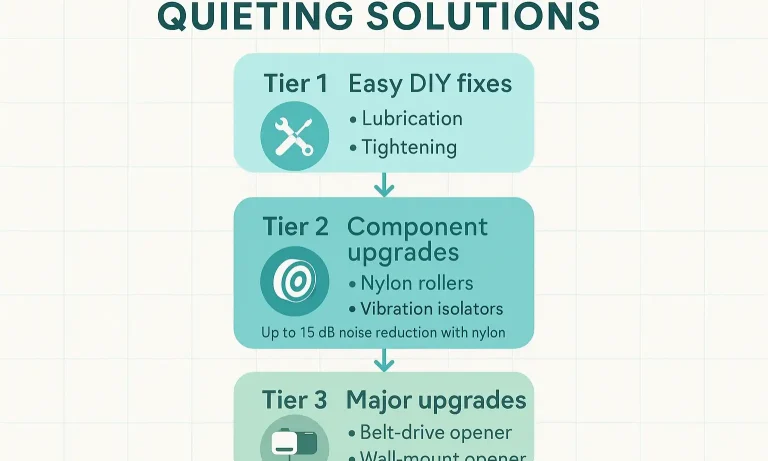
Now that you can diagnose the source of the sound, you can take targeted action. You can dramatically reduce noise by following a three-tiered approach, from simple maintenance to game-changing upgrades.
Tier 1: Easy DIY Fixes (15-Minute Tune-Up)
These simple steps can make an immediate difference.
- Tighten Everything: Use a socket wrench to gently snug up all the nuts and bolts on the door and track. Years of vibration can cause them to loosen.
- Lubricate Moving Parts: This is crucial. Apply a silicone or white lithium grease-based spray to all hinges, rollers (specifically the bearings), and springs. But remember, how often should you lubricate your garage door depends on your climate and usage—a good rule of thumb is twice a year.
- MythBuster: Do NOT use WD-40. It’s a solvent, not a lubricant, and can strip away existing grease, making the problem worse over time. Also, never lubricate the tracks themselves; this just attracts dirt and gunk.
Tier 2: Game-Changing Component Upgrades
If basic maintenance isn’t enough, these affordable upgrades are your next step.
- Switch to Nylon Rollers: This is one of the most effective noise-reduction upgrades you can make. The difference between nylon vs steel garage door rollers is night and day. Steel rollers grind against steel tracks, while nylon rollers glide smoothly and quietly.
- Install Vibration Isolators: These small rubber pads are installed between the opener motor and its mounting bracket. They absorb the motor’s vibrations, preventing them from transferring into your home’s framing.
Tier 3: The Major Upgrade for Ultimate Quiet
For the absolute quietest operation, nothing beats upgrading the opener itself.
Install a Belt-Drive Opener: The single biggest improvement you can make is investing in a quiet garage door opener. A modern belt-drive model will transform your door’s operation from a jarring rattle to a gentle hum. Many new models also come with “soft start and stop” technology, which further reduces noise by eliminating abrupt movements.
Action: Your Checklist for Silent Operation
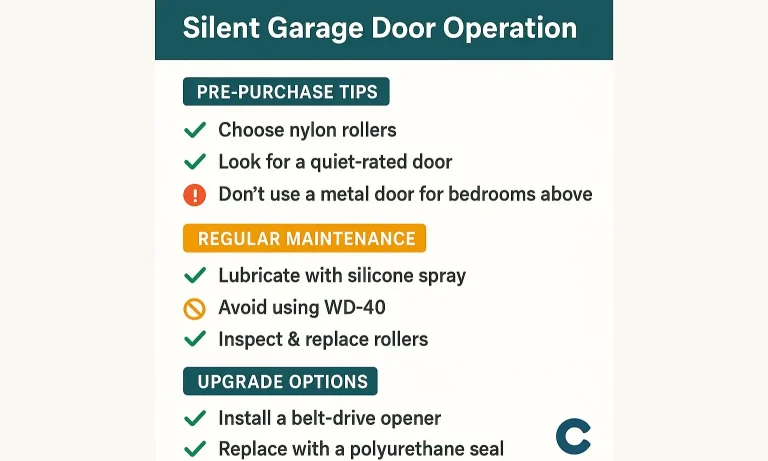
Whether you’re in the market for a new door or looking to silence your current one, use this checklist to guide you. Following these steps helps you avoid the common mistakes to avoid with garage door maintenance services and ensures lasting peace and quiet.
For New Buyers:
- Choose a Sectional Door: Opt for an insulated sectional door for its superior sound-dampening properties.
- Demand Nylon Rollers: Specify nylon rollers from the start. It’s a small cost upfront for a huge acoustic benefit.
- Select a Belt-Drive Opener: Make this a non-negotiable part of your new installation package.
- Ask About Vibration Isolators: Ensure your installer uses them to mount the opener.
For Current Homeowners:
- Perform a Tune-Up: Lubricate all moving parts and tighten all hardware.
- Inspect Your Rollers: If you have steel rollers, upgrade to sealed nylon rollers.
- Check Your Opener: If you have a loud chain-drive model, budget for an upgrade to a belt-drive opener.
- Listen for Vibrations: If you hear a deep hum in the house, install opener vibration isolators.
Frequently Asked Questions About Garage Door Noise
Are roll-up garage doors noisy?
Yes, generally they are. The large, single curtain of metal is more prone to rattling and vibrating than the insulated panels of a sectional door. They are designed more for durability in commercial settings than for quiet residential use.
What is a normal decibel (dB) level for a garage door?
It varies widely depending on the opener. A noisy chain-drive opener can be 70-80 dB (like a vacuum cleaner). A quiet belt-drive opener can be as low as 50-60 dB (the level of a quiet conversation).
Can I make my old garage door quieter?
Absolutely! Start with a thorough lubrication and tightening of all hardware. The next best step is to replace old steel rollers with new nylon ones. If noise is still an issue, upgrading to a belt-drive opener will provide the most significant reduction in sound.
Is WD-40 good for lubricating a garage door?
No. This is a common mistake. WD-40 is a water-displacing solvent and degreaser. It can clean parts, but it will strip away the necessary grease for long-term lubrication, often making the noise worse after it evaporates. Always use a dedicated garage door lubricant made from silicone or white lithium grease.
Reclaim Your Peace and Quiet
A loud garage door doesn’t have to be a fact of life. By understanding how different door types create sound and by knowing where to look for the sources of noise, you have the power to dramatically quiet your system. Whether it’s through simple maintenance, strategic upgrades, or choosing the right components from the start, a peacefully quiet garage door is well within your reach.
You May Also Like
Sectional vs. Roll-Up Garage Doors: What’s Best?
Over time, garage doors have changed in both functionality and design to provide the convenience we rely on today. However, where there’s a plus, there’s also, unfortunately, a minus. The variety of options available…
Published Date: Jan 16, 2025
Which Door Type Excels in Extreme Temperatures
You crank up the AC in the summer and the heat in the winter, but have you ever stopped to think about the largest, least-insulated wall in your home? For many of us, it’s the garage door. In regions with scorching…
Published Date: Apr 28, 2026
Comparing Intruder Resistance of Sectional vs. Roll-Up Garage Doors
Your garage door is more than just a way to get your car out of the rain. It’s a massive entry point to your home, often overlooked in security plans. Statistics frequently show that the garage is a preferred entry…
Published Date: Apr 27, 2026