





Which Door Type Excels in Extreme Temperatures
Published: Apr 28, 2026
You crank up the AC in the summer and the heat in the winter, but have you ever stopped to think about the largest, least-insulated wall in your home? For many of us, it’s the garage door. In regions with scorching summers or frigid winters, an uninsulated garage door is like leaving a massive window wide open, letting your expensive climate-controlled air escape and driving up your energy bills.
This is where the choice of your garage door becomes more than an aesthetic decision—it’s a critical factor in your home’s energy efficiency and comfort. The two main contenders in the garage door world are sectional doors and roll-up doors. While both get the job done, they have fundamentally different designs that dramatically impact their ability to handle extreme temperatures. Let’s explore which one is the champion of climate control.
Foundation: The Two Contenders (Sectional vs. Roll-Up)
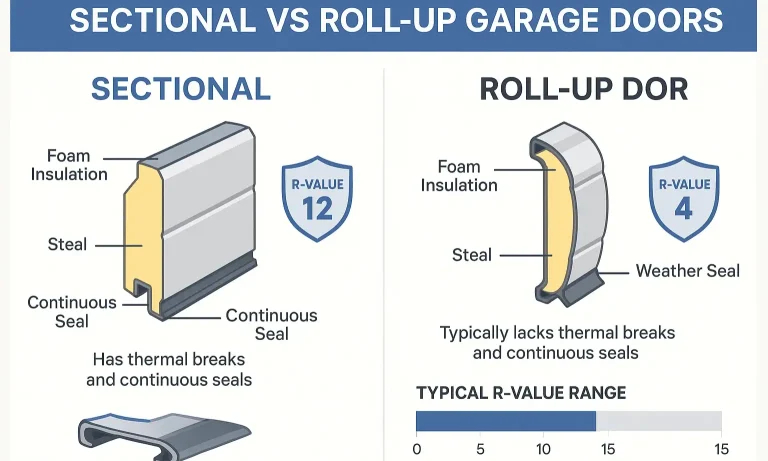
Before we dive into insulation, it’s helpful to understand the basic mechanics of each door. Think of it as meeting the players before the game begins.
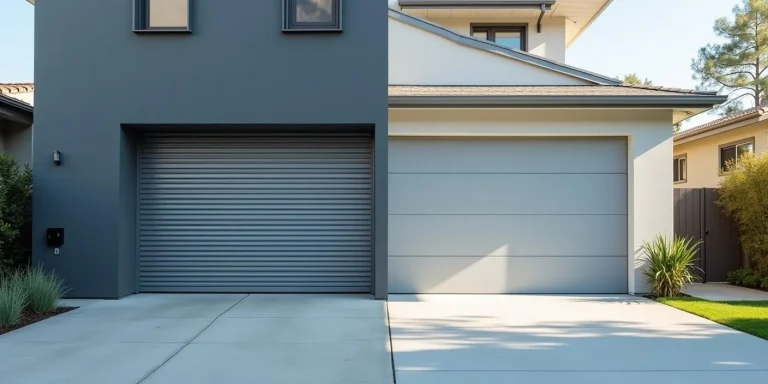
- Sectional Doors: These are the most common type for residential homes in the U.S. They are made of several horizontal panels (sections) hinged together. When the door opens, these panels roll up on a track system that curves along the ceiling of your garage. Their multi-panel design is the key to their insulating power.
- Roll-Up Doors: Often seen in commercial settings but also available for residential use, these doors are typically made of corrugated steel slats. When opened, the entire door coils up into a roll above the door opening, much like a roll of paper towels. This design is fantastic for saving ceiling space and durability.
The fundamental difference in how they’re built is the starting point for understanding their performance in extreme weather. While a high-level sectional vs. roll-up garage door comparison is useful, the real story is in the construction.
At first glance, the choice might seem purely functional. However, the multi-panel design of sectional garage doors gives them a distinct advantage when it comes to battling the elements.
Building: The Science of Warmth - Understanding R-Value & Weather Sealing
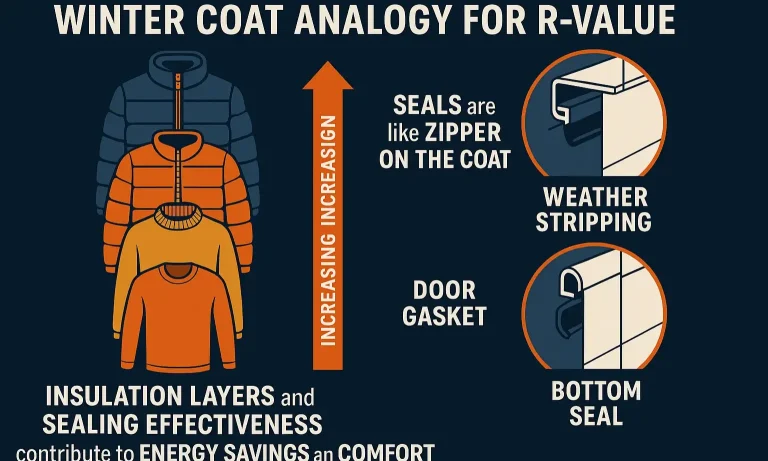
So, why are sectional doors typically better for climate control? It comes down to two simple concepts: insulation and sealing. Think of it like dressing for a blizzard. You need a warm coat, but you also need to zip it up.
Your Door’s “Winter Coat”: R-Value Explained
The most important metric for insulation is the R-value. In simple terms, R-value measures how well a material resists heat flow. The higher the R-value, the better the insulation.
An easy way to think about it is with a winter coat analogy:
- An uninsulated door (R-0) is like wearing a t-shirt in the snow.
- A basic insulated door (R-6 to R-9) is like a light fleece jacket. It helps, but it’s not for extreme cold.
- A well-insulated door (R-10 to R-18+) is like a thick, down-filled parka. It provides serious protection against the cold.
Sectional doors are designed to accommodate thick layers of insulation—typically polyurethane or polystyrene foam—sandwiched between steel or aluminum panels. This construction allows them to achieve very high R-values. Standard roll-up doors, being a single curtain of steel, have virtually no insulating properties. While you can find insulated roll up garage doors, their coiling design limits the thickness and type of insulation, resulting in a much lower garage door R-value compared to their sectional counterparts.
The “Zipper on the Coat”: Weather Sealing
A high R-value is fantastic, but it’s only half the battle. Air leaks around the edges of a door can completely undermine its insulating power. This is where weather sealing comes in.
Weather seals are the flexible gaskets along the bottom and perimeter of the door. They compress when the door is closed, creating an airtight barrier against drafts, dust, and moisture.
- Sectional doors excel here. Their rigid, flat panels press firmly and evenly against the perimeter seals and the floor, creating a tight closure.
- Roll-up doors, with their corrugated slats and flexible connections, often struggle to create a consistently airtight seal. Gaps are more common, especially in windy conditions.
Common Mistake Callout: Don’t pay for a high R-value door and ignore the weather seals! It’s like buying a winter coat with a broken zipper. A poor seal can lead to significant energy loss, so checking your garage door bottom seal replacement needs is crucial for efficiency.
Mastery: Choosing the Right Door for Your Climate
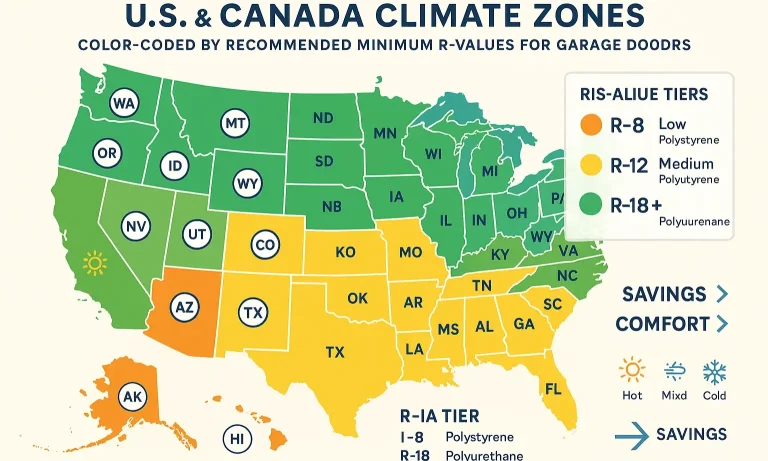
The right amount of insulation depends entirely on where you live. A homeowner in Phoenix has very different needs than one in Chicago. Using a climate zone map can help you make a practical, personalized decision.
Considerations for Cold Climates (Zones 4-7):
- Primary Goal: Prevent heat loss.
- Recommendation: An insulated sectional door with an R-value of at least R-12 is highly recommended. For attached garages or those with living space above them, an R-16 or higher is a wise investment.
- Key Feature: Look for doors with a “thermal break”—a feature in premium sectional doors where the inner and outer steel skins are separated, preventing cold from conducting through the panel.
- Primary Goal: Block and reflect radiant heat.
- Recommendation: Insulation is still crucial. It prevents the sun from turning your garage into an oven, which in turn heats up the rest of your home. An R-value of R-8 or higher is beneficial.
- Key Feature: Consider lighter colors for the door’s exterior, as they reflect more sunlight and absorb less heat.
Considerations for Hot Climates (Zones 1-3):
Action: Your Decision-Making Checklist
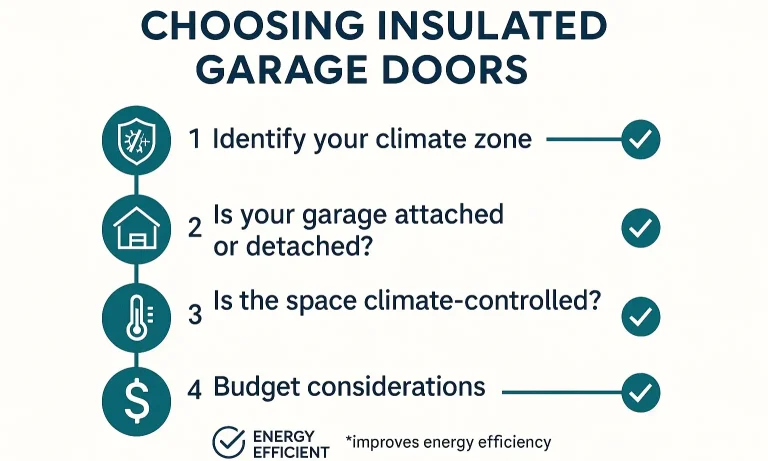
Feeling more confident? Use this simple checklist to guide your decision and ensure you get the right door for your home.
- What’s my climate zone? Use the map above to determine the minimum R-value you should be looking for.
- Is my garage attached to my home? If yes, insulation is critical. An uninsulated attached garage will make adjacent rooms harder to heat and cool.
- Is there a room above the garage? This is a non-negotiable. A well-insulated door is essential for keeping that room comfortable year-round.
- How do I use my garage? If it’s a workshop, gym, or playroom, a climate-controlled door will make the space usable for more of the year.
- What’s my budget? Insulated sectional doors cost more upfront than uninsulated roll-up doors, but they pay for themselves over time in energy savings and increased home comfort. If you’re looking to improve what you already have, you might wonder how to insulate a garage door yourself, but a professionally installed, modern door will always offer superior performance.
Frequently Asked Questions
What is a good R-value for a garage door?
It depends on your climate. In moderate zones, an R-value of 6-9 is adequate. In cold or very hot zones, aim for R-12 to R-18+ for the best performance, especially if your garage is attached.
Is it worth the extra money for an insulated garage door?
In almost every case, yes. The energy savings, increased comfort in your home, and reduced strain on your HVAC system provide a clear return on investment. It can also increase your home’s resale value.
Can you add insulation to an existing roll-up door?
It’s generally not recommended. The added weight can throw off the door’s balance and strain the opener mechanism. Furthermore, the single-layer, non-sealed design means you’ll get minimal benefit. Sectional doors are designed from the ground up to be insulated systems.
Do insulated doors also reduce noise?
Absolutely. The same foam core that blocks thermal transfer also dampens sound, making for a much quieter garage and reducing street noise from entering your home.
The Clear Winner for Climate Control
When it comes to keeping your garage comfortable and your energy bills in check, the insulated sectional door is the undisputed champion. Its superior construction, ability to achieve high R-values, and effective weather-sealing capabilities make it the ideal choice for any home in a region with extreme temperatures.
While a roll-up door might be a great fit for a detached shed or a commercial warehouse where space and durability are the only concerns, for your home, investing in a high-quality insulated sectional door is one of the smartest upgrades you can make.
You May Also Like
Sectional vs. Roll-Up Garage Doors: What’s Best?
Over time, garage doors have changed in both functionality and design to provide the convenience we rely on today. However, where there’s a plus, there’s also, unfortunately, a minus. The variety of options available…
Published Date: Jan 16, 2025
Comparing Intruder Resistance of Sectional vs. Roll-Up Garage Doors
Your garage door is more than just a way to get your car out of the rain. It’s a massive entry point to your home, often overlooked in security plans. Statistics frequently show that the garage is a preferred entry…
Published Date: Apr 27, 2026
Roll-Up vs. Sectional Doors for High-Traffic Commercial Loading Docks
Choosing the wrong commercial door for your loading dock can cost you thousands of dollars a year in lost energy, unexpected repairs, and operational downtime. It’s a decision that goes far beyond the initial quote.…
Published Date: Apr 24, 2026