





Comparing Intruder Resistance of Sectional vs. Roll-Up Garage Doors
Published: Apr 27, 2026
Your garage door is more than just a way to get your car out of the rain. It’s a massive entry point to your home, often overlooked in security plans. Statistics frequently show that the garage is a preferred entry point for burglars. When choosing a new door, most people weigh aesthetics, insulation, and cost. But there’s a critical question that deserves more attention: which type of door offers better protection against intruders?
Many homeowners and business managers find themselves debating between two popular options: the familiar sectional door and the space-saving roll-up door. The common assumption is that one must be inherently more secure than the other. But what if that’s the wrong question to ask?
Let’s dive into a head-to-head security comparison that moves beyond simple labels and gives you the framework to choose the right door for your peace of mind.
Foundation: Deconstructing the Doors - How They Really Work
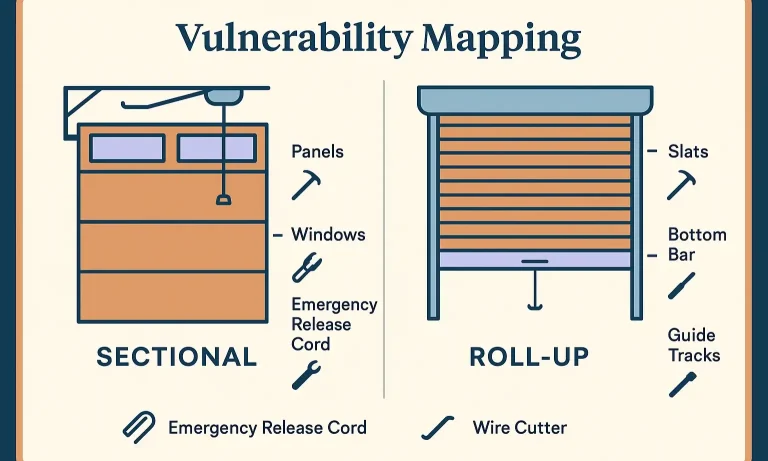
Before we can compare their security, we need to understand how each door is built and operates. Their fundamental designs create entirely different sets of strengths and weaknesses.
Sectional Garage Doors
You’ve seen these everywhere. Sectional garage doors are made of several horizontal panels (sections) hinged together. These panels ride on rollers within a track system that runs up the wall and then horizontally along the ceiling.
- How they work: When the door opens, the panels bend at the hinges and glide up and back into the garage, lying flat against the ceiling.
- Common materials: Steel, aluminum, wood, and fiberglass.
Roll-Up Garage Doors
Often associated with commercial storage units or warehouses, roll-up doors consist of a single curtain of interlocking metal slats. This curtain coils up into a barrel or drum mounted above the doorway.
An important distinction: There’s a huge difference between a flimsy, light-gauge “roll-up” door on a self-storage unit and a heavy-duty “rolling steel” door designed for security. Modern residential and commercial roll-up doors can be incredibly robust, using thick-gauge steel for serious protection. When we talk about security, we’re focusing on these high-quality versions.
The "Aha" Moment: It’s Not the Type, It’s the Quality
Here’s the single most important insight: A high-quality, professionally installed sectional door is more secure than a cheap, poorly installed roll-up door. And a heavy-duty, well-installed roll-up door is more secure than a flimsy, basic sectional door.
The debate isn’t truly about “sectional vs. roll-up.” It’s about “secure vs. insecure.” To properly assess any door, we need a better framework. Let’s introduce the Total Garage Security Framework, which evaluates doors on four key pillars.
The Security Showdown: A Head-to-Head Comparison
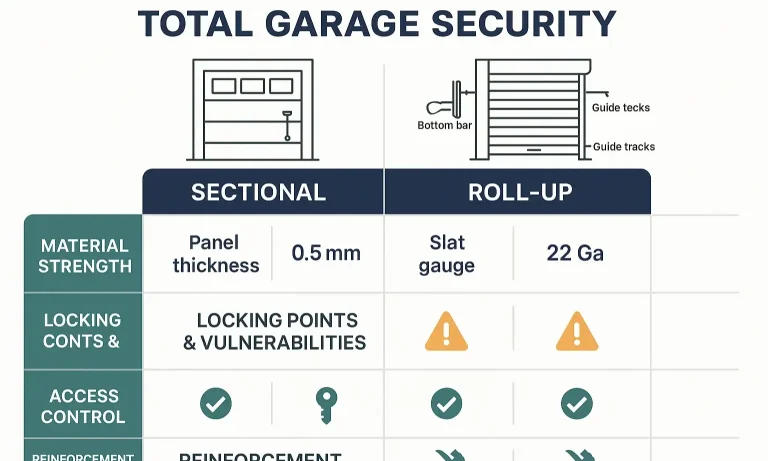
Using our framework, we can see where each door type typically shines and where it has potential vulnerabilities. This is more than just a simple sectional roll up garage door comparison; it’s a deep dive into genuine intruder resistance.
Material Strength & Intruder Resistance
This is about withstanding brute force—kicking, ramming, or trying to pry the door open.
Sectional Doors: Strength depends heavily on the material and thickness (gauge) of the steel panels. Thicker, double-layer insulated steel doors offer far more resistance than single-layer aluminum or thin steel. A weak point can be the individual panels themselves, which can sometimes be kicked in or dented.
Roll-Up Doors: A high-quality rolling steel door is a fortress. The interlocking slats create a continuous, solid curtain that is extremely difficult to breach with brute force. Again, gauge matters. A 26-gauge door is standard, but a heavier 18-gauge door is significantly tougher.
Vulnerability Note: Both door types can be vulnerable at the bottom. A determined intruder might try to pry the door up from the floor. Ensuring a tight fit and considering a garage door bottom seal replacement can help mitigate this.
Winner: A heavy-duty, thick-gauge roll-up door generally offers superior brute-force resistance.
Locking Points & Vulnerabilities
A door is only as strong as its weakest point. Here’s how attackers might try to bypass the locks.
Sectional Doors: The most notorious vulnerability is the emergency release cord. Burglars can use a coat hanger to hook this cord through a small gap at the top of the door, disengaging the opener and allowing them to lift the door manually. The central lock attached to the opener is the primary security point; manual slide locks on the tracks add another layer but are often forgotten.
Roll-Up Doors: These doors typically have locks on the bottom bar that slide bolts into the guide rails. This creates two solid locking points. Their weakness can be leverage; if the bottom bar can be lifted even slightly, an intruder might try to pry it further.
Winner: Roll-up doors often have more robust, dual-point manual locking systems built-in, avoiding the well-known emergency release vulnerability.
Access Control & Smart Technology
This pillar covers how you authorize entry, from old-school keys to modern smart devices.
Sectional Doors: These are almost universally paired with automatic openers. This offers the convenience of remote access and compatibility with modern security tech. You can easily integrate a keyless garage door lock (keypad) or a wifi garage door opener that lets you monitor and control the door from your phone, receive alerts, and grant temporary access.
Roll-Up Doors: While many commercial roll-ups are manual, modern residential and high-end models can also be fitted with specialized automatic openers, allowing for the same smart features and conveniences as sectional doors.
Winner: Tie. Both door types can be equipped with advanced access control systems. Sectional doors have a slight edge simply because opener integration is more standard.
Reinforcement Potential
How easily can you upgrade the security of the door after it’s installed?
Sectional Doors: There are numerous aftermarket products designed to reinforce garage door security. These include emergency release shields, garage door defenders (a large anchor bolted to the driveway), and additional slide locks.
Roll-Up Doors: Reinforcement is also possible, often through upgraded locking systems on the bottom bar or by installing floor anchors that the slide bolts engage with.
Winner: Sectional doors have a slightly broader market of easy-to-install, DIY-friendly aftermarket security products.
Mastery: Beyond the Door - An Actionable Reinforcement Guide
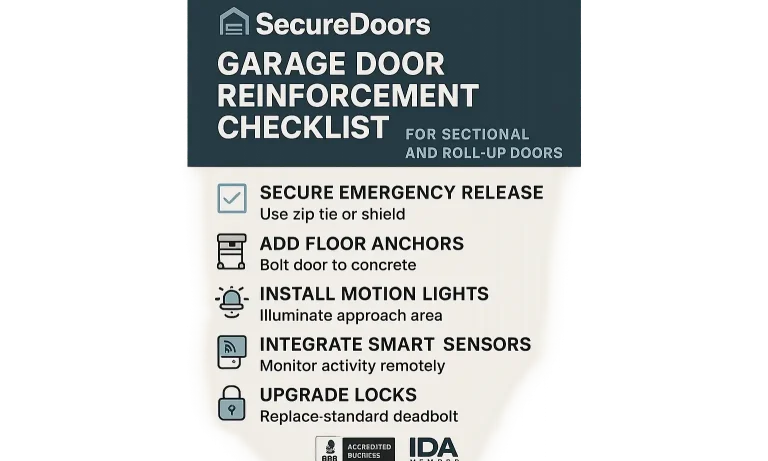
Regardless of which door you choose, real garage door protection comes from a layered approach. Here are actionable steps you can take to make any garage door more secure.
- Secure the Emergency Release: On sectional doors, use a simple zip tie to make the release cord harder to hook, or install a purpose-built shield.
- Use Your Manual Locks: If you have manual slide locks, use them, especially when you’re away for an extended period.
- Install a Garage Door Defender: This physical barrier is bolted to your driveway and blocks the door from opening. It’s a powerful visual and physical deterrent.
- Add Motion-Sensing Lights and Cameras: Burglars hate the spotlight. Well-placed lights and cameras can send them looking for an easier target.
- Obscure Windows: If your garage door has windows, apply a frosted or translucent film to prevent would-be thieves from seeing if your car is gone or if there are valuables inside.
- Don’t Forget the Entry Door: The door from your garage into your home should be as secure as your front door, with a solid core and a deadbolt.
The Final Verdict: Which Door Is Right for Your Security Needs?
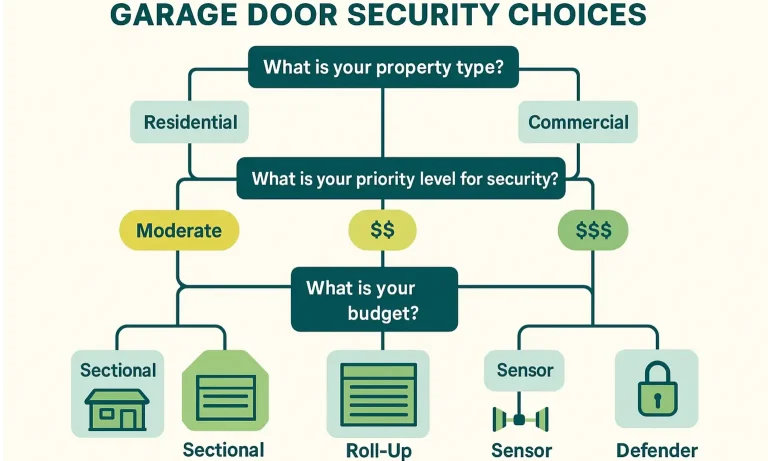
As we’ve seen, there is no single “winner.” The most secure door for you depends on your specific priorities, property, and budget. Instead of a simple answer, use this decision tree to guide your choice.
- Choose a Sectional Door if: You prioritize aesthetic variety, insulation, and seamless integration with standard smart home technology. To maximize security, invest in a heavy-gauge, insulated steel door and immediately secure the emergency release cord.
- Choose a Roll-Up Door if: Your top priority is maximum brute-force resistance and space-saving design. To ensure security, invest in a heavy-duty, commercial-grade model with a robust bottom-bar locking system, even for a residential application.
Ultimately, professional installation is just as critical as the door itself. An improperly installed door, no matter how strong, will have exploitable gaps and weaknesses.
Frequently Asked Questions (FAQ)
Are roll-up doors safe for homes?
Absolutely, as long as you choose a modern, high-quality residential model. The flimsy doors on storage units have created a myth that all roll-up doors are weak. A heavy-gauge steel roll-up door is one of the toughest options available.
Which garage door is hardest to break into?
A high-quality, professionally installed heavy-gauge rolling steel door with a robust locking system and additional reinforcements like a floor anchor is arguably the most difficult to breach with brute force. However, a premium insulated sectional door with a secured release and a defender is also an extremely formidable target.
How do burglars typically open garage doors?
Common methods include using a coat hanger to hook the emergency release on sectional doors, prying open the bottom of the door, breaking a window panel to access the interior, or simply exploiting a weak or unlocked door.
Does a smart garage door opener improve security?
Yes. It adds significant layers of security through real-time alerts to your phone whenever the door is opened or closed, the ability to check the door’s status remotely, and a log of all activity. This turns your door from a passive barrier into an active part of your home security system.
You May Also Like
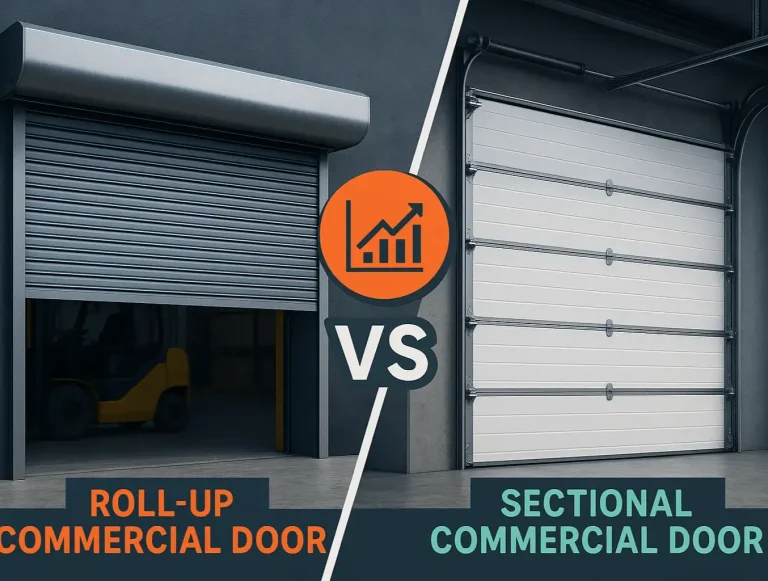
Roll-Up vs. Sectional Doors for High-Traffic Commercial Loading Docks
Choosing the wrong commercial door for your loading dock can cost you thousands of dollars a year in lost energy, unexpected repairs, and operational downtime. It’s a decision that goes far beyond the initial quote.…
Published Date: Apr 24, 2026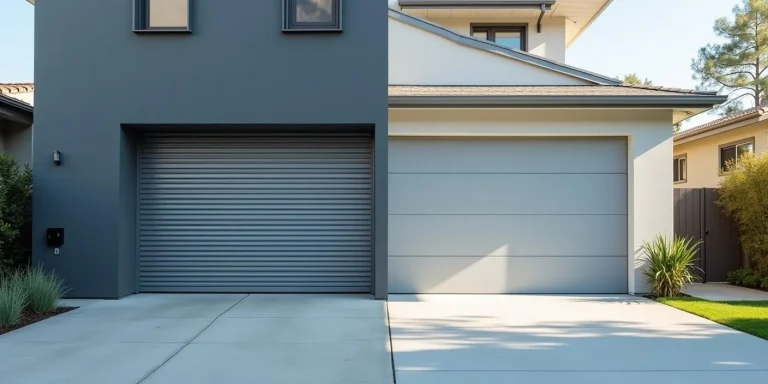
Sectional vs. Roll-Up Garage Doors: What’s Best?
Over time, garage doors have changed in both functionality and design to provide the convenience we rely on today. However, where there’s a plus, there’s also, unfortunately, a minus. The variety of options available…
Published Date: Jan 16, 2025
What Is a Sectional Garage Door: Benefits & Design
If you’re considering a new garage door for your home or building, you might be asking: What is a sectional garage door? Why is it such a common choice? These doors are made of hinged horizontal panels that open…
Published Date: Dec 10, 2025