





Which Insulated Garage Door Type Offers the Best Thermal Performance
Published: May 13, 2026
Ever get that feeling that your home is working overtime just to stay comfortable? You’ve checked the windows and sealed the front door, but there’s one massive weak spot many homeowners overlook: the garage door. Think of it as a huge, uninsulated hole in your home’s energy armor, constantly letting in the summer heat or winter chill.
If your garage feels like an oven in July or a freezer in January, or if you have a room directly above it that’s impossible to keep at a stable temperature, your garage door is likely the culprit. This guide is your first step to fixing that. We’ll break down the single most important factor in a garage door’s energy performance—its R-value—in a way that’s easy to understand. No jargon, just clear, friendly advice to help you make a smart decision for your home’s comfort and your wallet.
What is R-Value? (The Simple Explanation)
At its core, R-value is a measurement of thermal resistance. In plain English, it tells you how well a material can stop heat from passing through it.
Think of it like a winter coat. A thin windbreaker offers very little protection from the cold (a low R-value), while a thick, down-filled parka keeps you toasty by trapping your body heat and blocking the cold air (a high R-value).
Your garage door works the same way. A higher R-value means better insulation, which translates to:
- A more stable temperature inside your garage.
- Reduced energy transfer to the rest of your home.
- Lower heating and cooling bills.
- A quieter door, as the insulation also dampens sound.
- R-Value = Thermal Resistance. Higher is better.
- A high R-value door acts like a good winter coat for your garage.
- Benefits include stable temperatures, energy savings, and noise reduction.
Understanding the garage door r value is the first step toward transforming your garage from an energy drain into a comfortable, efficient part of your home.
Key Takeaways:
The Anatomy of an Insulated Garage Door
What actually gives a garage door its R-value? It’s a combination of two key components: the insulation material used inside the door and the construction of the door itself.
The Core of Comfort: Polystyrene vs. Polyurethane Insulation
While they might sound like complex chemicals, the two main types of garage door insulation are easy to understand.
1. Polystyrene Insulation
This is a rigid foam board that is cut to fit and glued into the panels of the garage door. It’s a cost-effective and common option that provides a significant upgrade over a non-insulated door. You can think of it as the insulation you see in a standard disposable coffee cup.
While it’s a great entry-level choice, polystyrene garage door insulation can sometimes leave small air gaps between the insulation and the door frame, slightly reducing its overall effectiveness.
2. Polyurethane Insulation
This is a liquid foam that is injected between the steel layers of a garage door, where it then expands and hardens. This process fills every single nook and cranny, creating a solid, dense core with no air gaps.
Because of its density and complete coverage, polyurethane garage door insulation offers a much higher R-value per inch—often nearly double that of polystyrene. This superior performance also adds significant strength and rigidity to the door panel.
Beyond the Core: How Door Materials Play a Role
The outer material of the garage door works in tandem with the insulation.
- Steel: The most common choice. Steel doors are often built in layers (single, double, or triple-layer construction). A triple-layer door (steel + insulation + inner steel) offers the highest R-values and greatest durability.
- Wood: Offers natural insulating properties but requires more maintenance. Its R-value can be good but is often lower than a premium triple-layer steel door.
- Fiberglass & Aluminum: These materials are lightweight and rust-proof but typically offer lower R-values unless combined with high-quality polyurethane insulation.
Mastery: The Ultimate R-Value Comparison
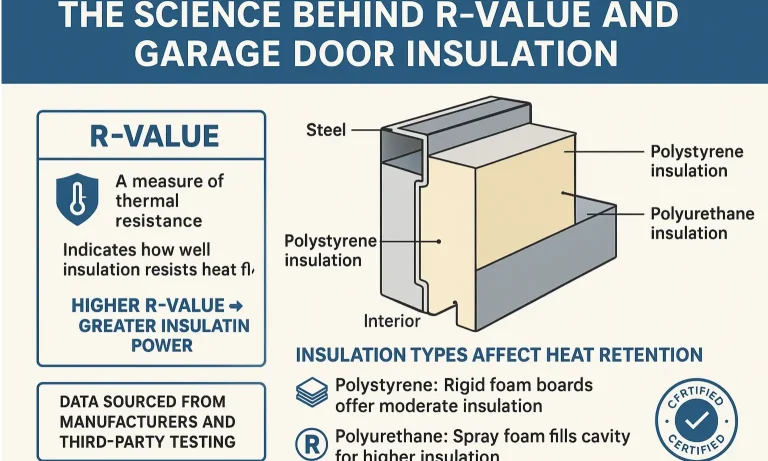
Seeing the data side-by-side provides that “aha moment” where the differences become clear. This chart breaks down how materials and insulation types stack up in the real world.
To truly grasp the difference, it helps to see what’s going on inside the door. The way the insulation is installed has a massive impact on its final performance.
Is Higher R-Value Always Better? Not Necessarily.
It’s tempting to think you should just buy the highest R-value door available, but that isn’t always the most practical or cost-effective solution. There’s a point of diminishing returns, especially if the rest of your garage isn’t well-sealed.
MythBuster: “A high R-value door will solve all my insulation problems.”
Reality: A highly insulated door is a fantastic start, but it can’t work miracles if your garage has uninsulated walls, drafty windows, or worn-out seals. It’s about creating a complete thermal envelope.
The “Weakest Link” in Your Garage’s Armor
Imagine buying that expensive parka but leaving it unzipped in a snowstorm. That’s what happens when you have a high R-value door but neglect the seals around it. The true energy efficiency of your garage depends on the entire system.
The importance of garage door weather stripping cannot be overstated. The bottom seal and the vinyl trim around the sides and top of the door prevent drafts, moisture, and dust from getting in. If these are cracked, brittle, or missing, you’re losing much of the benefit of your insulated panels.
Key Takeaways:
- Polyurethane offers nearly double the R-value of polystyrene for the same thickness.
- Triple-layer steel doors with polyurethane foam provide the highest R-values.
- Your door is only as good as its weakest link—don’t forget about weatherstripping and windows.
Action: Making the Right Choice for Your Home & Budget
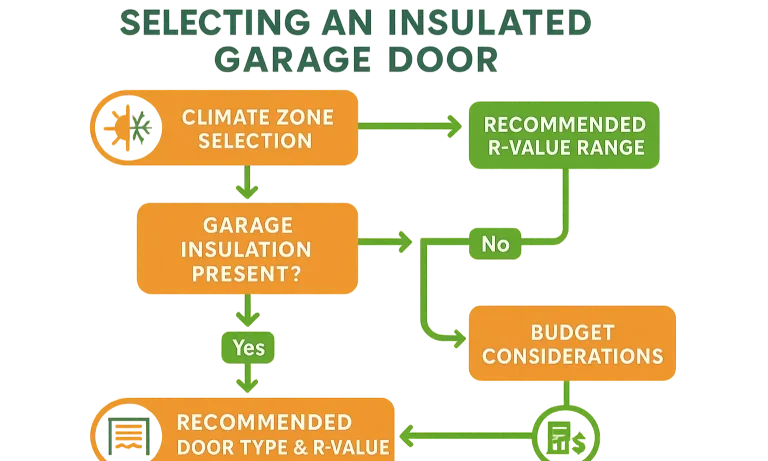
Now that you understand the technology, how do you choose the right door? This roadmap simplifies the decision by focusing on what matters most for your specific situation.
A Simple Checklist for Your Decision
- Assess Your Climate: Do you live in a region with extreme heat or cold? If so, investing in a higher R-value (R-12 and above) is crucial for both comfort and energy savings. For milder climates, a mid-range R-value (R-6 to R-12) might be perfectly sufficient.
- Define Your Garage’s Use: Is your garage attached to your home? Do you have a living space above it? Is it a workshop where you spend a lot of time? If you answered yes to any of these, a higher R-value door will make a noticeable difference in comfort. If it’s a detached shed used only for storage, a lower R-value may be fine.
- Consider the Complete System: Check your garage’s walls and ceiling. If they are already insulated, a high R-value door will complete the thermal envelope. If not, you might want to consider the best insulation for garage walls as your next project to maximize your investment.
- Set Your Budget: Polyurethane-insulated doors cost more upfront than polystyrene, but they often provide greater long-term energy savings and durability. Factor this into your decision.
The Big Question: Is an Insulated Garage Door Worth It?
For the vast majority of homeowners with attached garages, the answer is a resounding yes. The debate between an insulated vs non insulated garage door isn’t just about R-value; it’s about overall value.
An insulated door offers benefits beyond just energy savings:
- Enhanced Comfort: Reduces temperature swings in your garage and adjacent rooms.
- Increased Durability: Multi-layer doors with injected foam are far more resistant to dents and dings.
- Quieter Operation: The insulation absorbs vibrations and sound for a smoother, quieter door.
- Improved Curb Appeal & Home Value: A modern, high-quality garage door is a significant aesthetic upgrade.
Frequently Asked Questions (FAQ) About Garage Door R-Value
How much will I actually save on my energy bill?
This varies based on your climate, energy costs, and how you use your garage. However, studies have shown that replacing a non-insulated door with an insulated one can reduce heat loss through the garage by over 70%, leading to noticeable savings on your annual heating and cooling costs.
Does an insulated door make sense if my garage walls aren’t insulated?
Yes! Even in an uninsulated garage, the door is the largest single opening and is most exposed to the elements. Insulating it will still make a significant difference in stabilizing the garage temperature and reducing its impact on your home. It’s the most effective first step you can take.
What R-value is best for a hot climate like Texas?
In hot climates, the goal is to keep heat out. An insulated door acts as a radiant barrier. For a location that needs garage door insulation Dallas homeowners would appreciate, an R-value of 10 or higher is highly recommended to prevent the garage from turning into a sweltering sauna and radiating heat into your home.
What about preparing a garage for extreme cold in places like Connecticut?
For cold climates, you want the highest R-value you can justify in your budget, ideally R-16 or higher. This is crucial for keeping your garage above freezing and protecting the adjoining walls of your house. When undertaking a full garage upgrade for harsh weather, some even improve the space with durable wall storage like garage slat walls West Hartford CT residents might install to organize tools and winter gear.
Are there other energy-efficient options to consider?
Absolutely. Beyond insulation and weather seals, you can look into doors with thermal breaks (a material that separates the interior and exterior steel skins to prevent heat transfer) and even a solar garage door opener to reduce your home’s overall energy consumption.
Your Next Step to a More Comfortable Home
Choosing a new garage door can feel overwhelming, but by focusing on R-value, you’re already on the right track to making a smart investment. You’re not just buying a door; you’re buying comfort, efficiency, and durability for years to come.
By understanding the difference between polystyrene and polyurethane, considering your climate and how you use your garage, and remembering to check your weather seals, you have all the tools you need to select a door that will serve you well.
You May Also Like

Explore Different Types of Garage Doors
Choosing the right garage door is about making your home more secure and looking better. Finding the one that meets your needs and your home’s style can be overwhelming with so many options. Whether you’re looking…
Published Date: Sep 25, 2024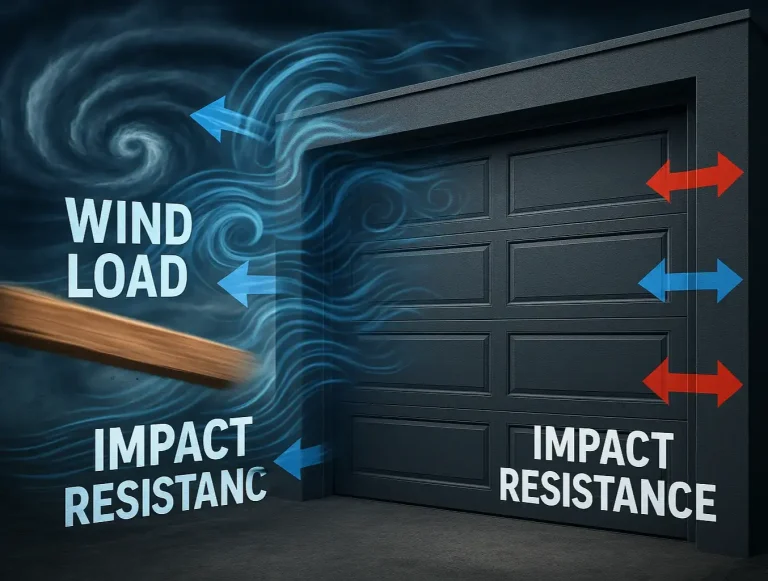
Understanding Wind Load and Impact Resistance
When a hurricane is on the horizon, we instinctively secure our windows and doors. But many homeowners overlook the single largest, and most vulnerable, opening in their home: the garage door. It’s not just a big…
Published Date: May 12, 2026
Garage Door Solutions for RVs, Boats, and Oversized Openings
It’s a moment of pure joy that quickly turns to frustration. You bring home your dream Class A RV or the boat you’ve saved for years, pull up to the garage, and realize with a sinking feeling: it’s not going to fit.…
Published Date: May 11, 2026