





Garage Door Solutions for RVs, Boats, and Oversized Openings
Published: May 11, 2026
It’s a moment of pure joy that quickly turns to frustration. You bring home your dream Class A RV or the boat you’ve saved for years, pull up to the garage, and realize with a sinking feeling: it’s not going to fit. This scenario is all too common and highlights a crucial truth—when it comes to oversized vehicles, an oversized garage door isn’t just a bigger door. It’s a complete, engineered system that demands careful planning.
Most online guides talk about door sizes, but they miss the bigger picture. They fail to explain the physics of lifting a 500-pound door safely or the structural changes your garage needs to support it. This guide is different. We’re going to walk you through the entire ecosystem of an oversized garage door, from framing to hardware, so you can avoid costly mistakes and build a solution that works for decades.
Foundation: Sizing Your Space, Not Just the Door
The first mistake many people make is measuring only their vehicle. While knowing your RV is 13 feet tall is a good start, it’s only one piece of a much larger puzzle. To ensure a successful installation, you need to measure your garage with three critical dimensions in mind.
- Headroom: This is the vertical space between the top of the door opening and the ceiling (or the lowest-hanging obstruction, like a beam). Standard doors might only need a foot of headroom, but oversized doors, especially those with heavy-duty springs and tracks, require significantly more. Insufficient headroom is one of the most common—and expensive—problems to fix after the fact.
- Side-room: This is the space on either side of the garage door opening. It’s essential for mounting the vertical tracks, springs, and in some cases, a wall-mounted jackshaft opener. A minimum of 6 inches is often recommended, but more is always better. The amount of space between garage doors is also a factor in multi-bay garages.
- Backroom (or Depth): This is the unobstructed distance from the garage door opening to the back wall of the garage. When your sectional door opens, it needs a clear path to retract along the ceiling. You must have enough depth to accommodate the full height of the door as it lies flat.
Measuring these three areas correctly is the foundational step that dictates every other choice you’ll make, from the type of door to the kind of opener you can install.
Building: Anatomy of an Oversized Door System
With your measurements in hand, you can start exploring the components that make up your oversized door system. It’s more than just panels and a window; it’s a collection of parts working in harmony to lift immense weight safely and reliably.
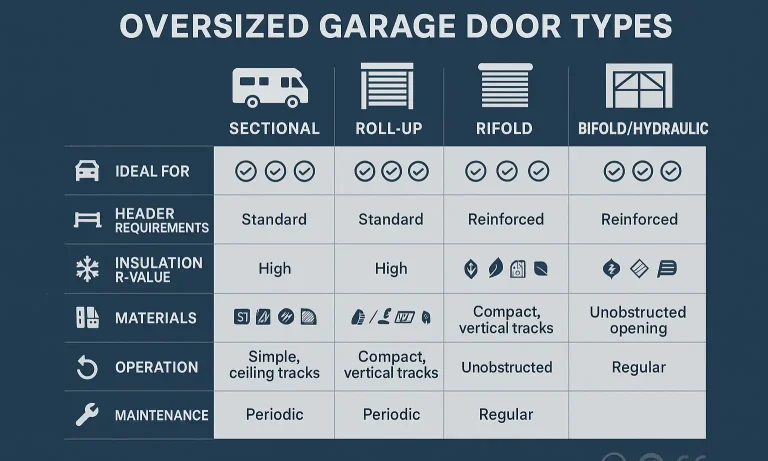
Choosing Your Door Type
While standard homes almost exclusively use sectional doors, oversized applications open up a few more possibilities. Each has distinct advantages depending on your needs and your garage’s structure.
- Sectional Doors: These are the most common choice, made of horizontal panels that roll up and back along the ceiling on a track system. They offer a great balance of design flexibility, insulation options, and cost-effectiveness. Because they are so popular, understanding what sectional garage doors are and how they operate is a great starting point for any homeowner.
- Roll-Up Doors: Often seen in commercial settings, these doors are made of interlocking steel slats that coil into a drum above the opening. They are incredibly durable and require very little backroom, making them a great solution for garages with limited depth.
- Bifold/Hydraulic Swing-Out Doors: These are custom, high-end solutions where the door either folds in the middle like an accordion or swings straight out from a top hinge. They offer a dramatic architectural statement and are ideal for spaces where you can’t sacrifice any ceiling height.
The Physics of Heavy Doors: Materials & Hardware Matter
Here’s where we get to the core of oversized doors: managing weight. A standard 16×7 foot steel door might weigh 150-200 pounds. A 12×14 foot door for an RV, especially if insulated or made of wood, can easily exceed 500 pounds. That extra weight puts immense strain on the hardware. Using standard components on a door this heavy is like putting bicycle brakes on a semi-truck—it’s a recipe for disaster.
Materials Deep Dive:
- Steel: The most popular choice for its durability, low maintenance, and design flexibility. Look for lower-gauge steel (e.g., 24-gauge) for better dent resistance.
- Aluminum: Lighter than steel and corrosion-resistant, making it a great choice for coastal areas. Often paired with glass panels for a modern look.
- Wood & Wood Composite: Offers unparalleled beauty and a classic look but is the heaviest option and requires the most maintenance.
- Fiberglass: Mimics the look of wood without the weight or maintenance but can become brittle in very cold climates.
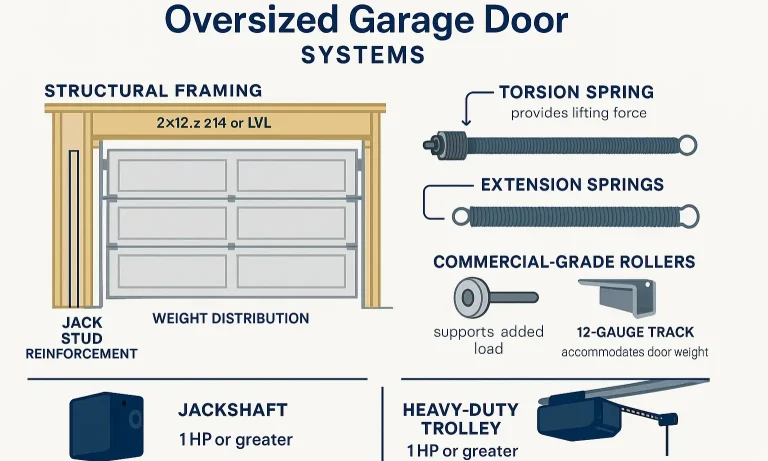
- Springs: The springs do the actual lifting, not the opener. For any oversized door, heavy-duty torsion springs are non-negotiable. They are mounted on a bar above the door and are far safer and more durable than standard extension springs. A perfectly balanced system means you should be able to lift the massive door with one hand when it’s disconnected from the opener. If you’re wondering how do garage door springs work, they essentially act as a counterbalance to the door’s weight.
- Rollers: These small wheels guide the door along the track. On a heavy door, standard plastic or steel rollers will wear out quickly. Upgrading to sealed nylon ball-bearing rollers ensures quieter, smoother operation for years. When you need to replace garage door rollers, choosing the right type is crucial for system longevity.
- Tracks: The tracks for an oversized door should be made of a lower gauge (thicker) steel to prevent bending or warping under the door’s weight and operational force.
The Unsung Heroes (Commercial-Grade Hardware):
Mastery: Powering and Structuring Your Door for Long-Term Success
With the door and hardware selected, the final pieces of the puzzle are the motor that moves it and the frame that supports it all.
The Opener Decision: It’s Not Just About Horsepower
A common question homeowners have is, “what size garage door opener do I need for a heavy door?” While a 3/4 or 1+ HP motor is a good start, the type of opener is even more important.
- Heavy-Duty Trolley Opener: This is the familiar ceiling-mounted opener that uses a chain or belt to pull the door. For oversized doors, a chain-drive model is often preferred for its strength and durability.
- Jackshaft (or Wall-Mount) Opener: This opener mounts on the wall next to the door and connects directly to the torsion spring bar. For tall openings, it’s often the superior choice. It frees up the entire ceiling for storage or a vehicle lift and provides smooth, powerful operation by turning the bar directly.
Framing for Success: Supporting the System
An oversized door places significant weight and force on the surrounding wall. The garage opening must be properly framed with a correctly sized header (the main support beam across the top) and reinforced jack studs on the sides to bear the load without sagging. If you are modifying an existing opening, consulting a structural engineer is highly recommended.
Advanced Considerations for Peak Performance
- High-Lift Tracks: If you have ample headroom, you can install a high-lift track system. This makes the door go up vertically for a few feet before turning back, maximizing your usable ceiling height inside. It’s a key part of any vertical lift garage door residential setup.
- Wind Load Ratings: A large door is like a sail in a storm. If you live in a hurricane-prone or high-wind area, ensuring your door is wind-load rated is a critical safety measure.
- Sealing Large Gaps: The larger the door, the harder it is to seal effectively against the elements. Learning how to seal a garage door properly involves using oversized bottom seals, robust weatherstripping, and potentially reverse angle jamb seals to keep drafts, dust, and pests out.
Action: Your Oversized Garage Door Project Checklist
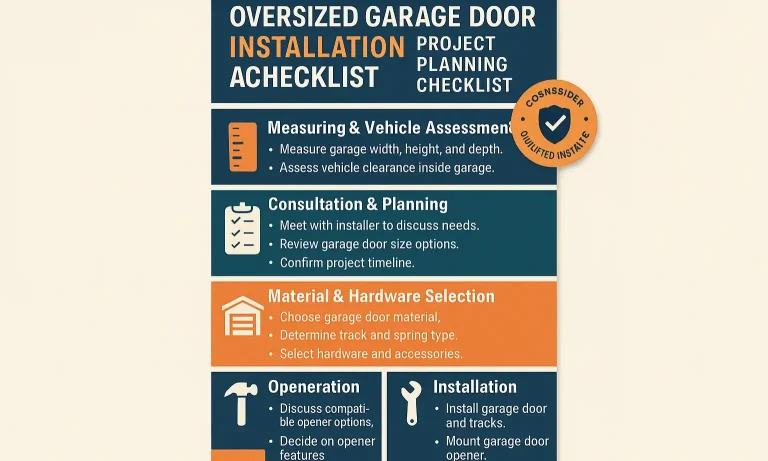
Feeling overwhelmed? Don’t be. By following a structured process, you can manage your project with confidence. Use this checklist as your guide from start to finish.
Phase 1: Planning & Measurement
- Measure the height, width, and length of your largest vehicle (don’t forget roof-mounted AC units or antennas!).
- Measure your garage’s headroom, side-room, and backroom.
- Define your budget, remembering to account for the door, hardware, opener, and potential structural modifications.
- Research local building codes and HOA requirements for garage doors.
Phase 2: Component Selection
- Choose the door type (sectional, roll-up, etc.) that best fits your space and needs.
- Select a material that balances aesthetics, maintenance, weight, and budget.
- Confirm that the hardware package (springs, rollers, tracks) is commercial-grade and rated for your door’s size and weight.
- Decide between a jackshaft or heavy-duty trolley opener.
- Get quotes from at least three qualified and insured professional installers. Due to the weight and complexity, this is not a DIY project.
- Ask potential installers about their experience with oversized doors specifically.
- Schedule your garage door installation near me and prepare the space by clearing any obstructions.
Phase 3: Installation
Frequently Asked Questions (FAQ)
How tall should a garage door for an RV be?
Most Class A RVs require an opening that is at least 14 feet tall to be safe, but you should always measure your specific vehicle. A 12-foot tall door is often sufficient for smaller RVs and fifth wheels. The rule of thumb is “measure thrice, cut once.”
Can I put an oversized door on my existing garage?
It depends entirely on your garage’s structure. The primary limiting factors are almost always headroom and the structural integrity of the door frame. A professional consultation is necessary to determine if it’s feasible and what modifications would be required.
Do I really need a commercial-grade opener?
For most oversized residential doors, the answer is yes. It’s less about lifting power (the springs do that) and more about having the durability to handle the forces of starting and stopping a very heavy door day after day. A residential opener would burn out quickly and pose a safety risk.
Ready to Plan Your Perfect Fit?
Choosing a garage door for your RV, boat, or workshop is a significant decision that impacts your home’s functionality and value. By understanding that you’re building a complete system—not just buying a door—you’re already on the path to a successful project. The world of custom garage doors provides endless options to match your exact needs, from size and material to style and technology.
When you’re ready to take the next step, working with experienced professionals can make all the difference. At Up & Down Garage Door, we help homeowners navigate these decisions every day, ensuring your biggest investments have a safe and reliable home.
You May Also Like
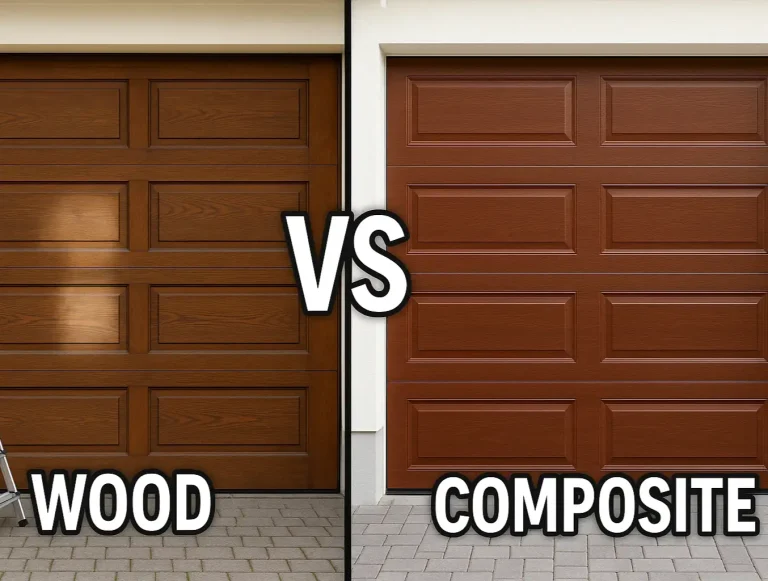
Composite Garage Doors: Durability, Appearance, and Maintenance
You see it in your mind’s eye: a beautiful, rich wood garage door that gives your home a timeless, rustic charm. It’s warm, authentic, and undeniably elegant. Then, another image appears: you, on a ladder, spending a…
Published Date: May 8, 2026
Explore Different Types of Garage Doors
Choosing the right garage door is about making your home more secure and looking better. Finding the one that meets your needs and your home’s style can be overwhelming with so many options. Whether you’re looking…
Published Date: Sep 25, 2024
Understanding Garage Door Sensor Wire Types
You’ve been there. You hit the button on your garage door remote, hear the familiar hum of the motor, but then… it stops. The door reverses, and the lights on your opener start blinking frantically. You check for…
Published Date: May 7, 2026