





Composite Garage Doors: Durability, Appearance, and Maintenance
Published: May 8, 2026
You see it in your mind’s eye: a beautiful, rich wood garage door that gives your home a timeless, rustic charm. It’s warm, authentic, and undeniably elegant. Then, another image appears: you, on a ladder, spending a sunny weekend scraping, sanding, and re-staining that same door to protect it from sun, rain, and time.
It’s the classic dilemma for homeowners. You want the beauty of wood without the demanding upkeep. For years, this felt like an impossible trade-off. But what if there’s a modern solution that offers the best of both worlds?
Enter the composite garage door. This guide is your friendly, straightforward comparison between classic wood and modern composite. We’ll break down everything from durability and appearance to the real-world maintenance each one demands over its lifetime, helping you make a choice you’ll be happy with for decades.
Foundation: What Exactly Is a Composite Garage Door?
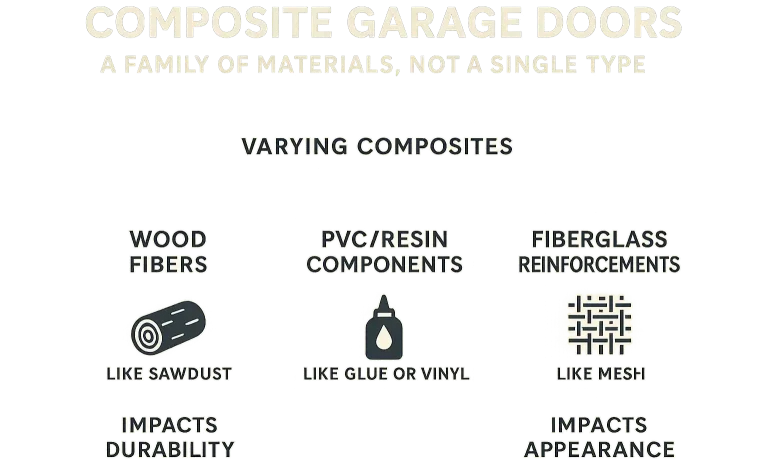
Before we can compare, let’s clear up a common point of confusion. “Composite” isn’t one single thing; it’s a category of materials engineered by combining different elements to achieve specific qualities. Think of it less like a simple ingredient and more like a recipe.
Most composite garage doors start with wood fibers for that authentic look and texture. These fibers are then mixed with synthetic polymers and resins under high pressure. This process creates a dense, stable material that captures the aesthetic of wood while adding the resilience of modern technology.
However, not all composites are created equal. The “recipe” can vary, leading to different performance characteristics.
Here’s a quick breakdown of the common types:
- Wood Fiber with Resin Overlay: This is the most common type. It features a core of wood-based material (like MDF) protected by a durable, weather-resistant polymer skin. This overlay is often molded with a realistic wood grain texture.
- Cellular PVC (Polyvinyl Chloride): This type is 100% synthetic but is expertly crafted to look and feel like wood. It’s lightweight, impervious to moisture, and won’t rot or be targeted by insects. Many consider this one of the most durable and eco-friendly garage door materials available.
- Fiberglass Overlay: These doors use a steel base for strength and insulation, which is then clad in a fiberglass skin. The fiberglass is molded to mimic the grain and texture of real wood, offering exceptional realism with high durability.
Understanding these differences is the first step toward seeing why composite has become such a compelling choice for modern homeowners.
Building: The Ultimate Comparison - Composite vs. Wood
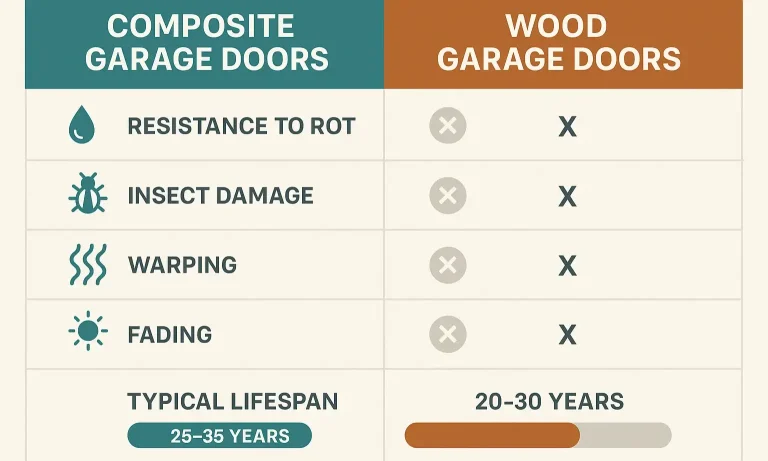
Now for the main event. Let’s put these two materials head-to-head across the categories that matter most to you as a homeowner.
Appearance & Aesthetics
Both wood and composite doors can deliver stunning curb appeal, but they do it in different ways.
- Wood: Offers unmatched authenticity. Each wood door is unique, with natural variations in grain, knots, and color that cannot be perfectly replicated. It can be stained to a beautiful finish that highlights this natural character. This is why many still explore the pros and cons of installing a wooden garage door for that one-of-a-kind look.
- Composite: Modern composite doors are masters of illusion. High-quality models feature deep, realistic grain patterns and finishes that are nearly indistinguishable from real wood, even up close. They provide the consistent, clean look of a perfectly finished wood door without the imperfections. Many homeowners looking for faux wood garage doors are amazed by the quality of today’s composite options.
The Verdict: If you value unique, natural character above all else, wood is the classic choice. If you want the look of perfect wood without the unpredictability, composite is the winner.
Durability & Lifespan
A garage door is an investment, and you want it to last. Here, the differences between wood and composite become much clearer.
- Wood: Is susceptible to the elements. Moisture can cause it to rot, warp, or swell. Direct sunlight can cause it to fade, dry out, and crack. It’s also a target for termites and other wood-boring insects. A well-maintained wood door can last 20-30 years, but “well-maintained” is the key phrase. This durability is also heavily dependent on solid garage door framing to support its weight and movement.
- Composite: Is engineered for resilience. The synthetic resins and polymers make it highly resistant to moisture, so it won’t rot, warp, or crack like wood. The material is also impervious to insects. This inherent durability means a high-quality composite door can easily last 30 years or more with minimal effort.
- Wood: Requires a significant commitment. To prevent damage, wood doors need to be cleaned and inspected annually. More importantly, they must be sanded and re-stained or repainted every 2-5 years, depending on your climate and exposure to the sun. Neglecting this leads to costly repairs and dramatically shortens the door’s life.
- Composite: The definition of low-maintenance. A composite door typically only needs to be cleaned once or twice a year with soap and water to keep it looking new. No staining, no sealing, no painting. This saves hundreds of dollars and countless hours over the life of the door. Avoiding common garage door maintenance mistakes is simple when the required tasks are so few.
The Verdict: For sheer, hands-off durability and a longer lifespan, composite is the clear winner.
Maintenance & Upkeep
This is often the single biggest factor for homeowners. How much time and money will you spend keeping your door looking great?
The Verdict: If your ideal weekend doesn’t involve a paintbrush and a ladder, composite is the undisputed champion of low maintenance.
Mastery: Advanced Considerations & Common Problems
You’ve got the basics down. Now, let’s look at a few advanced questions that savvy homeowners ask.
How do repairs differ?
This is an area where the materials have distinct trade-offs.
- Wood: Small scratches or dents in a wood door can often be sanded out and re-stained, blending the repair seamlessly. However, significant damage like a split panel or rot can be complex and costly to fix.
- Composite: Composite materials are very dent-resistant. However, if a deep gouge or crack does occur, repairs can be more challenging. While it’s possible, learning how to repair a dented garage door made of composite may require specialized fillers and paint kits, and a perfect match can be difficult. In many cases, replacing a full panel is the most effective solution.
Which is better for my climate?
- High-Humidity / Coastal Areas (e.g., Texas, Florida): Composite is the superior choice. Its resistance to moisture prevents the warping, swelling, and rot that plague wood doors in these environments.
- High-Sun / Dry Areas (e.g., Arizona, Southern California): Both can work, but composite has an edge. The UV-resistant coatings on quality composite doors prevent the fading and cracking that intense sun can cause on stained wood.
- Cold / Snowy Areas (e.g., Illinois, New York, Connecticut): Composite wins again. It won’t absorb moisture from melting snow that can seep into wood, freeze, and cause splitting.
- A solid wood door is naturally insulating.
- Composite doors are almost always built with a core of high-density polyurethane foam, giving them a very high R-value (a measure of thermal resistance). If energy efficiency is a top priority, it’s worth learning more about how to insulate a garage door, as composite doors often come with top-tier insulation built-in.
What about insulation?
Both wood and composite doors can be excellent insulators, which helps regulate the temperature in your garage and lower energy bills.
Action: How to Choose the Right Door for Your Home
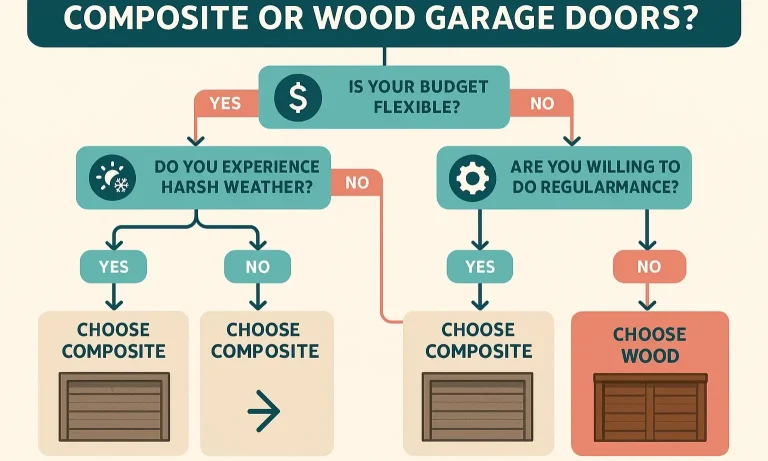
Feeling clearer? Making the final decision comes down to your personal priorities: your budget, your climate, and how much time you’re willing to dedicate to maintenance.
Use this simple decision guide to see which path is right for you.
Ultimately, both materials can lead to a beautiful result. But by understanding the long-term commitments each one requires, you can choose a door that not only enhances your home’s curb appeal but also fits your lifestyle. Whether you go for the classic charm of wood or the modern ingenuity of composite, you may even consider custom garage doors to get the perfect fit for your home’s unique style.
Frequently Asked Questions
Can you paint a composite garage door?
Yes, most composite doors can be painted, but you must use high-quality acrylic latex paint. It’s important to check the manufacturer’s recommendations, as some finishes are not designed to be painted over.
Are composite doors heavier than wood doors?
It depends on the type. Solid wood doors are very heavy. Some composite doors, especially those with a dense core and overlay, can have a similar weight. However, types like cellular PVC are significantly lighter.
Do composite doors look cheap or fake?
They used to. Early versions of composite could look plasticky. However, modern manufacturing technology has come a long way. High-end composite doors now feature incredibly detailed grain patterns and textures that are difficult to tell apart from real wood.
What is the R-value of a typical composite door?
Insulated composite doors often have excellent R-values, typically ranging from R-6.5 to R-18.4. This makes them a great choice for energy efficiency, especially if you have living space above your garage.
You May Also Like

Explore Different Types of Garage Doors
Choosing the right garage door is about making your home more secure and looking better. Finding the one that meets your needs and your home’s style can be overwhelming with so many options. Whether you’re looking…
Published Date: Sep 25, 2024
Which Door Type Excels in Extreme Temperatures
You crank up the AC in the summer and the heat in the winter, but have you ever stopped to think about the largest, least-insulated wall in your home? For many of us, it’s the garage door. In regions with scorching…
Published Date: Apr 28, 2026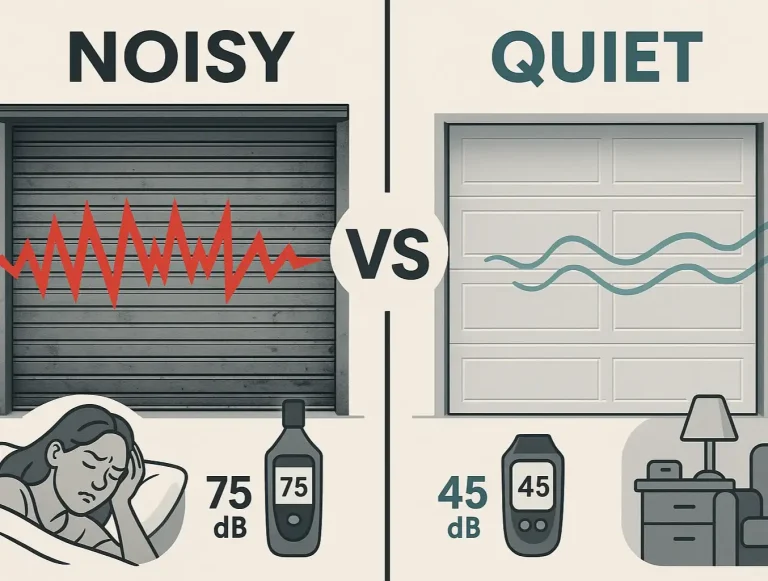
Sectional vs. Roll-Up Garage Doors for Quiet Operation
That jarring rumble of the garage door opening is a sound most of us accept as normal. It’s the soundtrack to early morning departures and late-night arrivals. But what if it didn’t have to be? What if that grating,…
Published Date: Apr 29, 2026