





Understanding Wind Load and Impact Resistance
Published: May 12, 2026
When a hurricane is on the horizon, we instinctively secure our windows and doors. But many homeowners overlook the single largest, and most vulnerable, opening in their home: the garage door. It’s not just a big door; during a severe storm, it can become a catastrophic failure point that compromises the entire structure of your house.
Understanding why this happens is the first step toward true home protection. It’s all about the physics of pressure.
Why Your Garage Door is a Home's Most Critical Failure Point
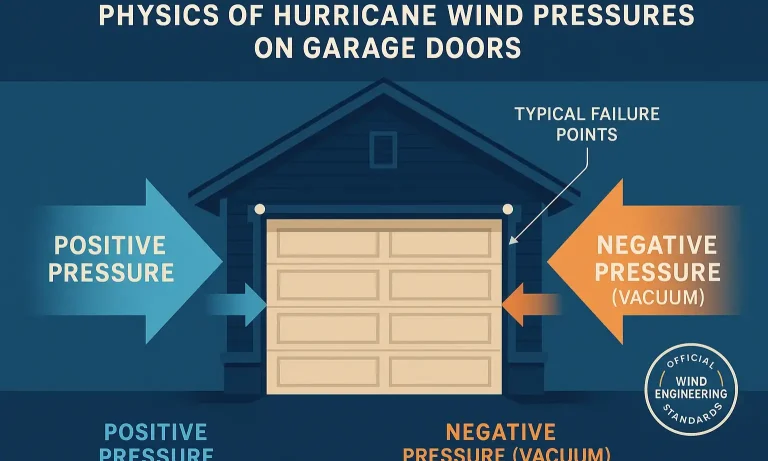
Imagine a hurricane’s intense winds hitting your home. This creates immense positive pressure, pushing relentlessly against your garage door. If the door isn’t strong enough, it can buckle inward. But that’s only half the story.
As that same wind whips over and around your roof, it creates a powerful lifting effect, much like an airplane wing. This results in negative pressure—a strong vacuum—pulling everything outward. A non-rated garage door, already weakened by the inward push, can be easily sucked out by this force.
Once the garage door is breached, wind rushes into your home, pressurizing it from the inside like an overinflated balloon. This internal pressure, combined with the negative pressure on the roof, can blow your roof off and cause walls to collapse. It’s a devastating chain reaction that often starts with one component: the garage door.
Decoding the Language of Strength
To choose the right protection, you need to understand the language manufacturers use. It boils down to two key concepts: wind load and impact resistance. They sound similar, but they protect your home from two very different threats.
Wind Load: The Battle Against Pressure
Wind load isn’t just about wind speed (MPH). It’s about the actual force, or pressure, the wind exerts on your door. This is measured in Pounds per Square Foot (PSF). A higher PSF rating means the door can withstand greater pressure before failing.
This rating is often expressed as “Design Pressure” (DP), which includes both positive (pushing) and negative (pulling) pressure values. For example, a door rated DP50 can handle 50 PSF of pressure pushing in and 50 PSF of pressure pulling out. Understanding PSF is more important than MPH because it accounts for the complex forces that actually damage your home.
Impact Resistance: Defending Against Flying Debris
During a hurricane, the wind turns everyday objects into dangerous projectiles. Lawn furniture, tree branches, and construction materials can become high-speed missiles. Impact resistance measures a door’s ability to withstand being hit by these objects without breaking.
The industry standard is the “Large Missile Impact Test,” where a 9-pound 2×4 piece of lumber is fired from a cannon at the door at around 34 MPH. To pass, the door cannot be perforated. This test ensures that even if the door gets dented, it won’t create an opening for wind and water to enter.
The Practical Guide: Finding Your Home's Exact Need
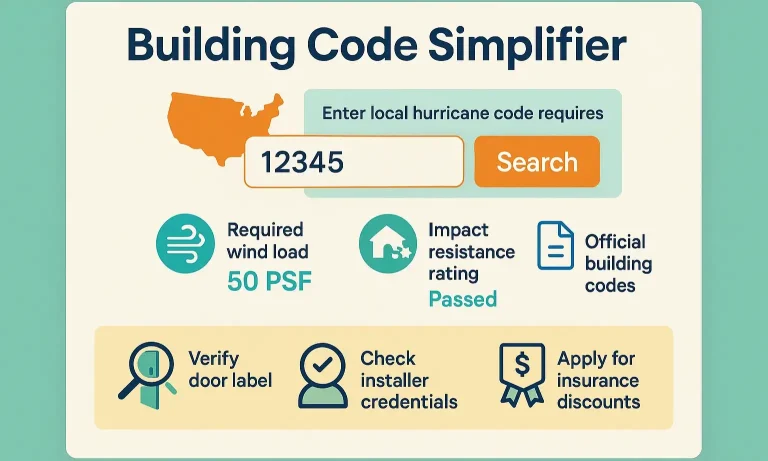
So, what rating do you need? The answer isn’t one-size-fits-all. It depends entirely on your location. Building codes in storm-prone areas, like Florida or the Texas Gulf Coast, are much stricter than in other parts of the country.
These codes are based on factors like:
- Your region’s historical wind speed data.
- The proximity of your home to the coastline.
- The specific “exposure category” of your property (e.g., open terrain vs. a dense suburban neighborhood).
Navigating these codes can feel overwhelming. The best starting point is to check with your local building department. They can provide the specific PSF and impact rating requirements for your address. This step is non-negotiable—installing a door that doesn’t meet local code can lead to failed inspections, insurance claim denials, and, most importantly, inadequate protection.
The Market: How to Read Labels and Compare Doors
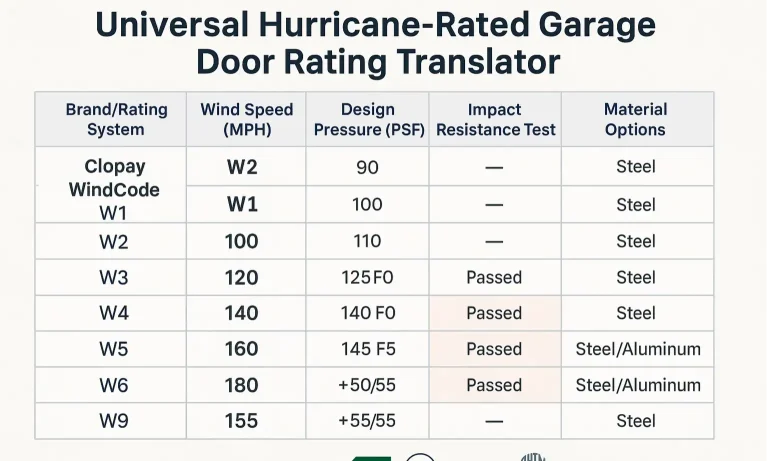
Once you know your required ratings, it’s time to shop. But you’ll quickly notice that different brands use different terminology, like Clopay’s “WindCode®” system. This can make direct comparisons tricky.
Finding the Sticker
Every certified hurricane-rated garage door has a sticker, usually on the inside edge of a section or near the track. This label is your proof. It contains crucial information:
- The manufacturer’s name.
- The Design Pressure (DP) or PSF rating.
- The impact rating (stating whether it passed the large missile test).
- The testing standard it was certified under (e.g., ASTM E330).
If a door doesn’t have this sticker, it’s not certified, no matter what a salesperson tells you.
A Universal Translator
To cut through the confusion of different brand ratings, think in terms of PSF. The chart below helps align various codes and ratings to the core metric of Design Pressure, giving you a clearer way to compare apples to apples.
Choosing Your Material
Hurricane-rated doors are essentially standard garage doors with heavy-duty reinforcement. The material you choose affects aesthetics, maintenance, and cost. While you can explore detailed garage door types pros and cons, here’s a quick overview:
- Steel: The most popular choice. It’s durable, relatively low-cost, and low-maintenance. Layered steel doors with insulation offer excellent strength.
- Aluminum: Lighter than steel and highly resistant to rust and corrosion, making it ideal for coastal areas. Often used in modern designs with glass panels.
- Fiberglass: Can mimic the look of wood without the maintenance. It’s resistant to dents, rust, and moisture.
- Wood: Offers timeless beauty but requires the most maintenance and is typically the most expensive option.
The Action Plan: From Knowledge to Installation
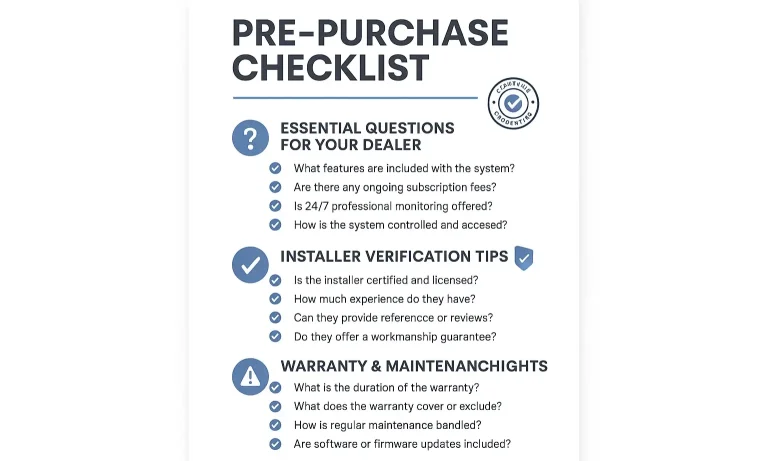
You’ve done the research and know what you need. Now it’s time to make it happen. A hurricane-rated door is only as good as its installation. The hardware, tracks, and rollers must all be storm-ready.
Use this checklist when speaking with professionals to ensure you’re getting the right product and service:
After installation, contact your homeowner’s insurance provider. A certified hurricane-rated door can often qualify you for significant discounts on your premium.
Frequently Asked Questions
Should I crack my garage door open during a hurricane?
Absolutely not. This is a dangerous myth. Opening the door, even a little, allows high-pressure wind to enter the garage, which is exactly what a rated door is designed to prevent. The safest answer for what to do with garage door during hurricane is to ensure it is fully closed, locked, and reinforced.
How can I tell if my current door is hurricane-rated?
Look for the certification sticker mentioned earlier. If there’s no sticker, check for horizontal reinforcement bars (struts) on each panel. While struts are a good sign, the sticker is the only official confirmation. If you’re unsure, have a professional inspect it.
Can I just add a brace to my existing door?
Aftermarket braces can add some strength to a non-rated door, but they are not a substitute for a fully certified system. They may not meet local building codes and could create a false sense of security. If you need to repair sagging garage door panels or add reinforcement, it’s best to consult a professional to see if your door is a good candidate for retrofitting.
What if my garage door frame is damaged after a storm?
The door itself is only part of the system. The frame, or jambs, must also be structurally sound. After a storm, a professional garage door storm damage repair assessment should include the frame to ensure the entire opening is secure.
Your Next Step to a Safer Home
Your garage door is more than a convenience; it’s a critical part of your home’s structural defense system. By understanding the forces it faces and the language of its strength, you can make an informed decision that protects your most valuable asset. The next time the forecast calls for high winds, you’ll have the confidence that your home is ready to stand strong.
You May Also Like
Garage Door Solutions for RVs, Boats, and Oversized Openings
It’s a moment of pure joy that quickly turns to frustration. You bring home your dream Class A RV or the boat you’ve saved for years, pull up to the garage, and realize with a sinking feeling: it’s not going to fit.…
Published Date: May 11, 2026
Composite Garage Doors: Durability, Appearance, and Maintenance
You see it in your mind’s eye: a beautiful, rich wood garage door that gives your home a timeless, rustic charm. It’s warm, authentic, and undeniably elegant. Then, another image appears: you, on a ladder, spending a…
Published Date: May 8, 2026
Explore Different Types of Garage Doors
Choosing the right garage door is about making your home more secure and looking better. Finding the one that meets your needs and your home’s style can be overwhelming with so many options. Whether you’re looking…
Published Date: Sep 25, 2024