





Safety Risks of Operating a Bent Garage Door
Published: Jun 19, 2026
That new dent in your garage door is glaring. Maybe a car bumped it, or a stray basketball found its mark. Your first thought might be about the cosmetic damage, but the real issue isn’t what you see—it’s what you can’t. A bent garage door is a compromised system, and continuing to operate it is like ignoring the check engine light on your car while heading for the mountains. It might work for a bit, but the risk of catastrophic failure is very real.
Most people don’t realize that the average residential garage door can weigh between 150 to 400 pounds. It’s not the electric opener that lifts this immense weight; it’s the high-tension springs. When a panel is bent, the entire delicate balance of that system is thrown off, creating a safety hazard that can’t be ignored. This guide will help you understand the “chain reaction” a simple bend can trigger, how to safely assess the severity of your situation, and when to stop everything and call for emergency help.
The Anatomy of a Balanced System
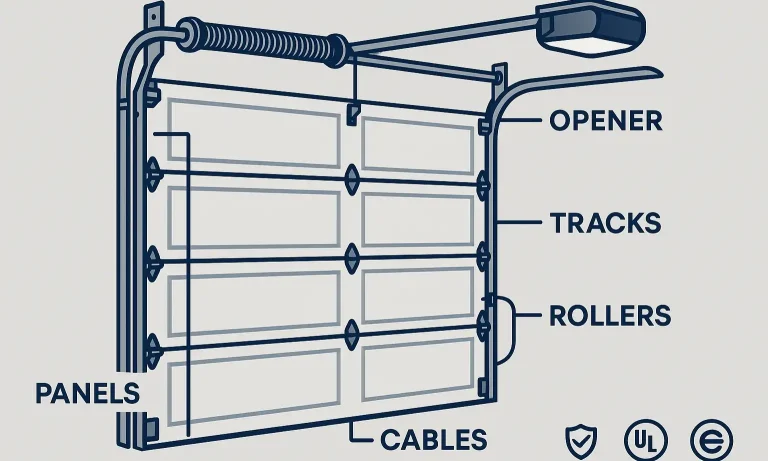
Think of your garage door not as a single slab of metal, but as an interconnected system where every part has a critical job. When one component is compromised, it puts immense strain on all the others.
- Panels: These sections form the door itself. A bend compromises its structural integrity.
- Tracks: These metal guides on either side ensure the door moves straight up and down. A bent panel can force the rollers out of alignment or even pop them out of the track entirely.
- Rollers: Wheels that sit in the tracks, allowing the door to move smoothly. They can be damaged or forced out by a bent panel.
- Springs (Torsion or Extension): These are the powerhouse of the system, counterbalancing the door’s weight. An unbalanced door puts extreme, uneven stress on them, which can lead to premature failure—a snapped spring releases its tension with explosive force.
- Cables: These connect the springs to the bottom of the door, transferring the lifting force. They must be under equal tension. A crooked door can cause one cable to fray, slip, or snap.
- Opener: This device initiates the movement but doesn’t do the heavy lifting. Forcing an opener to move a damaged, unbalanced door will burn out its motor quickly.
A single garage door bent at the bottom or top can set off a chain reaction, turning a simple cosmetic issue into a full system failure.
The Diagnostic Guide: Is It Cosmetic, Concerning, or Critical?
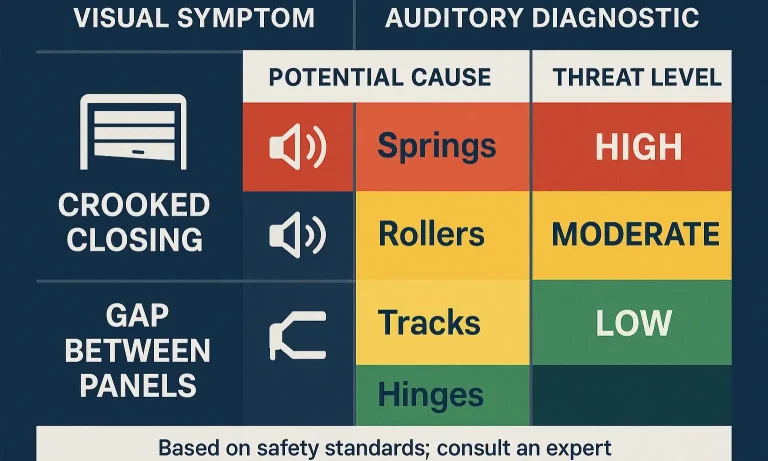
So, how can you tell if you have a minor annoyance or a ticking time bomb? By becoming a detective and looking for key clues. Use this three-step process to safely assess the damage.
Step 1: The Visual Inspection
From a safe distance (and with the door closed), carefully look at the system.
- Location of the Bend: Is it in the center of a panel or near the edge where rollers and hinges are located? Damage near hardware is far more serious.
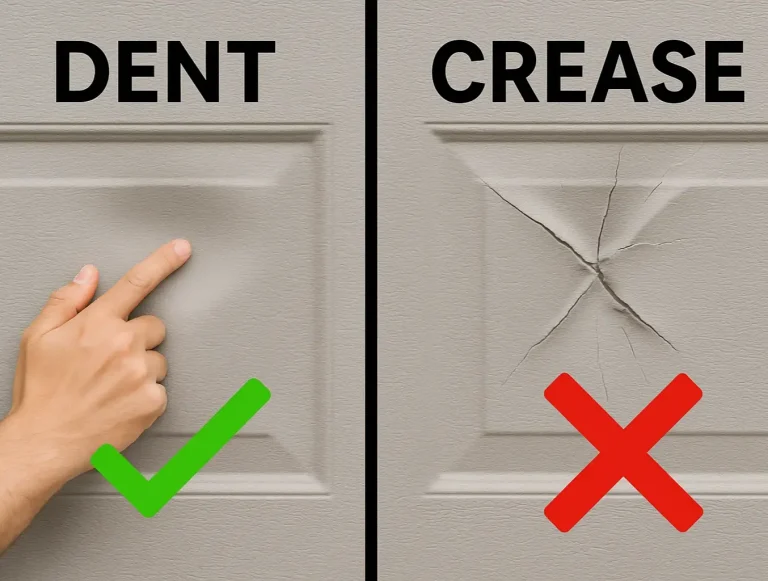
- Severity of the Bend: Is it a shallow dent or a deep crease that breaks the structural integrity of the panel? Is the panel folded or creased?
- Track Alignment: Look at the vertical tracks. Are they straight, or do they appear bent or misaligned?
- Rollers: Do the rollers appear to be sitting squarely in the track, or are they tilted or coming out?
- Cables: Look at the cables on both sides. Do they have equal tension, or is one sagging? Do you see any broken strands or fraying?
Step 2: The Sound Analysis
If you’ve been operating the door, what does it sound like? Strange noises are your door’s way of screaming for help. Don’t ignore them.
- Grinding or Scraping: This often means metal is rubbing against metal. It could be a roller scraping the track because the door is no longer aligned.
- Popping or Banging: A loud pop can be a sign of a major component failing, especially the torsion springs. This is an extremely dangerous situation.
- Rumbling or Squealing: This could indicate worn-out rollers or a door that’s struggling under immense strain.
- PASS: A properly balanced garage door will stay in place, or move up or down just an inch or two. This means the springs are still correctly counterbalancing the weight.
- FAIL: An unbalanced garage door will either slam shut or fly up toward the ceiling. Both are signs of a critical failure. If it slams down, the springs are worn or broken and are no longer supporting the door’s weight. If it flies up, the springs are too tense and can cause damage on the way up.
Step 3: The Manual Balance Test (Your ‘Aha’ Moment)
This test is the single best way to determine the health of your garage door system. An unbalanced door is a dangerous door, period.
Safety First: Perform this test only if the door can still open and close without getting stuck and if you haven’t seen any critical warning signs like frayed cables or a door off its tracks.
1. Close the Garage Door Completely. Never disengage the opener with the door in the open position.
2. Unplug the Garage Door Opener. This prevents anyone from accidentally trying to operate it electronically while you’re working.
3. Pull the Red Emergency Release Cord. This will disconnect the door from the opener. You should hear a click.
4. Carefully Lift the Door Manually. It should feel relatively light for its size—around 10-15 pounds. Lift it to about waist-high (3-4 feet off the ground).
5. Let Go Carefully. Now for the moment of truth:
If your door fails this test, do not use it again, even manually. It’s a severe safety risk.
When to DIY vs. When to Call for Emergency Repair
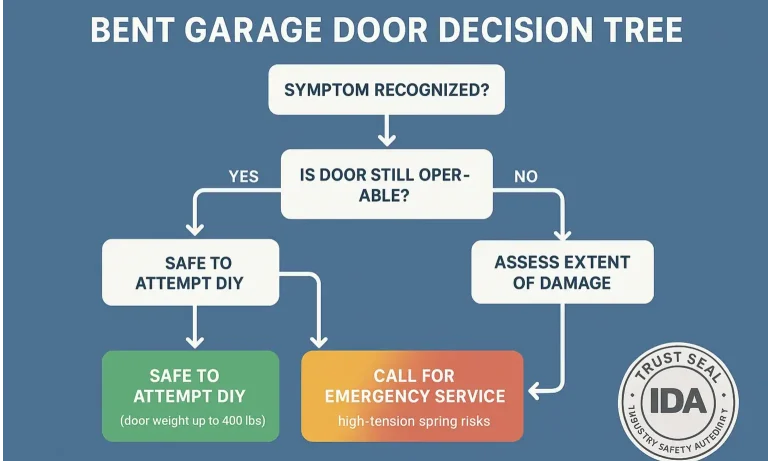
Now that you’ve completed your diagnosis, it’s time to make a decision. Knowing when you can tackle a problem and when you need a professional is key to your safety.
Green Light: The DIY Safe Zone
You might be able to attempt a fix yourself ONLY if all of these conditions are met:
- The bend is shallow and purely cosmetic.
- The door still passes the balance test perfectly.
- The door moves smoothly and quietly.
- The bend is not near any hinges, rollers, or the edge of a panel.
For minor cosmetic issues, learning how to fix a bent garage door panel may be an option, but proceed with extreme caution.
Red Light: The Emergency Pro-Only Zone
Stop immediately and call for emergency garage door services if you see ANY of these signs:
- The door fails the balance test.
- The door is crooked, jammed, or off its tracks.
- You hear a loud bang or popping sound.
- You see a snapped or sagging cable.
- You see a broken spring.
- The bend is severe, causing panels to separate or buckle.
Trying to operate a door in this condition can lead to the door falling, causing serious injury or property damage. The question of whether a damaged garage door can be repaired versus needing replacement is a decision best left to a trained technician in these scenarios.
Frequently Asked Questions
Can I just hammer out the dent in my garage door?
While tempting, this is often a bad idea. Using a hammer can stretch the metal, weaken the panel’s integrity, and crack the paint, leading to rust. For very minor dents on a door that is otherwise perfectly balanced, it might be possible, but for anything more, you risk making the problem worse.
What typically causes a garage door to bend?
The most common cause is vehicle impact. However, other issues can contribute, such as worn-out rollers causing the door to bind in the tracks, or an underlying issue with the springs or cables that causes the door to close unevenly.
Is it safe to open a bent garage door manually?
If the door failed the balance test or is showing any of the “Red Light” emergency signs, it is not safe to operate it at all, not even manually. An unbalanced door can slam shut unexpectedly. If you need to get your car out, it’s best to call a professional who can safely secure the door first. For guidance on safe manual operation in non-emergency situations, you can review instructions on a manual garage door.
Beyond the Bend: Maintaining a Safe System
A bent panel is often a symptom of a larger issue or a wake-up call to pay more attention to your garage door’s health. Proactive maintenance is the best way to prevent future emergencies.
- Lubricate Moving Parts: Regular garage door spring maintenance and lubrication of rollers and hinges can prevent binding that leads to damage.
- Test the Balance: Perform the manual balance test twice a year to catch spring issues early.
- Check Safety Features: Ensure your door’s photo-eye sensors and auto-reverse mechanism are working correctly. These are crucial overhead door safety devices that can prevent accidents.
Your garage door is the largest moving object in your home. Treating it with the respect and caution it deserves is the first step toward keeping your home and family safe. When you see a bend, don’t just see an eyesore—see a warning sign. Investigate it safely, and when in doubt, always call a professional.
You May Also Like
When a Bent Garage Door Panel Needs Replacement vs. Repair
It happens in a split second. A moment of distraction while backing out, an icy patch on the driveway, or a misplaced sports ball—and now there’s a noticeable bend in your garage door. The first feeling is…
Published Date: Jun 17, 2026
How To Fix a Bent Garage Door: Expert Repair Guide
A bent garage door panel can cause more than just cosmetic damage. From uneven movement to full mechanical failure, it can throw your whole system off. Whether you hit the garage door with a car or it warped over…
Published Date: Nov 17, 2025
How to Fix a Wire on a Garage Door: Sensor Wire Guide
When your garage door won’t cooperate, a damaged wire might be the reason. While it might seem like a complex electrical issue, it’s often a problem you can identify and sometimes even fix yourself. This article…
Published Date: Oct 20, 2025