





Retrofitting Existing Garage Doors with Insulation Kits
Published: Jun 2, 2026
You’ve probably felt it. The blast of cold air from the garage in the winter, or the wave of heat that hits you when you open the door in the summer. Your garage is often the largest uninsulated space in your home, and that old metal door can act like a giant radiator, working against your home’s heating and cooling system.
You Should Consider Insulating Your Garage Door If…
- You have a room above or next to your garage: An uninsulated door makes it harder and more expensive to keep those adjacent rooms comfortable.
- You use your garage as a workshop, gym, or living space: Comfort is key. Insulation can make the space usable year-round.
- You live in an extreme climate: Whether it’s scorching summers or freezing winters, insulation provides a crucial thermal barrier.
- You want to reduce energy bills: While not a magic bullet, insulating your garage door can contribute to overall home energy efficiency.
- Your current door is in good condition: If the door is dented, damaged, or old, insulating it is like putting a new coat of paint on a crumbling wall. It’s better to consider a replacement.
Foundation: Insulation 101 - The "Coat vs. Sunshade" Principle
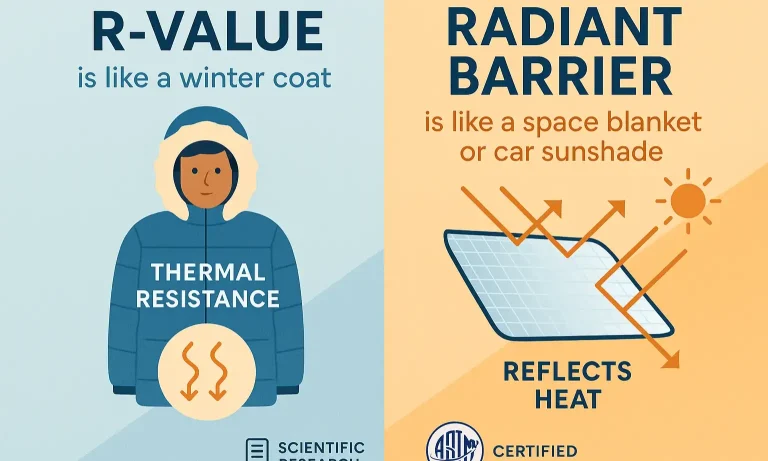
Before you can choose a kit, you need to understand what you’re actually buying. Most content online gets this wrong, focusing only on “R-Value.” But that’s only half the story.
There are two main ways insulation works, and the best way to understand them is with a simple analogy:
- R-Value is like a Winter Coat. It works by trapping air to slow down the transfer of heat. A higher R-value means a thicker, warmer coat that’s better at keeping heat from escaping on a cold day. This is crucial for cold climates.
- A Radiant Barrier is like a Sunshade. It works by reflecting radiant heat. Think of the shiny sunshade you put in your car’s windshield. It doesn’t trap heat; it reflects the sun’s thermal energy away before it can heat up your car. This is most effective in hot, sunny climates.
Most DIY kits use one of three materials:
- Foam Board (Polystyrene/Polyurethane): These rigid panels provide excellent R-value. Many consider polyurethane garage door insulation the gold standard for its high thermal resistance. Panels of polystyrene garage door insulation are also a popular and effective choice.
- Reflective/Foil Insulation: This is a radiant barrier. It looks like bubble wrap sandwiched between two layers of reflective foil. It has a lower R-value but is fantastic at reflecting sun heat.
- Fiberglass Batts: Similar to what you’d find in your attic, these kits come in rolls that you cut to size. They offer a good R-value but can be messy to install.
Building: How to Choose the Perfect Kit for YOUR Garage
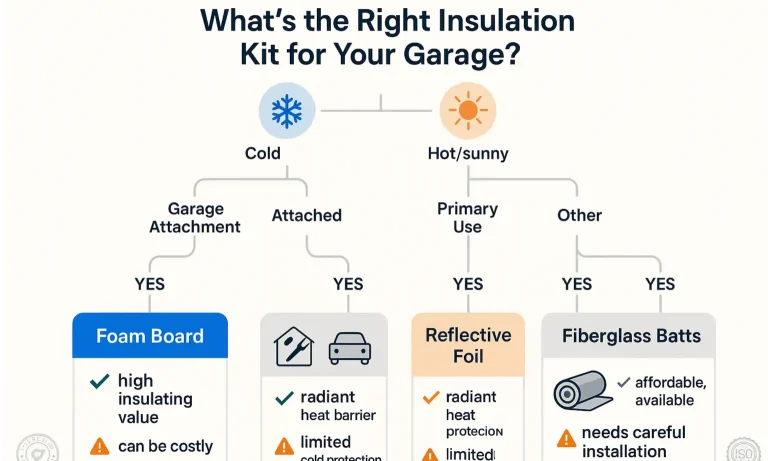
Now for the “aha moment.” The best kit isn’t the one with the highest R-value—it’s the one that’s right for your climate, your garage, and your door. The key benefits of garage door insulation are only realized when you choose the right product.
Use this decision tree to find your perfect match.
Once you’ve identified the right type of kit, you can compare specific products. Look for kits with strong reviews, clear instructions, and all necessary hardware included.
Mastery: The Complete DIY Installation Guide (For Any Kit)
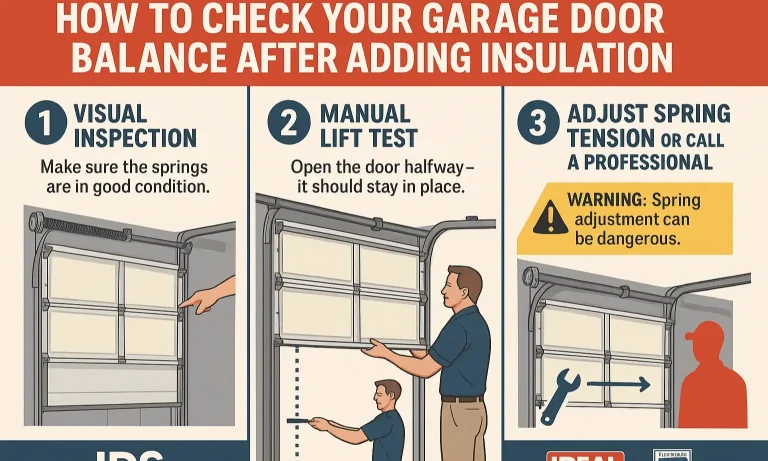
While every kit is slightly different, the process is generally straightforward. If you want a full walkthrough, our easy DIY guide on how to insulate a garage door covers it all. However, before you even open the box, remember these critical tips that most guides leave out.
The Crucial Step Zero: Clean Your Door
Adhesives, tape, and retaining pins will not stick to a dusty, greasy surface. Clean the inside of your garage door thoroughly with a degreasing cleaner and let it dry completely.
The Most Common Mistake: Inaccurate Measurements
Don’t assume all your door panels are the same size. Measure each one individually before you cut your insulation. A snug fit is essential for good performance.
The Critical Safety Check: Door Balance
This is the single most important step, and it’s almost universally ignored in other guides. Insulation adds weight to your door—anywhere from 10 to 20 pounds. This can throw off the balance of your door, putting immense strain on your garage door opener and springs. An unbalanced garage door is a safety hazard.
How to Check Your Door’s Balance (Before and After Installation):
- Close the garage door.
- Pull the red emergency release cord to disconnect the opener.
- Manually lift the door to about halfway open.
- Let go.
- If it stays put: Your door is balanced.
- If it slams shut or flies open: Your door is out of balance.
If your door is out of balance after installing the insulation, the spring tension needs to be adjusted. While some homeowners know how to adjust garage door springs, they carry immense tension and can be extremely dangerous. We strongly recommend calling a professional for this adjustment.
Action: Beyond Insulation - Don't Forget to Seal the Gaps
Insulation is only as good as the seal around your door. A half-inch gap at the bottom of your door can negate much of the benefit of your new insulation.
After installing your kit, inspect your weatherstripping. If the rubber or vinyl seal at the bottom and sides of your door is cracked, brittle, or torn, it’s time to replace it. The importance of garage door weather stripping can’t be overstated; it’s a simple, inexpensive project that completes the job and seals out drafts, dust, and pests. This is a key part of any good garage door maintenance routine.
Frequently Asked Questions (FAQ)
Does garage door insulation really make a difference?
Yes, especially in attached garages and those used as living or work spaces. Users often report a 10-20°F difference in temperature, making the space more comfortable and reducing heat transfer to the rest of the home.
How much weight does an insulation kit add to a garage door?
Most kits for a standard two-car garage add between 10 and 20 pounds. This is why checking the door’s balance after installation is a critical safety step.
What R-value do I need for my garage door?
For most climates, a kit with an R-value between R-4 and R-8 is sufficient for retrofitting. In extremely cold climates, aiming for R-8 or higher is ideal. Remember to consider radiant barriers for hot, sunny climates.
Can I insulate any type of garage door (wood, steel, aluminum)?
Most DIY kits are designed for standard steel panel garage doors. Insulating flat or wood doors is possible but may require different adhesives or custom-cut foam boards. Always check the kit manufacturer’s recommendations for your door material.
Your Next Step
Retrofitting your garage door with an insulation kit is a rewarding DIY project that can significantly improve your home’s comfort and energy efficiency. By understanding the core principles of insulation and prioritizing safety, you can confidently tackle this upgrade.
If you’ve performed the balance test and found your door needs a professional touch, or if you’re considering a brand-new insulated door for maximum performance, our team is here to help. At Up & Down Garage Doors, we believe in empowering homeowners with the knowledge they need to make the best decisions for their homes.
You May Also Like
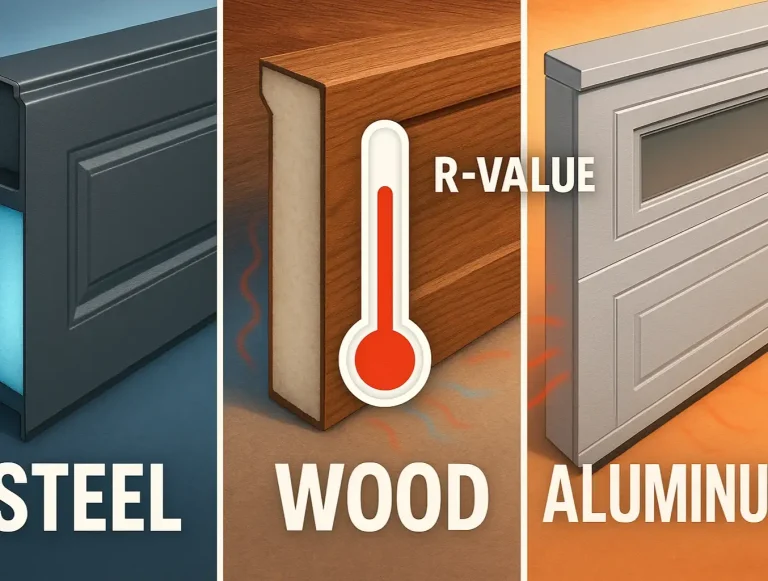
Comparing Insulated Garage Door Materials: Steel, Wood, and Aluminum
Ever walk into your garage on a freezing winter day or a blazing summer afternoon and feel an immediate, unpleasant blast of air? You might blame the weather, but the real culprit is likely the biggest moving part of…
Published Date: Jun 1, 2026
Insulated vs. Uninsulated Garage Doors: Which Option Offers the Best Value for Your Home?
Are you tired of walking into a freezing garage in the winter or a stifling one in the summer? Or maybe you’re looking to upgrade your garage to enhance your home’s appearance. The right garage door can make a big…
Published Date: Dec 26, 2024
Preventing Condensation with Insulated Garage Doors
You’ve seen it before: a mysterious puddle on the garage floor, right below the door. Your first thought is a leak. You check the roof, the seals, the foundation—nothing. The real culprit is often hiding in plain…
Published Date: May 29, 2026