





Preventing Condensation with Insulated Garage Doors
Published: May 29, 2026
You’ve seen it before: a mysterious puddle on the garage floor, right below the door. Your first thought is a leak. You check the roof, the seals, the foundation—nothing. The real culprit is often hiding in plain sight, and it isn’t a leak at all. Your garage door is “sweating.”
This common phenomenon, known as condensation, is more than just a nuisance. Over time, it can lead to rust on your door, mold growth, and damage to whatever you store nearby. Especially in humid climates, managing garage door condensation is key to protecting your investment.
This guide will walk you through the mystery of garage door sweat, from the simple science behind it to a step-by-step plan for creating a dry, healthy garage environment for good.
Why Your Garage Door "Sweats": The Simple Science of Condensation
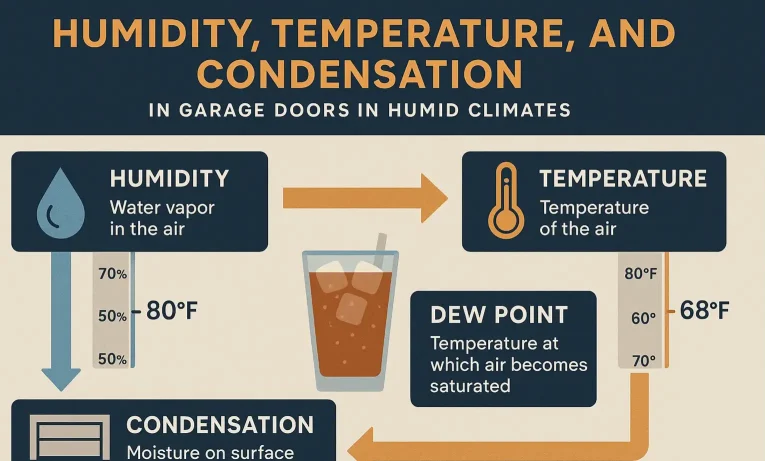
Have you ever noticed how a cold glass of iced tea gets covered in water droplets on a hot summer day? That’s condensation. It happens when warm, moist air comes into contact with a cooler surface. The cool surface chills the air around it, forcing the invisible water vapor in that air to turn back into liquid water.
Your garage door acts just like that cold glass. It’s a large, often uninsulated surface that separates two different environments: the outside world and your garage.
When the temperature and humidity on one side of the door are significantly different from the other, the door’s surface reaches the “dew point”—the exact temperature at which condensation forms. A non-insulated metal door, in particular, gets cold very easily, making it a perfect magnet for moisture.
Your 3-Step Action Plan to Stop Condensation for Good
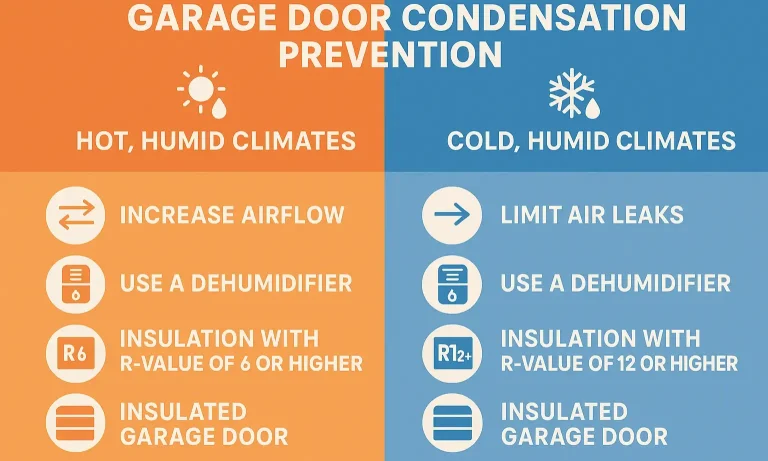
Tackling condensation doesn’t have to be complicated. By following a logical process, you can identify the root cause of your problem and choose the most effective solution for your home and budget.
Step 1: Diagnose Your Moisture Problem
Before you can fix the problem, you need to know exactly what you’re dealing with. Answer these simple questions to pinpoint the source of your condensation:
- Is the moisture only on the garage door? If so, the problem is most likely the temperature difference across the door itself. The door’s surface is getting cold enough to trigger condensation.
- Is there moisture on the walls, tools, and other surfaces too? This points to a larger issue of high ambient humidity inside the entire garage. The air itself is holding too much moisture.
- Is the water just a puddle at the very bottom of the door? Your primary issue might be a worn-out or poorly fitted bottom seal. Learning how to seal garage door gaps is a crucial first step in preventing air and moisture intrusion.
Step 2: Choose Your Solution (From Free to Full-Upgrade)
Once you’ve diagnosed the likely cause, you can explore solutions. We’ve organized them into tiers based on cost, effort, and effectiveness.
Tier 1: Free & Easy Fixes
If your problem is mild, start here. These habits reduce the amount of moisture you introduce into the garage.
Improve Airflow: On dry days, open your garage door for 15-30 minutes to circulate the air and vent out humidity.
Wipe Down Wet Cars: If you live in a snowy or rainy area, towel-dry your vehicle before parking it in the garage. A wet car can release a significant amount of moisture as it dries.
Tier 2: Low-Cost DIY Upgrades
These small projects can make a big difference, especially if your diagnostic pointed to air leaks.
Replace Weatherstripping: The seals around your garage door are its first line of defense. The importance of garage door weather stripping can’t be overstated; if it’s cracked or brittle, humid outside air can easily get in.
Install a Fan: A small, strategically placed fan can keep air moving and prevent moisture from settling on the door’s surface.
Tier 3: The Permanent Solution – An Insulated Garage Door
If condensation is a persistent problem, the most effective, long-term solution is to tackle the root cause: the cold door surface. This is where an insulated garage door shines.
Insulation works by keeping the interior surface of the door closer to the garage’s ambient air temperature. This prevents the surface from getting cold enough to reach the dew point, stopping condensation before it can even start.
When considering this option, pay attention to the garage door R-value, which measures its thermal resistance. A higher R-value means better insulation. For many homeowners, the decision to upgrade to insulated garage door panels is a smart investment in their home’s health and energy efficiency. While DIY kits exist, professional garage door insulation ensures a proper fit and maximum performance.
Step 3: Special Considerations for Your Climate
Humidity doesn’t behave the same way everywhere. Your strategy for fighting condensation should be tailored to your local climate.
Hot, Humid Climates (e.g., Texas, Florida)
The Challenge: The main battle is keeping hot, moisture-heavy outdoor air from getting inside and condensing on a cooler, often air-conditioned, garage door.
Your Strategy: Focus on sealing your garage envelope. Excellent weatherstripping is non-negotiable. An insulated door helps maintain a stable indoor temperature, reducing the need for AC and giving condensation less of a foothold. Proper insulation is a key part of learning how to cool garage spaces effectively.
Cold, Humid Climates (e.g., Pacific Northwest, Northeast)
The Challenge: Here, the problem is reversed. Warm, moist air from a heated garage hits the freezing cold surface of the garage door.
Your Strategy: Insulation is your most powerful tool. A door with a high R-value will keep the interior surface from getting cold, directly preventing condensation. You also need to control indoor humidity sources, like dryers or unvented heaters.
Mastery: Advanced Tips & Common Mistakes to Avoid
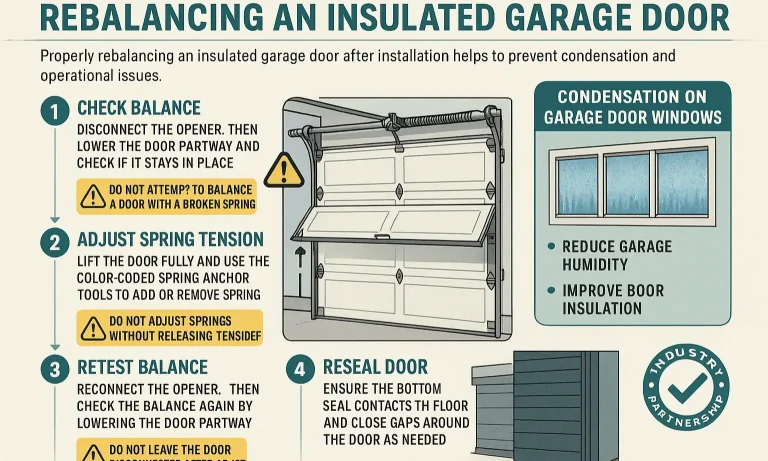
As you work toward a drier garage, keep these expert tips in mind to avoid common pitfalls.
- Mind the Windows: Even on a well-insulated door, the glass in windows can be a weak point where condensation still forms. Double-paned or thermally broken windows can solve this.
- Don’t Use Unvented Heaters: Using a propane or kerosene space heater in a closed garage is a recipe for moisture. Burning fossil fuels releases a large amount of water vapor, dramatically increasing humidity and making condensation worse.
- Warning: DIY Insulation Can Unbalance Your Door: Adding insulation panels to an existing door adds weight. This can throw off the delicate calibration of your garage door springs, creating an .unbalanced garage door. This is a serious safety hazard that can strain your opener and cause the door to fail. If you add insulation, always have a professional check and adjust the spring balance.
Your Path to a Dry Garage Starts Now
That mysterious puddle on your garage floor is a solvable problem. By understanding the cause, diagnosing your specific situation, and choosing the right solution, you can protect your home and reclaim your garage from damaging moisture.
Here’s your action plan:
- Diagnose: Determine if your problem is the door, the seals, or ambient humidity.
- Act: Start with free and easy fixes. If they don’t work, upgrade your weatherstripping.
- Invest: For a permanent fix, especially in humid climates, an insulated garage door is the ultimate solution.
Learning how to weatherproof your garage door is an ongoing process, but eliminating condensation is one of the most impactful steps you can take.
Frequently Asked Questions (FAQ) About Garage Door Condensation
What is garage door condensation?
Condensation is the moisture that forms when warm, humid air makes contact with a cooler surface, like your garage door. The air cools, and the water vapor it holds turns into liquid droplets.
Is condensation on my garage door a problem?
Yes. Chronic condensation can cause metal doors to rust, wooden doors to rot or warp, and promote the growth of mold and mildew in your garage. This can damage the door itself and anything stored nearby.
Why is my insulated garage door still sweating?
This can happen for a few reasons. The ambient humidity in your garage might be extremely high, overwhelming the door’s defenses. Alternatively, your door’s seals may be failing, letting in humid air. Lastly, the door’s R-value might not be high enough for your climate’s temperature extremes.
Will a dehumidifier solve the problem?
A dehumidifier is an excellent tool for treating the symptom—high humidity in the air. It can certainly help. However, it doesn’t fix the root cause, which is often a poorly insulated and sealed garage door that allows temperature and humidity transfer. It’s often best used in combination with other solutions.
How do I know if it’s a leak or condensation?
Condensation typically covers a wide surface area of the door with a fine mist or uniform droplets. It will also appear and disappear as temperatures change. A leak will usually originate from a specific point (like a seam or crack) and will be more consistent, often leaving a distinct trail of water.
You May Also Like
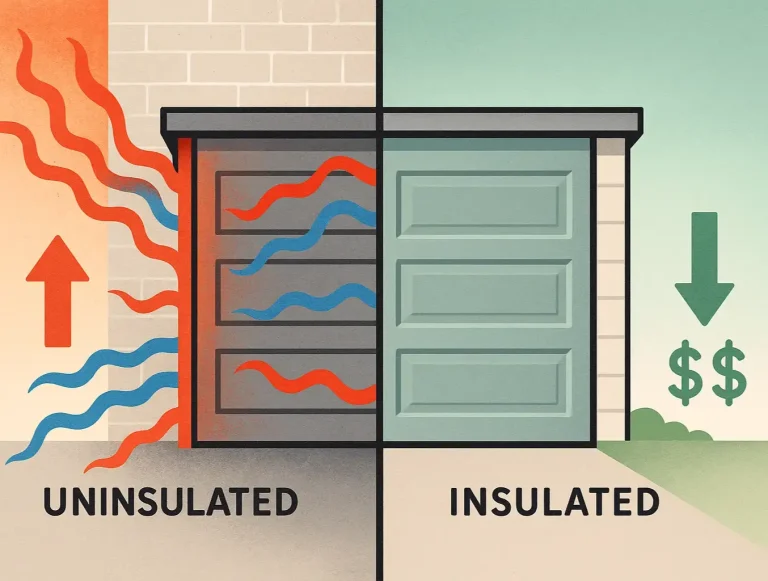
Insulated Garage Doors for Attached Garages
Think of your attached garage as a giant, uninsulated window on the side of your house. During a blazing summer day or a frigid winter night, that thin metal door becomes the biggest source of energy loss in your…
Published Date: May 27, 2026
Insulated vs. Uninsulated Garage Doors: Which Option Offers the Best Value for Your Home?
Are you tired of walking into a freezing garage in the winter or a stifling one in the summer? Or maybe you’re looking to upgrade your garage to enhance your home’s appearance. The right garage door can make a big…
Published Date: Dec 26, 2024
How Insulated Garage Doors Muffle Street Sounds and Opener Noise
Is your garage door the loudest part of your house? For many, the answer is a resounding yes. It might be the jarring rattle and hum of the opener that wakes the whole family, or perhaps it's the constant drone of…
Published Date: May 26, 2026