





Comparing Insulated Garage Door Materials: Steel, Wood, and Aluminum
Published: Jun 1, 2026
Ever walk into your garage on a freezing winter day or a blazing summer afternoon and feel an immediate, unpleasant blast of air? You might blame the weather, but the real culprit is likely the biggest moving part of your home: your garage door. It’s a massive, uninsulated wall that can be secretly draining your wallet through higher energy bills and making a potentially useful space completely uncomfortable.
Many homeowners don’t realize that the material their garage door is made of—and how it’s insulated—is one of the most significant factors in their home’s overall energy efficiency. Choosing the right combination isn’t just about looks; it’s a long-term investment in comfort and savings.
This guide will walk you through everything you need to know, from deciphering technical jargon to comparing how materials like steel, wood, and aluminum perform when the heat is on (or when the cold sets in).
The Foundation: Understanding R-Value in 60 Seconds
Before we compare materials, let’s talk about the most important metric in this conversation: R-value.
Think of R-value like the insulation rating of a coffee mug. A thin paper cup has a very low R-value; you can feel the heat immediately, and your coffee gets cold fast. A vacuum-insulated travel mug has a high R-value; it resists the transfer of heat, keeping your coffee hot for hours and your hand comfortable.
In technical terms, R-value measures a material’s capacity to resist heat flow. The higher the R-value, the better it insulates. For a garage door, a higher R-value means less heat escaping in the winter and less heat entering in the summer. This simple number is key to understanding how well a door will perform. To learn more, you can explore a detailed garage door r value comparison to see how different ratings stack up.
Building: The Core Materials - A Head-to-Head Comparison
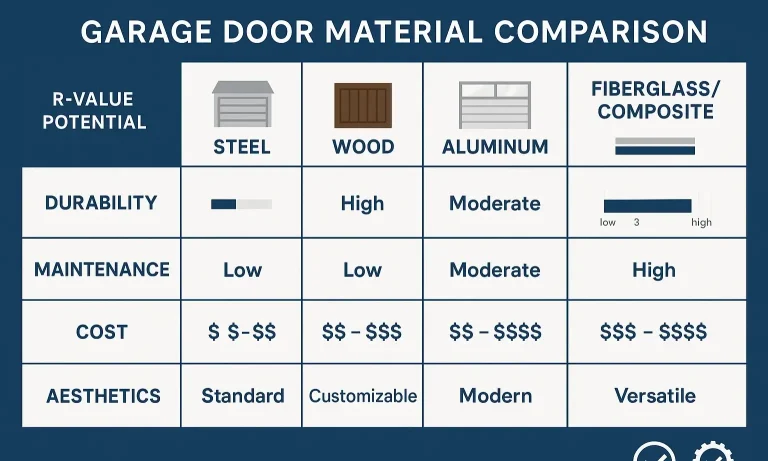
The material of your garage door is the foundation of its insulating potential. Each one has its own inherent properties that affect everything from durability and maintenance to its maximum possible R-value.
Steel Garage Doors
Steel is the most popular garage door material for a reason. It offers an incredible balance of durability, low maintenance, and design flexibility. Most importantly, its construction is ideal for achieving very high R-values.
- Pros: Highest potential R-value, extremely durable, low maintenance, wide range of styles (can mimic wood).
- Cons: Can dent upon impact (though thicker gauge steel is more resistant).
- Best For: Homeowners who prioritize insulation and durability above all else. The steel garage door benefits often make it the most practical choice for any climate.
Wood Garage Doors
For pure aesthetic appeal and timeless beauty, nothing beats real wood. It provides a classic, high-end look that can dramatically boost curb appeal. However, that beauty comes with maintenance requirements and natural limitations on insulation.
- Pros: Unmatched aesthetics, high-end look, naturally solid.
- Cons: Requires regular maintenance (staining, sealing), susceptible to rot and insects, generally has a lower R-value than insulated steel.
- Best For: Homeowners focused on curb appeal and a traditional aesthetic, who are prepared for the upkeep. The wooden garage doors pros and cons are important to weigh carefully.
- Pros: Rust-proof (ideal for coastal areas), lightweight, modern aesthetic.
- Cons: Dents very easily, typically has lower insulation values compared to steel.
- Best For: Modern homes or coastal environments where resistance to salt air is a priority. The debate between steel vs aluminum garage doors often comes down to style and climate.
Aluminum Garage Doors
Often used for modern, full-view glass panel doors, aluminum is lightweight and rust-proof. While less common for traditional insulated doors, it serves a specific design purpose.
Fiberglass & Composite Doors
Fiberglass doors offer a practical compromise, often molded to mimic the look of real wood without the maintenance. Composite doors, made from a blend of wood fibers and resins, are another durable, low-maintenance alternative.
Pros: Can look like wood without the upkeep, resists dents and rust.
Cons: Can become brittle and crack in extremely cold climates, finish can fade over time with sun exposure.
Best For: Homeowners who want the wood look in a harsh or humid climate. To see how these stack up against the classics, review the pros and cons of garage door materials.
Mastery: How Insulation and Materials Work Together
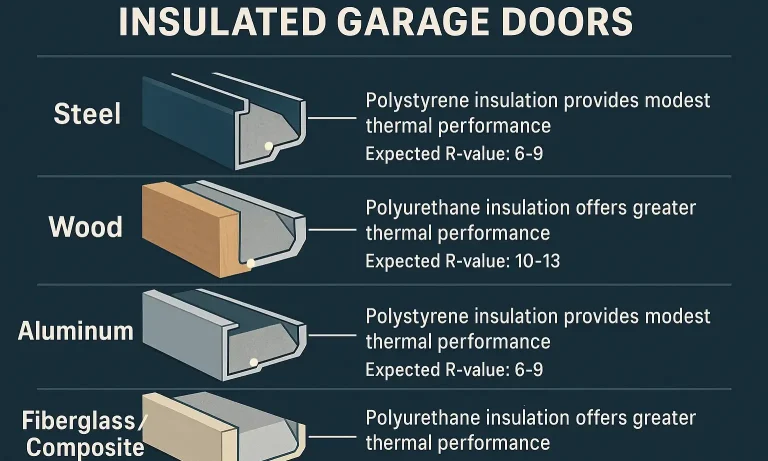
A door’s material is just one part of the equation. The type of insulation used and how it’s integrated with the material is where you get true thermal performance. This is the “aha moment” where you see why a multi-layer steel door can outperform a solid wood door.
There are two primary types of insulation used in garage doors:
1. Polystyrene Insulation
This is a rigid foam board that is cut to size and fitted into the garage door panels. It’s a cost-effective solution that provides a good boost in R-value.
- How it Works: In a “double-layer” door, a sheet of steel forms the exterior, and the polystyrene panels are glued to the back.
- R-Value: Good (typically R-2 to R-8).
- Best In: Steel and composite doors. Because it’s a solid panel, it’s a common and reliable choice. If you’re considering this option, understanding polystyrene garage door insulation is a great first step.
2. Polyurethane Insulation
This is a liquid foam that is injected between two layers of steel, where it then expands, hardens, and fills every single gap. This process creates a door that is incredibly strong, rigid, and exceptionally well-insulated.
- How it Works: Used in “triple-layer” or “sandwich” doors, the foam is injected between an exterior and interior steel skin.
- R-Value: Excellent (typically R-10 to R-20+).
- Best In: Steel doors. The foam bonds to the steel skins, creating a remarkably strong and energy-efficient panel. The benefits of polyurethane garage door insulation make it the top choice for anyone seeking maximum thermal performance.
The key takeaway is that the highest R-values are achieved when a material that doesn’t insulate well on its own (like steel) is combined with a superior insulation method (injected polyurethane).
Action: The 3-Step Framework for Choosing Your Perfect Insulated Door
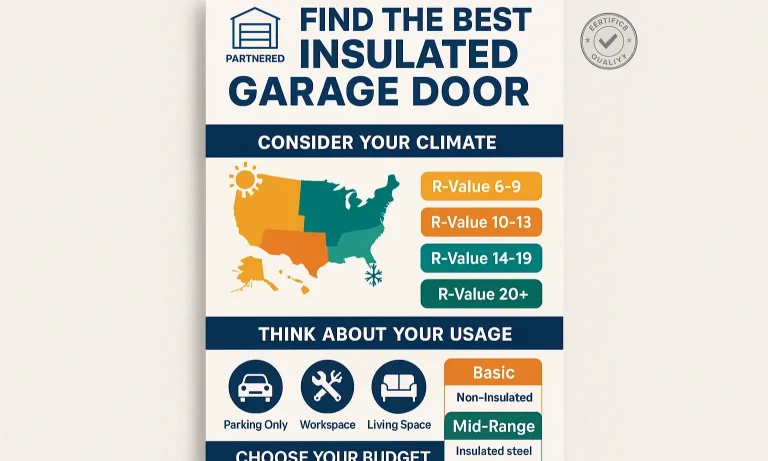
Feeling more confident? Now let’s turn this knowledge into a decision. Use this simple framework to find the right door for your home.
Step 1: Assess Your Climate
Your local weather is the biggest factor.
- Cold Climates (Northern US): An R-value of 12 or higher is recommended. A triple-layer polyurethane-insulated steel door is an excellent investment to prevent heat loss.
- Hot & Humid Climates (Southern US): An insulated door is still crucial for keeping heat out. An R-value of 8 or higher will help keep your garage cooler and reduce the load on your home’s AC if the garage is attached.
- Mixed Climates: A double-layer door with polystyrene (R-6 to R-8) offers a great balance of performance and value.
Step 2: Define Your Garage’s Purpose
How you use the space matters.
- Just for Parking: A basic insulated door (R-6+) will still help regulate the temperature in the rest of your home.
- Workshop, Gym, or Play Area: You’ll want a higher R-value (R-12+) to maintain a comfortable temperature year-round.
- Attached Garage with a Room Above It: This is where you need the best insulation for garage you can get. A high R-value door (R-16+) will make a huge difference in the comfort and energy bills for that room.
- Good (Lowest Cost): A single-layer uninsulated door. Offers no thermal protection.
- Better (Mid-Range): A double-layer steel door with polystyrene insulation. A significant and cost-effective upgrade for most homes.
- Best (Highest Performance): A triple-layer steel door with injected polyurethane insulation. Offers maximum energy efficiency, durability, and sound dampening.
Step 3: Align with Your Budget
Insulated doors are an investment that pays off over time in energy savings. Think of it in tiers:
Frequently Asked Questions (FAQ)
What is a good R-value for a garage door?
For an attached garage, an R-value of 8 to 12 is a great starting point for most climates. If you live in a very cold or hot region, or if you use your garage as a living space, aiming for an R-value of 12 or higher is a smart investment.
Is a higher R-value garage door worth the extra cost?
In most cases, yes. A higher R-value door can lower your annual energy bills by preventing heat transfer, which can pay for the initial cost difference over the life of the door. It also provides added benefits like a quieter door, increased durability, and a more comfortable garage.
Do garage door windows affect the R-value?
Absolutely. Windows are a major source of energy loss. While they add natural light and style, even double-pane insulated glass will have a much lower R-value than the rest of the insulated door. If you prioritize maximum efficiency, limit the number and size of windows.
What’s the difference between R-value and U-factor?
They are essentially two sides of the same coin. R-value measures heat resistance (higher is better), while U-factor measures heat transference (lower is better). While U-factor is common for windows, R-value has become the industry standard for discussing garage door insulation.
Your Next Step to a More Comfortable Home
Choosing a new garage door is about more than just picking a color. By understanding how materials and insulation work together, you can make a smart decision that enhances your home’s comfort, value, and energy efficiency for years to come. The right door doesn’t just open and close—it protects your home from the elements and helps create a more usable space for your family.
If you have more questions or are ready to explore your options, our team is always here to help you navigate the choices and find the perfect fit for your home and budget.
You May Also Like
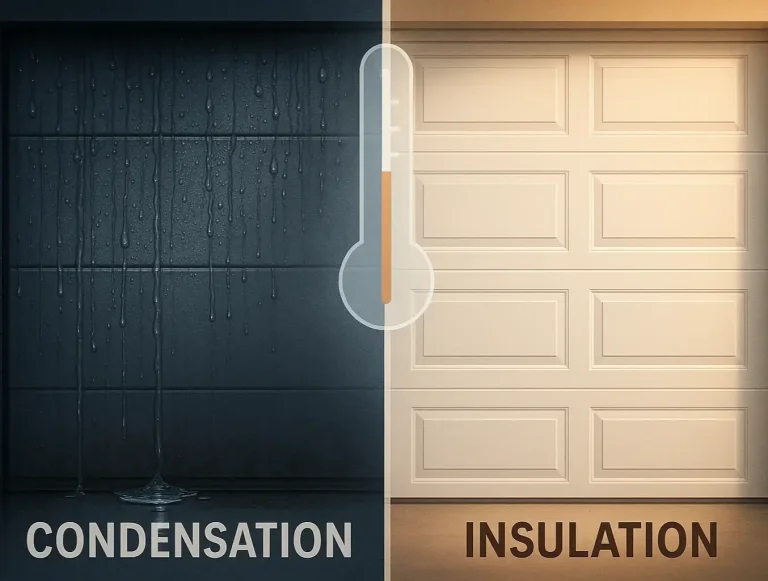
Preventing Condensation with Insulated Garage Doors
You’ve seen it before: a mysterious puddle on the garage floor, right below the door. Your first thought is a leak. You check the roof, the seals, the foundation—nothing. The real culprit is often hiding in plain…
Published Date: May 29, 2026
Insulated vs. Uninsulated Garage Doors: Which Option Offers the Best Value for Your Home?
Are you tired of walking into a freezing garage in the winter or a stifling one in the summer? Or maybe you’re looking to upgrade your garage to enhance your home’s appearance. The right garage door can make a big…
Published Date: Dec 26, 2024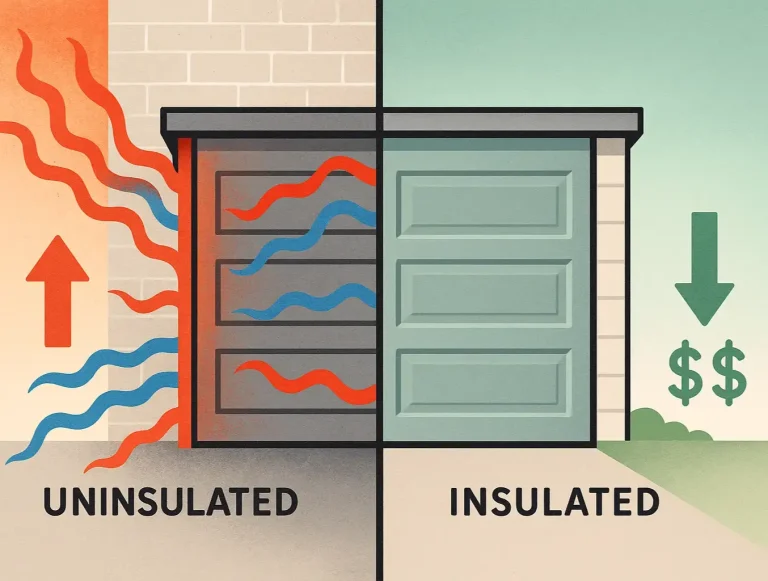
Insulated Garage Doors for Attached Garages
Think of your attached garage as a giant, uninsulated window on the side of your house. During a blazing summer day or a frigid winter night, that thin metal door becomes the biggest source of energy loss in your…
Published Date: May 27, 2026