





Child and Pet Safety Protocols During a Garage Door Malfunction
Published: Jun 1, 2026
That sudden, sickening BANG from the garage stops everyone in their tracks. It’s a sound you can’t ignore. Whether the door is now hanging crooked, stuck halfway, or won’t move at all, your first thought isn’t about the repair bill. If you have children or pets, your first thought is, “Is everyone safe?”
A malfunctioning garage door instantly changes a familiar space into a hazardous one. And while adults see a broken machine, curious kids and pets see a strange new playground full of tempting—and dangerous—new features.
Existing advice often jumps straight to repair warnings, but it misses the most critical first step: securing the area for the most vulnerable members of your family. This isn’t about fixing the door; it’s about creating a safe environment until a professional can. Here’s the immediate action plan every parent and pet owner needs.
The 3-Step Immediate Safety Protocol
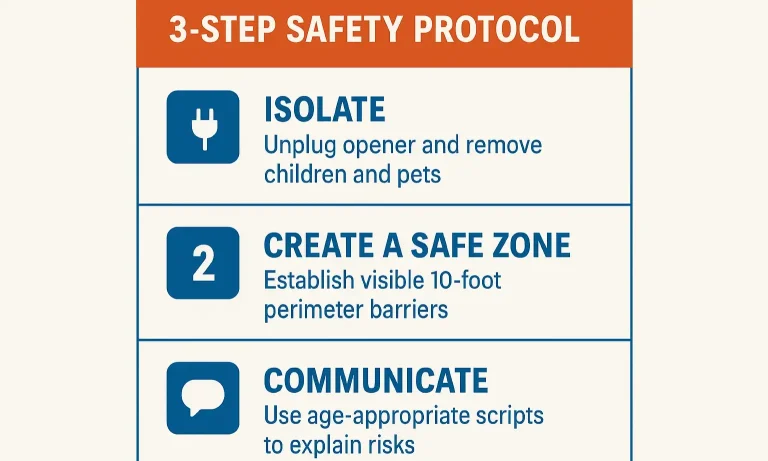
In the first few minutes after a malfunction, clarity is key. Don’t worry about diagnosing the problem. Focus entirely on safety with these three steps.
Step 1: Isolate the Hazard
First, remove all power to the door to prevent any unexpected movement.
- Unplug the Opener: Find the cord for the garage door opener motor unit (the one on the ceiling) and unplug it from the outlet. This is the single most important action to prevent accidental activation.
- Get Everyone Out: Immediately lead all children and pets out of the garage. The area is now off-limits.
- Don’t Touch Anything: Instruct everyone not to touch the door, the remote, the wall button, or any dangling cables. If you need to enter the garage, use another door. For information on what to do when your door loses power, our guide on how to manually open your garage door can provide context, but remember the goal here is to secure, not operate.
Step 2: Create a “Safe Zone”
A simple verbal warning isn’t enough for young children or pets. You need a clear, physical boundary. We call this the “Garage Door Safe Zone.”
Establish a 10-foot perimeter around the interior of the garage door. Use brightly colored, visible objects to mark this boundary. Think laundry baskets, cones, folding chairs, or even a temporary baby gate. This visual cue turns an abstract danger into a clear, “do-not-cross” line.
Step 3: Communicate Clearly
How you explain the danger matters. Your goal is to be firm and clear without causing unnecessary fear.
- For Toddlers (Ages 2-4): Use simple, relatable concepts. Try saying, “The big door is sick and needs to rest. We have to stay far away so it can get better.”
- For Young Children (Ages 5-8): Be a bit more direct. “The garage door is broken and could move by itself, which is very dangerous. Nobody can go near it until it’s fixed.”
Reinforce these verbal instructions with consistent boundaries. This is a crucial moment to apply your family’s general garage door safety rules in an emergency context.
A New Set of Dangers: Seeing a Broken Door Through Their Eyes
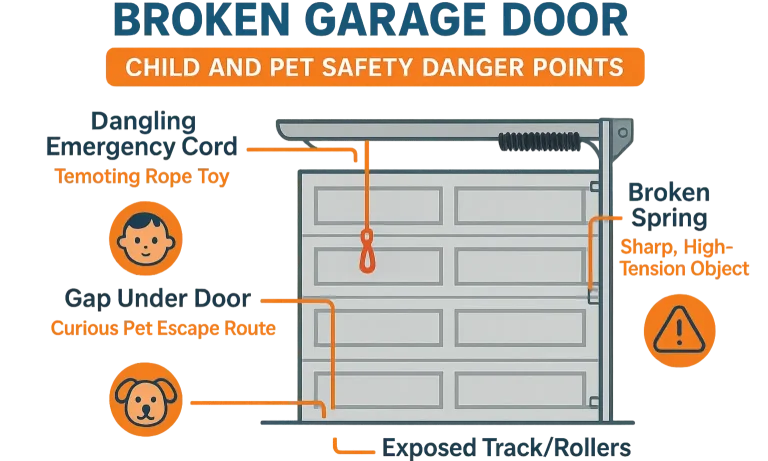
To a child or pet, a broken garage door isn’t just an inconvenience; it’s a landscape of new curiosities. Understanding their perspective is key to preventing an accident.
- Crush & Entrapment Risk: This is the most serious danger. A garage door can weigh several hundred pounds. If a spring has snapped or a cable is frayed, the door could slam shut without warning. The gap under a partially open door may look like a perfect crawl space for a toddler or a small pet, but it’s an incredibly dangerous trap.
- Entanglement Hazards: That dangling red emergency cord? It looks just like a pull toy. A snapped cable hanging down can be just as tempting. Any entanglement could cause the door to move or pull a child off their feet.
- Pinch Points & Sharp Edges: A door that has come off its track exposes rollers, hinges, and track edges that aren’t normally accessible. These create powerful pinch points around bulkhead doors that can severely injure small fingers. Furthermore, the immense force involved in a malfunction, especially the dangers of a broken garage door spring, can create razor-sharp metal edges on the spring itself or on a damaged door panel.
How to Secure the Door Until Your Technician Arrives
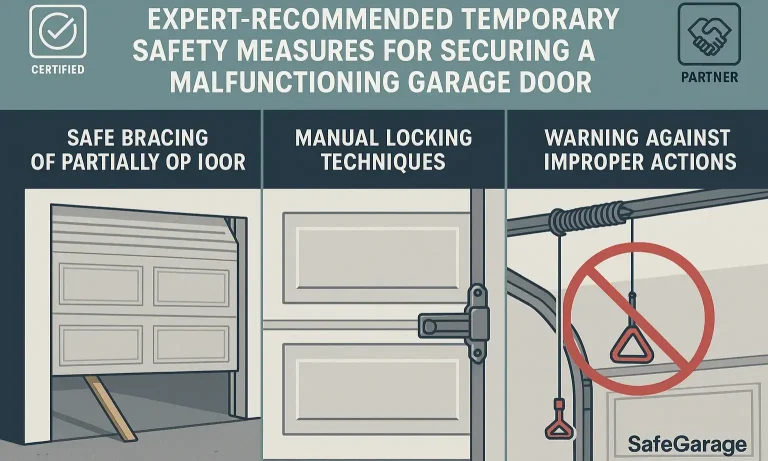
Once your family is safe, you may need to temporarily secure the door itself. This is not a repair. These are temporary measures to prevent movement and secure your home until a professional arrives.
- If the Door is Stuck Partially Open: The safest way to prevent it from moving is to clamp a pair of locking pliers or a C-clamp tightly onto the garage door track just above the highest roller. This creates a physical stop that prevents the door from sliding down. Do this on both tracks.
- If the Door is Fully Closed: Simply leave it. Use the lock on the door if it has one. Do not try to operate it. Barricade the door from the inside if you’re concerned about security.
- If the Door is Off-Track: Do not touch it. A door in this state is extremely unstable. The only goal is to keep everyone away. A professional will know how to put a garage door back on track safely, as it often requires specialized tools to manage the door’s weight.
Critical Warning: Never pull the red emergency release cord if you suspect a spring is broken. The springs are what carry the door’s weight. If they are broken, pulling that cord will release the door to slam shut with its full, crushing weight. This is often how the most severe accidents, like when a garage door fell down, happen.
Your Emergency Family Safety Checklist
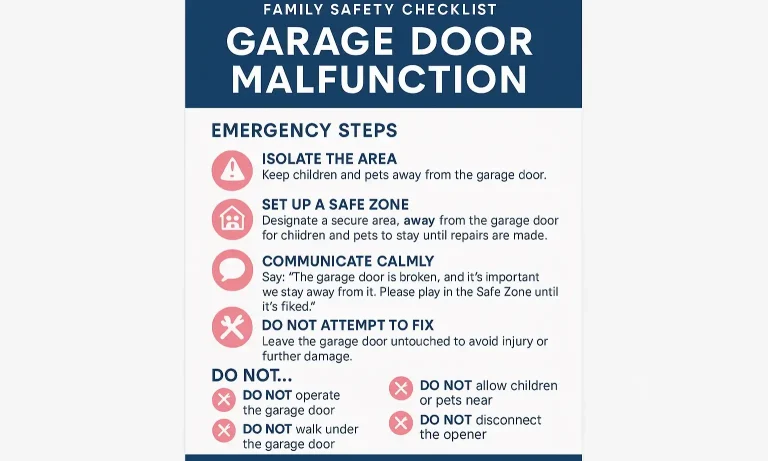
In a moment of stress, it’s easy to forget a step. Print this checklist and keep it in your garage or with your home emergency kit.
Frequently Asked Questions
Should I try to move the door myself?
No. A modern residential garage door weighs between 150 and 450 pounds. The spring system is under extreme tension to make that weight manageable. When that system fails, you are dealing with the door’s “dead weight,” which can cause serious injury if it falls unexpectedly.
My garage door seems stuck but not broken. Are these steps necessary?
Yes. Any time a garage door behaves unpredictably, it should be considered unsafe. A door that’s “just stuck” could have a component on the verge of failing. Following these safety protocols is the best way of preventing garage door injuries before they happen.
How do I know if my garage door safety sensors are working correctly?
This is a great proactive check. The safety sensors are two small boxes located near the bottom of the garage door tracks. To test them, start closing the door and then wave an object (like a broom handle) in front of one of the sensors. The door should immediately reverse direction. If it doesn’t, the sensors need adjustment or repair. Understanding the proper garage door sensor location and function is vital for ongoing safety.
What’s that loud bang I heard?
That loud noise is almost always a torsion spring breaking. These high-tension springs do the heavy lifting, and after thousands of cycles, they eventually wear out and snap. It’s the most common and dangerous point of failure on a garage door system.
Your Next Step is a Safe One
A garage door malfunction is startling, but it doesn’t have to be dangerous. By taking these immediate, decisive steps to create a safe zone for your children and pets, you can manage the situation calmly and confidently. You’ve successfully handled the immediate emergency.
Now that the area is secure and your family is safe, the next step is to have a trained and licensed technician assess the damage and perform the repair safely. Your priority was protecting your family, and now you can hand the mechanical problem over to an expert.
You May Also Like
What To Do After Hitting Your Garage Door: A 5-Minute Safety Checklist
The crunch of metal is a sound no homeowner wants to hear. Whether it was a moment of distraction backing out of the garage or a sudden, jarring failure of the system, a damaged garage door can turn a normal day into…
Published Date: May 28, 2026
Installing an Exterior Emergency Release Kit for Stuck Garage Door
It’s a scenario we all dread: the power goes out, and your car is trapped inside the garage. The remote is useless, the wall button is dead, and you have no other way in. That feeling of being stuck is frustrating,…
Published Date: May 29, 2026
Emergency Exterior Access for Commercial or Rolling Steel Garage Doors
The power is out. Your delivery truck is loaded and needs to leave, but the massive rolling steel door to your warehouse is sealed shut. Or maybe the motor made a grinding noise and now refuses to budge. Panic starts…
Published Date: May 27, 2026