Your Ultimate Guide to Garage Door Spring Lubrication
Published: Apr 7, 2026
That ear-splitting screech your garage door makes isn’t just an annoying wake-up call. It's a cry for help from the hardest-working part of the entire system: the springs. Before you resign yourself to the noise or start worrying about a massive repair bill, we have some good news. The solution is often simpler and cheaper than you think, and it’s a task you can confidently tackle yourself.
Properly lubricating your garage door springs is one of the most effective pieces of preventive maintenance you can perform. It silences that awful noise, protects against rust, and dramatically extends the life of both your springs and your garage door opener. This guide will walk you through everything you need to know, transforming you from a casual browser into an empowered homeowner.
The Unsung Hero: Why Your Garage Door Springs Need TLC
- Noise: That groaning, squeaking sound is the literal sound of the metal coils grinding against each other.
- Wear and Tear: Unchecked friction wears down the steel, leading to corrosion and fatigue. This not only shortens the spring's lifespan but also puts a tremendous strain on your garage door opener motor, forcing it to work harder to overcome the resistance.
Torsion vs. Extension Springs: A Simple Visual Guide
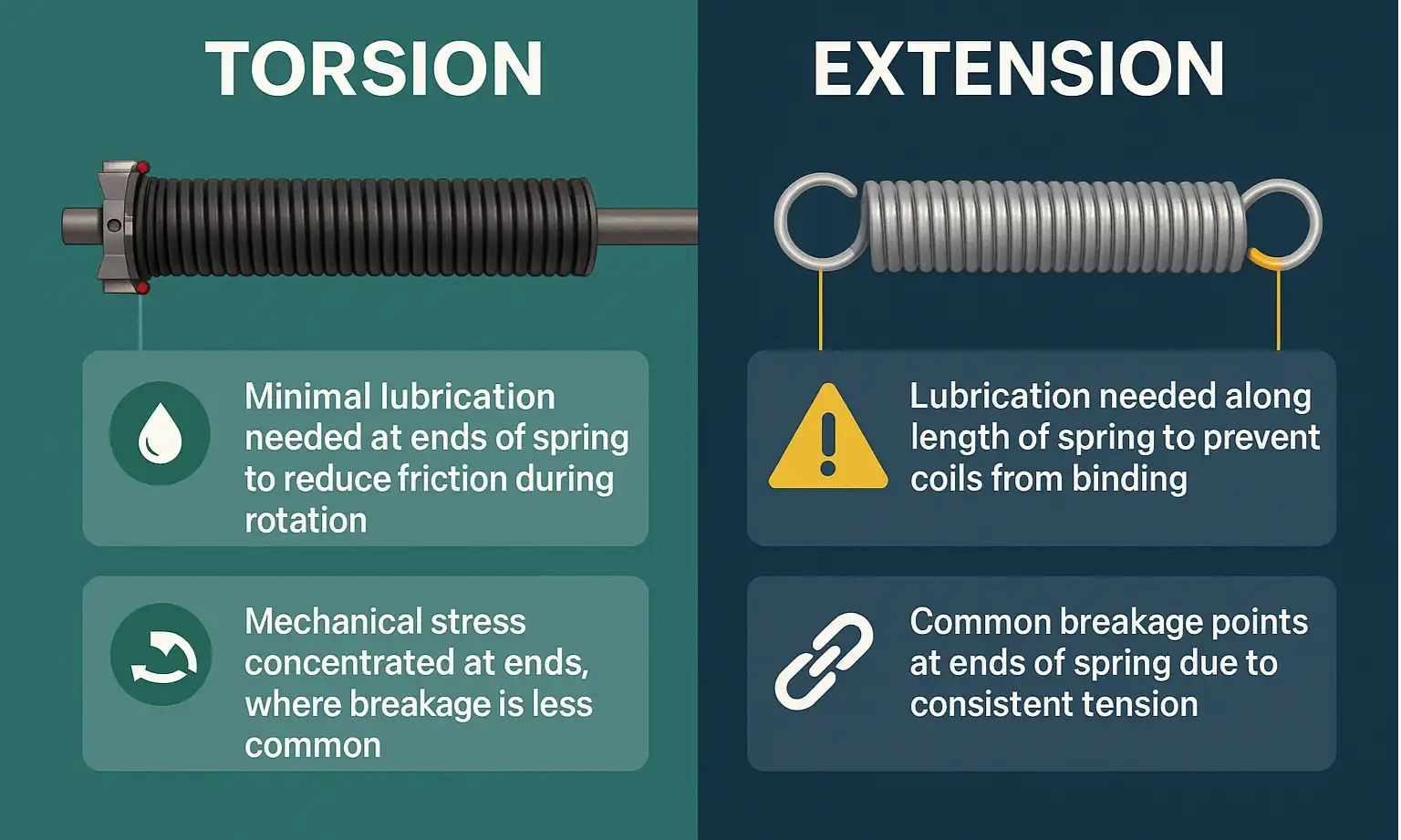
- Torsion Springs: These are the large, heavy-duty springs mounted on a metal bar directly above the garage door opening. They work by twisting (or "torquing") to lift the weight of the door. Their coils expand and contract slightly, rubbing against each other.
- Extension Springs: These smaller springs are found on either side of the door, running parallel to the horizontal tracks. They work by stretching and contracting, like a massive rubber band.
The Science of Silence: Choosing the Right Lubricant
What to Avoid: Common Lubrication Mistakes
- Standard WD-40: This is the number one mistake homeowners make. While the WD-40 brand makes specialized lubricants, their classic, multi-use product is a solvent and water displacer, not a long-term lubricant. It can clean the spring effectively but will quickly evaporate, leaving the metal unprotected and potentially stripping away any existing grease.
- Thick Grease: Products like automotive or bearing grease are too heavy. They are incredibly sticky, creating a magnet for dust, dirt, and grime. This mixture turns into a gritty, abrasive paste that will accelerate wear on your springs.
Your Best Options for Garage Door Springs
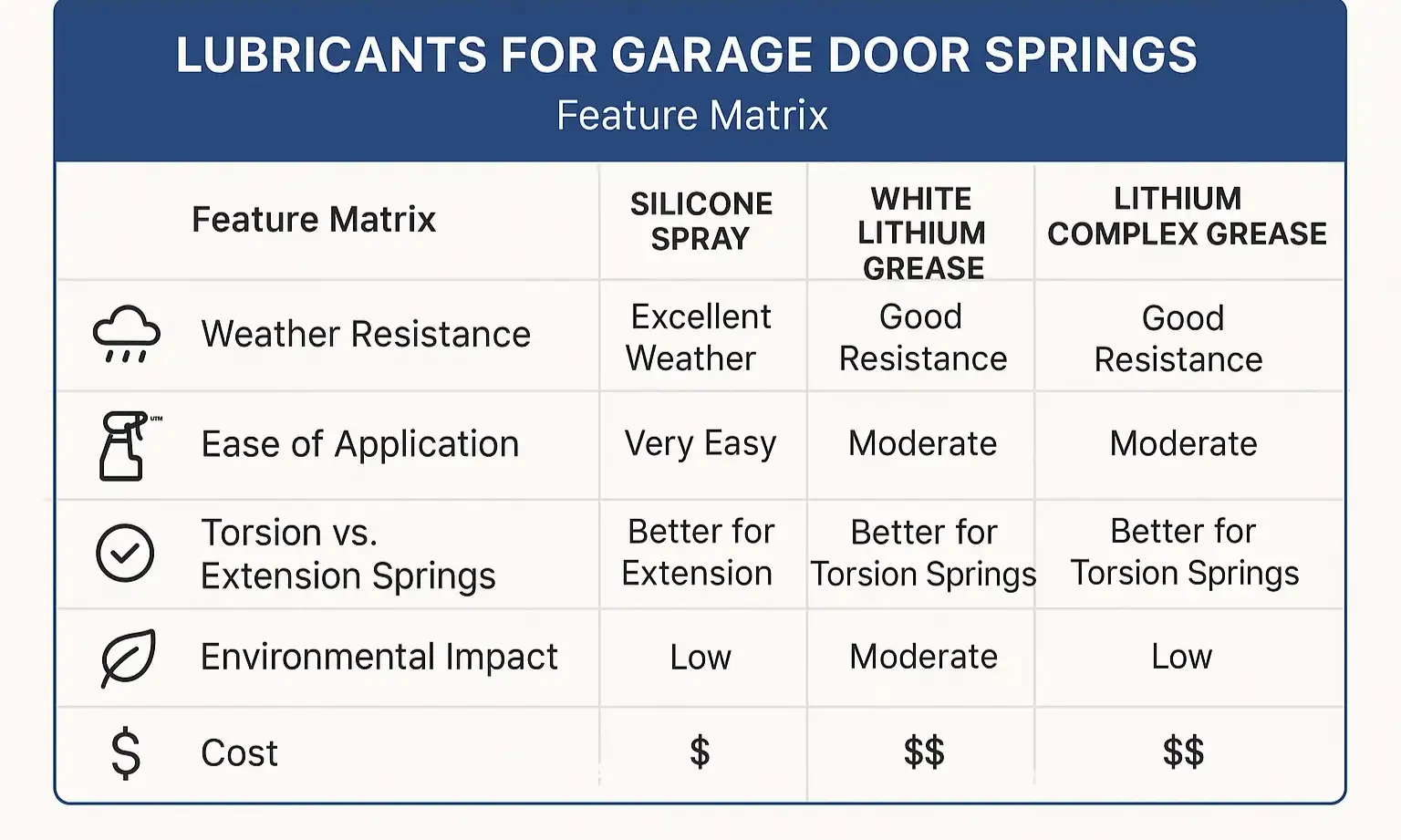
- White Lithium Grease (Spray): This is an excellent choice for metal-on-metal applications. It sprays on as a thin liquid to penetrate the coils and then solidifies into a thick, protective coating that won’t run or drip.
- Silicone Lubricant (Spray): Silicone is fantastic for its ability to lubricate and protect against moisture without leaving a sticky residue. This makes it a great option for all moving parts and particularly effective in damp or coastal environments.
How to Lubricate Your Garage Door Springs: A Step-by-Step Guide
- Close the garage door completely. This releases the tension from the springs.
- Unplug the garage door opener from the electrical outlet.
- Wear safety glasses and gloves.
Lubricating Torsion Springs
- Clean the Spring: Use a clean, dry cloth to wipe down the entire surface of the spring, removing any dust, cobwebs, or old grime.
- Apply Lubricant: Stand safely to the side (a sturdy step ladder helps) and apply a thin, even coat of white lithium grease or silicone spray across the top of the entire spring. You're aiming for full coverage, from one end to the other.
- Distribute: Manually lift the garage door about halfway and then close it again. Do this two or three times. This action works the lubricant deep into the coils.
- Wipe Excess: Check for any drips and wipe them away with your cloth. A light sheen is all you need.
Lubricating Extension Springs
- Clean the Springs: With the door closed, wipe down both extension springs to ensure they are clean.
- Apply a Light Coat: You don’t need to saturate extension springs. A light spray of silicone is often sufficient to prevent rust and ensure smooth operation.
- Lubricate Friction Points: Pay special attention to the pulleys that the safety cables run through. A quick shot of lubricant here can reduce a surprising amount of noise.
- Distribute and Wipe: As with torsion springs, operate the door a few times and wipe away any excess lubricant.
Your Personalized Maintenance Schedule: How Often to Lubricate
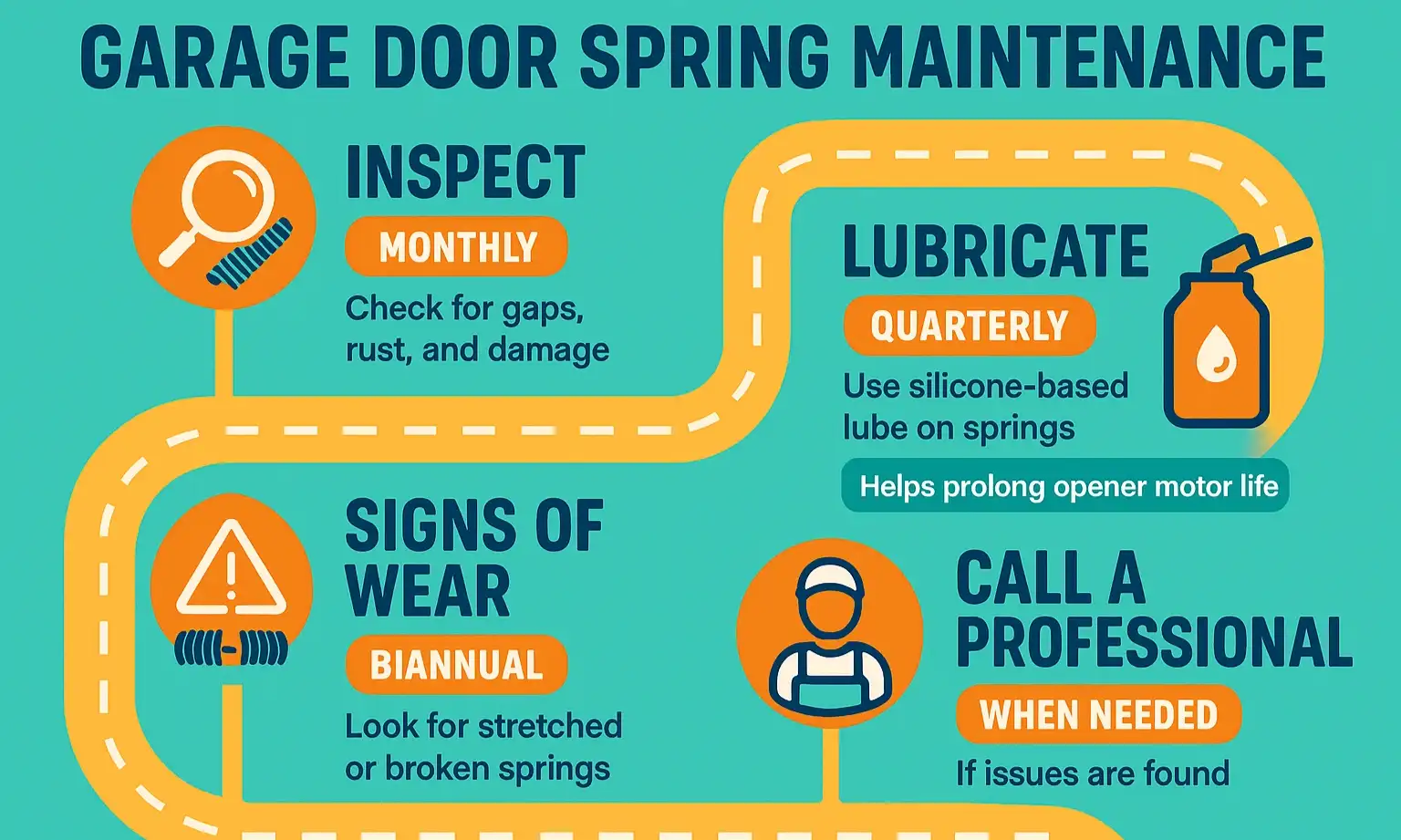
- Coastal/Humid Areas: Salt and moisture are enemies of metal. Lubricate every 3 months to prevent rust. For homes in these regions, consider other specific maintenance tips for doors in challenging climates.
- Dusty/Windy Areas: If you live where dust and grit are common, lubricate every 3-4 months, and be extra diligent about wiping the springs clean first.
Beyond the Squeak: The Hidden Benefits of Proper Lubrication
- Extends Opener Lifespan: A smooth-moving door puts significantly less strain on your opener's motor and drive train, helping it last for years longer.
- Improves Safety: While lubrication won't prevent a spring from breaking due to old age, it does prevent premature failure caused by rust and binding. Proper garage door spring maintenance is a critical safety practice.
- Saves Money: A can of lubricant costs a few dollars. Replacing a broken spring or a burned-out opener motor costs hundreds. The return on investment is undeniable.
Need more information?
Get a free quote
Frequently Asked Questions (FAQ)
Should you lubricate garage door springs?
How do I know if I've used too much lubricant?
Can I just use regular WD-40?
What other parts of the garage door should I lubricate?
My spring still makes noise after lubricating. What's next?
Taking the Next Step in Your Garage Door Care
You may also like