The Ultimate Safety Guide to Manually Opening Your Garage Door
Published: Jan 14, 2026
The power goes out. You hear the faint hum of electronics shutting down, and then silence. You need to get your car out of the garage, but the button on the wall is useless. That red cord hanging from the opener motor suddenly has your full attention.
You’ve probably seen it a hundred times, but now you actually have to use it. Pulling that cord seems simple enough, but doing it safely involves more than just a firm tug. The difference between a smooth manual lift and a dangerously crashing door comes down to understanding one surprising fact.
Your Opener Doesn't Lift the Door—Your Springs Do
Here’s the most important thing to understand about your garage door system: the electric opener doesn't do the heavy lifting. Its real job is to guide the door up and down. The incredible strength needed to lift a 200-400 pound door comes from high-tension springs.
These springs act as a counterbalance, holding the door’s massive weight in a state of equilibrium. When they are working correctly, the door is essentially weightless, allowing you to lift it with one hand.
This is why the most critical step in manually opening your garage door happens before you ever touch the emergency release. It’s a quick safety check that protects you from the door’s true, unassisted weight. A potential garage door spring injury is serious, and this simple inspection is your best defense.
Foundation: The 60-Second Safety Check BEFORE You Touch Anything
Before you disengage the opener, take one minute to assess the situation. This pre-flight check can prevent serious injury.
Critical Step 1: The Door Must Be Fully Closed
Never, ever pull the emergency release cord with the garage door open. When the door is open, the springs are under their highest tension. If a spring is broken or failing, the opener is the only thing holding the full weight of the door up. Disengaging it will cause the door to slam shut with dangerous force.
Critical Step 2: Visually Inspect the Springs
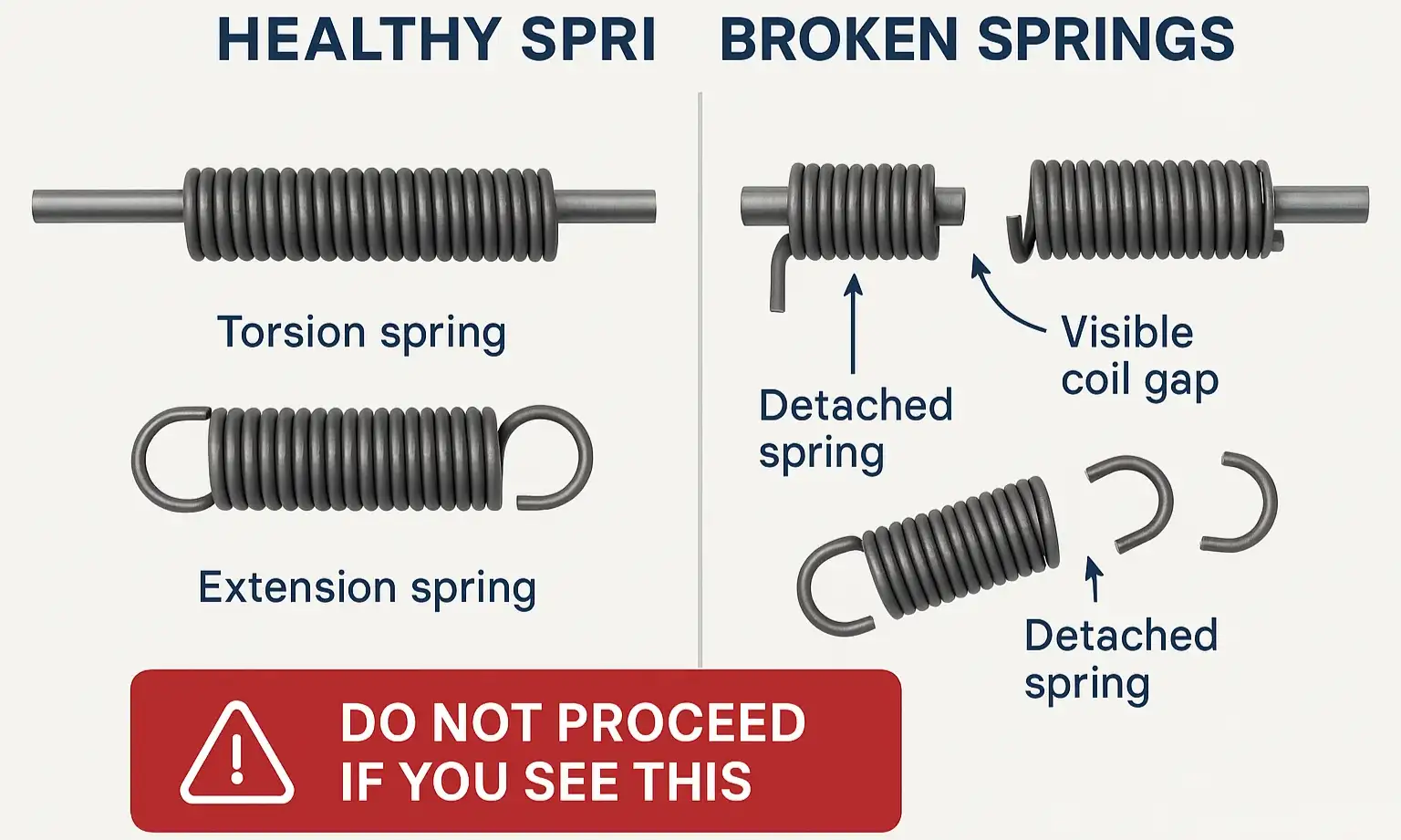
Now, look at the springs themselves. You don't need to be an expert to spot a major problem. There are two main types:
- Torsion Springs: These are thick, coiled springs mounted on a metal bar directly above the garage door opening. A healthy spring is a single, continuous coil. A broken torsion spring will have a visible 2-3 inch gap in the middle of the coil.
- Extension Springs: These are longer, thinner springs that run alongside the horizontal tracks on either side of the door. A broken extension spring will often be hanging down or you might see a disconnected cable dangling nearby.
Proper garage door spring safety begins with this simple visual confirmation.
DANGER: DO NOT PROCEED
If you see a gap in your torsion spring or a hanging extension spring, STOP. Do not pull the release cord. The door is no longer counterbalanced and now carries its full, dangerous weight. Attempting to lift it could cause severe injury. This is a situation that requires a professional technician.
If your door is closed and the springs look intact, you can proceed with confidence.
Building: The Safe 4-Step Procedure to Manually Open Your Door
Knowing how to open a garage door manually is a valuable skill for any homeowner. Follow these steps carefully.
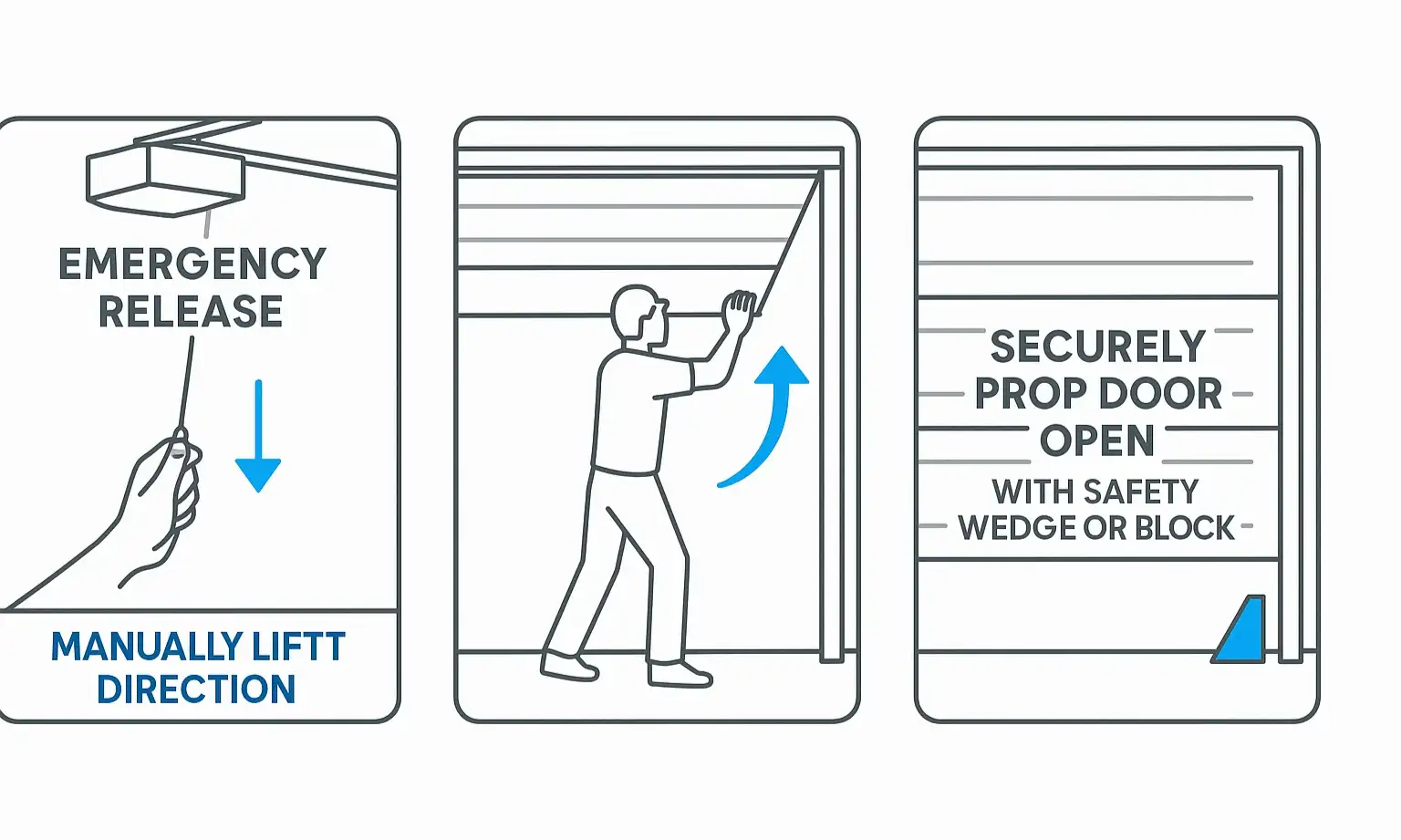
Step 1: Disengage the Opener
Locate the red cord hanging from the opener's track. This is the garage door emergency release. Pull straight down on the handle firmly. You should hear a distinct click as the trolley release arm disconnects from the opener's chain or belt drive.
Step 2: Lift the Door by Hand
Stand in the center of the door, bend at your knees (not your back!), and use the handle or the bottom edge to lift the door upwards. If the springs are working correctly, it should feel relatively light and lift smoothly.
Important: If the door feels extremely heavy, stop immediately. This is a sign the springs are not providing support, and trying to force it open can cause muscle strain or other injuries.
Step 3: Secure the Open Door
Lift the door all the way until it stops. A properly balanced door should stay open on its own. If it tries to creep down, it may be unbalanced and you should have it professionally inspected later. Do not leave it half-open, as it could unexpectedly slide down.
Step 4: Manually Close the Garage Door
When you're ready, simply pull the door down by hand until it is fully closed. Because it's disconnected from the opener, it won't lock automatically. If you plan to leave it in manual mode for a while, you may want to know how to lock the garage door when the power is out using its manual slide lock, if it has one. Following the steps for how to manually close the garage door ensures your home remains secure.
Mastery: Re-engaging Your Opener Like a Pro
Once power is restored, you'll need to reconnect the door to the opener. This is often where people get stuck, but it’s straightforward.
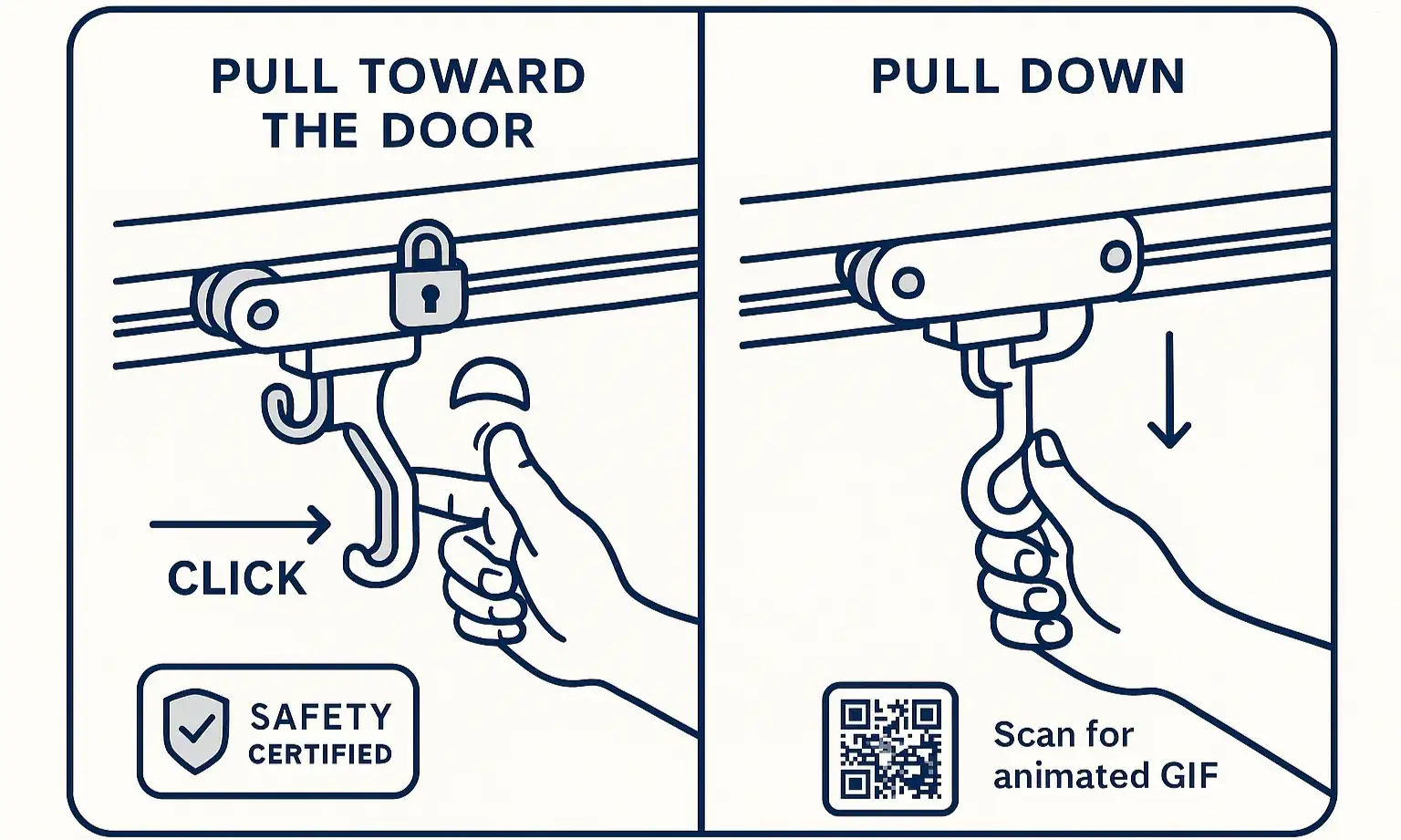
- Make Sure the Door is Closed. This is the safest position to work from.
- Pull the Release Cord. This time, pull it at an angle back toward the garage door opener motor. This moves the release lever into the "re-engage" position.
- Run the Opener. Press the button on your wall control or remote. The opener's chain or belt will move the trolley along the track until it meets the carriage on the door. It will automatically click back into place.
You’ll hear a loud "clack" when it connects. Your door is now back in automatic mode. If you need more detailed instructions, a guide on how to reattach a garage door to the opener can be a helpful resource.
Action: Troubleshooting Common Problems (FAQ Section)
Even when you do everything right, you might run into issues. Here are answers to common questions.
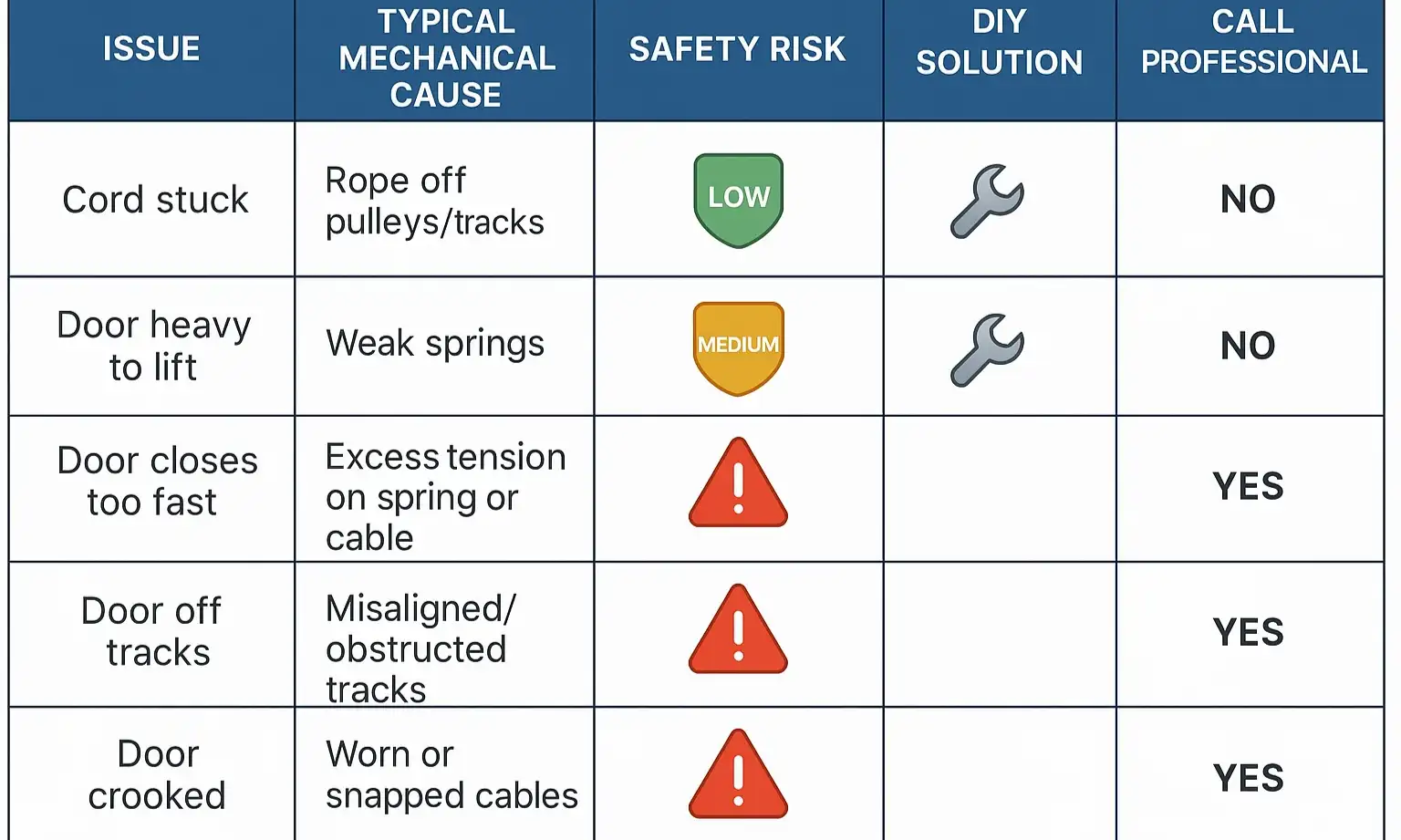
Why is my garage door so heavy to lift manually?
This is an immediate red flag. It almost always means you have a broken or worn-out spring. The door’s true weight is no longer being counterbalanced. STOP trying to lift it and call a professional for repair.
Why won't my garage door stay open?
This indicates an imbalance. The springs have lost some of their tension and can no longer perfectly balance the door's weight. While not as urgent as a broken spring, it's a sign that your springs are weakening and should be serviced soon.
What do I do if the emergency release cord is stuck or won't work?
First, ensure there is no tension on the system by making sure the door is fully closed. Jiggling the door slightly can sometimes loosen a stuck mechanism. If it still won't release, there could be an issue inside the trolley. If you find your garage door won't close or open at all, professional help is the safest option.
Can I get locked out if the power goes out and there's no other entrance?
Yes, this is a common problem. If your garage is your only way in, it's wise to have an emergency release kit installed. This is a special lock on the outside of your garage door that connects to the release cord, allowing you to learn how to open a stuck garage door from the outside during an outage.
When should I give up the DIY approach and call a professional?
Always err on the side of caution. Call a professional if:
- You spot a broken spring.
- The door is extremely heavy to lift.
- The door slams shut after being released.
- You are unable to re-engage the opener after multiple attempts.
Your Safety Is the Priority
A power outage can be a nuisance, but it shouldn't be a hazard. By understanding the simple mechanics of your garage door and performing a quick safety check, you can handle the situation like a pro. Remember the key takeaway: the springs do the work, so their health is everything.
Taking a few minutes for proactive garage door maintenance a couple of times a year can help you spot issues before they become an emergency. Your safety, and your peace of mind, are worth it.
You may also like