When NOT to Reengage Your Garage Door Opener: Identifying Safety Risks
Published: Apr 6, 2026
You’re heading out, you press the button on your garage door remote, and… nothing. Or worse, a horrible grinding sound fills the air, and the door stops halfway, hanging at a crooked angle.
Your first instinct is probably to press the button again. Maybe it was just a fluke. We get it. It’s the simplest solution, and we’re all programmed to try the easy fix first.
But in this situation, that instinct could turn a manageable repair into a catastrophic failure. Hitting that button again when your garage door is under mechanical stress is like telling a sprinter with a torn hamstring to "just run it off." You’re not fixing the problem; you’re risking severe, expensive damage to the door, the opener, and even your property.
Before you touch that remote again, take five minutes to read this. This quick diagnostic guide will help you understand what might be happening, identify critical safety risks, and decide on the safest next step. It could save you a thousand-dollar headache.
Your Opener Is the Muscle, Not the Brains
The 5-Point Visual Safety Inspection
1. Check the Springs
2. Inspect the Cables
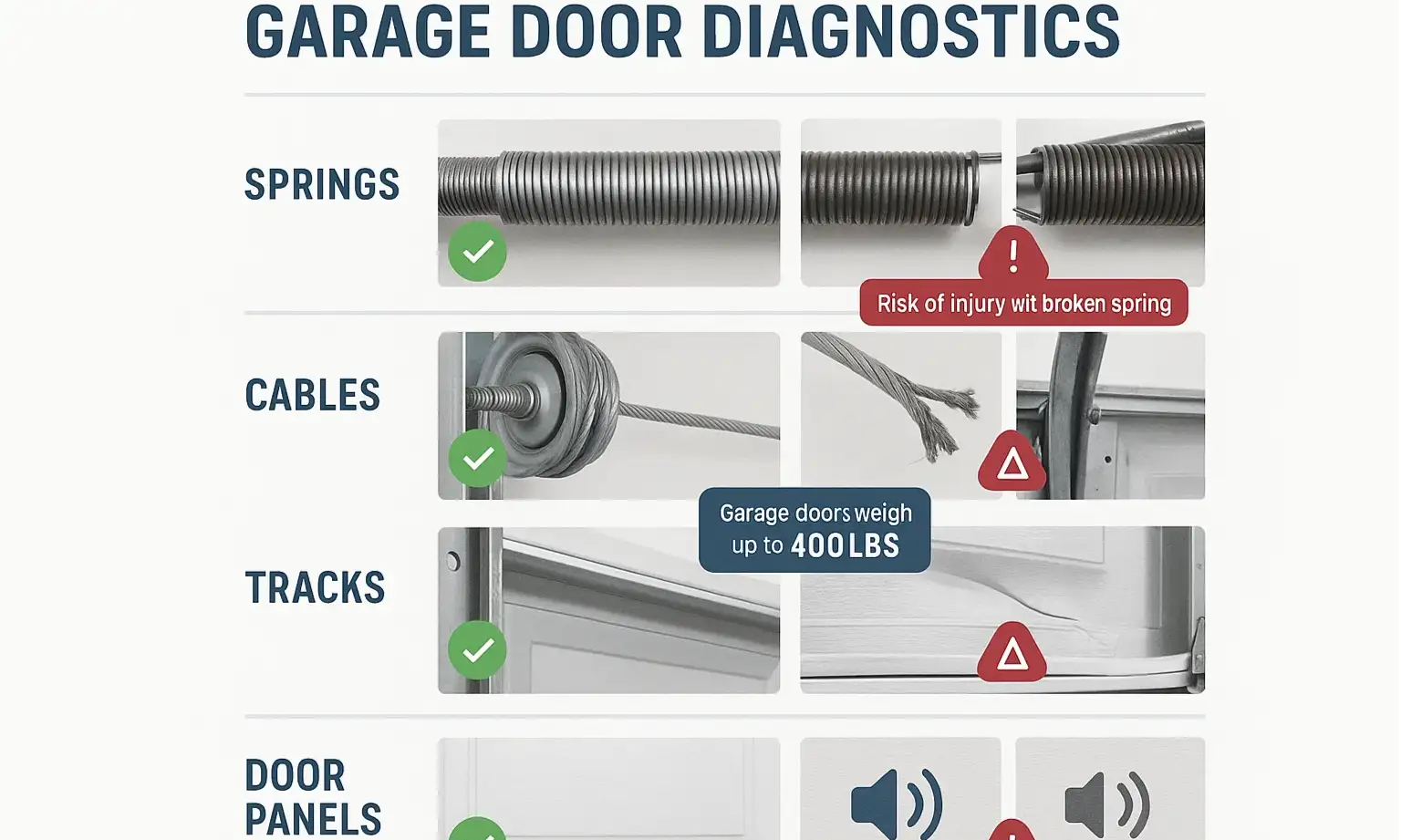
3. Examine the Tracks
4. Look at the Door Panels
5. Listen to the Sounds
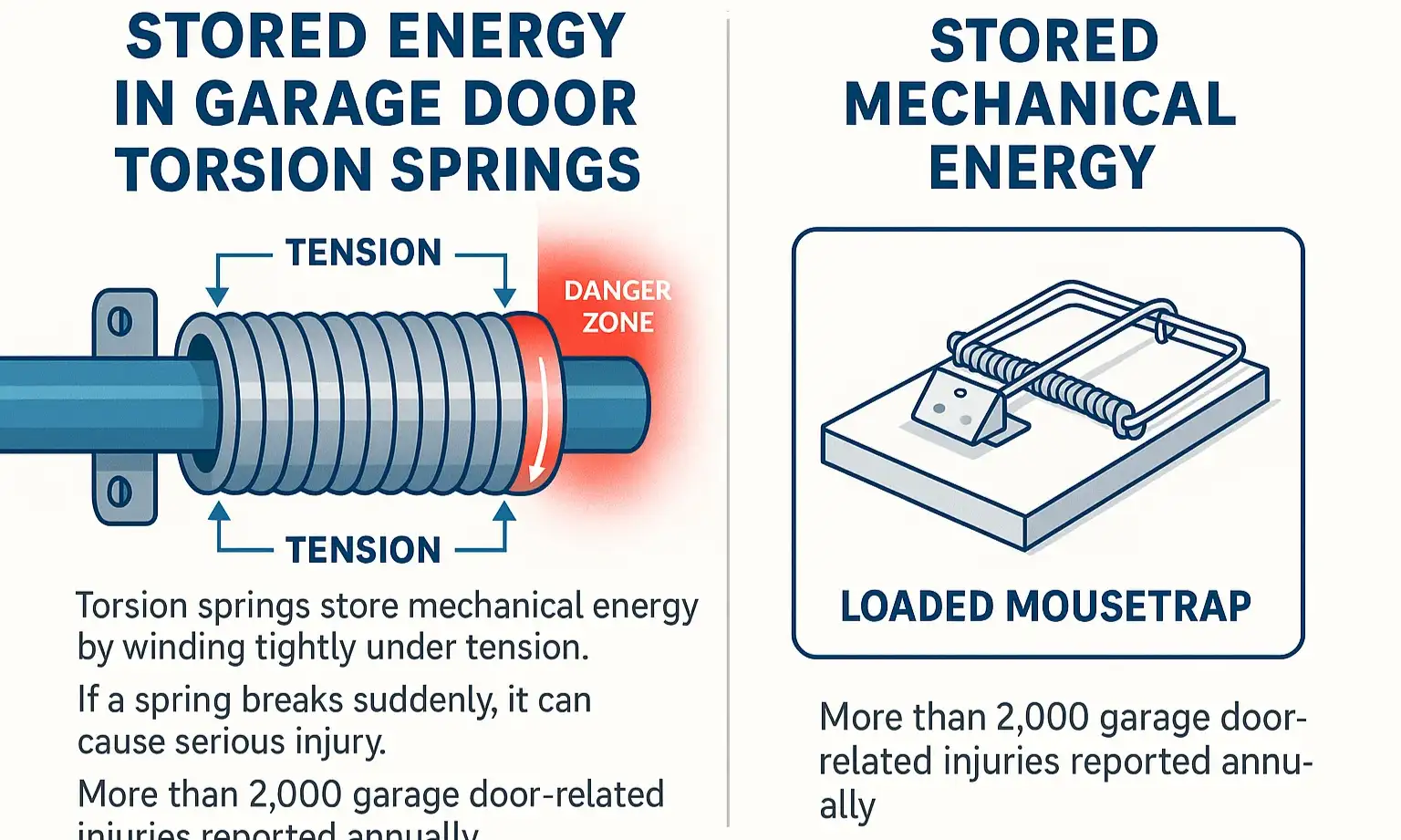
Understanding the 'Why' Behind the Dangers
- Buckled Door Panels: The door bends under its own weight, turning a single-part repair into a full door replacement.
- Destroyed Opener: The motor and gears strip themselves trying to lift a weight they were never meant to handle.
- Complete System Failure: A crooked door can fall out of its tracks entirely, posing a severe safety risk.
The 'When to Call a Pro' Scorecard
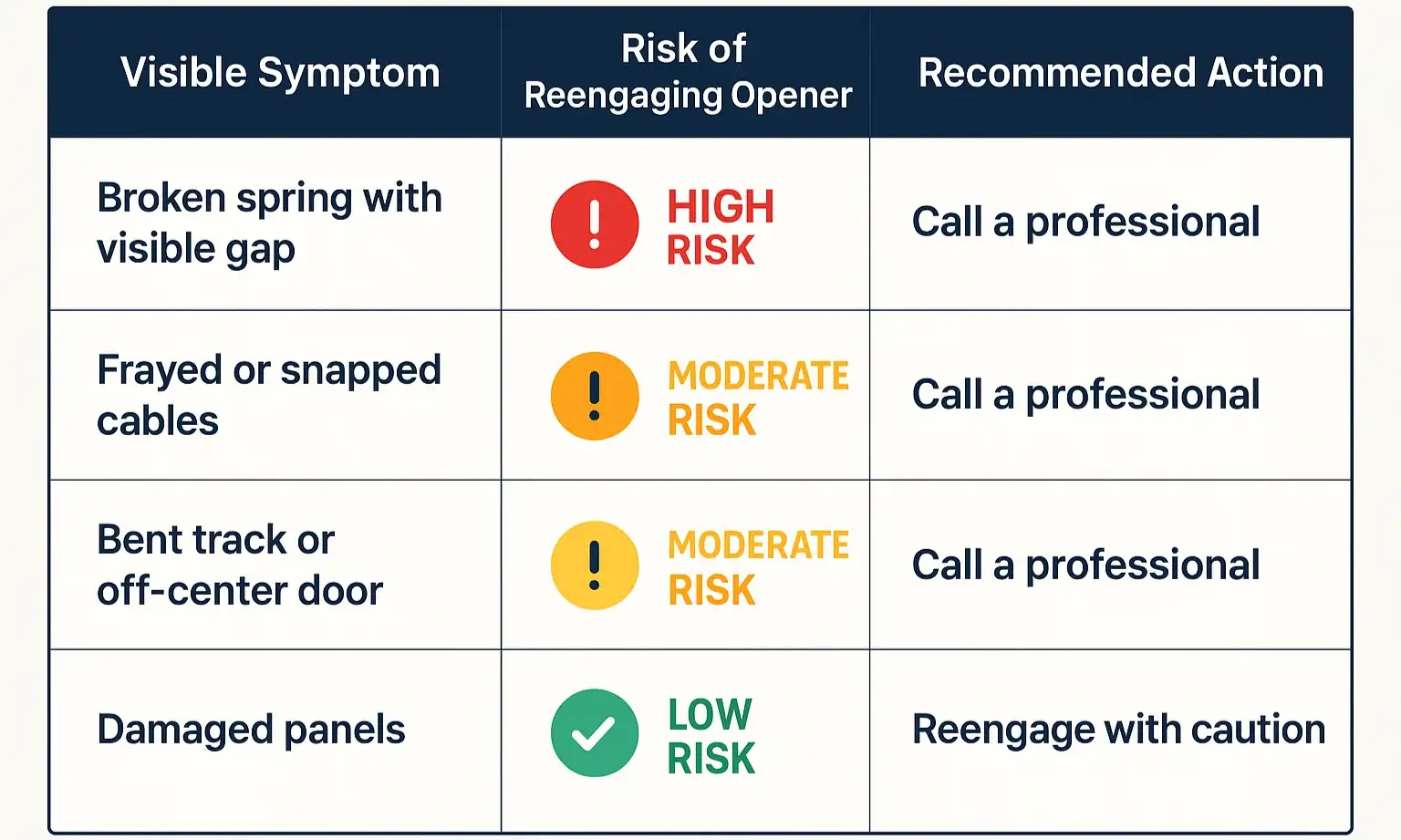
Red Flag Diagnostic Scorecard
- A gap in the spring: The hidden danger is that the door's full weight is entirely unsupported. Your only next step is to call a professional immediately. Do not operate the door.
- Frayed or snapped cables: The hidden danger is that the door can lift unevenly, violently jam, or fall. Your only next step is to call a professional immediately.
- Rollers out of the track: The hidden danger is that the door is unstable and can collapse. Your only next step is to call a professional immediately.
- A bent or crooked door: The hidden danger is that a core mechanical part has already failed. Your only next step is to call a professional immediately.
Your Safe Next Steps
- Unplug the Garage Door Opener: This removes any chance of someone accidentally trying to operate it.
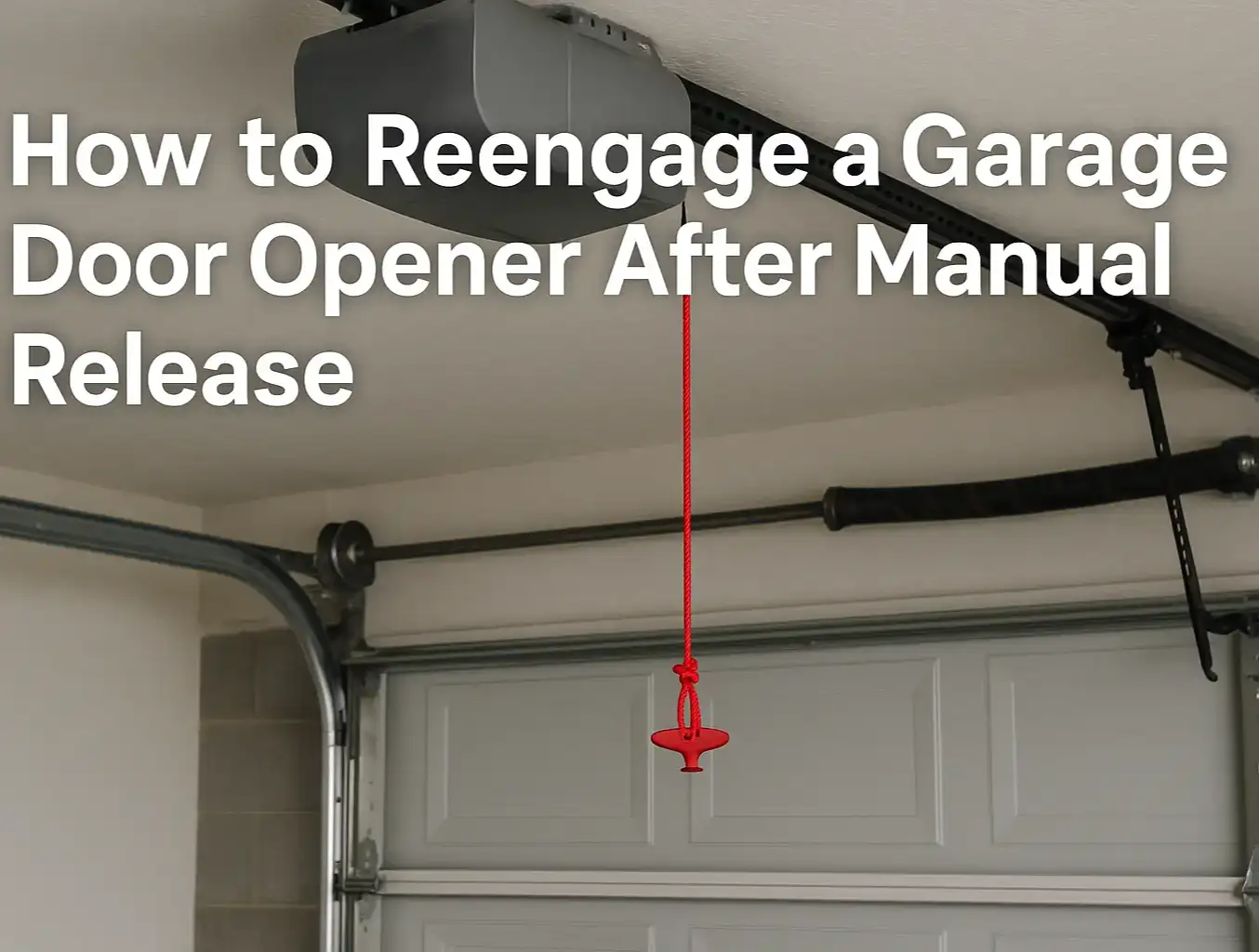
- Do Not Touch the Red Cord: Pulling the emergency release will disconnect the door from the opener. If the spring is broken, the full weight of the door will come crashing down the moment you pull it.
- Secure the Area: Keep pets and children away from the garage door until it’s been professionally serviced.
- Call a Professional: When you call, be ready to tell them what you saw in your inspection (e.g., "I think my spring is broken," or "The cable on the right side is loose"). This will help them come prepared with the right parts.
Need more information?
Get a free quote
Frequently Asked Questions
Can I just manually lift the door if the spring is broken?
What if the door is just slightly off-track?
Is it expensive to have a professional fix a broken spring or cable?
The Smartest Move Is a Safe One
You may also like