




Smart Garage Security & Automation Hub: Evaluating Connected Entry Protection
Published: Oct 16, 2026
Crime research indicates that nearly 9% of residential burglaries occur through garage doors, making this primary access point a central focus for modern home security upgrades. Homeowners evaluating automation options often face a confusing landscape of platform lockouts, conflicting protocols, and hidden subscription costs. Achieving true home automation requires pairing bank-grade digital encryption with physical perimeter defenses.
The Executive Decision Matrix: Retrofit Module vs. Full Opener Replacement
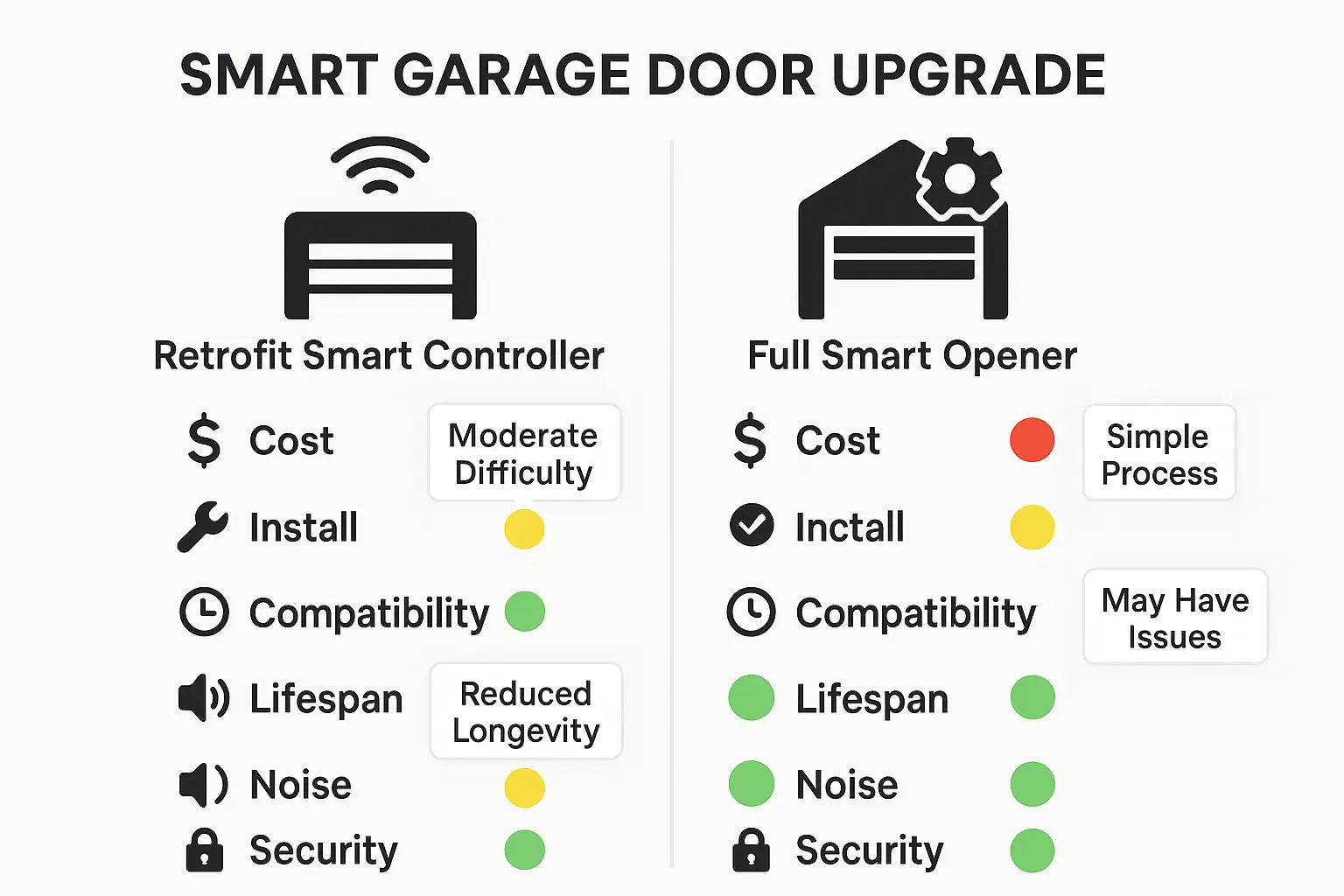
When upgrading, homeowners typically choose between retrofitting an existing motor head ($30–$100) or installing a complete smart opener unit ($250–$450+). Retrofitting works well on operational openers manufactured after 1993 that have working safety sensors. However, if your existing opener is over 10 years old or excessively noisy, a full motor replacement is usually the better investment. Over 68% of modern residential installations now select quiet rubber belt drives over traditional steel chains. Professional smart garage door opener installation ensures proper motor horsepower sizing (1.25+ HP for heavy double doors) and correct safety recalibration.
The Smart Home Ecosystem Compatibility Grid (SmartThings, Matter, HomeKit)
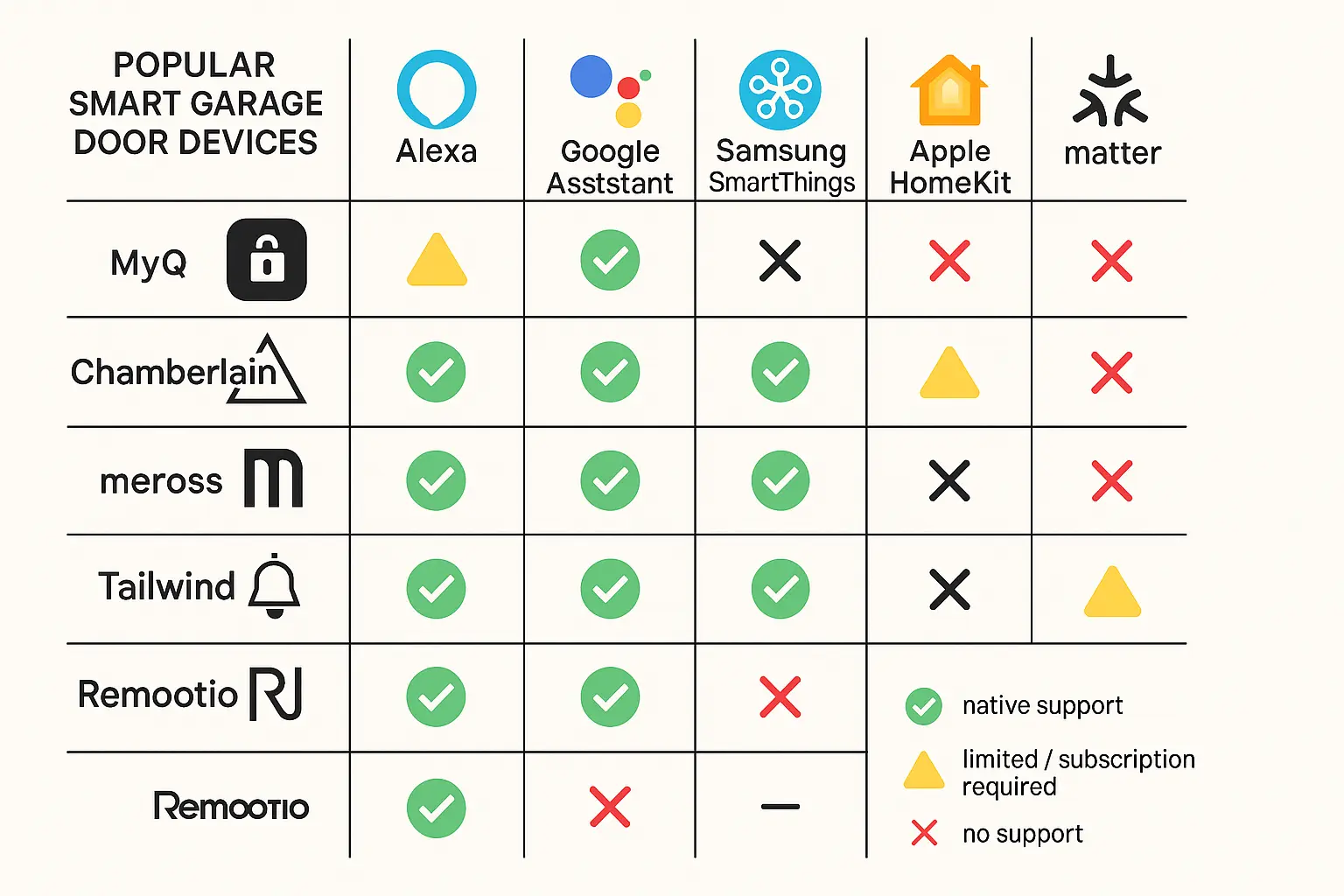
Ecosystem fragmentation has created significant headaches for homeowners. Recent API blocks from major manufacturers like Chamberlain myQ disrupted native integrations with SmartThings and Home Assistant. For seamless automation without monthly subscription fees, alternative platforms provide superior versatility:
- Apple HomeKit & SmartThings: Solutions like the Meross MSG100 or Ratgdo offer direct local control without cloud paywalls. If you want a dedicated homekit garage door opener, verified local bridge hardware prevents cloud downtime.
- Hands-Free Geofencing: Systems like Tailwind iQ3 automatically open or close the door as your vehicle approaches.
- Detached Garages: Standard 2.4GHz Wi-Fi struggles across long distances. Long-range LoRa technology (such as YoLink) operates reliably up to a quarter-mile away, allowing you to easily control garage door from phone settings across large properties.
Digital Encryption & Unmasking Security Risks
Digital security is just as crucial as physical locks. Older systems relying on fixed frequencies are highly vulnerable to code grabbing, where intruders intercept and clone radio signals. When evaluating whether are smart garage door openers safe, look for modern Security+ 2.0 multi-band rolling codes (310, 315, and 390 MHz) combined with AES-256 bank-grade encryption to prevent signal duplication.
Layered Physical & Digital Garage Defense Architecture
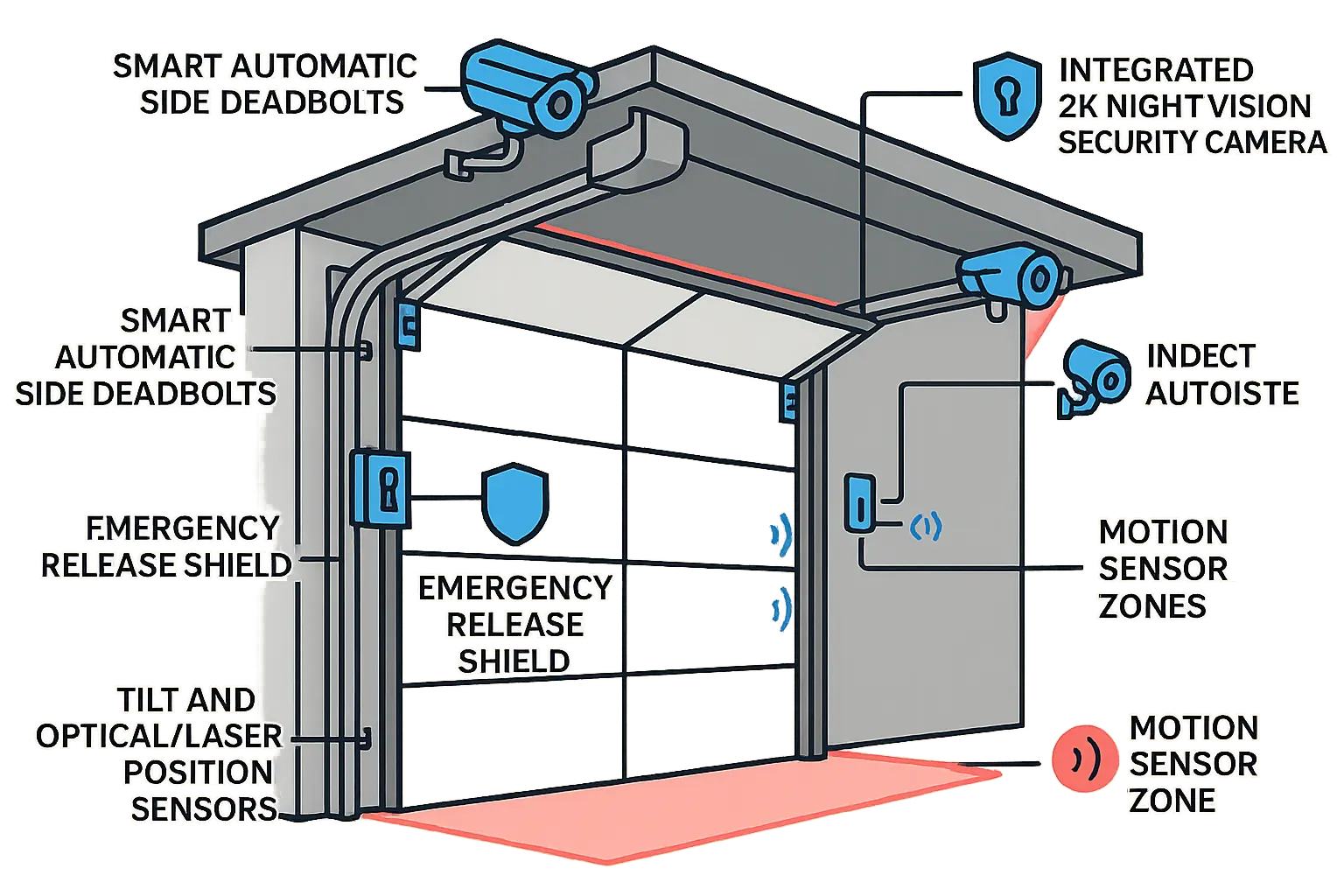
A smart app alone cannot stop a physical break-in. Comprehensive entry protection requires combining advanced digital features with mechanical security barriers:
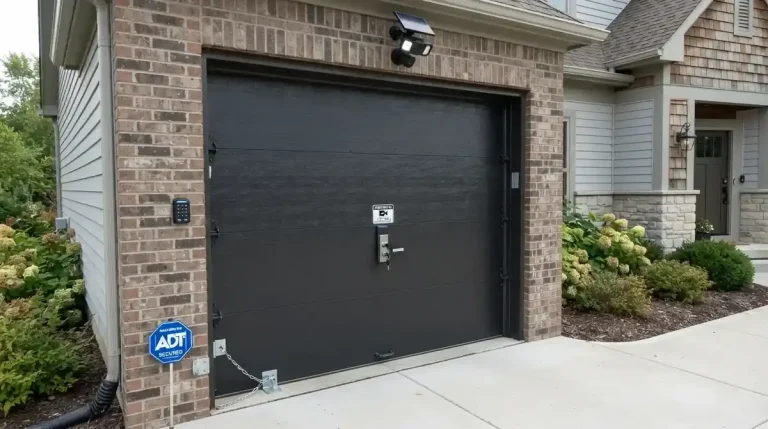
- Automatic Side Deadbolts: Motorized locks engage directly into the steel track whenever the door closes, physically immobilizing it.
- Emergency Release Shielding: Protective shields block intruder coat-hanger tricks designed to trip the overhead manual emergency release latch.
- Integrated 2K Night-Vision Cameras & Motion Detection: Cameras equipped with activity zones provide real-time visual verification whenever movement is detected.
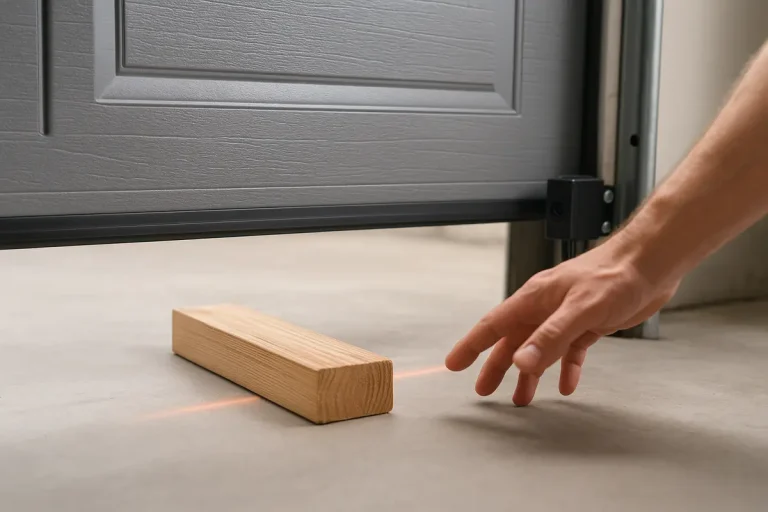
- Laser & Optical Position Sensors: Understanding how garage door safety sensors work prevents false alerts caused by high winds or minor panel shifts.
Evaluating these physical and digital features together gives you complete confidence in your essential smart garage door security features.
Professional Safety Compliance and System Audits
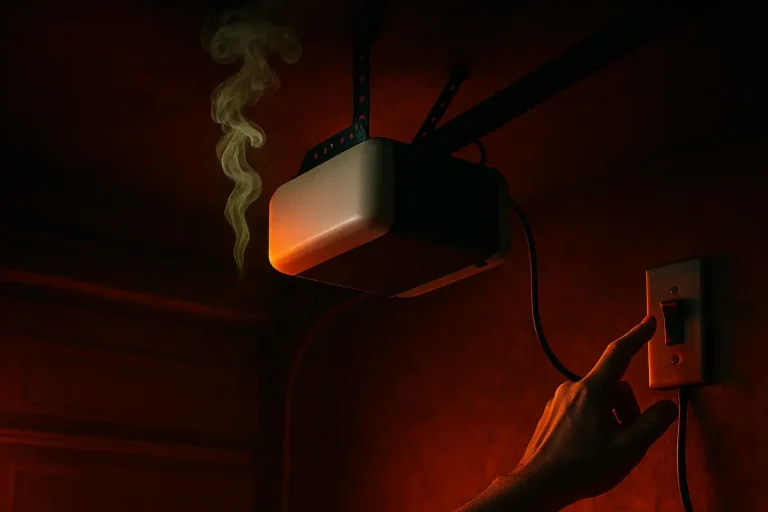
Nearly 75% of garage door mechanical failures—such as false smart sensor readings or motor burnouts—stem directly from unaddressed mechanical wear. Furthermore, high-tension torsion springs pose serious injury risks during improper handling. Professional technicians conduct thorough UL 325 auto-reversing safety tests, photo-eye alignment checks, and mechanical balance audits during installation. Planning these critical garage door security upgrades ensures your system operates reliably for years to come.
Frequently Asked Questions
Are smart garage door openers safe against digital hacking?
Yes, provided they utilize AES-256 encryption and Security+ 2.0 rolling code technology, which changes the access code every time the door is operated to prevent signal cloning.
What is the best smart option for a detached garage?
For detached garages beyond normal Wi-Fi range, long-range LoRa technology (like YoLink) offers up to a quarter-mile range, maintaining a rock-solid connection without requiring expensive Wi-Fi extenders.
Why does my smart garage opener trigger false open alerts?
False alerts are typically caused by misaligned optical sensors, high-wind panel flexing, or mechanical track drag. Routine professional maintenance realigns sensors and balances the door to eliminate erroneous warnings.
You May Also Like