





How Proactive Maintenance Delays Full System Replacement
Published: Jun 19, 2026
Your garage door is likely the largest and heaviest moving part of your entire home. It opens and closes over a thousand times a year, quietly doing its job until, one day, it doesn’t. That’s when the sudden reality of a four-figure replacement bill hits.
But what if you could delay that massive expense for years? The secret isn’t complicated or time-consuming. It’s about shifting your mindset from reactive repair to proactive care. By spending just 30 minutes twice a year addressing minor wear and tear, you can prevent the cascade of failures that leads to a full system breakdown. This guide will teach you not just what to do, but why each small step is critical for your garage door’s long-term health and your financial peace of mind.
The Foundation: Your 15-Minute Seasonal Check-up
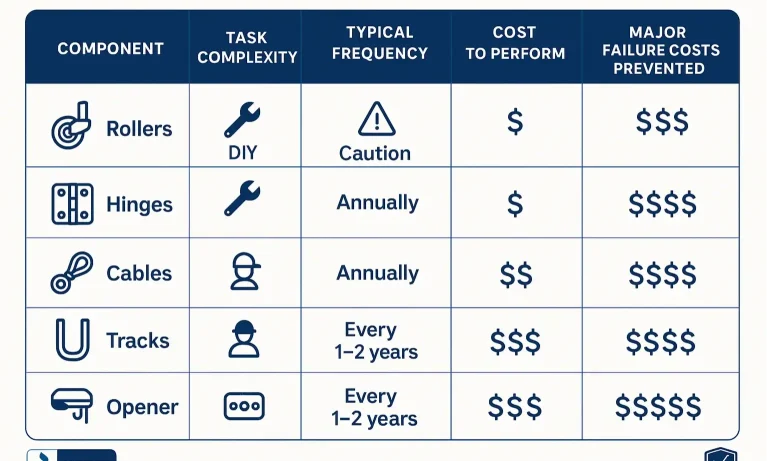
Think of garage door maintenance like a regular health check-up. By catching small issues early, you prevent them from becoming chronic, expensive problems. A simple visual and auditory inspection each spring and fall can tell you everything you need to know about your system’s condition.
The goal is to get familiar with what “normal” looks and sounds like. This way, the moment something changes—a new squeak, a slight hesitation—you’ll notice it immediately. We’ve put together a comprehensive garage door maintenance checklist to guide you, but the core idea is simple: Look, Listen, and Test.
The Deep Dive: Connecting Minor Wear to Major Failures
Every part of your garage door works together in a delicate balance. When one component starts to fail, it puts immense stress on the others. Here’s how to spot trouble and understand the consequences of ignoring it.
Rollers: The Unsung Heroes of Smooth Operation
What they do: These small wheels guide your garage door along the metal tracks. Smooth rollers mean a quiet, efficient door.
Symptom of Failure: A grinding, scraping, or squeaking noise as the door moves. You might also see visible signs of wear, like cracked or flattened wheels.
The Proactive Fix:
- Inspect: Look at the rollers. Are they cracked, chipped, or wobbly in their brackets?
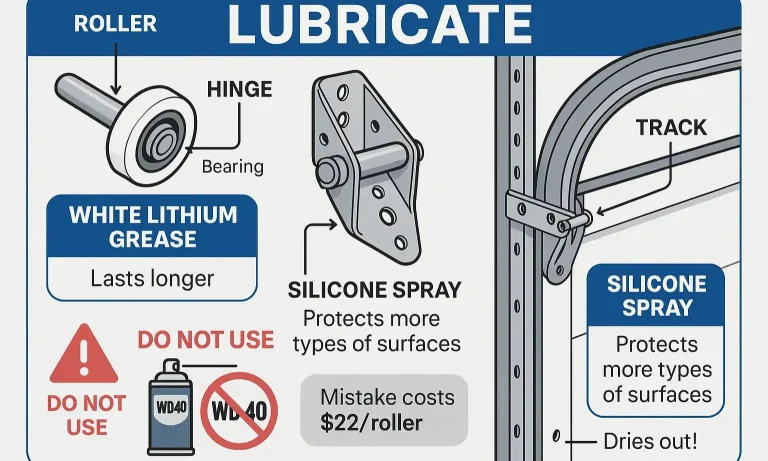
- Lubricate: Apply a high-quality garage door lubricant (a silicone or lithium-based spray, never WD-40) to the stems and bearings. Do not spray the track itself, as this can cause the rollers to slide instead of roll.
Tracks: The Guiding Path
What they do: The metal tracks guide the rollers, ensuring the door moves up and down smoothly.
Symptom of Failure: The door shudders or jerks during operation, or you see visible bends or gaps in the track.
The Proactive Fix:
- Clean: Wipe the inside of the tracks with a damp cloth to remove dirt and debris.
- Check Alignment: Look for any bent sections or loose mounting brackets. You can gently tighten the brackets, but major alignment issues should be handled by a professional.
- Test the Reversal Mechanism: Place a 2×4 board flat on the ground in the door’s path. When the door touches it, it should immediately reverse. If it doesn’t, the force setting needs professional adjustment.
- Check the Photo Eyes: These small sensors are located a few inches off the ground on either side of the door. Make sure they are aligned (both indicator lights should be solid) and clean. Simply waving an object in front of the sensors while the door is closing should make it reverse. These are crucial overhead door safety devices.
Springs & Cables: The Muscle of the System
What they do: This is the most important—and dangerous—part of your door. The high-tension springs do the actual lifting. A 300-pound door only feels light because the springs are counterbalancing the weight. The cables connect the springs to the bottom of the door.
Symptom of Failure: A loud bang is the classic sign of a broken spring. You may also notice the door feels extremely heavy to lift manually, or it won’t open at all with the opener. Fraying or rust on the cables is a critical warning sign.
The Proactive Fix:
Regular lubrication is the key to proper garage door spring maintenance. A light coat of silicone spray on the springs once or twice a year prevents rust and reduces friction, which helps them last longer. Understanding how long do garage door springs last can help you budget for their eventual replacement.
The Opener & Safety Sensors: The Brains and Eyes
What they do: The opener is the motor that automates the lifting, but the safety sensors are what protect you, your family, and your property.
Symptom of Failure: The door reverses before it hits the ground, the light on the opener blinks, or the door won’t close at all.
The Proactive Fix:
The Red Zone: Knowing When to Call a Professional
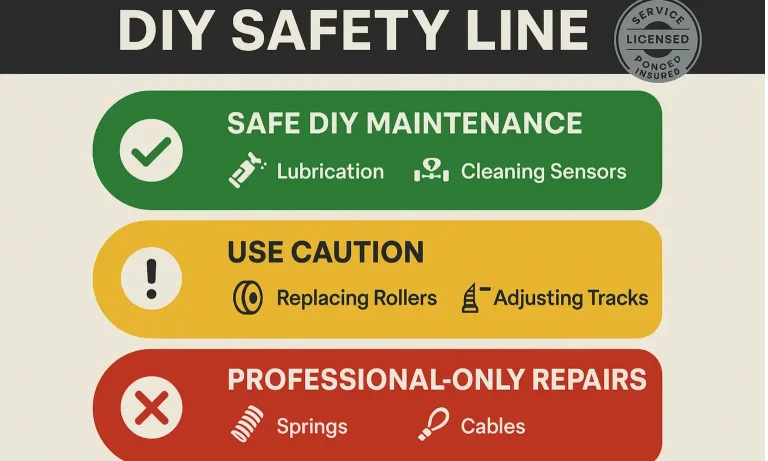
Confidence is great, but wisdom is better. While many maintenance tasks are perfectly safe for homeowners, some parts of a garage door system are under extreme tension and can cause severe injury if handled improperly. This is where you need to draw a clear line between DIY garage door repair and calling a certified technician.
NEVER attempt to adjust, repair, or remove garage door springs or cables.
The springs store an incredible amount of kinetic energy. If that energy is released uncontrollably, it can turn tools or parts into dangerous projectiles.
The Action Plan: Your Proactive Maintenance Toolkit
You don’t need a professional workshop to keep your garage door in good shape. Your toolkit is simple:
- Your Senses: Your eyes and ears are your best diagnostic tools.
- A Rag: For cleaning tracks and sensors.
- A Socket Wrench: For tightening loose nuts and bolts on hinges and brackets.
- A Step Ladder: To safely reach the opener and upper parts of the door.
- Garage Door Lubricant: A high-quality silicone or white lithium grease spray.
By following a simple roadmap, you can transform maintenance from a chore into a smart investment in your home’s value and safety.
Frequently Asked Questions (FAQ)
Is garage door maintenance really worth it?
Absolutely. A few dollars spent on lubricant and 30 minutes of your time can prevent hundreds or even thousands of dollars in repairs. It extends the life of every component, enhances safety, and ensures your door works when you need it most.
How often should I perform maintenance?
A thorough check-up twice a year is ideal—once in the spring to prepare for heavy summer use and once in the fall to get ready for cold weather, which can make parts contract and become brittle.
What kind of lubricant should I use and why not WD-40?
Always use a lubricant specifically designed for garage doors, such as a silicone spray or white lithium grease. WD-40 is a solvent and degreaser, not a long-term lubricant. It can attract dust and grime and may even strip away the factory grease, making the problem worse over time.
What is the most common garage door repair?
Broken springs are one of the most frequent major repairs. While you can’t prevent them from eventually wearing out, regular lubrication and a balanced door will reduce strain and help them reach their maximum expected lifespan. You can find more details on what is the most common garage door repair? in our local guides.
The Takeaway: From Maintenance to Mastery
Your garage door isn’t just a convenience; it’s a complex system that protects your largest assets. By learning to recognize the early warning signs of wear and tear, you empower yourself to act before small noises become system failures. Proactive maintenance isn’t about becoming a professional technician—it’s about becoming an informed homeowner who can protect their investment, ensure their family’s safety, and keep their home running smoothly.
You May Also Like
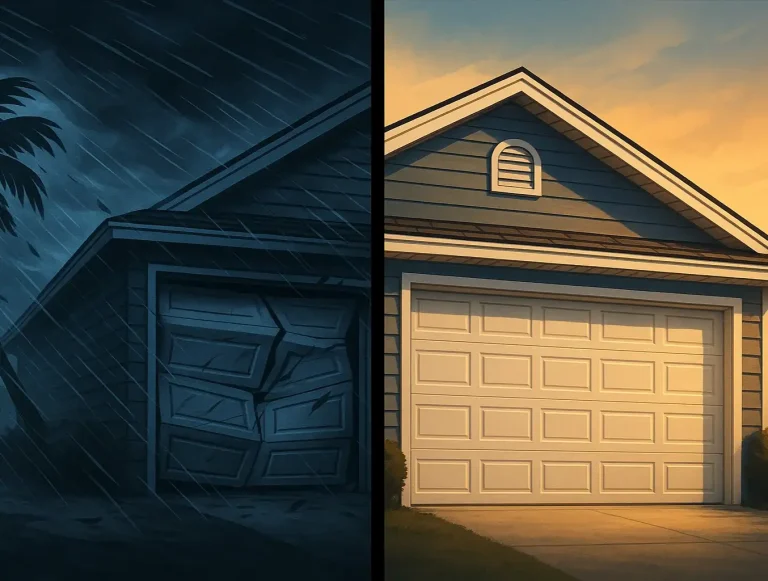
Benefits of Ensuring Your Garage Door is Storm-Ready
Imagine a single gust of wind costing you $20,000. It sounds impossible, but for countless homeowners, it’s a devastating reality. During a severe storm, the largest opening in your home—your garage door—can become…
Published Date: Jun 17, 2026
How Timely Garage Door Repairs Can Save Homeowners Money & Stress
A garage door is an essential part of overall home defense. It keeps your family safe, protects your belongings, and simplifies everyday life. However, like any other mechanism, it’s not immune to wear and tear. Over…
Published Date: Feb 19, 2025
How a Malfunctioning Garage Door Compromises Home Security
It’s a familiar sound: the low hum of the garage door motor, the rattle of the tracks, and the final, reassuring thud as it settles into place. But what happens when that thud is followed by a slight groan and the…
Published Date: Jun 12, 2026