





How a Malfunctioning Garage Door Compromises Home Security
Published: Jun 12, 2026
It’s a familiar sound: the low hum of the garage door motor, the rattle of the tracks, and the final, reassuring thud as it settles into place. But what happens when that thud is followed by a slight groan and the door reopens an inch? Or when you have to press the remote three times for it to respond?
Most of us dismiss these as minor annoyances—quirks of a machine we use every day. We make a mental note to “get that looked at” and move on.
But what if these small malfunctions are more than just inconvenient? What if they’re silent invitations, leaving your home’s largest entrance vulnerable in ways you haven’t considered? The truth is, the gap between a perfectly functioning garage door and a faulty one is also a gap in your home’s security and your family’s peace of mind.
The Garage Door: Your Home's Forgotten Front Line
We install deadbolts, alarm systems, and window locks, meticulously securing the obvious entry points. Yet, we often overlook the single largest door in our home. According to law enforcement data, this is a critical oversight. While front doors (34%) and first-floor windows (22%) are common entry points for burglars, the garage is a significant target, accounting for 9% of break-ins.
What makes the garage so appealing to an intruder? Opportunity. A study from the University of North Carolina found that most burglars will abandon a break-in attempt if they can’t gain entry in under 60 seconds. A malfunctioning garage door can offer them that instant opportunity. That slight gap at the bottom, the delayed response, the weakened panel—it all translates to an easy target.
With the FBI reporting a home burglary in the U.S. every 25.7 seconds, turning a blind eye to garage door issues isn’t just ignoring a mechanical problem; it’s ignoring a statistical reality.
Identifying Security Risks in Garage Door Malfunctions
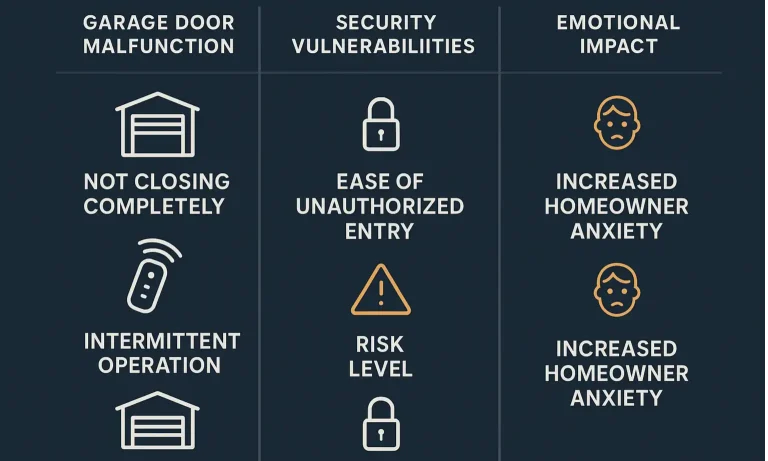
It’s easy to spot a major breakdown, but the real security threats often hide in the subtle, everyday issues. These small problems can escalate into significant vulnerabilities, chipping away at your sense of security without you even realizing it.
The “Almost-Closed” Gap
Does your garage door leave a small gap at the bottom when it closes? Even a half-inch opening is enough for a burglar to wedge a crowbar and force the door open. This gap is often caused by misaligned sensors or worn-out weatherstripping. Beyond security, it also invites pests and raises energy bills, highlighting the importance of garage door weather stripping.
Intermittent Operation & Unpredictable Behavior
You press the button, and nothing happens. You press it again, and it closes halfway before reversing. This erratic behavior is more than frustrating—it’s dangerous. You might drive away thinking the door is closed, only for it to reopen moments later, leaving your home exposed for hours. If you find your garage door won`t close consistently, it’s a clear sign that a critical security component is failing.
The Telltale Signs of Weakness
Listen to your garage door. Are there creaking, grinding, or popping sounds? These noises often signal worn-out rollers, frayed cables, or springs under extreme tension. A damaged panel, whether dented from a basketball or cracked from age, also compromises the door’s structural integrity, making it easier to break through.
Why Professional Expertise Matters for Garage Door Security
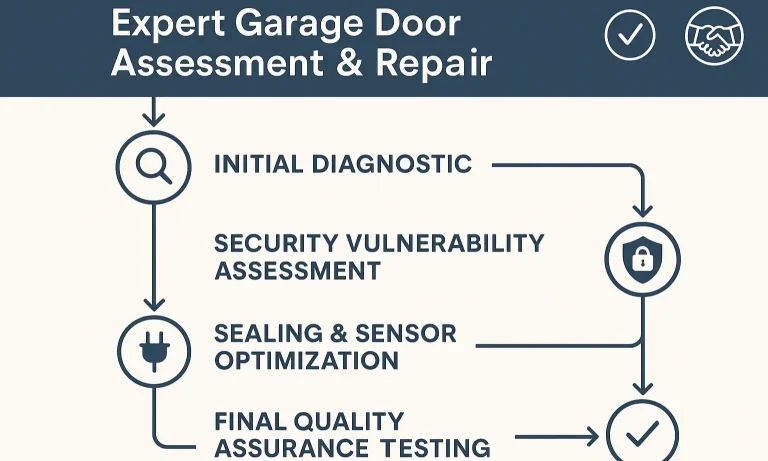
A garage door system is a complex network of cables, springs, sensors, and electronics, all working under immense tension. While a DIY fix might seem tempting for a minor issue, an untrained eye can easily miss the underlying cause of a problem—one that could have serious security implications.
A professional technician can:
- Diagnose the Root Cause: Is the door reversing because of a sensor issue, a problem with the tracks, or a logic board failure? A professional can pinpoint the exact problem, ensuring the fix is effective and lasting.
- Identify Hidden Vulnerabilities: During an inspection, a trained technician can spot issues you might not notice, like weakening springs, worn-out rollers, or outdated opener technology that’s easily hacked.
- Ensure Proper Balance and Alignment: An improperly balanced door puts extra strain on the opener, leading to premature failure and creating an opportunity for forced entry.
When a sudden breakdown happens, you need a reliable solution. Having access to emergency garage door repair services ensures that your home’s security is restored quickly and correctly. Committing to a regular garage door maintenance regime is the best way to prevent these emergencies altogether.
Proactive Steps for a More Secure Home
Securing your garage door is an ongoing process. By taking a few proactive steps, you can significantly enhance your home’s security and your peace of mind.
Embrace Modern Technology
Older garage door openers often use fixed codes that can be easily captured and duplicated by tech-savvy criminals. Modern openers use “rolling code” technology, which changes the access code every time you use the remote. Exploring smart garage door security features allows you to check your door’s status and open or close it from your phone, ensuring it’s never left open by mistake.
Prioritize Safety for Everyone
Your garage door’s security system is also its safety system. The photo-eye sensors at the base of the door prevent it from closing on an object, person, or pet. It’s crucial to keep these sensors clean and aligned. For instance, if you notice your garage door sensor is orange, it’s often a sign of misalignment that needs immediate attention. Following a proper safety protocol protects your loved ones and ensures your door functions correctly.
Consider Security Upgrades
If your door is old or made of lightweight material, it might be time for an upgrade. Consider materials like steel or reinforced wood. There are many garage door security upgrades available, from slide locks and reinforcement kits to automated deadbolts that engage when the door is closed.
Frequently Asked Questions (FAQ)
How can I tell if my garage door is a security risk?
Look for visible gaps when the door is closed, listen for unusual noises during operation, check for damaged panels or hardware, and test its response time. If it operates intermittently or can be easily lifted from the outside, it’s a security risk.
Is an old garage door opener less secure?
Yes. Openers manufactured before 1993 often use fixed codes that are vulnerable to code-grabbing devices. Modern openers with rolling code technology are significantly more secure.
How often should I have my garage door inspected?
It’s recommended to have a professional inspection and tune-up at least once a year. This helps catch potential problems early, ensuring both the safety and security of your system.
What’s the first thing I should do if my garage door stops working?
First, ensure there are no obstructions blocking the door’s path or safety sensors. Check if the opener has power. If the issue isn’t obvious, avoid trying to force the door, especially if a spring or cable appears broken. It’s best to call a professional to avoid injury or further damage.
Your First Step Towards Peace of Mind
Your garage door is more than a convenience; it’s an active part of your home’s security system. Treating it with the same care and attention as your front door is one of the most effective steps you can take to protect your home and family. By understanding the risks hidden in small malfunctions and taking proactive steps, you can transform a potential vulnerability into a line of defense, ensuring your home remains a safe haven.
You May Also Like
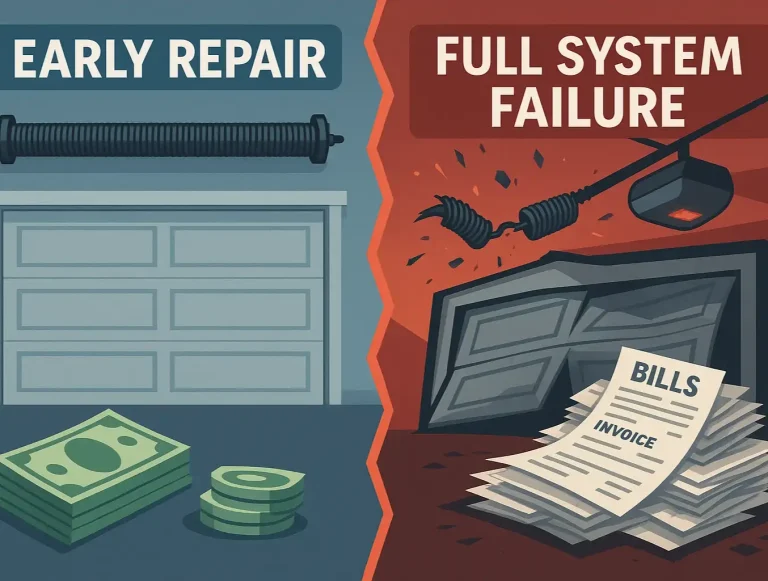
Difference Between Garage Door Spring Repair vs. Full System Failure
Imagine this: You're rushing out the door one morning, you hit the garage door remote, and instead of the familiar whir, you hear a startlingly loud BANG. The door groans, moves a few inches, and stops dead. That…
Published Date: Jun 11, 2026
How Timely Garage Door Repairs Can Save Homeowners Money & Stress
A garage door is an essential part of overall home defense. It keeps your family safe, protects your belongings, and simplifies everyday life. However, like any other mechanism, it’s not immune to wear and tear. Over…
Published Date: Feb 19, 2025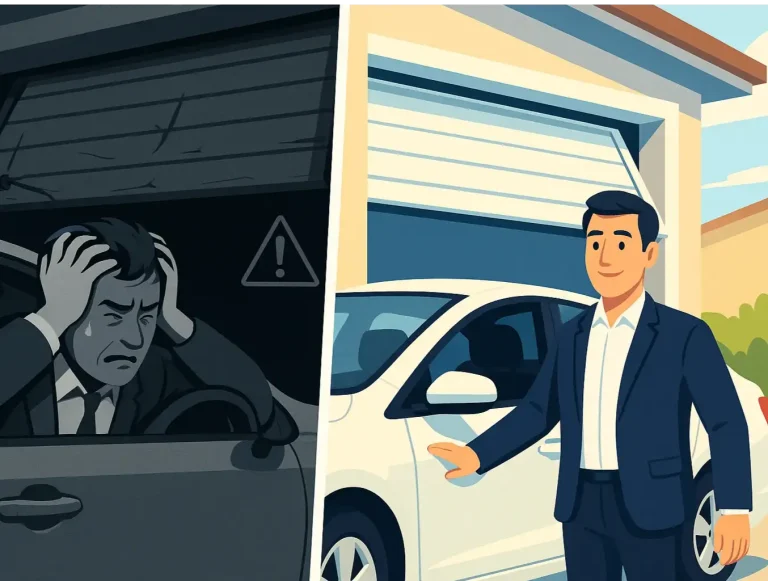
How a Stuck Garage Door Impacts Your Daily Schedule
It’s the moment every busy homeowner dreads. You’ve brewed the coffee, grabbed your keys, and you’re mentally running through your day’s schedule. You press the button on the garage door opener, and… nothing. Or…
Published Date: Jun 10, 2026