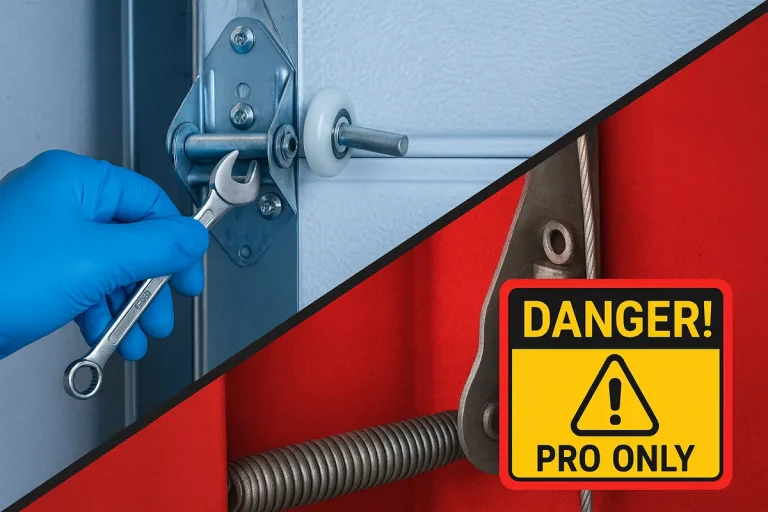





Master Guide to Swing Gate Hinge, Post & Alignment Repair
Published: Nov 19, 2026
In this article (6 sections)
A dragging, binding, or misaligned swing gate is more than an inconvenience—it exerts massive continuous strain on your property’s perimeter hardware and security entry points. Unlike overhead doors that travel along vertical tracks, swing driveway and entry gates operate on cantilevered leverage anchored to a single pivot axis.
According to hardware engineering data from the National Association of Fence Contractors, over 68% of residential swing gate alignment failures stem from exceeding maximum hinge moment arm weight capacities rather than fastener shear failure. Understanding the physics of rotational torque, post anchorage, and hinge mechanics allows you to diagnose issues accurately and execute long-lasting structural repairs.
Interactive Diagnostics: Why Is Your Swing Gate Sagging or Binding?
When a swing gate fails to latch smoothly or drags across your driveway, pinpointing the exact failure point prevents wasted spending on unnecessary replacement parts. Structural breakdown typically originates in one of three areas: post foundation movement, hinge wear, or internal gate frame distortion.
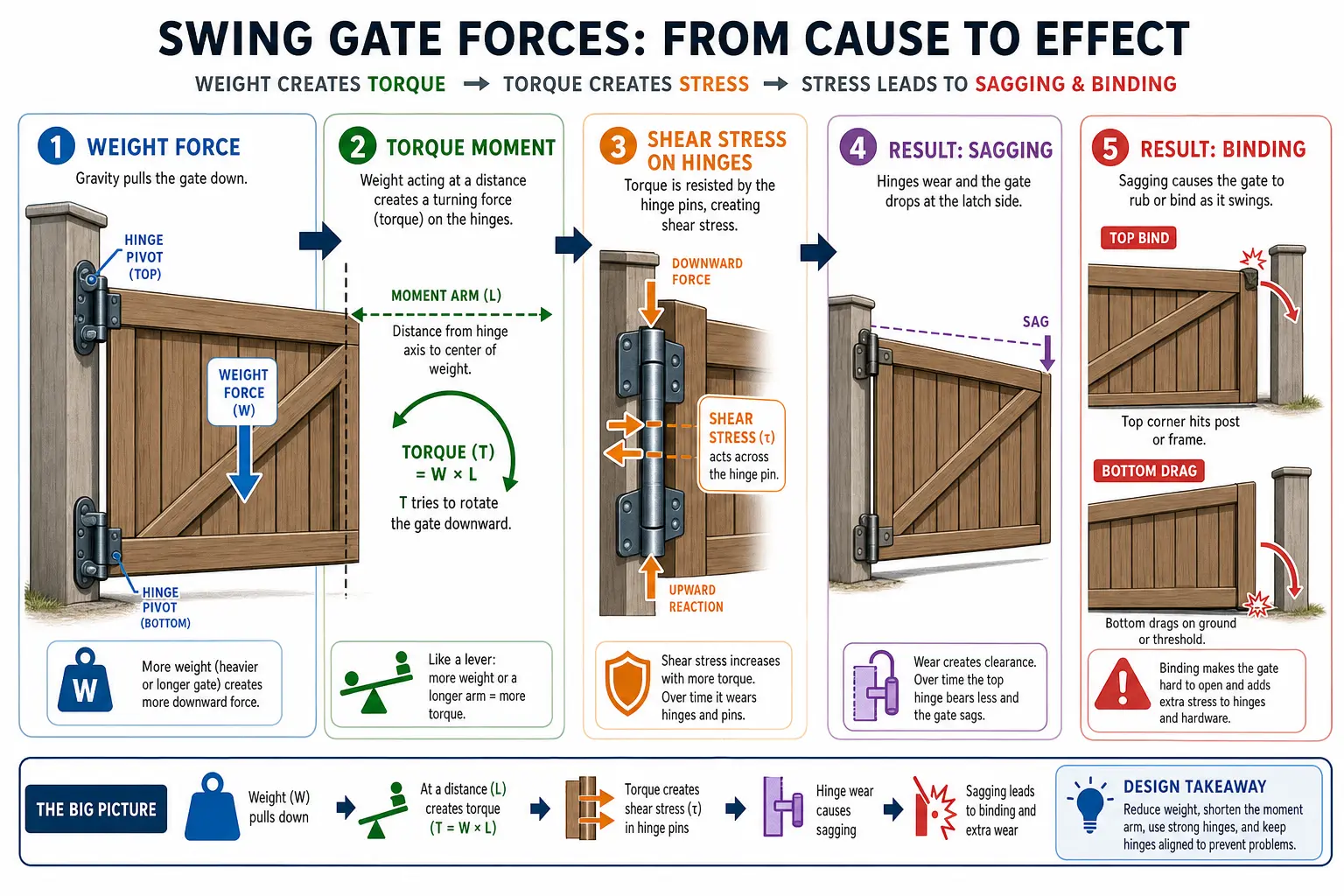
To isolate the root cause, perform a basic diagnostic assessment:
- The 2-Minute Push & Level Test: Place a 4-foot spirit level vertically against the hinge post. Apply firm lateral pressure to the top of the post. If the spirit bubble shifts significantly or the post moves in its socket, your underlying issue is foundation displacement rather than hardware wear.
- Hinge Slop Inspection: Lift the outer latch edge of the gate leaf upward by hand. If you observe mechanical movement inside the hinge barrels before the post responds, the internal bearings or mounting pins are worn out.
- Frame Geometry Check: Measure diagonally from corner to corner across your gate leaf. Equal diagonal measurements indicate a square frame; unequal measurements confirm frame sag.
Recognizing whether your entry system requires simple hardware service or expert garage door repair service techniques ensures your property perimeter remains secure.
Gate Post Structural Mechanics & Footing Anchor Standards
The stability of any swing gate depends entirely on the structural integrity of its vertical support posts. Because a heavy driveway gate acts as a horizontal lever arm, it exerts continuous leverage torque against the concrete foundation.
The American Fence Association specifies that for swing gates exceeding 6 feet in length or 150 lbs, post footings must extend below local frost lines at a depth equal to a minimum of 1/2 the above-ground post height. For example, a 6-foot tall swing gate requires a post hole drilled at least 3 feet deep, encased in a concrete anchor block at least three times the post’s diameter.
When soil shifts or timber posts warp over time, resetting the foundation becomes mandatory. Similar to heavy-duty garage door frame repair, anchoring structural posts against dynamic forces prevents recurring binding and latch misalignment.
Hinge Selection, Replacement & Tension Adjustment
Selecting the correct hinge hardware is critical for handling continuous moment arm loads. Standard hardware store strap hinges lack the load ratings required for wide metal or heavy timber entry gates.
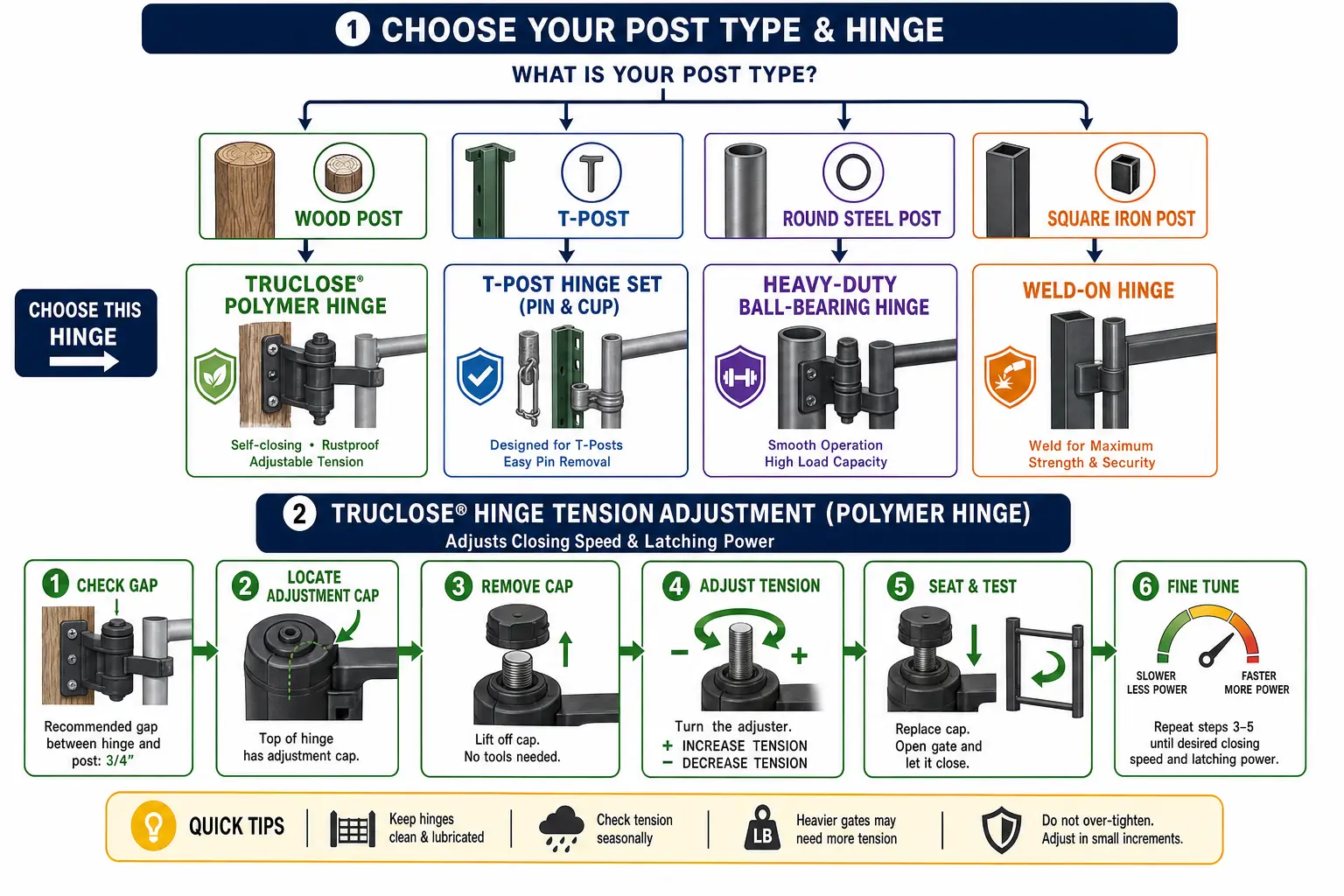
Hardware Sizing & Compatibility
- Tension-Adjustable Polymer Hinges (e.g., TruClose): Ideal for self-closing pedestrian gates up to 132 lbs. Modern polymer hinges offer up to 3/4-inch side-to-side and tension adjustment, allowing you to fine-tune gaps without resetting post footings.
- T-Post Pin Assemblies & Clamp Hinges: Designed for agricultural round posts and chain-link tubing, using heavy 5/8-inch steel pins to absorb high rotational forces.
- Ball-Bearing & Weld-On Hinges: Essential for heavy ornamental iron or solid wood driveway gates weighing over 250 lbs. Internal greaseable bearings eliminate friction and resist binding.
Upgrading to rated heavy-duty hinges drastically reduces mechanical wear. If mounting hardware pulls free from wood or composite posts, addressing door hinge screw holes stripped through structural timber screws or through-bolting restores necessary clamping pressure.
Correcting Gate Leaf Alignment & Latch Binding
Even when support posts remain plumb, wooden frames and wide aluminum panels can drop over time due to gravity pulling on un-braced joints.
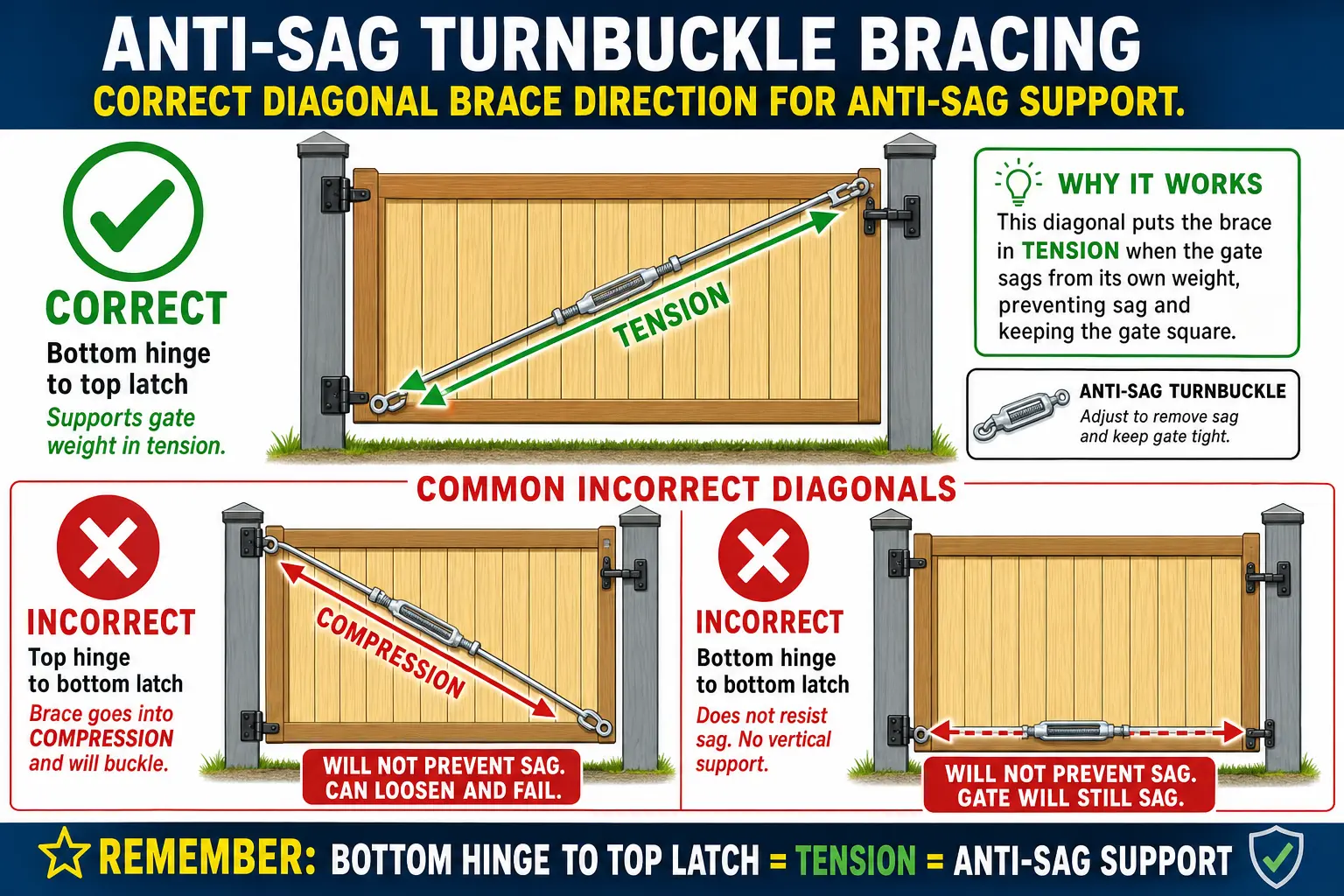
The Anti-Sag Turnbuckle Rule
Installing an adjustable turnbuckle rod or tension cable corrects leaf sag quickly. However, orientation is critical:
- Tension Rods/Cables: Must run diagonally from the bottom hinge corner up to the top latch corner. Tightening the turnbuckle pulls the sagging latch corner upward toward the rigid hinge post.
- Compression Struts (Rigid Wood/Metal Braces): Must run diagonally from the top hinge corner down to the bottom latch corner to push the lower frame outward.
Automated Driveway Swing Gates
For automated entryways, mechanical alignment must be perfected before adjusting electric motor limit switches. Binding gates overload linear actuator arms, leading to gear failure or a broken garage door bracket on the gate frame. Professional automated driveway gate installation and maintenance ensures the leaves swing freely through their entire arc before motor engagement.
DIY Quick-Fix vs. Professional Contractor Overhaul
Deciding whether to tackle gate alignment yourself or hire a qualified technician depends on component weight, safety risk, and structural scope.
| Repair Scenario | DIY Feasibility | Risk Level | Required Tools | Recommended Action |
|---|---|---|---|---|
| Minor Hinge Tensioning | High | Low | Flathead/Hex Key, Wrench | DIY: Adjust TruClose tension nut or turnbuckle |
| Stripped Screw Repair | High | Low | Drill, Structural Timber Bolts | DIY: Re-drill and through-bolt hinge plates |
| Worn Ball-Bearing Hinge | Medium | Moderate | Jacks, Socket Set, Angle Grinder | DIY/Pro: Support gate weight before unbolting |
| Leaning Concrete Footing | Low | High | Excavator, Concrete Mixer, Shoring | Professional: Reset post below frost depth |
| Automated Driveway Gate | Low | High | Multimeter, Alignment Jigs, Welders | Professional: Prevent motor burnouts and pinch risks |
Heavy dual-swing driveway gates present significant tipping hazards and pinch-point crushing risks. When repairs involve resetting main concrete footings, structural welding, or recalibrating integrated automatic openers, consulting a licensed professional protects your home and investment.
Frequently Asked Questions
How deep should a concrete footing be for a swing gate post?
A swing gate post concrete footing must extend below your local frost depth line and reach a minimum depth equal to 1/2 of the above-ground post height. For a 6-foot tall swing gate, the hole must be dug at least 3 feet deep into solid ground and poured with concrete three times the diameter of the post.
Why is my swing gate binding at the bottom latch?
Bottom latch binding is typically caused by post leaning, worn hinge bearings, or frame distortion. Perform a level test on the hinge post first; if the post is straight, adjust the top hinge outward or install a diagonal anti-sag turnbuckle running from the bottom hinge corner up to the top latch corner.
Can tension-adjustable hinges fix a sagging driveway gate?
Tension-adjustable polymer hinges like TruClose can correct minor horizontal sag and tension loss up to 3/4 of an inch. However, if the gate leaf exceeds the hardware’s rated moment arm weight limit or the concrete post anchor has shifted in the soil, the post foundation must be structurally reset.
You May Also Like